Neuralink in Tesla Optimus Robot SHOCKED The World (Mind-Controlled)
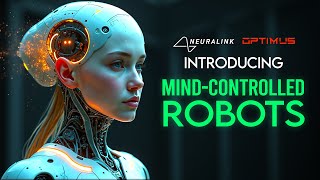
YouTube video transcript describing a collaboration between Neuralink and Tesla (Optimus) to connect Neuralink’s N1 brain–computer implant with Tesla’s humanoid robot Optimus. The video summarizes prior Neuralink trials (thought-to-digital control), introduces the CONVOY study to extend control to robotic limbs, details Optimus’s design and hand/forearm dexterity, highlights a tested quadriplegic participant, and raises ethical, security, and accessibility concerns; it also mentions Neuralink’s Blindsight project and a sponsor plug for Growth School.
Chapters
NeuroLink and Tesla Optimus are teaming up to completely blur the line between human thoughts and advanced robotics. Neuralink's N1 implant, a cutting edge brain computer interface, has already shown it can turn thoughts into actions on a screen. Now, with the approval of the groundbreaking CONVOY study, this technology is moving into the physical world, allowing people to control robotic limbs with their minds. Tesla Optimus, a humanoid robot built to move and function like a real person, is, is at the heart of this game, changing collaboration. Together, they're not just restoring mobility, they're redefining what humans are capable of. The N1 implant is central to Neuralink's work. This tiny wireless device is surgically implanted in the brain in the region responsible for planning movement. The implant reads neural activity, processes it and translates it into actionable signals for machines. Initially, neuralink focused on helping individuals with neurological impairments regain control over digital devices such as smartphones and computers. The prime study, Neuralink's earlier trial demonstrated this capability. Participants, some of whom were unable to use their hands, could control these devices with their thoughts alone. The new CONVOY study builds on these achievements by extending the implant's applications to assistive robotic limbs. Neuralink has already proven that the N1 implant can effectively interpret motor commands from the brain. Now the aim is to show that these commands can control advanced robotic systems like Tesla Optimus with the same precision and naturalness as biological limbs. This isn't speculative anymore. It's happening. Earlier this year, the N1 implant was successfully tested on a 29 year old quadriplegic, Noland Arbaugh. Arbaugh, who had lost the ability to move his limbs, could play chess and video games hands free. Using the implant, his thoughts controlled the actions and and the system responded seamlessly. This alone was a major breakthrough. But the collaboration with Tesla Optimus takes it to a new level. Instead of merely interacting with digital devices, users could regain physical capabilities by controlling robotic arms, legs, or even entire bodies. Tesla Optimus, first unveiled in 2021 and shown as a prototype in 2022, has been in development for years. The robot is designed to replicate human biomechanics as cool closely as possible. Tesla's engineers have spent countless hours studying human anatomy to ensure that Optimus's movements feel natural and lifelike. One of the most impressive aspects of the robot is its hands, which feature 22 degrees of freedom. For comparison, human hands have 27 degrees of freedom, while most robotic hands top out at just 6 or 7. This gives Optimus an incredible range of motion and the ability to perform complex, delicate tasks. In recent demonstrations, Optimus was shown catching a tennis ball with its upgraded hands. The forearm and wrist have also been enhanced, adding three additional degrees of freedom, doubling the flexibility of earlier models. Tesla engineer Milan Kovac explained that these upgrades allow Optimus to handle intricate tasks with precision, making it one of the most advanced humanoid robots in the world. The hands are not just dexterous, but also robust. Jim Fan, a senior researcher at Nvidia, praised the durability of Optimus's hands, noting their ability to interact with objects repeatedly without requiring constant maintenance. This level of reliability is critical, especially when these robots are envisioned for use in everyday life, healthcare or industrial environments. Tesla's focus on durability ensures that Optimus can handle real world challenges without frequent repairs. With breakthroughs like neuralink and Tesla Optimus Redefining Human potential, it's clear that staying ahead in an AI driven world is more crucial than ever. That's why we've teamed up with Growth School for this video to bring you something truly valuable that could help you thrive in this rapidly evolving landscape. 2024 has been a whirlwind. Jobs popping up everywhere, but layoffs are just as common. It's a wild ride and even if things feel secure now, you never know what's around the corner. That's why I think having multiple streams of income isn't just smart, it's essential. Here's where AI comes in. With the right tools and skills, you could seriously start earning an extra $10,000 a month. Now, if you're wondering how to get started, Growth School has something really cool. They're offering a three hour hands on AI training where you'll learn to use over 25 powerful AI tools. Normally it's paid, but the first 1000 AI revolution viewers can join for free using the link in the description. On top of that, you'll get $500 worth of bonus resources just for signing up. The training covers everything job hunting, tips, salary negotiation, mastering Excel, even content creation. And it's not just for tech experts. Whether you're in finance, sales, marketing, HR or even still studying, this can work for you. GrowthSchool has already helped millions of people level up and this could be your turn to stay ahead in an AI driven world. So if this sounds like your kind of thing, hit the link below to grab your free spot. Plus, don't miss joining Growth School's WhatsApp community. It's a great place to connect with others. Diving into AI too Alright, now back to Neuralink in Optimus, Elon Musk has long been Vocal about his vision for Neuralink and Tesla Optimus, he described how the N1 implant could intercept the brain's motor commands, commands that would typically go to biological limbs, and redirect them to robotic counterparts. According to Musk, this technology doesn't just restore mobility. It has the potential to enhance human capability. With robotic limbs powered by neuralink, individuals could lift heavier objects, perform tasks requiring extreme precision, or achieve feats far beyond the limitations of biological anatomy. Musk has referred to this as giving people cybernetic superpowers. The potential applications are staggering, particularly for individuals with disabilities. For someone who has lost the use of their arms or legs, the ability to control a robotic limb as if it were their own could be life changing. Tasks that once required the assistance of a caregiver could be performed independently, restoring a sense of autonomy and freedom. But the vision extends beyond medical applications. Musk has hinted at the possibility of using robotic enhancements in industries like construction, logistics and even athletics. Imagine a worker equipped with robotic limbs that allow them to lift objects no human could manage. Or an athlete using enhanced precision to perform extraordinary feats. Tesla's expertise in scaling production is critical for making this vision a reality. The company has a proven track record of mass producing complex systems, as evidenced by its success with electric vehicles. The goal is to eventually manufacture optimus robots at a scale that makes them as accessible as Tesla cars. Neuralink, on the other hand, is focused on ensuring that its implants are affordable, aiming to democratize access to this life changing technology. Together, these efforts could make advanced robotics and brain computer interfaces available to a broad audience, not just the wealthy. As promising as this collaboration is, it raises important ethical and societal questions. When robotic limbs and brain implants become widespread, how will society redefine concepts like identity and humanity? If a person's physical body is no longer entirely biological, what does that mean for our understanding of what it means to be human? There are also concerns about inequality. If these technologies remain expensive, they could create a divide between those who can afford them and those who cannot. Security is another critical issue. If a robotic limb can be controlled by the brain, what happens if the system is hacked? These challenges will need to be addressed as the technology matures. Neuralink isn't stopping with mobility. The company recently received FDA Breakthrough Device designation for a project called Blindsight, which aims to restore vision for people who are blind. The Blindsight implant works by activating neurons in the brain's visual cortex, creating a visual image. This shows that neuralink's technology isn't just about physical movement. It's about enhancing sensory perception as well. Meanwhile, Tesla continues to refine Optimus. The robot's ability to adapt to complex tasks makes it versatile enough for applications beyond personal use. In healthcare, Optimus could assist with patient care. In logistics it could handle tasks requiring precision and strength. And in space exploration, the robot's durability and adaptability could make it an invaluable asset. Tesla's engineers have designed Optimus to be a platform that can evolve with technological advancements, ensuring it remains relevant for years to come. The Convoy study is a critical step in this journey. By testing the integration of Neuralink's N1 implant with Tesla Optimus's robotic limbs, this study aims to prove that human thought can seamlessly control advanced robotics. If successful, it will pave the way for broader applications from assisting individuals with disabilities to transforming entire industries. Alright, let me know what you think in the comments and if you enjoyed this. Make sure to like and subscribe for more AI updates. Thanks for watching and see you in the next one.










