New AI Chatbot - Claude 2 - is Free and Outperforms ChatGPT
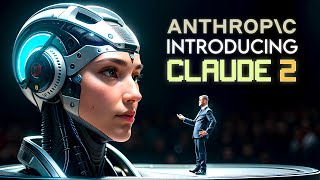
Video review of Anthropic's Claude 2 (second-generation chatbot), describing its capabilities (very large context/summarization, improved benchmark scores in bar exam, coding, and math), safety claims, hallucination risks, and comparisons with ChatGPT and other competitors. The presenter highlights Claude 2's longer context window, lower-priced API, team background, and Anthropic's roadmap while noting unresolved safety and hallucination concerns.
Chapters
AI just got a whole lot more interesting with Anthropic's new AI chatbot, Claude2. And it comes ready to challenge ChatGPT, developed by Anthropic, a rising star in the AI world, which was founded by former OpenAI research executives. And you know what? They just might be OpenAI's worst nightmare. So Claude 2 is the second generation of Anthropic's AI chatbot, and it's a huge improvement over the previous version. Honestly, it can do amazing things that ChatGPT can't, like summarize up to about 75,000 words compared to GPT4's 3,000 words. That means Claude 2 can transform large data sets into concise summaries, which is super useful for researchers, journalists, students, and anyone who needs to digest a lot of information quickly. Imagine being able to read a whole book in a minute, or get the gist of a complex report in seconds. That's what Claude 2 can do for you. It's based on a deep neural network that learns from a large corpus of text Data, just like ChatGPT. But Claude 2 has some unique capabilities that make it stand out from the crowd. In fact, it has done better than its previous version on various intelligence and reasoning tests. For example, it scored 76.5% on the multiple choice section of the bar exam, compared to 73% before. That's higher than the average human score of 74%. In a Python coding test, it scored 71%, up from 56% in the previous version, which means that it is capable of writing code at a professional level. And when it comes to grade school math problems, it scored 88%, up from 85%. So if you allow it, Claude 2 could excel at your math homework. But how did Anthropic manage to create such a powerful AI chatbot? Well, it took them a lot of time and effort. According to their website, they have a team of 30 to 35 people dedicated to building Claude 2 with a total support of around 150 people. That's a lot of brain power behind this project, and they have some big names in the AI field as well. Daniela Amodei, the co founder and CEO of Anthropic, is a former research director at OpenAI, where she led the team that created GPT3, the predecessor of GPT4. She also happens to be the sister of Dario Amodei, another co founder of anthropic and former VP of Research at OpenAI. Daniela Amodei has said that there is a huge business demand and a market gap for AI chatbots like Claude2. She believes that Claude2 can help people with various tasks and problems that require natural language, understanding and generation. She also thinks that it can be more trustworthy and reliable than other AI chatbots because it has been designed with safety in mind. The safety of AI chatbots is a serious concern, as they can spew out harmful or offensive content, potentially impacting people and causing issues. For instance, ChatGPT has a track record of generating texts which can be racist, sexist or violent. This isn't just about hurting feelings. It could cause real world harm to users or even broader societal issues. The folks at Anthropic are beating the drum about their AI Claude 2, claiming it's safer than ChatGPT. They say it's been fed with more up to date and varied information that mirrors today's societal expectations. They also tout the safety measures they've put in place to stop this bot from turning out damaging content or falling prey to nasty users. They're pretty proud, saying that Claud 2 is twice as good at dishing out harmless responses compared to its earlier version, according to their own testing. But let's be clear, that's a murky claim. Does it mean Claude 2 is half as likely to spit out harmful stuff, or is it twice as likely to produce harmless output? And how do they measure harmlessness? Anyway? Anthropic really needs to clear up these points if they're going to convince us that Claude 2 isn't just another problem waiting to happen. Even though safety is a big hurdle for Claude 2 and the entire AI sector, it's not the only one. Another problem is what's called hallucinations, which is when AI chatbots come up with wrong answers or details that don't have any evidence or logic behind them. This happens because AI chatbots aren't truly grasping what they're saying or writing. They're just copying language patterns they've picked up from the data they've learned. But sometimes these patterns might be wrong or confusing, and the AI chatbots can't tell the difference. Daniela Amodei has openly said this is an issue for all language models, not just Claude 2. She's explained they're working to make Claude 2's answers more accurate and consistent, and also to make the system more clear and understandable. She's also made it clear they're not saying Claude 2 is without problems or mistakes. Instead, she's saying it's a move towards building more helpful and safer AI chatbots. So you're wondering how Claude 2 stacks up against other AI chatbots out there, it's best to look at ChatGPT first for a comparison. Now, ChatGPT is built on GPT4, which is the newest and biggest language model from OpenAI. This model has a staggering 175 billion parameters, while Claude 2 has 100 billion parameters. Think of parameters like the controls on a soundboard. They decide how the AI processes data and produces results. ChatGPT is highly respected, and many believe it's the top AI chatbot in the world. It's capable of creating clear and varied texts on pretty much any topic. Plus it can look up information on the Internet, which Claude2 can't do, but can only search through documents. Millions of people have used ChatGPT for lots of different things, ranging from fun and games to learning to business needs. It's also led to the creation of many applications and platforms that use its programming interface or API, like Replika, Jarvis and copy AI. But don't count out Claude 2 just yet. It's got a few tricks up its sleeve that give it an edge over ChatGPT, making it a real competitor in the AI chatbot game. For starters, Claude 2 can produce longer texts and summaries than ChatGPT. This means it is better at handling more complicated tasks that need a lot of info and analysis. And Claude 2 performs better on certain intelligence and reasoning tests than ChatGPT, like the Bar exam and the Python coding test. This shows that it could be more useful and dependable for tasks that call for logic and problem solving skills. Another advantage that Claude 2 has over ChatGPT is the price of its API. If you want to use ChatGPT for your business or project, you have to pay a hefty fee to access its API. According to OpenAI's website, the price is $0.12 per 1,000 tokens, which is equivalent to approximately 750 words. And that's for the premium tier, which gives you access to more features and support depending on the context window size. That's a lot of money for an AI chatbot that can sometimes give you harmful or inaccurate outputs, but with Claude 2 you don't have to break the bank to use its API. According to Anthropic's website, the price of Claude 2 API is the same as Claude 1.3 API, which is $0.0465 to generate 1000 words. That means you can use it for a fraction of the cost of ChatGPT and get better performance, longer responses and safer outputs. That's a great deal for anyone who wants to leverage the power of AI chatbots for their business or project. And if you just want to try Claude 2 for fun or personal use, you can do that for free on Claude AI, where you can chat with it in natural language and ask it for help with any tasks that you like. Of course, ChatGPT is not the only AI chatbot that Claude 2 has to compete with. There are also other models from other companies that have their own strengths and features. For example, there is Bard, the AI chatbot from Google, which is an early experiment that lets you collaborate with generative AI. Bard is based on Google's Palm 2 model, which has 11 billion parameters and can perform various natural language tasks. Bard is now publicly available in the US and the UK and will support more languages soon. Google has showcased some of its outputs on its blog and YouTube and they look pretty impressive. So what does the Future hold for Claude 2 and how will it disrupt the landscape of AI chatbots? Well, Anthropic has said that they have an exciting roadmap of capability improvements planned for Claude 2 and that they will be slowly and iteratively deploying them in the coming months. They have also said that they are working to make Claude more globally available and accessible to more people and businesses. They have also hinted that they are working on other projects besides Claude 2, such as Vision models and reinforcement learning models. But other AI companies are also working on improving their models and creating new ones. The competition is fierce and the stakes are high. The AI chatbot market is expected to grow from $17 billion in 2020 to to $102 billion by 2026, according to a report by Markets and Markets. That's a lot of money and opportunity for anyone who can create a better AI chatbot than the rest. So what do you think? Is Claude 2 going to destroy Chatgpt? Or will Chatgpt remain the king of AI chatbots? Or will another model emerge and surprise us all? Let me know your thoughts in the comments below and if you liked this video, please give it a thumbs up and subscribe to my channel for more AI content. Thanks for watching. Subscribe and I'll see you next time.










