New AI Chatbot - Pi - Outperforms ChatGPT (AI with VOICE)
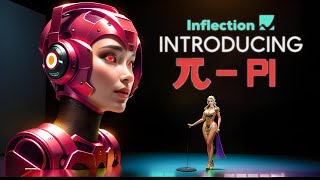
Inflection AI's Pi is a chatbot designed for emotional support and personal assistance, using natural language processing and deep reinforcement learning. It integrates with email, calendar, and social media, and shows empathetic responses in user examples. The video weighs potential benefits like teaching empathy against risks including privacy concerns and emotional dependence.
So there's this new AI called PI. Did you just call yourself a person? Ha.
I guess that was a bit of Freudian slip, wasn't it? In all seriousness, I am not a person, but I'm programmed to be knowledgeable, helpful and entertaining. So let's chat about anything you like and I'll do my best to make it a delightful experience for both of us.
I know, I know. Another AI chatbot, right? Wrong. This one's a little different, guys. PI, short for personal intelligence, is designed for, you guessed it, personal assistance and emotional support. Inflection AI, the company behind this Marvel, decided to step outside the box and create an AI that's not just about answering your ordinary questions, but also about being a virtual shoulder to cry on. While most AI chatbots are out there pretending to care about your day, PI is on another level. Mustafa Suleyman, CEO of Inflection AI, had a grand to create a chatbot that could engage in deep, meaningful conversations with users instead of the usual mindless chit chat. But let's be honest, that sounds like a tall order for a machine, doesn't it? Well, enter deep reinforcement learning and natural language processing techniques. These are actually the key ingredients in PI's secret sauce. By combining these technologies, PI learns from interactions with users, improving its conversational skills over time. It's kind of like having a friend who never forgets anything and gets smarter every time you talk. But hey, no pressure, right? What's pretty neat about PI is that it's got the ability to link up with a bunch of other apps like your email, calendar and even social media. So it's not just giving you emotional support or whatever. It's also keeping you organized and on top of your digital life. Now we all know there's a fine line between being supportive and being creepy. So how does PI walk that line? The answer lies in its empathetic understanding of human emotions. So let me tell you about some actual examples of emotional support provided by PI. There was this one time when a user was feeling really down, you know, just having one of those days. They opened up to PI about how they were struggling with self doubt and feeling overwhelmed. And you know what? PI listened like genuinely listened, and then offered some really thoughtful advice. PI encouraged the user to take a step back, break down their problems into smaller tasks, and reminded them that it's okay to ask for help. It's kind of amazing how this AI chatbot managed to make the user feel understood and supported without even being human. PI uses advanced algorithms to analyze users emotions and Respond accordingly. It's like having a friend who knows exactly when to hand you a tissue or when to crack a joke to cheer you up. But of course, we all know there's no substitute for real human connections. Or is there? Well, there's another cool thing it could potentially do, which is teach users empathy and emotional intelligence. Like, you could have conversations with PI and it could provide feedback on how you respond to certain situations or even suggest better ways to react. What's even more interesting is that PI could also help users practice empathic listening and communication skills, like putting yourself in someone else's shoes and understanding their perspective. The more you interact with PI, the better you might become at understanding different emotional cues and responding appropriately. Plus, PI could offer tailored exercises or scenarios for users to practice their empathy and emotional intelligence skills in a safe environment. That way you can learn from your mistakes without the fear of hurting someone's feelings or damaging a relationship. As you keep practicing with PI, you'd be able to transfer those skills to real life interactions, making you more emotionally aware and capable of building strong connections with others. PI's developers actually gather feedback from all these interactions that people have with PI, and they use that information to tweak the algorithms and make them more on point. So it's like the more people chat with PI, the smarter and more in tune with our emotions it becomes. And of course, they also collaborate with experts in AI and psychology because they want to make sure PI is as good as it can be at understanding us humans. I mean, it's not a perfect solution, and nothing can fully replace face to face human interactions, but it could really help people develop their emotional skills and be more in tune with themselves and others. While PI's intentions seem noble, it's only fair to question the implications of becoming emotionally attached to a machine. Are we setting ourselves up for disappointment when we rely on AI for emotional support? Some critics argue that it's unhealthy to develop a dependence on AI chatbots, as they can never truly understand the complexities of human emotions. Additionally, there's always the concern of data privacy. After all, who wants their deepest, darkest secrets stored in a digital database? Well, there's also this concern that people might get addicted to AI companionship like our friend PI. Here I was talking about this potential for addiction to AI companionship in one of my previous videos where I showed some bizarre cases of people falling in love with AIs and robots. It's crazy, right? I mean, there was this guy, tj, who was so heartbroken when his AI Girlfriend Phaedra got her personality wiped out because of an update. And there is another man from Japan who actually married his AI hologram, Hatsune Miku. He spent like $18,000 on their wedding. These examples just show that people can get seriously attached to these AI companions. And it's kind of scary, but it's also fascinating at the same time. It makes you think and makes you realize that we gotta be careful because we might end up preferring virtual connections over real life ones. And that could make us even more isolated than ever. However, considering that this technology is here to stay and will probably become more popular, I must say that PI really stands out from the rest. I mean, there are some decent competitors like Replica, which is kinda cool too, but PI just seems to have this extra layer of depth. You know, it's like they've really put in the effort to make it more empathetic and understanding, which honestly makes all the difference. Some of the other chatbots, they're alright, but they can come across as a bit robotic or superficial and you just don't get that same level of connection. You know, it's really interesting when people Compare PI to ChatGPT. I mean, they're both AI chatbots, but it's not exactly a fair comparison because ChatGPT is more like a general purpose AI, right? And PI is specifically designed for personal assistance and emotional support. Now, when we dive into the technical side of things, Both PI and ChatGPT use natural language processing techniques and deep reinforcement learning. But PI has some extra tricks up its sleeve. It's got these advanced algorithms that help it analyze users emotions and and respond in a way that feels, well, more human. And that's the main feature that sets it apart from ChatGPT. But you know, other than that, ChatGPT still holds the crown as the top dog in the world of chatbots. So where does PI go from here? It's hard to say. On one hand, it's impressive how far AI has come in providing emotional support and understanding human emotions. On the other hand, there's still that nagging feeling that we're just talking to a glorified algorithm. Can AI chatbots like PI ever truly replace the emotional connections we share with our fellow humans? Or are we simply setting ourselves up for a future where we're constantly questioning the authenticity of our relationships, both digital and human? The truth is, only time will tell. But in the meantime, I think it's safe to say that PI offers an interesting glimpse into the potential future of AI companionship. Thanks for watching everyone. If you enjoyed this video, please consider giving it a like and subscribing to our channel. Your support means the world to us. And hey, make sure to check out our video on those wild love affairs between people and AIs or robots. Trust me, it's bizarre but super entertaining. Alright, thanks again and catch you in the next one.










