New AI Humanoid Robot - IRON - Is Made to Replace Humans
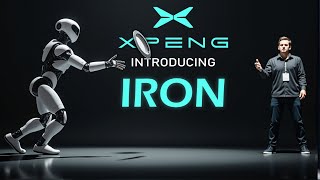
Xpeng unveiled its humanoid robot Iron and in-house Turing AI chip at its 2024 AI Day. The robot is built for factory work, while the chip supports up to 30 billion parameters. Xpeng also showed off a flying car prototype with 500 km range and plans to start taking preorders.
Questions this video answers
178 cm (listed as '5, 8 or 178 cm')
About 154 pounds
Over 60 joints and 200 degrees of freedom
15 degrees of freedom
40 cores
Chapters
So Xpeng, known for its electric vehicles, just held its 2024 AI Day event, which is basically turned into a major tech showcase. This event gave us an inside look at some mind blowing AI driven innovations from humanoid robots and a next level AI chip all the way to flying cars. So let's get into all the details. Alright, so Xpeng introduced a new humanoid robot named Iron at its AI Day event in Guangzhou, China. Now, Iron is an operational machine already working on Xpeng's production line. It stands at 5, 8 or 178 cm and weighs about 154 pounds, making it similar in size to an average person. And it's not just there for show. Iron is actively involved in assembling Xpeng's upcoming electric vehicle, the P7, in their factories. The robot is powered by Xpeng's custom built Turing AI chip. And this chip is a serious piece of tech. Equipped with a 40 core processor and designed specifically for AI vehicles, robots and even flying cars, the Turing chip can handle large AI models with up to 30 billion parameters, allowing it to reason, think and adapt to different tasks, making Iron more like a human in terms of flexibility and decision making. With over 60 joints and 200 degrees of freedom, Iron has a pretty impressive range of movement, giving it the agility to perform complex tasks. From walking around the factory floor to picking up and handling various components. Its hands alone have 15 degrees of freedom, meaning they can move in very precise ways to grasp, hold and place objects with a human like Finesse. Now think about it. Xpeng's vision goes far beyond assembling cars. They're setting their sights on deploying robots like Iron, not only in factories, but also in retail spaces, offices and even homes. Iron isn't just a manufacturing assistant. It's envisioned as a robot that could integrate into everyday spaces, providing real hands on assistance. Like an idea of entering a store or office where Iron is there to help with tasks or manage customer service. This is an ambitious goal and Xpeng is clearly focused on extending Iron's role beyond industrial applications. And if you're wondering if Iron reminds you of something, you're spot on. There are some obvious similarities to Tesla's Optimus robot. Tesla's been working on using their own autonomous driving technology to create humanoid robots. And now Xpeng is doing the same, using the tech from its EVs to build iron. The design of Iron also raised some eyebrows. Brett Adcock, the CEO of Figure AI, actually called Xpeng out, claiming they'd copied the spine and hip design of his company's Robot. This is a common accusation in the tech world, and it might sound familiar if you've followed Xpeng before. So what's going on with Xpeng and Tesla here? Well, if we zoom out, this rivalry goes beyond just robots. It's all part of Xpeng's strategy to leverage AI across multiple sectors, especially in electric vehicles and now robotics. Over the past few years, Xpeng has built a reputation for adopting and let's be honest, sometimes mimicking Western tech. We saw this happen in smartphones and EVs where Chinese companies initially took heavy inspiration from Western designs, but then took over with large scale manufacturing and innovation. If history's any guide, China could end up doing something similar in robotics now. Iron isn't the only new tech Xpeng showed off. They also introduced the Kunpeng super electric system, a next generation powertrain. This system is built on high voltage silicon carbide tech, which optimizes energy conversion and cuts down power loss, making Xpeng's EVs more efficient and extending their driving range. And here's where it gets impressive. With the kunpeng system, their EVs will have a combined range of up to 1,400 kilometers or around 870 miles. That's a big leap in range and something that could make EVs a lot more practical for people who do long distance travel. In addition to that, the Kunpeng system can fast charge from 10% to to 80% in just 12 minutes, using what's called 5C charging technology. Imagine needing just 12 minutes to go from low battery to nearly full. That's something that could change the game in EVs if it catches on widely. Xpeng's focus here is on making EVs not just efficient, but fast charging, which could really help ease the range anxiety many people feel about electric cars. Xpeng's in house touring AI chip is another major development they highlighted. The Turing chip isn't just for robots. It's also the brain behind Xpeng's newest vehicles. The chip is optimized for AI heavy applications supporting up to 30 billion parameters. And it powers some of their most advanced tech, like the Kanghai platform. This platform is essentially Xpeng's new neural network for level four autonomous driving. The goal is to create a robotaxi that doesn't even need a human driver. And with this chip, they're well on their way. To put it into perspective, the Turing chip in these robotaxis has a computing power of up to 3,000 tops TERA operations per second. What does that mean? Basically it's like putting the processing power of three high performance chips into one. This tech isn't just about driving. It's also about safety. Xpeng's Hawkeye Pure Vision system gives the robotaxis a 720 degree view with no blind spots. So you're looking at a pretty advanced level of autonomy here with the car able to drive itself safely without human input in most situations. But Xpeng went even further. They also showed off their flying car plans through a subsidiary called Aeroht. Xpeng Aeroht is developing both EVTOLs and hybrid flying cars. They showcased a modular flying car that works with a parent vehicle for recharging, and even a tilt rotor flying vehicle that can carry six passengers up to 500 kilometers, about 311 miles with a top speed of 360 kilometers per hour. 224 miles per hour hybrid flying car scheduled for release in 2026, will cost around 2 million yuan, or about $279,000, a price tag that's surprisingly reasonable for something so futuristic. Xpeng is already on track to integrate these flying cars into everyday transportation systems. They're planning a public flight demonstration later this month and will open preorders in December. So while flying cars might still sound like sci fi to some of us, XPENG is moving full steam ahead, treating them like a natural evolution in urban mobility. Beyond flying cars and autonomous robots, XPENG has its eye on global expansion too. They're already present in 30 countries with 145 after sales service centers. By next year, they plan to be in 60 countries, which shows just how aggressively they're targeting global growth. With all these developments, XPENG is positioning itself as a tech giant far beyond just an electric vehicle manufacturer. They're entering industries like robotics, AI chip design, autonomous driving, and even aerial mobility. And what makes this so intriguing is that it's not just talk. They're actively integrating this tech into real products, as we can see with iron already in use on the factory floor. And let's not overlook XPeng's production milestones. As of October 2024, they've delivered 122,478 vehicles, a 21% increase compared to last year, with nearly 24,000 units sold just last month. Clearly, their EV sales are on the rise. And these new AI driven advancements in robot technology, power systems and autonomous vehicles could push their growth even further. So where does this leave us? Xpeng's aggressive strategy reflects China's broader focus on AI and robotics, backed by massive government investments and an established manufacturing infrastructure. With all the advancements we've seen from humanoid robots and AI chips to range extending EVs and flying cars, Xpeng is signaling that they're not content to just be players in the EV market. They're aiming to be leaders in AI driven technology and robotics on a global scale. Xpeng's advancements at this year's AI Day underscore that they're not just chasing trends, they're setting the stage for what could be a major transformation in tech. Whether it's through the humanoid robot Iron, their high powered Turing AI chip or their ambitious flying car project, Xpeng is showing they're committed to pushing the boundaries of what's possible. And that wraps up our look at XPeng's latest tech moves and their impact on the future. Stay tuned for more updates as this innovation unfolds. Share your thoughts in the comments and remember to like the video and subscribe for more insights on AI and tech. Thanks for watching and I'll catch you in the next one.










