New AI Robot Gets Smarter with Every Action It Takes
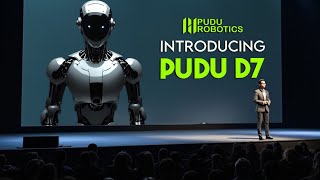
This content was created by LARRUZ. This content was uploaded by LARRUZ. This is a YouTube video titled "New AI Robot Gets Smarter with Every Action It Takes" created on September 21, 2024. It discusses the Pudu D7, a semi-humanoid service robot designed for efficiency and adaptability in industries like retail, hospitality, and healthcare. The video highlights the robot's advanced AI, adaptability, and practical applications in real-world environments.
Chapters
Powered by advanced AI and learning from every move, this machine is built to handle everything from heavy lifting to intricate tasks. Its ability to adapt in real time is reshaping how industries operate, making work smoother and smarter. Alright, let's talk about the real power behind the Pudu D7, a service robot that's been designed with purpose and practicality in mind. It's a semi humanoid robot, which means it it's not built to look fully human, but it borrows some useful features from humanoid designs. This robot is all about efficiency, adaptability and intelligence, Something that's going to be increasingly common as automation becomes more embedded in industries like retail, hospitality and healthcare. The Pudu D7 stands at 1.65 meters or 5 foot 4 tall and weighs about 45 kilograms. The key to its design is in its upper body, which resembles a human torso and arms, and a wheeled base for movement. It's important to mention that these wheels aren't just for show. They allow the robot to move in any direction with high precision. That omnidirectional base ensures the D7 can navigate even in complex environments where space is tight, like busy kitchens or hospital corridors. The speed tops out at 2 meters per second, or roughly 7.2 kilometers per hour. This allows it to keep pace with the flow of human activity in places like restaurants or public areas without being too slow or or too disruptive. One of the most notable features of the Pudu D7 is its arms. Each arm is equipped with 30 degrees of freedom, providing a lot of flexibility in terms of movement that's crucial for handling a variety of tasks. The arms themselves are about 65 cm long, which might not sound like much, but this is just enough to get the job done in most service settings. What's even more interesting is that these arms aren't static. Depending on the task at hand, they can be outfitted with different attachments, including human like hands. In its most advanced configuration, the Robot can have 20 degrees of freedom in its humanoid hands, which brings a great deal of dexterity to tasks like picking up items or interacting with objects in a way that most simple robots cannot. What sets the semi humanoid robot apart from standard service robots is the level of intelligence packed inside. Pudu Robotics has embedded a multi layered intelligence system into the D7. It combines data driven intelligence with advanced AI models which allows it to handle complex scenarios. Let's take a moment to consider what this really means. Instead of just following pre programmed instructions, the D7 learns and improves over time each interaction it has, whether it's serving A meal in a restaurant or transporting goods in a hospital is logged and used to refine its decision making process. The robot not only understands its environment, but adapts to it, becoming smarter as it goes along. Pudu Robotics developed this system with a clear focus on practical use in real world environments. Take a retail space, for example. Specialized robots might be great at stocking shelves or greeting customers, but they can't adapt to unexpected situations very well. The Pudu D7, however, is designed to fill that gap. It bridges the space between those systems, simple task specific robots, and full humanoid robots, which are still incredibly expensive and tricky to implement. In that sense, it hits the sweet spot, offering a good amount of adaptability without the high costs associated with creating a fully humanoid machine. The arms of the D7 can lift 10kg each, meaning it's built to handle some significant weight without compromising on precision. With a precision of up to 0.1 millimeters, it can perform tasks that require accuracy, such as picking up fragile items or manipulating small objects. That kind of precision is crucial for environments where errors can be costly or dangerous, such as in healthcare or industrial settings. This robot isn't just built for basic service jobs. It's equipped to handle complex tasks like operating elevators or sorting through goods. Its design is aimed at industries where human robot interaction is essential, which is why it's being deployed in settings like hospitals and restaurants, where the ability to communicate with people and execute tasks reliably is paramount. And because it runs on a battery that exceeds 1 kilowatt hour, it's able to operate for more than eight hours straight. This extended battery life is essential for environments like hospitals, where a robot may need to be running around the clock without frequent downtime for charging. Another technical edge the D7 has is its high level and low level control planning. This is where the intelligent system really shines. High level planning takes care of strategic tasks, like figuring out the best way to approach a customer or transport an item. Low level planning, on the other hand, handles the real time actions, like adjusting its grip on an object or ensuring it avoids obstacles as it moves through a crowded space. This hierarchical system allows the robot to act on both broad strategic tasks and detailed real time commands. That's what makes it particularly powerful in environments where things can change quickly and the robot needs to adapt on the fly. The D7's mobility is another key selling point. Its wheels aren't just for smooth linear movement. They allow the Robot to move 360 degrees in any direction. This means the D7 can make quick adjustments without having to physically turn its body, making it incredibly nimble in confined spaces. It's also built to handle slopes up to 10 degrees, which adds to its versatility. Whether it's moving through a flat kitchen floor or navigating a ramp, this robot maintains stability and balance. Pudu Robotics has been deploying service robots for a while now. With over 80,000 units already shipped out to industries like hospitality, retail and healthcare. Their robots are known for performing specialized tasks like food delivery or cleaning. But the Pudu D7 represents a leap into more adaptable human like interactions. This marks a significant shift in how we think about service robots. The introduction of semi humanoid robots like the D7 allows companies to reduce operational costs while enhancing customer experiences by creating a robot that can handle more than just one type of task. For Pudu, the D7 is part of a broader vision. They've been working towards an ecosystem where specialized robots, semi humanoids and fully humanoid robots coexist, each performing specific functions to streamline operations. The idea is to create an environment where robots are doing the repetitive or physically demanding work, allowing human employees to focus on more strategic tasks. The D7, with its ability to learn and adapt, fits perfectly into this vision. It's built to be more than just a tool. It's meant to be an active participant in the workforce. It's worth noting that Pudu Robotics has invested heavily in research and development. They have nearly 1,000 authorized patents to their name, which shows just how much they've been innovating behind the scenes. The D7 isn't just the product of random experimentation. It's a carefully crafted solution based on years of expertise in robotics. This focus on innovation is what has made Pudu one of the leading names in the service robotics industry. And the D7 is a clear representation of how far they've come. As we look ahead, PUDU is planning to fully commercialize the D7 in 2025. By that time, we're likely to see these robots in even more industries performing a broader range of tasks. From lifting items in warehouses to assisting patients in hospitals. The potential applications are vast. It's not just about replacing human labor though. It's about making those tasks more efficient and reliable. When, with the added benefit of reducing human error. There's a clear direction that Pudu Robotics is heading with this robot. Their focus isn't just on developing impressive machines, but on creating robots that genuinely improve the way businesses operate. The Pudu D7's ability to adapt, learn and handle complex interactions with people makes it a key player in the future of service robotics. In the next couple of years, it's likely we'll see even more advancements from PUDU Robotics and and the D7 might just be the beginning of a new era where semi humanoid robots become commonplace in our day to day environments. With its mix of technical sophistication, real world practicality and long term vision, the Pudu D7 is certainly a robot worth paying attention to. All right, if you're interested in more deep dives into AI, robotics and the future of tech, make sure to like subscribe and leave a comment. Thanks for tuning in and I'll catch you in the next one.










