New AI Robot "ISAAC" - Personal AI Assistant Robot That Learns and Gets Smarter Over Time
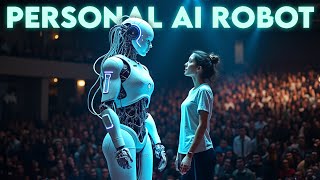
Isaac is a home robot that learns locally, does laundry and pet care, and costs $59,000 or $1,385 monthly. Reservations open now with a $1,000 deposit; first 30 units ship fall 2025. The video also covers Hisense's health-check robot Harley, Neura Robotics' humanoid 4ne1, and Samsung's Ballie projector arriving this year.
Questions this video answers
$1,000 refundable deposit.
$59,000 upfront.
48 months at $1,385 per month plus interest.
Around fall 2025 (first 30 units).
September 7 (at IFA).
Chapters
The next few years are about to redefine how we live as AI powered robots are poised to take over everyday tasks in our homes and beyond. So in this video, we're covering the latest AI and robotics news from the past few days, featuring Isaac, Tesla's Robotaxi and the newest robots from lg, Samsung, Hisense and Neura Robotics. We'll start with Isaac and see how these innovations are set to transform the future of automation. Alright, so Isaac is built to handle all those repetitive, mundane tasks. It tidies up, folds laundry, takes care of your pets, waters your plants and even fetches your stuff. Whether it's your keys, phone or even a drink. It works through voice commands, text instructions or automations you set in the app. Over time, it learns where things are supposed to go, so it actually gets more efficient the longer it's in your home. And when it's not in use, it just tucks itself away in its charging enclosure with the camera and mic safely, safely turned off. Now, this isn't something that's just for show. It's a real functioning robot that you can have in your home by fall 2025. The first 30 units are being shipped out around that time. And to get in on that, it'll cost $1,000 to reserve your spot that's fully refundable. And when the time comes, you can decide whether to go for it. The full price, $59,000 upfront. Or if you prefer, there's a payment plan. 48 months of $1,385 plus interest. It's not just about cleaning though. Isaac has a bunch of additional features that make it incredibly useful. It'll take photos on demand, so if you need a quick snapshot or want to capture a moment, you won't even need to grab your phone. And there's a lot of thought put into privacy. When Isaac isn't running, the camera folds down and everything it learns stays local to the device, so you don't have to worry about data being stored somewhere else. What's really promising about Isaac is that it's not a one time deal. This robot will get regular updates that will make it even more capable over time. If it hits a task it can't do right away, there's a service called Remote Op where specialists can take over and get the job done for you. This ensures you're not stuck waiting for future updates. To make Isaac more helpful, each Isaac comes with the robot itself, a charging enclosure, and access to the app for managing tasks. It's being assembled in California and while the first deliveries are US only, they're planning to expand production as quickly as possible. If you're not in the first batch, reserving one now still helps speed things up for future deliveries. And for anyone who's working in robotics, machine learning or product design, the team behind Isaac is hiring. So this could be your chance to get involved in something pretty pretty groundbreaking. That's the rundown on Isaac, a real leap forward in home automation. No more clutter, no more endless tasks. It's like having a reliable helper that's always ready to go. Keep an eye on this one. And if you're interested, securing your spot early might be worth it. Alright now we've also got some seriously exciting news coming out of the IFA in Berlin, the biggest consumer electronics show in Europe this year. A bunch of big players like LG, Samsung, Hisensey and Neura Robotics just revealed their latest AI home robots. And trust me, 2025 is shaping up to be a huge year for home automation. So let's kick things off with Hisense. They showcased their new robot, Harley on September 7th and honestly, it's awesome. Harley's about knee high and greeted visitors at the event with this friendly smile. One of the coolest things they showed off was Harley's ability to do a quick health check. A reporter touched Harley's face And in about 10 seconds it analyzed heart rate, blood pressure, oxygen levels. Pretty standard stuff, but it also gave a readout of stress levels. Turns out the reporter was a bit stressed, so Harley sent the data to a smart fridge which recommended some stress relieving meals like salmon steak and oil pasta. Yeah, this thing isn't just analyzing your health, it's also working with other smart devices in your home to make life easier. After picking the salmon, the connected oven even preset itself to cook the dish. Pretty wild, right? And the best part is that Harley's set to launch within the next 12 months. Now, Hisense wasn't the only company flexing their robot game at ifa. Neura Robotics, which is pretty well known for its humanoid robots, also made a big announcement. David Rager, the CEO and founder, said they've got home use robots coming in 2025. What they had on display at IFA were second gen prototypes. But the real deal is coming next year. These third gen models are expected to be fully market ready, which is super exciting. Neura's also been making headlines because they secured a huge investment, 21.7 billion won from a US private equity firm just last year. Their humanoid robot called 4ne1 is built to help around the house. It's 180cm tall, weighs around 80kg and can carry up to 15kg of stuff. Plus it has sensors in all its joints, which means it can adjust its strength and balance for tasks like ironing. It's designed to really assist with everyday chores. Moving on to the South Korean giants, both Samsung and LG brought their A game to ifa. Samsung's been teasing us with Ballie for a while now and it's finally set to hit the market by the end of this year. Ballie is this cute little yellow ball shaped robot on wheels. It's compact, but it's powerful. Think of it as a personal assistant that can control your smart home devices and even project images. Samsung did this demo at IFA where Bali was asked to show landmarks in Berlin. It projected images of the Brandenburg Gate, the Berlin Wall Memorial and Museum island right onto the floor like a mini projector. And when asked for more info, Bally rolled over to a blank wall and projected a bigger screen with even more details. So not only is it super helpful, but it's also pretty interactive. And then there's LG's Q9 which is set to release next year. LG's really going for the emotional connection with this one. The Q9 is basically a mobile AI hub that can show emotions through its screen. It winks and smiles, using expressions on its screen to communicate in a feels natural and engaging, but don't let that fool you. This thing's packed with tech. It's on wheels, has autonomous driving capabilities and can adjust your home's lighting and temperature based on your routine. It even features generative AI, which is a fancy way of saying it can create stuff from scratch, like telling stories. During one demo, someone drew a picture of a cat, the moon and some clouds, and Q9 instantly came up with a whole story based on those elements. It's not just a gadget, it's it's an AI that's actively engaging with your home environment. With all these major players making moves, it's pretty clear that AI home robots are going to be huge in 2025. It's not just about convenience anymore, it's about transforming the way we interact with our homes and making daily life smoother, smarter and more personalized. We're not talking distant future stuff. We're looking at next year for some of these launches. So if you've been dreaming about a robot filled home, the next couple of years are going to be really exciting. Alright? Now, Tesla has recently revealed exciting details about its upcoming Robotaxi, a fully autonomous vehicle set to be unveiled at an event in October 2024. One of the key innovations tied to the Robotaxi is its wireless charging technology, which was filed in a patent earlier this month. This system will allow the Robotaxi to charge autonomously via pads installed on the ground, eliminating the need for manual plug ins. The vehicle will simply park over a pad and start charging, which is crucial for a fully autonomous fleet that needs to operate 24,7 without human intervention. This move is in line with Tesla's commitment to making the Robotaxi entirely independent, without the need for steering wheels or pedals. In addition to the wireless charging system, Tesla's patented sanitization system is another significant development for the Robotaxi. This automated system will ensure the vehicle is kept clean between passengers, addressing the hygiene concerns of shared autonomous vehicles. Combined, these innovations underscore Tesla's push towards revolutionizing both transportation and autonomous vehicle technology. With the Robotaxi expected to play a massive role in Tesla's growth, the technology behind it is crazy critical to its success, and these developments signal that Tesla is aiming for a completely self sufficient, safe and practical fleet of autonomous vehicles. Alright, that's all for today, but definitely stay tuned for more updates as we follow these robots from prototype to our living rooms. Make sure to subscribe for more AI and tech news and I'll catch you in the next one.










