New Live AI SEARCH ENGINE That Could Finally Take Down Google
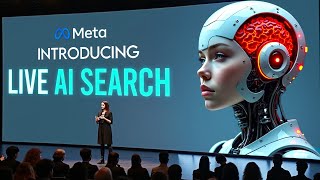
Meta is building its own AI search engine to stop paying Google for search results. The company spent months crawling the web and signed a multi-year deal with Reuters for news. The engine will power Meta AI across Instagram, WhatsApp, and Threads.
Questions this video answers
October 29, 2024.
About 8 months.
A multi-year partnership with Reuters.
Instagram and WhatsApp (also discussed: Threads).
A two-year process.
Chapters
Meta is taking a strategic leap in AI by developing its own search engine with the goal of moving away from relying on Google and Bing for real time information. This effort isn't just about wanting control. It's about redefining how information flows within Meta's ecosystem, like on Facebook, Instagram and WhatsApp. Meta's current setup leans on two major players for search Google with its AI model Gemini and Microsoft's Bingo. Google's been pushing to make its search more interactive, delivering conversational results through Gemini. Meanwhile, Microsoft powers ChatGPT's web browsing with Bing, allowing it to pull in live information. Both of these giants are Meta's competitors, which complicates relying on them for search. The plan is to integrate Meta's AI search directly with its chatbot meta AI already embedded in popular platforms like Instagram and WhatsApp. This new search engine will have real time responses, giving Meta the ability to handle queries about current events, financial market and sports. This move not only ensures Meta's independence, but also strengthens their AI's knowledge base. Months of groundwork have gone into this with Meta's web crawlers actively gathering data from around the Internet. Meta's been collecting everything from general information to location based data, the kind that could even compete with Google maps. For about 8 months this data has been quietly building the foundation of Meta's new AI search engine. And recently Meta took another big step by forming a multi year partnership with Reuters. And this deal means Meta's AI can access riders content, ensuring it delivers real time accurate answers about current events, especially for US based users across its platforms. This shift is notable especially since Meta previously reduced its focus on news due to controversies, going so far as to remove the news tab. Now, through AI, they're doubling down on providing reliable up to date news. In the bigger picture, Meta's move shows a clear strategy for building its own search framework, potentially developing a system that can stand on par with Google or Bing. Creating a web crawler that can rival these giants is no small task. It involves huge infrastructure and advanced machine learning models. But the payoff is clear control over its own AI powered answers and possibly even exclusive information Meta might not have if it continued relying on outside partnerships. There's an added dimension here too. Meta's AI will evolve as it gathers data from around the web, gaining insights directly through its own crawlers. This provides an advantage because the AI can deliver answers not only tailored to Meta's platforms, but also shaped by data Meta itself owns and in practical terms, it safeguards Meta If Google or Microsoft competitors on the AI front ever decide to end their partnerships, it's worth noting that Meta isn't alone in this AI search race. OpenAI is rolling out its own search GPT while companies like Perplexity are launching similar AI driven search engines. But they're facing legal challenges. Publishers like News Corp and the New York Times are suing over copyright issues, arguing these AI tools pull data without fair compensation. Meta's setup, especially with its Reuters deal, avoids some of this conflict by ensuring direct access to high quality licensed content. Meta's focus on in house data gathering and reducing third party reliance and may set them apart in this crowded space. The direction is clear. A robust search tool that powers Meta's real time AI responses across apps, and possibly a broader tool for users that leverages their massive data set. There's also a chance this could enhance Meta's other platforms such as Threads, where real time insights could bring users up to the minute information on evolving news stories. Alright. With Meta ramping up efforts to control its own data flow, it highlights how important it is to keep your personal info secure in today's digital world. And on that note, it's a good time to address the ever growing online threats that go hand in hand with advancements in AI. See, every time you connect to the Internet, whether you're streaming, shopping or just browsing, your personal info is at risk. Cybercriminals are constantly looking for ways to steal your data through phishing scams, data breaches and even man in the middle attacks where they intercept your private communications. But there's an easy way to protect yourself. NordVPN. NordVPN uses military grade encryption to lock down your data, keeping it safe from hackers, snoopers and malicious websites. They've got this amazing feature called Threat Protection Pro that block ads and trackers. But even more importantly, it actively scans your downloads for malware and blocks harmful websites before you even click on them. You can also monitor the dark web for leaks of your personal info with their dark web monitor. And get this, NordVPN can protect up to 10 devices at the same time. Which means your laptop, phone, tablet and more can all stay secure wherever you go. Now here's the best part. Right now NordVPN is running an exclusive offer just for AI Revolution viewers get exclusive NordVPN deal plus 4 months extra on this link. Nordvpn.com AI Revolution it's risk free with Nord's 30 day money back guarantee. Seriously, don't wait until something happens. Protect yourself today and get NORDVPN through the link in the description now, as Meta works to control its own search engine, there's a bigger conversation happening around transparency in AI. The Open Source Initiative, or osi, just set new standards on what it really means to be open in AI, putting pressure on tech giants, including Meta, to rethink how open their models truly are. So the OSI just put out a big update that's causing waves in the tech world. They've released a new official definition for what it means to have open artificial intelligence, and it's directly challenging some of the biggest players in the field. Meta, for instance, has promoted its AI model, Llama, as open Source. But under OSI's new standards, llama doesn't quite make the cut. For years, OSI has set the standard on what open source should look like. Their definitions have shaped the industry, guiding developers to work openly, freely sharing their work to encourage collaboration. Now, with AI coming into play, OSI is expanding its standards. They're saying that to be truly open, an AI model has to reveal the data used for training, allowing others to understand and potentially replicate it. This also means making the entire code base accessible so users know exactly how the AI was built and operates. On top of that, OSI Incentive insists that the specific settings and weights which fine tune the AI's responses need to be available. These details give the AI its unique performance characteristics, and full access would mean anyone could recreate, modify or build upon it with the same quality. For Meta's llama, this poses a problem. While Llama is available for anyone to download, it doesn't allow unlimited commercial use, especially for applications with massive audiences, and it doesn't disclose the training data used. OSI argues that for something to be open source, it has to be completely open, without restrictions on use or sharing. Meta's stance is that there's no single universally agreed definition of open source AI. Pointing out the challenges in applying traditional open source rules to today's complex AI models, Faith Eichen, Meta's spokesperson, has noted that Meta does agree with OSI on many points. But this new definition goes too far in a way that doesn't account for the nuances of AI development today. Meta's position is that while they're committed to making AI more open and accessible, they're also mindful of the risks involved in exposing certain details like training data. In a sense, this clash echoes the open source battles of the 1990s. OSI's executive director, Stefano Maffuli, even compared Meta's resistance to Microsoft's initial stance against open source software decades ago. Back then, Microsoft argued that open source software was a threat to their business model, a similar stance to what Maffoli now sees with Meta. When he met with Meta's representatives, they talked about the resources poured into Llama's development and questioned if anyone else could replicate that kind of effort. Mafuli views it as a familiar strategy, using costs and technical complexity as reasons to keep their innovations tightly guarded. OSI's new definition didn't happen overnight. It was a two year process involving global experts across various fields, academics specializing in machine learning, philosophers, open source advocates, and even creatives from the Creative Commons world. They aimed to create a robust framework that could withstand challenges from major corporations while staying true to the core values of openness and accessibility. Other leaders in the open source world are on board with OSI's stance. Clement Delang, CEO of Hugging Face, has called this new definition a big step forward, especially in addressing the role of training data, which is often kept hidden due to its value as intellectual property. DeLonge believes this transparency is crucial and and he sees OSI's standards as essential for shaping a more open, ethical AI landscape. Meta's reasons for holding back its training data go beyond just business interests. They cite safety concerns as well. However, critics see another angle, arguing that keeping training data private allows Meta to minimize its legal risks and preserve a competitive edge. Many AI models, Metas included, are likely trained on copyrighted material, a fact that has sparked numerous lawsuits. The New York Times reported in April that Meta has internally acknowledged the difficulty of excluding copyrighted content from its training data simply because there's no surefire way to filter it out. Legal cases against Meta, OpenAI and others continue to emerge, but it's tough for plaintiffs to prove copyright violations without access to exact data. A rare exception here is stable diffusion, which openly reveals its training sources, making it easier for copyright holders to understand where their work has been used. Simon Willison, a researcher and creator of the open source tool dataset, sees OSI's new definition as a way to call out what he refers to as open washing, where companies claim their AI is open source without really meeting the standards. Now that OSI has laid down these ground rules, it could push back against tech companies that, in Wilson's view, are using the term open source as a marketing tool rather than a commitment to genuine transparency. With OSI's updated standards, the tech industry faces a align with these principles or find new ways to justify the secrecy around AI's inner workings. The Linux foundation has also joined this debate recently, announcing its own efforts to define open source AI, showing that the conversation is expanding. It's a critical moment as the industry decides whether traditional open source values openness, freedom to modify and shared development can survive in the rapidly evolving AI landscape. So what do you guys think about all this? Let me know in the comments. And as always, if you enjoyed this breakdown, don't forget to like and subscribe for more on the latest in AI and tech. Thanks for watching and I'll see you in the next one.










