NVIDIA GTC: When Simulation Becomes Reality! 🤯
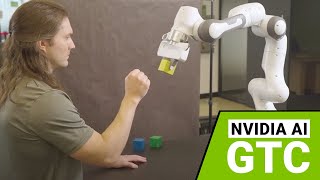
Dr. Károly Zsolnai-Fehér breaks down Nvidia's GTC conference, where AI research is moving from papers into real products. ForecastNet runs on a single GPU. Virtual worlds now have millimeter accuracy. Self-driving cars, digital twins, and synthetic assistants are shipping or launching soon.
Chapters
Dear fellow scholars, this is 2 Minute Papers with Dr. Today we are going to see that the research papers that you see here in these videos are real. So real that a ton of them are already seeing use in Nvidia's AI projects, some of which are so advanced they seem to be straight out of a science fiction movie. And even more of them are coming. We will talk about Nvidia's GTC event and as always, we will try to have a scholarly angle on it. For instance, in our Tesla AI day recap video, we marveled at how Transformer neural networks, a paper from 2017 saw use just a couple years later in real self driving cars deployed all around the world. That kind of tech transfer is extraordinary. So around here we talk about a ton of amazing research papers and under almost every video I see some of you asking, ok, this all looks great, but when do we get to use it? That is a completely understandable question. And finally, you'll get your answers today. And it gets better. We will also learn three lessons. Lesson one is that AI is everywhere today and it is improving incredibly fast. For instance, it can now train these virtual warriors from scratch. Or as many of us have these computers with weird camera placements, it can recreate our image such that it appears that we are holding eye contact. Yes, that's right. Parts of this image are synthetic. Parts are made on the fly by an AI and it is already almost impossible to notice. And this is ForecastNet. This is a physics model that can predict outlier weather events. And it runs not in a data center anymore. No, no. It runs on just one Nvidia graphics card. That is fantastic. But lesson two, AI is opening up completely new frontiers that we never even thought of. And now hold on to your papers and check this out. They can now also create a virtual world where they can accurately simulate infrastructure projects down to the accuracy of a millimeter when talking about digital copies of real things. This is a virtual assistant which understands English, the questions we ask it, and let's be honest, today all that is expected. However, what is not expected is that it can synthesize and answer in a real person's voice. This person is Jensen Huang, the CEO of Nvidia. And it also animates its mouth and gestures accordingly. Synthetic biology is about designing biological systems at multiple levels, from individual molecules up to and all this in real time. Look at the face of this proud man. This is priceless. And we talked briefly about Tesla, but do you know that Nvidia is also making progress on self driving cars? This is how it sees the world. Marvelous. But the self driving part is nothing. Watch carefully, because here it comes. Oh yes. Lesson number three. Everything is connected. See the assistant there? It sees and identifies the passenger, understands natural language. And it also understands which building is which and what shows are played in them today. This is self driving cars combined with the virtual assistant. And look. Oh my. This is also combined with virtual copies of real worlds too. By the end of 2024, they expect to have a virtual video game version of all major North American highways, plus Europe and Asia. What in the world? Wow. So I hear you asking, what are all these virtual video games good for? Why do we need a video game world? Why not just use the real one? It's right here. Well, one of the answers is domain randomization. Here we can reenact real situations for self driving cars and even create arbitrarily complex new situations. And these AIs will be able to learn from them in a safe environment. You see? Once again, everything is connected. And there is still so much more to talk about. My goodness. They also have this cell visualization system that can show us real cells splitting right in front of our eyes in real time. Not so long ago, such a simulation would have taken days. And now it runs in real time. They can also create a digital version of real fulfillment centers. This virtual world can be simulated and optimized before the real one is changed. Does this mean that. Yes, that is exactly right. Now companies can find the optimal layout for their plans before making any physical investments. Kind of like playing the game Factorio, but in real life. How cool is that? Their vision system can also look at conveyor belts and adjust their speed based on congestion. And once again, you see that everything is connected. The self driving engine can also be put not only into a car, but into a little robot. And thus it can now navigate those warehouses. So whenever you see a new research paper and it does not immediately show how it could be used, please do not forget, everything is connected. They also have their Isaac Gym system in which these robots can train safely before they are deployed into the real world. And these simulations can get insanely detailed and accurate. For instance, here the physics and connections of 5,400 parts are simulated. And as a result, this virtual robot works exactly as the real one. This application would have been unfathomable just a few years ago. And yes, this has huge ramifications. For instance, in the future, whenever we have this robot called Animal pass a test in a simulation, it is very likely that it will pass in the real world too. A simulation that is nearly the same as reality. Just think about that. What a time to be alive. And once again, applications like this require light transport, simulations, cloud streaming, and collaboration with an AI assistant. And now you can even stream these from the cloud if you don't have a beefy graphics card at home. And the results are absolutely amazing. Here you see what this place will look like at noon. Now how about some trees? Nice. And maybe more variation. And we don't even need to be experts in 3D modeling. We just say what we wish to see to the virtual assistant. And there we go. We can also ask what does this look like at night? And it looks spectacular. All that is truly amazing. My eyes were popping out like these machines when seeing these results for the first time. And with all these remarkable results we really just scratched the surface. There is so much going on it is almost impossible to keep track of all these amazing projects. Here are some more for your enjoyment. So the papers that you see here in this series are real? As real as it gets. We can get from a research paper to a real product in just a couple years. And everything that you saw here today is already in production or will be in production in the near future. By the way, if everything goes well, I will hold my own talk in this year's GTC as well and publish a video of it on this channel. Make sure to subscribe and hit the bell icon to not miss it. So what do you think? Does this get your mind going? What would you use this for? Let me know in the comments below. If you're looking for inexpensive cloud GPUs for AI, Lambda now offers the best prices in the world for GPU Cloud computer. No commitments or negotiation required. Just sign up and launch an instance and hold on to your papers. Because with Lambda GPU Cloud you can get on demand a 100 instances for $1.10 per hour versus $4.10 per hour with AWS. That's 73% savings. Did I mention they also offer persistent storage? So join researchers at organizations like Apple, MIT and Caltech in using Lambda Cloud instances, workstations or servers. Make sure to go to lambdalabs.compapers to sign up for one of their amazing GPU instances today. Thanks for watching and for your generous support and I'll see you next time.










