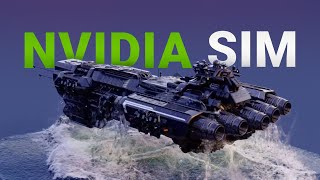
Nvidia's neural VDB compresses volumetric physics simulations by roughly 95%, shrinking 15-gigabyte datasets to a fraction of their size while keeping visual quality intact. The technique, developed by Doyub Kim's team, runs on a single GPU and works for film effects, weather forecasting, and scientific visualization.
Questions this video answers
September 21, 2022.
"15 gigabytes for a simulation is not uncommon;" some examples took "well over 100 gigabytes."
About 95% less storage (approximately 20×); reported sometimes 50× and up to 60× smaller.
Doyub Kim.
Lambda: 100 instances for $1.10 per hour versus $4.10 per hour with AWS — cited as 73% savings.
Chapters
Dear fellow scholars, this is 2 Minute Papers with Dr. Today we are going to talk about an amazing new technique to make these beautiful but very expensive computer simulations cheaper. How much cheaper? Well, I will tell you in a moment. You see around here we discuss research papers like this and this. We talk a great deal about how difficult and computationally expensive it is to simulate all this physics. But that's not the only thing that needs to be done here. All this data also has to be stored too. That is a ton of geometry information. How much exactly? Well, 15 gigabytes for a simulation is not uncommon. And my fluid simulation that you see here took well over 100 gigabytes of space to store some of the more extreme examples can fill several hard drives from for only a minute of physics simulation data. That is an insane amount of data. So we need something to help compressing down all this data. And the weapon of choice for working with this kind of volumetric data is often a tool called OpenVDB. It has this hierarchical structure within. And scientists at Nvidia had a crazy idea. They said how about exchanging this with all of these learning based methods that you are hearing about everywhere. Well ok, but why just throw a neural network at the problem? Is this really going to help? Well maybe. You see, neural networks have exceptional compression capabilities. For instance, we have seen with their earlier paper that such an AI can, can help us transmit video data of us by get this only taking the first image from the video and just a tiny bit of extra data and they throw away the entire video afterwards and it still works. So can these techniques do some more magic in the area of physics simulations? Those are much more complex, but who knows. Lets see. And now hold on to your papers because it looks like this. Now that is all well and good, but here's the kicker. It takes about 95% less storage than the previous method. Yes, that is a 20x compression while the two pieces of footage still look the same. Wow, that is absolutely incredible. And the previous OpenVDB solution is not just for some hobby projects. It is used in many of the blockbuster feature length movies you all know and love. These movies won many many academy awards. And we are not done yet. Not even close. It gets even better if you think 20x is the best it can do. Now look, we also have 50x here and sometimes it gets up to even 60 times smaller. My goodness. And this new neural VDB technique from Nvidia can be used for not only these amazing movies, but for everything else OpenVDB was useful for. Oh yes. That means that we can go beyond these movies and use it for scientific and even industrial visualizations. They also have the machinery to read and process all all this data with a graphics card. Therefore, it not only decreases the memory footprint of these techniques, but it even improves how quickly they run. My mind is officially blown. So much progress in so little time. And this is my favorite kind of research. And that is when we look into the intersection of computer graphics and AI, that is where we find some of the most beautiful works. And don't forget these applications are plentiful. This could also be used with ForecastNet, which is a physics model that can predict outlier weather events. The coolest part about this work is that it runs not in a data center anymore, but today it runs on just one Nvidia graphics card. And with neural VDB it will require even less memory to do so. And it will help with all of these absolute miracles of science that you see here too. So all of these could run with an up to 60 times smaller memory footprint. That is incredible. What a time to be alive. Huge congratulations to Doyub Kim, the first author of the paper, and his team for this amazing achievement. And once again you see the power of AI, the power of the papers and tech transfer at the same time. And since Nvidia has an excellent record in putting these tools into the hands of all of us. For instance, they did it with the previous incarnation of this technique, nanovdb. I am convinced that we are all going to be able to enjoy this amazing paper soon. How cool is that? So does this get your mind going? What would you use this for? Let me know in the comments below. If you're looking for inexpensive cloud GPUs for AI, Lambda now offers the best prices in the world for GPU Cloud compute. No commitments or negotiation required. Just sign up and launch an instance. And hold on to your papers. Because with Lambda GPU Cloud you can get on demand a 100 instances for $1.10 per hour versus $4.10 per hour with AWS. That's 73% savings. Did I mention they also offer persistent storage? So join researchers at organizations like Apple, MIT and Caltech in using Lambda Cloud instances, workstations or servers. Make sure to go to lambdalabs.compapers to sign up for one of their amazing GPU instances today. Thanks for watching and for your generous support and I'll see you next time.