NVIDIAS NEW Insane PICASSO SHOCKS The Entire Industry! (NEW SOFTWARE ANNOUNCED!)
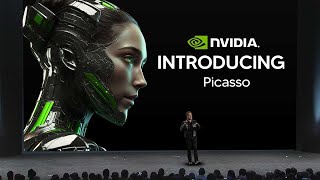
YouTube commentary analyzing Nvidia’s Picasso announcement from the 2023 keynote. The speaker explains Picasso as a DGX Cloud–backed generative AI platform offering text-to-image, text-to-video, and text-to-3D capabilities, discusses demos and photorealism, details partnerships with Getty Images, Shutterstock, and Adobe, and predicts industry impact—especially for creative workflows and 3D asset production.
Chapters
So Nvidia just announced something that is completely game changing. Introducing Picasso at their new event at the 2023 keynote, they introduced a whole wide range of new AI applications that's going to be powered by Nvidia's large GPU service. And this is truly going to change the game for AI because there are a large amount of applications. So introducing Picaso, a cloud service for building and deploying generative AI powered image and 3D applications. You can all see that this is definitely going to change the game because this is what the next set of companies are going to be built on. Now you can see right here it says what is Nvidia Picasso? And essentially it's something that other companies can build on and they can use to train different models and essentially, you know, make their companies off of because these companies can't create these image generations themselves. Now there are three main things that Nvidia is working on with Picasso that it did just release. And you can all see that one of them is one that we are very familiar with, but the other two aren't quite too familiar. So of course you can see on the left hand side we've got text to image, which is something that many different, you know, many different image generation platforms have, such as Midjourney, Dall, E2, stable diffusion and even Microsoft recently with their new announcements. But now we have something new. Text to video is fairly new because it is something that is very hard to develop. But Nvidia is working on this and it says temporal layers and novel video. Denoiser generates high fidelity videos with temporal consistency. Now this is truly interesting because they aren't the only company that have been working on this. And if we've seen anything recently by a company called Runway, you'll know that they've actually been working on this for quite some time and, and their advancements are very, very decent. And they look pretty, pretty good. Which brings me to the question, how crazy will text to video look in the future? Are we going to get entire movies? Are we going to get basic videos? I mean it truly depends on the user's input. But right now what we are seeing in the early stages of AI shows us a very promising future, especially with text to video. And I know that yes, what you're seeing behind you is footage from Runway, but, but this is just to show you what is capable with text to video and the current stages that it is at. Because of course Nvidia haven't really released too much footage on their text to video AI software. But this isn't about Runway because of course they're doing incredible things. But this is about Nvidia. And what is crazy about Nvidia is that with the entire event, this small text to video, although it's going to literally revolutionize the creative industry. And it only seemed to be a very small part of their entire keynote event, which honestly I'll leave a link to a short summary of the presentation, but I just want to dive in to the very specifics that are Nvidia Picasso, which compromises of the three key points that I talked about earlier. Text to image, text to video, and text to 3D. Now the last one, text to 3D is definitely very, very interesting. There are a few models and a few research papers that are online that you can actually use. And I was meant to make a tutorial. I should still be in the works of making that because it is actually possible to do this and it is actually quite accurate. But it is something that has just gone under the radar. Trust me when I say there are so many different research papers out there about AI that have just gone under the radar. And Texta 3D is something that seems to be already near perfect based on the current technology that we do have. But it's going to be interesting to see how, how Nvidia deploys it. And I do think that they're going to deploy it through Adobe because Adobe did release something very, very recently that I need to all show you. If you haven't, you can see the video on my channel tool is called Firefly. This is the video that you should click. It goes into detail on all the crazy stuff that they have. And we're going to be going into some of that later on in this video too. But if we move into the actual partnerships to see that we are going to be seeing a partnership with Nvidia and Getty Images. We and this one is going to be super interesting because Getty Images is something that already additionally provides a large image data set for mid journey, which is a very interesting image producing software. And they've achieved photorealism within just five iterations of their software. And we already know that this was a pressing issue for them because they were already targeted by these companies saying that, you know, you already trained your AI on our data and, and your software is amazing, but you didn't give us credit. So it shows us now that if the original companies are going to be training their own AIs on these different softwares, just shows us now with the actual legal data sets that they're about to use. It just shows us honestly how crazy this is about to get, because I'm pretty sure Getty Images has a wide variety of images that we maybe have not seen. And it's truly going to be very, very interesting to see how this is going to develop. Now, Getty Images is not the only partnership that Nvidia is also doing it with. They're also doing it with Shutterstock. Now, Shutterstock is going to be moving towards the 3D space and essentially a move to gain some of that ground back. Because of course, as you know, Mid journey stable diffusion, Dall E2, all these platforms have kind of taken the market share because where you needed to previously be able to buy images in order to be able to get something from the Internet, and now all you need to do is simply use an image creation software. And of course Shutterstock wants some of their market share back. So this will be very interesting to see exactly how this really does work. And I do think from the demos, it's going to be very interesting. Now with Adobe, they've already managed to secure some crazy, crazy software stuff and we're going to get into that into a moment. But for Picasso, let's take a look at what they demoed and exactly how this is going to work, because it truly is interesting to see how this integrates with Adobe, Shutterstock and Getty Images to provide us with the next level of AI stuff. So you see right here that this is the trailer. It says edify generative AI foundation models create images, videos and 3D simply from tech. So this is definitely something that you do want to pay attention to. So you can see right here we have this prompt and then we have this image. Now this is something that of course does look absolutely incredible. I mean, it looks photorealistic. I think it's, you know, it's absolutely insane that in just a year we've come from, you know, not being able to do this. And we're now at Photorealism. And of course, let me just state this caveat. Of course it's not just one year. It feels like a year because of course, many years of progress lead to that exponential growth that we're currently experiencing right now with that hockey curve growth. And let's move on. So you can all see right here that this is where the videos come into play. So the prompt that they've used is a bioluminescent jellyfish swimming in space with, with shining stars in the background, ultra detailed, trending on ArtStation. And the prompt that they have is truly, truly, really cool because it does look somewhat realistic. Now if we go back to this, I just want to, you know, keep this on for a second because this is only the first iteration of this. And you have to understand that we are in the early days of what this is. Now. If you remember technology previously when we had the first, you know, video games, the first mobile phones, they were very clunky, slow and just not that great to look at. But this is already looking and shaping up to be something very interesting because this is already looking smooth, it's already looking decent. And I wonder where we'll be in three years time. Are we going to have complete movies, complete 4K footage? It's going to be very, very interesting to see exactly where this goes because the creativity limits are going to be interesting. So also what we also want to talk about which is very interesting, is the 3D models. Now 3D modelers take so much time to create the products that they do make. Now if you don't understand what I'm talking about, let me show you. This is a video of someone speed modeling in Blender. And this shows you the traditional kind of methods that people use to create 3D models. Now of course there are different UV meshes and different textures that this person is using which are going to create a far more intricate and highly detailed model. But this just goes to show how much detail there is in this space already and why these kinds of tools are going to shake up the space. Because this person could simply, you know, create these assets with a single prompt and create the textures with a single prompt as well. Because there are software out there that is being developed that will be able to do this. And this is all sped up and this is something that does take a very long time to learn. But if we do have something where we can Simply put a 3D model of a male bust with a furrowed brown and deep set eyes wearing a ref of ivy leaves, highly detailed and we simply get that immediately. That is going to save people a lot of time. So it's very interesting because of course they also do detail exactly how this software kind of does work and essentially what it runs on. And it does run on the Nvidia DGX cloud. So Nvidia is going to be one of the most powerful companies coming up in the future. I wouldn't, you know, hesitate that they are going to be potentially a trillion dollar company in the future if the AI continues to develop at the rate that it does. So it's definitely very Interesting to see what kind of things they have because additionally on this you can all see that they have image, video and 3D. Well, they also have the ability to integrate these things into many different apps and services. So not only is this base stuff good, we're going to be seeing a vast majority of companies be able to actually use all of this stuff. Because you can see right here we've got the client app and you're going to see many different companies be able to use their own custom data sets and build on this stuff. So companies like Getty Images, which we talked about, and you can all see right here that this is already being built into the Creative Suite. So right here what this have, if you don't know what this is, this is Photoshop, this is Premiere Pro. And yeah, it's definitely truly insane to see exactly how this is going to be. Because for example, in Premiere Pro where people would download videos, you can see right here that there might just be something where you can actually have, you know, text to video, just quickly create a video and then import that into your project. And of course you can see right here in the Omniverse, which is something another thing built by Nvidia, which essentially It's a realistic 3D landscape which companies build things on in order to better predict what happens in the real physical world rather than building out, you know, certain simulations. It's going to be very, very interesting to see exactly how all of this stuff pans out. And I think that Picasso was severely underrated and not picked up by enough people. So once this is going to be deployed and once companies are going to be able to use this, we're going to see a huge wave, many different companies coming in and disrupting the space. And if I had to make a prediction, I would say that Adobe is going to win because they are just already integrated with the products that we use on a day to day basis, especially for those in a content creation. So if there was something I missed, let me know in the comment section below. And if there was something that you thought this video was missing.










