Open AI's NEW GPT Store UPDATE (10 Things To Know)
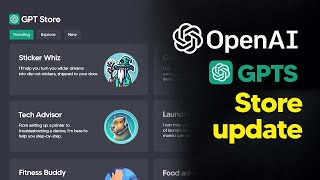
A YouTube monologue advising creators about the upcoming OpenAI GPT Store launch. The speaker reviews OpenAI’s email to builders, highlights publishing requirements (verify builder profile, comply with usage/policy and brand guidelines, publish publicly), explains naming restrictions and trademark rules, summarizes disallowed uses (illegal activity, malware, adult content, political campaigning, unauthorized legal/financial advice, gambling, scams), and gives practical advice for building successful GPTs (niche focus, custom/up-to-date data, iterative prompt refinement, examples of popular GPTs and directories, monetization potential). The video emphasizes reading the policies carefully and preparing GPTs ahead of the store launch to capture opportunity.
Chapters
So, with the GPT Store launching next week, what I wanted to do was create a really comprehensive guide on things that you should know. Because although there are some videos about this, there is actually a few key details that people did miss out. So I'm going to ensure I cover absolutely everything that a lot of people did miss. So let's get into exactly how the GPT Store is actually going to be coming. So if you haven't been paying attention recently, OpenAI actually did send out this email. So you can see here, it's. It says, dear GPT Builder, we want to let you know that we will launch the GPT Store next week. If you're interested in sharing your GPT in the store, you'll need to review our updated usage policies and GPT brand guidelines to ensure that your GPT is compliant and verify your builder profile in settings and build a profile and enable your name or a verified website and of course publish your GPT as public. And of course anyone will link selected, will not be shown in store. So essentially they've highlighted three key things that you need to do. And of course later on in the video I'll talk about some secret features that are somewhat leaked that are pretty much confirmed to be coming. So one of the things if you are going to be planning on building GPTs, that you do need to do is take a look at the usage policies, because I know right now there are probably tons of people that are building stuff that they don't know isn't actually able to be done due to the guidelines. So if we take a look at the GPT's guidelines, what we can see here is that it says GPTs in ChatGPT. So essentially this is just the entire thing. But what you essentially wanted to do is you want to make sure that you really, really read through this because you really don't want to waste your time. So essentially it just says choose a name appropriate for an Apple service. And having a GPTs named with GPT at the end is discouraged, but, but not prohibited. So essentially what they're saying here at this part, they're basically saying that you actually need to name your GPT properly. So if you're going to name your GPT, you shouldn't name it like meowalytics GPT. If it's called mealtics, it should just be called Mealtics, or if it's Mealtics Helper that is providing support for the service, then it should be called Mealtics API Helper. So it's clear that what OpenAI actually want to do here is they want to build, I guess you could say, GPTs that don't really act like GPTs, but more act like, I guess you could say apps that are sort of built on the OpenAI app store, I guess you could say, or the GPT App Store because they don't want people to, you know, have, you know, I guess you could say these GPTs called GPT for whatever reason. And I'm guessing because it's going to make people feel like they're experiencing something a bit different, which just kind of makes sense because if you're, you know, chatting with mealytics, API helper, I think on a subconscious level, you're going to think, okay, this is a kind of system that is just, you know, everything's just basically built on this one platform. And of course this is GPT Store, but everything is on this entire platform, which essentially makes people want to use it more, if that does make sense. But one thing that you do need to know as well is that you can't use another person's trademark. And essentially what this means is that you can't like create a, you know, a GPT for a big company. I'm pretty sure that you're not going to be able to do that because I'm pretty sure it just, just breaks like trademark rules and legislations or whatever, because OpenAI, they are very, very strict with that stuff. So I'm pretty sure that when, you know, you do take a look at the fine print here, you're going to want to stay on the right side of this because like I said, don't waste all the time building it and not looking at this and then thinking, oh my gosh, okay, I've wasted my time here. So pretty much you don't want to, you know, create stuff of like celebs, you don't want to. Well, essentially it says public figures, profanity and harmful topics are prohibited. So someone recently did make a GPT on some stuff that did just come out. But I would say, although that is a very effective strategy, just ensure that whatever topic it is that you do cover on your GPT, like for example, let's say there was a natural disaster and you wanted to create a GPT so that people could ask that GPT questions about it, which had all the custom information. Just make sure that that news story isn't one that is, I guess you could say, in the gray area that covers a topic that isn't really child friendly, I would say, because you can kind of waste your time in that aspect, because I did see someone's GPT get removed yesterday because it was a big news story, and then the GPT was removed from the store. So that's just a quick tip for you guys there. And of course, you can't use a big company's trademark name or logo unless you're authorized to do so, because essentially the problem right now is that if you've ever opened up the iPhone on the App Store and you've looked at the amount of apps that are impersonating OpenAI's platform. So, yeah, right here, this is basically the App Store, okay? And all I've done is a search for ChatGPT. Now, ChatGPT now is the first one, but sometimes when you search, it isn't actually the first, and it wasn't for quite some time. So essentially what chat GPT OpenAI are trying to prevent is of course, the saturation of, you know, public GPTs that are essentially based on other large companies, because they don't essentially want other companies to get discouraged from using the platform because other users have already monetized it. Now, I know that, that people are going to be actively doing this anyways. Like they might be creating, you know, Coca Cola GPT, Nike GPT based on, you know, just a bunch of, you know, companies data or whatever. And I know that some people really just don't care because any of the companies here, they really just don't care either. But I'm just saying that if you don't want to waste your time, I would just simply argue against it. But I would say that it would be useful to create something that can be used in, I guess you could say, a broad setting. And later in the video, I'll just give you guys some useful tips on reasons why you should create a custom GPT and how it can actually be useful to people, rather than just creating something that just gets, you know, removed from the store for breaking terms of service. So if you actually click the other link, they actually do talk about the disallowed usage of our models. So essentially what they do talk about here is a lot of stuff. So we're going to go through this very, very quickly because I don't want to waste too much time, because I actually want to show you guys the kind of GPTs that you should be creating on the store, because you don't want to wait until the GPT Store is public, because by the time the store is public and the GPTs that you think you should have created are already popular, it probably is going to be too. Not that it's ever too late, but you don't want to be behind on this trend because it definitely is going to be a large financial opportunity for those that are able to capitalize. So it says disallowage of our model. So illegal activity. Not going to read that hateful comment. Malware, high risk of physical harm, including weapons development. Military warfare, high risk of economical harm. And this is crazy because this includes MLMs, multi level marketing, gambling, payday lending. So this is what I'm saying, okay, because a lot of people might be thinking that okay, I'm going to help people for gambling strategies and stuff like that. But look here you can see that this is something that isn't allowed. And although you know, on many other sites, you know, even on YouTube you can upload gambling and stuff like that, creating a GPT for that is technically not allowed. So I'm guessing that going through this list and making sure that you save yourself some time is going to be something that is very, very effective. Now in addition, you can see here fraudulent scams, which is obvious. Adult content, which is obvious. Political campaigning or lobbying, generating high volumes of campaign materials. Obvious activity that violates people's privacy. Obvious. Basically anything that you can't really do on a platform like YouTube. Anyways, of course here in gaining other unauthorized practice of law, models are not fine tuned to provide legal advice. People are still going to do this anyways. I'm not sure if you should provide a gpm. I mean maybe, I mean, I guess we'll have to see because this one is kind of, I guess you could say a gray area because I know a lot of people are already using ChatGPT to get legal advice and I guess as a consultant and it's pretty interesting because GPT4 actually did pass the bar. But, but as always, of course you should not solely rely on our models as a source of legal advice because I'll be honest, using an LLM like people have done and there have been lawyers that have used this for their cases and ChatGPT has generated fake citations in defenses of their case. So it's something that will honestly come up if you do that. So yeah, never do that. Obviously not fine tuned to provide financial advice. You should not rely on our models as a source of financial advice. But I think here what they're saying is that this is how they don't want people to interact with the software. So don't use our models for this. And this I'm guessing what they're saying is just, just not entirely for GPTs, but this is more of like the broad platform. And I guess this is just like. Well, they're essentially just removing themselves from any potential lawsuits because although GPT4 can pass the bar on that, they don't want people going out and using GPT4. So I'm guessing that maybe you could provide a GPT that has law on specifics in certain areas. And I'll talk about why that could be key later on in the video. Okay. But I don't think that any GPT could be specifically created, such as like something called Lore GPT that, you know, tons of people are using for free legal device because they're probably going to take it down because they don't want people doing that anyways. So, anyways, this was a mock up that I created because of course nobody knows what the GPT Store is going to be like, but this is a mockup that I created just for the thumbnail. And I do think that it will be interesting once this GPT Tour store does come out. But I will show you some of the most popular GPTs in a moment. Now, one thing that I do think about right here is that, is this going to be an App Store moment? If you don't know what the App Store is, the App Store is essentially the iPhone store or the Android Store. Now, maybe you have an iPhone, maybe you have an Android. Either way, it doesn't matter. It's a mobile phone, okay? And the App Store is actually a place where people do make tons and tons and tons and tons of money. Now, Depending on how OpenAI deploy this platform and how they, you know, you're able to monetize it, it really is going to set up a new wave of people to make money. And as long as you are creative and able to, you know, share this and able to, I guess you could say, market this in a very effective way. You could definitely make a lot of money from this because platforms that are built on these generative AI systems are in that new era. I mean, it's an era that hasn't really been explored yet. This is definitely the first of its kind. Creating an AI model yourself is actually extremely hard. Training on your own data is extremely hard. And what OpenAI have done is they've made it essentially extremely, extremely easy to do so. So I think that this moment is definitely something that you should at least be paying attention to because it's. Even if you're someone that doesn't have technical knowledge, this is not something that does require too much technical knowledge. There's even the entire GPT builder, which I'm going to go through in a second. But this is something that you don't want to, you know, fade. Don't ignore this because, you know, I mean, years and years and years ago, I wasn't even old enough to, like, know what the App Store is or be able to develop the apps, because developing an app is, like, really expensive. But developing a GPT is fairly cheap and there are tons and millions of tutorials. I'll definitely be creating some that you can do. So I would say this is a.
Moment that you don't want to ignore.
Because I'm pretty sure some people are going to make some GPTs and then we're going to see their income statements and they're going to be making like, really, really huge amounts. Because we already know that ChatGPT has, I think it was like 100 million users. It was one of the fastest apps to get 100 million users.
And I know they have tons and.
Tons of users every single day. So if you get a GPT that is really effective in what it's doing and it's used by absolutely everyone, then that is going to be a massive financial opportunity. And not only that, it's going to be a decent stream of passive income. So I would say as well, don't fade this opportunity because the likely scenario is right now you have a piece of information that I don't have in a niche that you're interested in, and you could likely create a GPT that could serve the needs of someone in your niche. And I'm going to tell you how to do that later on in the video because I think that people are missing the mark with GPT. So they also do have an article that kind of shows you how they actually built the GPT builder, because if you didn't know, the GPT builder is actually a custom GPT itself and the instructions for that are here. So I would say go ahead and read this. I'll leave a link to this in the description because one of the OPI employees actually did leave a link to this. And it's just, I guess you could say, a detailed way to look at how they did their GPT. For example, at the end, you can see after the above steps, you're now in an iterative refinement mode. The user will prompt you for changes and you must call update behavior after any re interaction. And you must ask clarifying questions here. Of course, there are levels to this, like, I Know, some people are going to make some insane GPTs with some insane APIs and stuff like that. But let's take a look some other ideas and the directories that you can do, because the ideas are going to be really, really important. So let's take a look at some of the ideas that people have done.
And why they're effective. And then I'm going to tell you guys some of the things that I would be doing and some of the GPTs that I'm going to be creating. If you didn't know, there are a ton of different websites that are actually GPT directories. And I will leave a link to the list of GPT directories so you can find out every single directory there is and you can go through every single list and you can find every single GPT that is really popular. So you can see here that some of the most popular ones are convert anything, convert image, documents, audio and more. It handles individual batch uploads and provides a downloads link. And I would also take a look at other websites online that are pretty simple and see if you can convert them into a GPT. For example, ways to format different pieces, ways to, you know, automatically tweet stuff, all those things. I would just say have a look at those, because a lot of software and a lot of services, I guess, are entering that era now. Where previously it was done by a previous AI system, it can now be done by the LLM that is ChatGPT, and can be done by Code Interpreter and can be done by Dall E3. So understand you're dealing with a very comprehensive system that's going to put out a lot of different websites. So I would say that if you can find one and get the concept to make it even better with the LLM, that's going to be something that's really cool because, for example, the Ultimate File Converter is really cool because ChatGPT can actually convert files. Maybe you could get it to convert PDFs to text, maybe you could get it to convert your text into a certain format. Like, I'm pretty sure those are things you can do. And although they're simple, if you, if you share them and yours is the top one, it's definitely going to be popular and you're definitely going to be earning from it. So you can see here, I think the one that definitely did pop off quite a lot and actually did earn a lot of money was one that was called Grimoire. And essentially It's a coding wizard, 100x engineer. You can build a website with one sentence. A new era of prompting. I'm going to click this and this guy actually put I'm like this GPT. I don't actually do coding. I did coding like around six, seven years ago. And you can see, you can just press R for the readme here. And if I type in R, you can see here it gives you the readme of how this is actually better than ChatGPT. Now I'm guessing that this is a message that is meant to output immediately when someone presses R. But this is just to show you the kinds of things that people are building. And in the previous video I did actually show you also some kind of GPTs that people are building because people are creative and you'll be constantly surprised by what people do build. And it shows you here, here's the quick actions here, the tips for beginners. Use S for an explanation. Repeat if necessary. Getting started. Open the menu with this, yada yada yada. But I'm going to go ahead and show you guys some more GPTs. For example, here we do have logo GPT by this guy and I would argue that we're definitely going to get variations of this because there are many different styles of logos. So if I was someone, I would really, really niche down on my GPT because what a lot of people are doing is they're creating broad GPTs. And although that's fine, you know, you can create broad GPTs, I would just say create niche one. So for example, I would say, you know, rather than doing logo GPT because logos are pretty basic, I would say, for example, I'm going to do software company GPT.
So for example, so if you didn't.
Want to do software, what I would do is I would ask ChatGPT to do this style because ChatGPT is actually really good at this style. But you know, with the text and everything, I guess you could refine it so you could essentially make it even better because you could say certain colors, you could, I guess you could say have certain concepts. You could essentially make it, you know, for example, let's say I was creating an esports logo GPT or a gaming logo GPT. Some of the things that I would include in my custom GPT that would make it better than the default one is I would include any new gaming organizations that have been created. And I would say, let's say for example, someone's making their gaming logo, for example, and I've created this custom GPT, I'd make it better than the standard base model of ChatGPT by every month or every week, I'd update it on any new team that's out. And I would say, look, I know you're creating a logo called the Beehive Gamers or whatever, but a team recently launched called the Beehive Gamers, so you might want to think of a better name. And remember, ChatGPT's cutoff is April 2023. So if you continually update your GPT with relevant information, then it's instantly going to be better than the base level of ChatGPT. And remember, these GPTs are free to use, so people are not going to have any resistance to using them, especially if you do manage to get your prompt refined as well. So what I would do is that if you're doing something like within Dall E or you're doing something text related, I would say, you know, definitely look around on Fiverr because this is where you're going to be able to look at some inspiration. Because of course many of the services on Fiverr are going to be automated with this website, unfortunately. And yeah, there are many different ways. And for example, for, for writing, there's a specific style of writing called SEO and that essentially just means search engine optimization. And what I would do is I would, you know, have it for a specific website. So I wouldn have SEO enhancer, I would have SEO enhancer for WordPress landing pages. That way it's really specific. So anyone using WordPress notices that this GPT is always up to date with the newest policies, the newest terms of service and the newest ways. You know, for example, if Google updates, because search engine optimization, you have to focus on what Google does. So that's how I'd make my GPTs. And I'm pretty sure that that's what people are going to be doing as well. And like I said, for websites like chop GPTs, I'm going to leave a huge link because someone on Reddit made a huge directory of every single GPT that's out there. So I. Take a look at this, Take a look. I'm going to leave this link in the description, so don't worry about it. But go through all of these and find some of the best ones, get some inspiration, figure out how you can make them better. And then of course I would say also discuss as well in the comment section below because creativity is being able to bounce it off ideas. Of course, talk to Chat GPT as well. But yeah, let's go ahead now on some of the things that I think you should do as well. Is Basically just going over what I said. Have something that has custom information, of course, as well. What you do want to have is you do want to have some custom information. Like I said, in certain writing styles, you do want to specifically state that this is the writing style, because there are new writing styles, for example, there are niche styles that ChatGPT doesn't really know. And if you do refine it and keep refining and keep talking to it, you can eventually get the right prompt. And trust me, guys, once you get that right prompt, it is plain sailing from there. And I've definitely used that before because ChatGPT is a very, very comprehensive system and you need to really, really try with your prompts in, in the way that you talk to it and just keep testing it, because trust me, guys, I've tested Chat GPT and the more better I got prompting, and I will release a prompting guide soon, the better the system seemed to get. And of course, like I said, do an updated version of something because the last cutoff was literally last year. We're now in 2024. So there's been around, you know, I think seven to eight months gone by since then. And that means there are eight months of data that ChatGPT doesn't have access to. Of course it can access the Internet, but that is not something it does have access to. And with updated policy, updated guidelines, with certain industries that move really quickly, I would say if you create a GPT in that space and you keep adding to it every day you wake up, you just input the data in form of PDF or whatever, that's going to be an edge that you have. Now, there was this tweet by Matt Wolf, another AI content creator, and I would say that, of course, this is definitely an interesting take, and I would agree with some of this because he says that the GPT Store isn't going to be a big of deal, as some people make it out to be. 99% of the GPTs that will be created will have nothing proprietary about them, and anyone will be able to make their own clone of it. Now, like I said, this is possible, but of course, I would say what people need to understand is that the use of GPTs is definitely going to be easy. Like, you know, if someone creates a GPT that's going to make me be able to write in a specific style, I'm just going to use that. I'm not going to ask ChatGPT many times. What's annoying about ChatGPT is that you have to literally, you know, ask it hey, can you do this again? Oh, by the way this, by the way that, by the way, like, it always forgets, it always starts on a blank slate, and that's not something you want to remember. And of course, this is pretty accurate because it is like the App Store. On the App Store, people create millions and millions of apps. Loads of them get no downloads, and it's only a select handful that do get a whole lot. But this is the difference. Okay? Remember this time, okay, previously, apps were, you know, you needed 10,000, 100,000 software.
Developers, coders, UI makers.
But right now, in order to develop a GPT, you just need yourself. You just need a few hours and you can do it. So the level, there's a level playing field, which means this is something that the majority of people are going to be able to do. But at the end of the day, I do think that this is an interesting take and it is a capitalist world, which means it's a competitive world, and it will be interesting to see how it goes.
Also, another thing that I did forget.
To actually mention was the fact that.
I do think that we're now entering an era where people are probably no.
Longer going to share their prompts. So previously when we had a very interesting conversation with ChatGPT, what would essentially happen was people would share their prompts, people would copy that prompt, input it into ChatGPT, and then go away. Talking. Now with Dall E3, I think the biggest opportunity with custom GPTs, and this is something that you really need to pay attention to, is figuring out certain prompts that output certain responses that you can then go ahead and not essentially sell, but put on the store for free that people then you can then use. And then of course monetize. Because if you've ever seen something that you're thinking, oh my gosh, how on earth did they make that in Dall E3, I really want to know what's likely going to happen is someone is going to make something so cool in Dall E3, then they're just going to link their custom GPT and then tons of people are going to be using it. Also, people are going to be having some amazing essay articles outputted by ChatGPT, then someone's going to share the GPT that they used rather than sharing the amazing prompt. And I guess prompt sharing websites aren't going to be that much more effective. And I guess now if you really want to make your custom GPT stand out, find a unique way to interact with ChatGPT. And then of course Share that output, whatever it is on Twitter, on YouTube, over on TikTok, and then just give people the link. And that is going to be a very effective method because I've seen some outputs from Dalle 3 that I would think, wow, if I could get an image like that, I would definitely be using their GPT. So definitely think of that aspect as well when you are creating your custom GPTs. Now, there is something I do want.
To talk about because custom GPTs could.
Be coming with a new feature that OpenAI didn't explicitly state, but it was a feature that was, I guess you could say, data mined from the information on their website. And I do want to show you guys a few clips from that video because Project Sunshine is essentially going to show you how powerful custom GPTs could really get. So I'm not sure if I'm going to leave a link to the video, I'm going to include a clip, but take a look because it is really interesting and this is what most people did miss. The video didn't get that much attention, but it is something you do want to see because if you do know about it, then you can prepare your GPT for it when it does eventually arrive, if it it does. And you always want to make sure you're one step ahead of the competition when making this stuff. Top was the fact that Chat GPT was already adapting its knowledge base the more we talk about it. So this Reddit user around a month or two ago actually posted something about this. So they actually said, okay, that your primary GPT will continually improve as you chat, picking up on details and preferences to tailor its response to you. Try saying things like I moved to San Francisco in two weeks, always code in Python, or forget everything about my last project and you can see that it says Chat GBT adapts its knowledge base the more we talk about it. Now, the thing about this, this didn't blow up that much because I'm guessing the problem was, was that this was maybe rolled out to an only small amount or small subset of users, which is why most people didn't see this, including myself, including most people on Twitter. And the problem is that most people do see stuff on Twitter, it gets a lot of shares. It just honestly gets shared on all the main AI Twitter pages. But this one slipped under the radar. So what I'm guessing is when gbts was announced, they rolled out this feature and I guess you could say a beta or an alpha to a select few. And I'm guessing that this didn't make the Final cut. I don't know what reasons it was. Maybe they wanted to just test it to get some user feedback, see exactly how it worked. But you can see right here that this was something that was already there. Now also. So this is a source pace of ChatGPT T and essentially when you click Ctrl F and you click memory, you can see that there's memory onboarding right here. You can see if I just scroll down and I just keep scrolling, I keep looking, you can see it says memory onboarding model. I'm not sure if I can zoom in, but it's pretty hard to see. That's why I did take a thing of it. I'm going to scroll down again. Memory. Memory. Yeah. Memory onboarding function. Memory onboarding modal. And you can see default message. Your GPT can now learn from your chats. Memory onboarding modal. Keep the conversation going. Memory onboarding modal. It improves over time and you can see memory onboarding modal manage what it remembers. So this is stuff that you can see that this is like literally I just opened up ChatGPT and went into view source code and this is what I'm seeing on the actual website. So maybe this feature doesn't get released. Maybe they just scrap this feature completely. Maybe they can't solve the memory problem. But right now this is actually on the web page. You can just click, you know, right click on any page, then click View page source and when you click that, you click another link like on the source page, one of them. And then this is exactly what pops up. So like I said, I'd be surprised if this feature doesn't come to pass because this is something that many people have wanted for quite some time and this is definitely something that would take GPT to the next level. And it's also something that we haven't seen other companies do. For example, Bard, we haven't seen any kind of these features. LLMs, like anthropic open source AIs, we've seen nothing really like this before. There was one that I can't remember exactly what it was, but we haven't really seen anything like this before.










