Open AI's NEW Physical ROBOT Shocks The Entire INDUSTRY (GPT -5 WITH BODY!) (FINALLY HERE!)
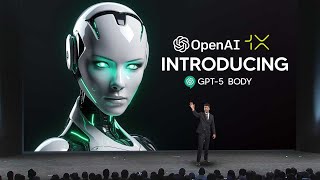
1X Technologies, backed by OpenAI, built Neo, a 30-kilogram humanoid robot that walks at 2.5 mph and can carry 20 kg. It uses VR teleoperation and learns autonomously, designed for industrial work and home assistance. OpenAI led a $23.5 million funding round in the Series A2.
Questions this video answers
$23.5 million.
Norway.
About 30 kg (≈66 pounds).
Two to four hours.
About 2.5 miles per hour.
Chapters
In this video, we are going to show you the first official pictures of OpenAI's first physical robot. As you know, artificial intelligence is moving at a rapid speed. And in doing so, we know that one of the giant leaps that many of these artificial intelligence companies are trying to do is to place that into the physical embodiment of an actual robot. One company that is backed by OpenAI is successfully going to do this, and we aren't far away from an official release date. This is where we have OpenAI's backed robot, 1x Robotics. The robot in question is called Neo. It's being described as safe, balanced and smart. And your highly intelligent Android assistant. So, before we get into some of the groundbreaking news that was just released last week, we do need to talk a little bit about OpenAI's partnership. So OpenAI has invested in 1X Technologies, a Norway based engineering and robotics company. Through its startup in March 2023, OpenAI led a Series A2 funding round that raised $23.5 million for 1X Technologies. And this investment aimed to help 1X establish a production line in Dallas, Texas for commercial use and scale the manufacturing use of its robots. And One X's main product, coming later this summer, is going to be the bipedal human humanoid robot named neo. Now, on the webpage it describes this robot as being embodied artificial intelligence. They state that One X is advancing the fields of robotics and artificial intelligence by combining them in an unprecedented way. General Purpose Android inspired by human nature. As they move, they get smarter, becoming as strong, gentle and capable as we are. Simply by working alongside you, One X androids will learn to adapt to universal applications. So let's take a look at some of the groundbreaking features of one of the world's first artificial intelligence robots that is likely to be groundbreaking in every regard. So it starts by saying safety first. One X tests every NEO in real world scenarios before they're deployed. Neo's soft, organically inspired mechanics make them safer from the inside out. So they're ready to for your spaces. I'm guessing that this safety first design means that these robots aren't sharp or have any jagged edges that could, in case of an accident, harm anyone nearby. I'm guessing that they may have done rigorous testing on these Neo robots to ensure that when they are moving in real human spaces in real world scenarios, that even if they do manage to bump into a person to a wall, that there isn't any severe damage. So that is the safety first. Then it goes on to state balanced performance. They go on to State Neo moves like us so they can meet your needs. 1x engineers Neo for high precision and gentle strength with arms and legs modeled after human muscle movement, so they can walk through doors, climb your stairs and do everything in a more natural way. This will be interesting. You see, we've seen the likes of the Tesla bot, how it moves, how it walks, but they're describing Neo, this artificial intelligence embodied robot to have gentle strength with arms and legs modeled after human muscle movement. So it will be very interesting to see if they revolutionize the way that robots do walk. Because currently we've only seen a couple of robots that do walk very well. We've seen Agility Robotics robot, which is a robot that we will be covering and it's already been demoed in a real world scenario where it was packing boxes at a live demonstration. We've also seen a Tesla bots robot which can walk and has been walking around the Tesla factory, which was very interesting because Elon Musk has seemed to move very quickly with Tesla. And then of course we've also seen the robot Boston Dynamics. And of course, as we know Boston Dynamics, ATLAS is probably the most advanced robot in terms of movement. We've seen it do a multitude of things that we truly didn't think was possible, such as backflips, dancing, running around, and even handing a construction worker a bag of tools. So it will be interesting to see how this does compare to neo's actual movement walk cycle and its physical embodiment. Then of course we have the third part in which they talk about smart behavior. They state that NEO embodies artificial intelligence, which 1x combines thoughtfully designed bodies with advanced AI minds. So you can talk to them naturally and they can do what you ask. So this is where we have something very, very interesting. The smart behavior is where robots can level up to a whole nother realm. This is because, as you know, currently standing, the best large language model in the world is of course GPT4. And we do know that OpenAI has backed 1x robotics with the funding. So we don't think that it would be a stretch to suggest that if this artificial intelligence robot is going to be designed with an advanced AI mind, that we can actually talk to them in a natural way. It's likely that it will have some fine tuned version of GPT4, the reason being any other large language model be used. But if OpenAI are publicly backing this company with large sums of investment, then it makes sense for this company to have a fine tuned version that is going to be used in this robot. Now, it is also likely that whatever they do choose to use will likely be an offline version specific for this robot. As you do know, if this robot is going to be responding in real time, quick responses are something that you do need. And one of the major problems that we've seen with artificial intelligence when trying to talk to it is that the delay in response is, can seem a bit unhuman. So it will be interesting to see what kind of large language model they embed in this system. It may be GPT4, it might be a standalone version custom built for the One X robotics, or it might be an unreleased large language model, such as a future version which combines the multimodal features. And the reason we do state that is because if this robot is able to help us in our daily lives, then it is likely to have some multimodal capabilities that such as processing vision. Then of course, as we move on through the images, we can see that NEO is currently in a house and seems to be cleaning something. So it's clear that these products, that this robot is effective at household tasks. And we've seen this by this company before. They've shown us that they've already built robots which can effectively do these things. This is one of their earlier models which they released a video on two years. And you can see this robot called EVE and baking cookies. And of course to be able to grip the bread, get things from the fridge is definitely something out of a sci fi movie because I didn't think that artificial intelligence robots were going to be able to do these tasks as effectively as this robot manages to do it as early as we are now seeing. So it will be interesting to see how great the jump from NEO is from the previous generation model that we're currently seeing on screen. Then of course we have the most interesting part of NEO that was released. So in the description where they state meet Neo, they state a few things about control. And this is where we learned a few things. On the control tab they state that NEO is going to be controlled by VR Teleop sync mode. Now if you don't know what VR teleop sync mode is, VR Teleop stands for the use of virtual reality technology to remotely control and operate robots or other devices in a different physical location. It allows a user to immerse themselves in a virtual environment and manipulate objects or perform tasks if they were physically present at the remote location. For those of you that are confused by that explanation, firstly it's actually quite like Pacific the movie where you can control another robot by simply moving your hands and having that sync up. Or take a look at this demo right here where we can see someone who is using a virtual reality device to control a physical robot in a nearby space. So because there is this VR teleop sync mode, it will be interesting to know if this is going to be the primary method of control for this physical robot or not. Because of course, as you know, it is going to have a large language model in it. We do know that visual systems are more and more capable all the time, as many different multimodal models are coming out of the woodwork. Or is this just going to be a feature of NEO where you're going to be able to control this robot if you want to? Let's say, for example, maybe you head out and you've left your robot at home and you want to check something at home, maybe you want to check where something is, or maybe you want to simply walk around your home as a robot. Is that going to be a possibility with this VR teleop sync mode? That is going to be an interesting possibility. Then of course, further on in the description, they state that NEO learns from tasks completed in VR teleop, which of course, as we previously discussed, is where you have someone in VR completing a task and then the robot mirroring those exact tasks with their hands. Additionally, it also states that we will have autonomous behavior. And if you don't know what autonomous means, that means that this artificial intelligence is going to be moving independently. So autonomous just refers to the ability of a system or entity to operate and make decisions independently of without direct human intervention or control. And an autonomous system is capable of self governance, self regulation, self execution of tasks based on its internal programming algorithms and artificial intelligence. So this means that if NEO is going to be having some autonomous behavior, it is going to have a robust AI system. This is because an autonomous system is going to have to have decision making capabilities where you can process information in your environment, assess the current situation and make decisions based on predefined rules. You're also going to have to have a sense of an adaptability where autonomous systems can learn from their past experiences or data inputs and adjust their behavior or decision making process according. And of course we're going to need to ensure that these systems are completely safe because too many of us have seen those movies or where autonomous AI agents decide to go rogue. Then of course we have some of the standard statistics where they talk about power. They state that this is going to have a two to four hour runtime. It's going to be built on an electrical system and its weight is going to be around 30 kg or 66 pounds, which is quite a lot lighter than the Tesla bot, which weighs in at £125. But then again, the Tesla bot was designed for carrying large loads. On the mobility tab, we can see that it walks at around 2.5 miles per hour, which is pretty standard when looking at all of the robots that we've seen. Then we have the run speed, and for the run speed we have 7.5 miles per hour, which is three times faster than their walk speed. And it will be interesting to see if this robot can run effectively without falling over. Additionally, they talk about the carry capacity of this robot, which is around 44 pounds or 20 kilograms, which should be interesting considering that the robot actually does weigh around 66 pounds. So being able to carry that much is going to be very intriguing because it's quite a light robot. Now further on, they state some basic things that they say. NEO is an innovative bipedal type of humanoid robot, which means that they're designed to move and look like a human. They have a head, torso, arms and legs just like us, so that they can interact with the world in a way that feels familiar to us. They'll walk, grab things and communicate through facial expressions. They also state, what can NEO do? Because this is of course a capability that we want to know. I mean, you're building an AI robot, what can it really do? So it states that NEO is an Android with a wide range of capabilities. They excel in industrial tasks in sectors like security, logistics, manufacturing, operating machinery and handling complex tasks. Long term, we envision NEO providing valuable home assistance and performing chores like cleaning or organizing. 1x is also looking into how NEO can support offer to individuals with mobility challenges, fetching items and providing companionship. NEO potential extends to research, helping the robotics community to explore fields like psychology and artificial intelligence. With neo's continuous evolution, the possibilities could for assistance, productivity and learning are boundless. They also state that how does NEO use artificial intelligence? Using embodied artificial intelligence, NEO will understand its environment deeper. Thanks to the fusion of their AI senses and their physical body, NEO continuously learns and improves, becoming smarter and capable over time, the way you interact with them, navigating life with NEO will feel more natural and intuitive. NEO will understand their own environment, how to handle fragile items, creating seamless collaboration and immersive human robot interaction. So from that paragraph we did get something particularly interesting. They state that thanks to the fusion of their AI senses and Their physical body, neo, continuously learns and improves, becoming smarter and more capable over time. The reason I read that again is because there's three key things that you might have missed. They talk about their AI senses, okay? And that means that it's clear that this AI is going to be able to see to some degree. And the fact that these AI sensors are merged into their physical body. Now that is of course something that we did expect, because how is an AI supposed to move if it can't see at all? Then of course, we have the crazy. This is where they state that NEO continuously learns and improves, meaning that it's going to become more smarter and capable over time. Now, at first you might just think, okay, how is that crazy? Well, the majority of robots that are deployed have a specific set of capabilities and don't really get smarter. But recently we've seen this trend where in artificial intelligence, a lot of systems are having the ability where they can learn and become smarter over time. Now, there's many different ways to achieve this, but it will be interesting to see if this is going to be an independent system or one that is kind of like a software. We know that many AI systems do get more rapidly smarter through deep reinforcement learning or the advancement in recent algorithms, such as recently where we saw DeepMind's robot RoboCat be able to perform a task only after seeing 100 demonstrations. And if you don't know why that's crazy, it's because usually robots are trained on hundreds of thousands of demonstrations before being able to perform a task one time. So we do know that with the rapid advancement in AI, and if this robot is able to continuously learn and improve, it's going to get crazy. Now, they also state that this robot is going to be open for pre orders at the end of 2023, which likely means that we're going to get the reveal sometime soon. Now remember, NEO is launching in 2023, which means that this year we are going to get our first look at our very capable artificial intelligence and embodied physical robot, which is backed by OpenAI's software systems. So overall, it will be interesting to see what kind of robot we do get. I mean, I'm so excited to see that the rapid rise of artificial intelligence has now progressed to a stage where we're moving large language models, multimodal models, into physical robots for the first time. And since this is already done by a company that we know excels at large language models, it will be very interesting to see how this is deployed, how effective it is, and just how quickly the world adopts this.










