OpenAI Drops Its Most POWERFUL AI - Deep Research & a Secret AI Device
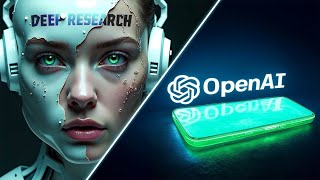
OpenAI released Deep Research, an O3-powered agent for ChatGPT Pro that browses the web and writes cited reports like an analyst. The company is also building a dedicated AI device with designer Jony Ive, backed by investors including Emerson Collective, though prototypes are still years away.
Chapters
So I've got two major updates from OpenAI. First, we'll take a look at Deep Research, a new AI powered tool or agent built on their latest flagship model O3. This is essentially the first real glimpse of the full O3 model in action, not just the O3 mini that's already out there. Then we'll dive into OpenAI's plans to develop an AI focused hardware device in collaboration with Jony. I've the design genius behind some of Apple's most iconic products. With Sam Altman leading the charge, this could be one of the biggest shifts in tech since the iPhone. Let's get into it. Alright, so OpenAI just launched Deep Research, an AI agent now available in ChatGPT for Pro subscribers. At least for now. According to Sam Altman, it's rolling out first to Pro users with a limit of 100 queries per month plus team and enterprise plans will follow soon, with free tier access coming later. The idea is that it can handle multi step research tasks for you on the Internet. Usually we rely on regular ChatGPT or GPT4 to provide answers, but that's still basically an on demand Q and A approach. Deep Research, on the other hand, is what AI folks call an agent. It goes out there, browses hundreds of sources, sifts through text, text, images, PDFs, whatever it can find, and returns a fully documented, cited and reasoned report. They're calling it the next big leap toward AGI because being able to synthesize knowledge is sort of a prerequisite to creating new knowledge, right? So if you can do a high level literature review in minutes, that's a game changer. Kevin Weil, OpenAI's chief product officer, even demonstrated it in Washington, D.C. showing how you can get detailed info about, for example, Albert Einstein. Like if Einstein were somehow a Senate nominee for the Secretary of Energy and you wanted his background and possible interview questions. Deep Research hunts down all that data, weaves it into one cohesive report and cites the sources so you can verify everything yourself in your ChatGPT interface. There's now an option to select Deep Research right inside the message composer you type in your query. Maybe you want an in depth analysis of various commuter bikes for city living, or you want a robust financial analysis of streaming platforms. You can even attach data files and spreadsheets. Then once you hit go, a sidebar pops up and shows you the steps the agent is taking, which sources it visits, how it's pivoting if it encounters new info. This can run for five minutes or up to half an hour, depending on how big your question is. One huge difference from normal chat is that you can walk away from while it's busy, maybe grab a coffee. The research is done asynchronously, so it's basically working behind the scenes. When it's done, it'll let you know and you'll get a final super thorough research analyst style report in the chat. According to OpenAI, they'll eventually embed images, data, visualizations, maybe graphs or tables. To make it even clearer, they did a neat comparison example. Someone asked about the usability differences between buttons that have both text labels and icons that versus icons alone or text alone. A short GPT4 response might say oh yeah, icons plus labels are generally clearer because icons can be ambiguous, which is a decent summary. But Deep Research created this massive deep dive, referencing real studies, pulling stats on user error rates and older adult usage patterns, citing Nielsen Norman Group recommendations, even referencing how icons can be ambiguous across cultures. The final report looked like a carefully curated multi page document, perfect for anyone who needs to present it to a client or professor. They also tested it on the question what's the average retirement age for NFL kickers? GPT4 gave a quick summary, some general stats about 29 is an average age in the league. But Deep Research took that question and gave a thorough historical analysis how George Blanda retired at 48, Adam Vinatieri and John Carney played until 46, Adam etc. It analyzed how the position endures fewer collisions so you can keep playing. The result was basically a multi paragraph research paper referencing different data sets on average NFL career length. That's the hallmark difference here. The short answer is fine if you just want a quick stat, but if you want to see the bigger picture with citations, that's exactly where Deep Research shines. So what's powering this? Well, it's an upcoming version of OpenAI's new model series called O3, optimized for web browsing, data scraping, analysis and importantly reasoning. The system was also trained with end to end reinforcement learning using real tasks. That means it literally practiced searching the web, reading results, analyzing them, pivoting if something was contradictory, and so on. It can also use Python to process data or generate visualizations. They tested Deep Research on humanity's last examination, a big 3,000 question test across 100 subjects to see how well it handles expert level queries. The normal GPT4 got a 3.3% accuracy. Then they have other models like Grok 2, Claude, 3.5, Sonnet, Gemini Thinking, etc. Eventually you see OpenAI03 mini at 13% accuracy, but the one powering deep research soared to 26%. That's a huge jump and it all has to do with letting it do that multi step, multi search research. They also mention Gaia, which is a public benchmark for real world questions. Deep Research apparently topped that leaderboard, especially at advanced difficulty. They track all sorts of metrics like the pass rate goes up if the model's allowed to do a bunch of tool calls online. The more it browses and thinks, the better it does, which is exactly how a human researcher might work. Read a bit, realize something's missing, go read another thing, cross check references and finalize. Now OpenAI also wants it to go beyond web browsing. Eventually it'll connect to subscription based sources and internal company data, even analyzing private PDFs. Long term, they see it working alongside Operator, another AI agent that handles real world tasks like booking flights or making purchases. The goal? A fully autonomous AI assistant that thinks, researches and acts for you. So that's the big chunk on Deep Research. Now for the second update. This is the hardware news. Sam Altman has been pretty vocal about wanting to do something that will transform user interactions with AI. We're talking about a brand new hardware device designed in partnership with none other than Jony I've, Apple's former chief design officer. The rumor is that they basically want to replace the smartphone. That's a big statement, right? They keep calling it an iPhone, like Breakthrough, referencing how the iPhone changed everything back in 2007. From what we know, I've was introduced to Altman by Brian Chesky, the Airbnb CEO. The project is apparently also financially backed by Laureen Powell, Jobs Emerson Collective. We might be looking at up to a billion dollars in funding by the end of 2024. That's some serious capital. The earliest hints suggested this device might feature a touchscreen and revolve around generative AI's real strengths. Summarizing messages, identifying objects around you, booking travel, all that stuff we often rely on multiple apps to do instead of living on a standard smartphone with normal software, it'd be a dedicated AI platform from the ground up. Now you might be thinking, but aren't companies like Google and Apple also adding AI to their phones? Sure, Google's got the Pixel with its local generative AI features and Apple's exploring Apple intelligence stuff, but from Altman's perspective, it might take more than just software add ons to achieve a true AI device. He's said it'll probably be several years away, but it's definitely in the works. We do know that Altman once invested in a startup called Humane Income which was building hardware for Generative AI. The device that came out of that, called the Humane AI Pin, got mixed reviews. People said it was buggy. Another device called the rabbit R1 also didn't get great feedback. So it's not easy to do an AI hardware product. But with Jony I've on board, the design might be more refined and they'll presumably leverage OpenAI's advanced models like O3 or future versions to run tasks locally or in the cloud. They want something that's less disruptive socially than the iPhone. Maybe it means less time glued to your screen, more natural interactions. Possibly a wearable or something that uses voice as the main interface. We'll see. They're not giving a timeline, but we do have that quote from Sam Altman that it might be a few years before we see any prototypes. Also, for cost, Altman basically said that people are willing to pay for a phone anyway, so they might go with a somewhat premium or mid range price, not necessarily cheap. Alright, that's my update on OpenAI's deep research and their upcoming AI hardware device. Let me know in the comments if you have questions or if you want me to do a dedicated deep dive on either topic. Maybe I'll even let Deep Research do the heavy lifting for that next video. Anyway, thanks for watching. Don't forget to like and subscribe if you want more AI news and analysis. Catch you in the next one.










