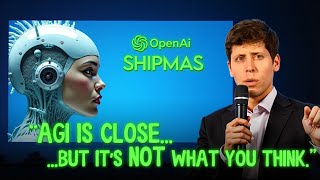
A LARRUZ YouTube explainer (uploaded Dec 5, 2024) about OpenAI’s "12 Days of Shipmas" rollout, highlighting the debut of Sora (a text-to-video model), a new reasoning model, and CEO Sam Altman’s moderated timeline for AGI (possible signs by 2025 but gradual impact). The video covers Sora’s private alpha testing and controversy with artists, ChatGPT usage metrics, competitive moves (Google’s Veyo), recent DeepMind hires joining OpenAI’s Zurich office, and strategic ties/tensions with Microsoft.
Questions this video answers
December 5, 2024.
12 days (the "12 Days of Shipmas").
Over 300 million weekly active users; about 1 billion messages processed per day.
A text-to-video AI model that was in private testing with a select group of artists.
Veyo (part of Google’s Vertex AI platform).
Chapters
Sam Altman just dropped some bombshells that could shake up OpenAI's entire game plan. With the 12 Days of Shipmas about to roll out groundbreaking tools like Sora, their insane text to video AI and a new reasoning model, he's also flipping the script on what we should expect from AGI. Altman says. We could see the first signs of it as early as 2025, but instead of the explosive change everyone's bracing for, he's predicting a slow, steady transformation. OpenAI isn't just launching cool new tech, it's quietly setting the stage for a future that could blow our minds. So starting December 5, OpenAI is rolling out a series of announcements over 12 days, a kind of tech focused holiday celebration they're calling the 12 days of shipmas. Each day promises a new feature, product or demo. It's an ambitious effort, and at the center of it all is Sora, their much anticipated text video AI tool. For almost a year now, Sora has been in private testing with a select group of artists, sparking plenty of curiosity and controversy along the way. The model allows users to generate videos purely from text input, and while that sounds like something out of science fiction, it's set to become reality during this event. This isn't just about flashy features, though. OpenAI is also introducing a new reasoning model during Shipmas. While details are still under wraps, the aim is to take AI reasoning to the next level, making tools like ChatGPT even better at understanding complex tasks and logic. It's no secret that OpenAI has been steadily evolving ChatGPT, which now boasts over 300 million weekly active users and processes a staggering billion messages every single day. Those numbers aren't just impressive, they're a testament to how deeply integrated AI has become in the lives of so many. SORA itself has been a magnet for both excitement and criticism. Artists in the alpha testing phase leaked elements of the tool earlier this year, accusing OpenAI of using their work for free research and publicity. It sparked debates about ethics and and compensation in AI development. But OpenAI has stayed the course, refining the tool for a wider release. Former CTO Mira Murati had hinted earlier in the year that Sora would arrive by the end of 2024, and it seems they're delivering on that promise just in time. This launch comes in the midst of fierce competition. Google, for instance, recently unveiled its own generative video model called Veyo. Aimed primarily at businesses. Veo is part of Google's Vertex AI platform and has already been integrated into profess content creation pipelines While Sora might be entering a crowded space, its potential to reach creatives and casual users alike could give it a unique edge. OpenAI is betting big on making tools accessible and transformative, not just for industries but for individuals. On a broader level, OpenAI's leadership has been stirring up plenty of discussion. Sam Altman, the company's CEO, spoke at the New York Times DealBook Summit, sharing his vision for artificial general intelligence, or AGI. He suggested that AGI might arrive sooner than expected, possibly as early as 2025, but tempered expectations by saying its initial impact might be more subtle than most imagine. Instead of the world changing moment many anticipate, Altman described a gradual shift towards superintelligence, which he predicts will bring much more dramatic changes over time. Altman's perspective marks a shift in how OpenAI talks about AGI. The company's early statements framed AGI as a groundbreaking development that could revolutionize intellectual labor and elevate humanity. Now the tone is more measured. Altman emphasized that AGI could be achieved on existing hardware, which is a fascinating detail in itself, suggesting that the leap isn't as far off as some might assume. He also highlighted that the economic disruptions tied to AGI might take longer to materialize owing to societal inertia and the slow adoption of transformational technologies. One of the more intriguing aspects of this discussion is how OpenAI's relationship with Microsoft factors into the AGI narrative. Altman acknowledged some tension between the two companies, but maintained that their priorities remain aligned. What complicates this partnership is OpenAI's profit sharing agreement with Microsoft, which includes a clause allowing OpenAI to exit the deal once AGI is officially declared. If AGI is labeled as a smaller milestone than initially thought, this could position OpenAI for a more independent future, free to pursue its own strategic goals without being tethered to Microsoft. Meanwhile, OpenAI has been making strategic hires to bolster its capabilities. Recently they announced that three senior engineers from Google's DeepMind, Lukas Beyer, Alexander Koleshnikov and Xiaohua Jai are joining the team. These experts in computer Vision and Multimodal AI are now based in OpenAI's newly established Zurich office. The focus on Zurich isn't accidental. The city is home to ETH Zurich, one of Europe's top tech universities, and has become a hub for AI talent. Companies like Apple have also quietly set up AI focused labs in Zurich, making it a hotbed of innovation and competition. These new hires signal OpenAI's commitment to staying ahead in multimodal AI, a field that blends capabilities across text, images and audio. Tools like Dall E and the multimodal functionalities of ChatGPT have already made waves, and adding these engineers to the team will likely accelerate the development of savings similar breakthroughs It's a clear move to solidify OpenAI's dominance in a space that's rapidly evolving. Of course, not all the news is about growth and innovation. OpenAI has seen its share of high profile departures, including Mira Muradi, who left earlier this year to reportedly start her own venture, and Ilya Sutskever, who co founded the company and has since launched a startup focused on AI safety. This churn highlights how competitive the AI talent market has become. Top researchers are in high demand, often commanding compensation packages that can reach seven figures or more. These departures haven't slowed OpenAI's global expansion, though. In addition to Zurich, they've opened offices in cities like New York, Paris, Singapore and Tokyo. The aim is to establish a global presence that attracts talent and positions OpenAI as a leader not just in AI innovation, but also in its application across diverse markets. Amid all this, Altman's reflections on AGI are worth considering. He described the transition from AGI to superintelligence as a long, drawn out process, with early impacts being relatively muted. This runs counter to the more dramatic predictions often associated with AGI, where many imagine instant, transformative change. Altman's view suggests a more nuanced reality where incremental advancements pave the way for broader societal shifts. What's also fascinating is the potential redefinition of AGI itself. Some reports suggest that OpenAI might integrate its existing large language models to achieve what it calls AGI, effectively moving the goalposts to align with current capabilities. This has sparked debates about what AGI actually means and whether the term is losing some of its original weight. For OpenAI, though, the focus seems to be less on meeting a rigid definition and more on delivering tools that are practical and impactful. OpenAI is leading innovation, taking on ethical, competitive and strategic challenges with a focused approach. Through the Shipmas announcements, fresh talent from DeepMind and Altman's realistic vision for AGI, the company is making bold strides forward. The AI landscape continues to evolve at a rapid pace, with OpenAI positioned at its center. Sora's release and the ongoing discussions about AGI mark a defining moment shaping the path forward in AI development and its future impact. Alright, let me know what you think in the comments and if you enjoyed this. Make sure to like and subscribe for more AI updates. Thanks for watching and see you in the next one.