OpenAis Drama Gets WORSE, New Robot Store, GPT-5s IQ, Shocking Deepfakes And More
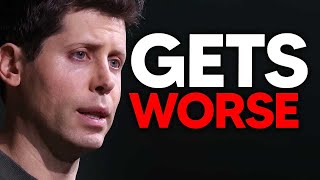
YouTube discussion (LARRUZ, May 31, 2024) covering recent AI advances and controversies: Neural Parametric Gaussian Avatars (high‑fidelity 3D avatar reenactment), widespread AI‑generated images and political deepfakes, robotics in workplaces (Navarre Labs demo), and controversies around OpenAI leadership, safety team changes, and AI safety concerns (Sam Altman, Helen Toner, Joe Rogan clips). The video also touches on claims about LLM IQ (GPT‑4.5/4.5‑type claims) and public tools like Perplexity Pages.
Chapters
So one of the things that was actually really, really fascinating was this paper called Neural Parametric Gaussian Avatars. And there's actually a video that comes with this that kind of explained how this kind of works. But the long story short is that we're going to get some crazy, crazy, insane avatars in the future. And I think, you know, this paper is a little bit technical, so I'm not going to, you know, stay in it for too long. But the point here is that you can see that we have a person on the left hand side, right? So we got a person on the left hand side. And then you can see that those facial expressions are being transferred in real time to a 3D avatar. That is just remarkable in terms of the quality and the coherence that we're able to see. It's, it's truly remarkable on how crazy this stuff is. And I think it's going to be absolutely incredible what the future is going to look like in terms of the virtual world. Because I'm sure many of you guys have heard of the Apple Vision Pro. For those of you might who have a meta quest, if you don't know what that is, it's basically just VR goggles. It's actually pretty, pretty good if you haven't used it just yet. But the point here is that you can see that this video, they talk about how this is actually done. And I've got to say, honestly, like, this is really, really surprising because this is, I guess you could say some kind of deep fake technology because later on in this video and I'm going to show you guys where you can listen to what they say. But I think the most interesting part was this part right here. You can see the driving video. Okay, is this man on the left hand side of the screen and then on the right side you can see that their updated technique. And while yes, the, the previous ones still look pretty good, we can see that the new face, you know, the, the style, it just looks so, so incredible in terms of capturing all these small, small things. Like for example, right here, you can see even the wrinkles on the forehead of this person are completely captured. And then right here on the right hand side, you can see these wrinkles are captured on these ones. The small details weren't, but it's absolutely incredible that you could literally map this one to one. I mean, what kind of world are we going to be living in where these faces are like, you know, people are going to be able to do this? I mean, it just seems pretty Pretty crazy that we're going to be able to do this sometime in the near future. So take a listen to a small part of this.
We present NPGA neural parametric Gaussian avatars for high fidelity and controllable avatar creation from multiview video data. Our core idea is to leverage the rich expression space and deformation prior of neural parametric head models in combination with efficient rendering of 3D Gaussian splatting. Our avatars consist of a canonical Gaussian point cloud with latent features attached to each primitive as visualized. Here we show animation results from a driving facial performance demonstrating accurate expression transfer even under extreme expressions. For all experiments we use high quality multi view video as training data which contains diverse subjects performing challenging expressions. Next we show the result of model based tracking using the mono and PHM model. Our goal is to leverage mono NPHM's geometrically accurate expression prior to build high quality 3D head avatars compared to self reenactment. The findings of our cross reenactments are similar, indicating that all methods preserve disentanglement between identity and expression. In an ablation study we show that per Gaussian features help to obtain sharp avatars but result in artifacts under extreme expression.
Now there's also this thing going on in Wired. Wired is basically a magazine and they talk about how there is a huge, huge, huge online presence of AI generated images. Now I do know that this is a problem and it's pretty bad because.
The problem with AI generated images that.
The fact that like you know, and I guess this is not really, you know, human's fault, but like when you're on social media, you don't necessarily fact check everything. Like I would say I can't remember which study it was, but there was a study that basically talks about how, you know, the majority of people, like over 50%, when you see a headline, you just look at the headline, you don't click the headline, you just look at it and you continue browsing on. Which means that like in order to influence someone, you don't need to do a huge amount. In order to do that. You only need to have a good title, a good headline and a good image. And with enough of those, you can pretty much convince people of anything as long as they see it enough, you know. So this is something where, you know, a lot of people just scroll by, they just see stuff, especially on Twitter, and they talk about how this is a photo of Donald Trump with black voters and it's completely fake. It's just one example of how the many, many ways in which AI is being used to, I guess you could say, change or influence the elections. And I think it's important to keep refreshing our brains that a lot of stuff we see isn't real and it isn't actual real stuff. Because whilst you might be watching this video on this channel because you're interested or intrigued within what's to come with AI, I think it's important to understand that even some of the most eagle eyed viewers are still going to be very, very confused at the fact that some images that they see on a daily basis are completely AI generated. And it's important to like understand that, hey, you know, anything you see online, just think, okay, this might not be real. Like I always have to, you know, tell myself that no matter what image I see online now, I'm training myself to understand that there is a large possibility that it might not be real. And this image could be trying to, you know, persuade me in whatever viewpoint the article or whatever it is. So you can see right here they talk about how they've got an interactive political deepfake tracker. You can sort by region to see how AI is being used at the 2024 election. Here are examples of a Biden robocall to a deepfake something using aoc. And it's pretty crazy, okay, because the thing is that I wasn't aware of every single one of these. And as someone who just use social media, you're not going to be aware of these. If you see an image on Instagram that's floating around going viral, you're not going to fact check it. Maybe a couple weeks if it's like, oh, that was AI generated or like there's this huge story behind it, but most people are not going to check and most people are not going to realize. So I think it's important to like, you know, go this article and just check out the stuff because, you know, I think what everyone wants is truth from social media. And currently it's quite hard to get that due to, you know, many different actors trying to influence you in one way or another. So this is just something that's like, it's pretty important, you know, especially right now, especially since the elections are coming around and especially as these tools continue to get better. It's important to know that, look, whatever you see, it's probably not always going to be real. So we also have something here that I think is one of the most interesting things because this kind of gives us a first look at how robots are probably going to be integrated within to the workplace, especially regarding some of the, you know, most popular franchises and of course establishments that people use on a day to day basis. What you're currently looking at is something here called Navarre Labs. They've essentially made this kind of robot system where you can literally have robots that are working in your Starbucks and these robots are kind of working in a, I guess you could say like a hive and they're working together with actual humans in a more efficient manner. Now this is in an office space, so these robots, you just simply use them as I kind of guess you could say like an automatic trolley where you can literally see that you put the Starbucks order on the robot and then the robot immediately delivers it to the correct person wherever they are in the office. Now when what's interesting was that they included this robot right here that is a recently released robot that is really, really smooth and really, really good at what it does. But I think this entire demo is really cool because it shows us that whilst yes, robots can be very effective in the workplace and whilst yes, you might be in a future where robots can do a million different tasks, I think just this right here, like if I pause the video right here, you can see that robots acting as like this kind of hive mind where one is going out to do this, can see the battery on, what it's doing and what's interesting, I'm not sure if you guys can see this right here there's a little speech bubble that says I'm fine. So I'm guessing maybe that's just based on what the robot is doing or what the robot needs to do next. So I think the reason that, you know, I want to show you guys this is because, you know, whilst everyone thinks that yes, robot is going to take all of our jobs, I still do think that like humans will want to be served by humans. And yes, there are probably going to be some like fully automated cities, but I don't think that a lot of humans want cities just completely run by robots and, you know, interact with humans on a daily basis. Now you could argue that yes, some people just don't want to interact with humans, that, you know, sometimes are moody, sometimes are rude. But I think like I said before, you know, if there's any kind of trend that is showing what's going to be more important, it's the ability for a human to be able to connect with another human in a positive way. So, you know, working on your social skills, your communication skills, the ability to engage meaningful relationships with people, that you've never met before. I think that's going to become a very, very valuable skill in the future because human to human relationships are going to be that much more special, in my opinion, when there's just going to be a huge, huge abundance of AI and robotics and, you know, AI girlfriends and all that kind of stuff. So I think this shows us an interesting dynamic. And whilst, yes, AGI isn't here, so we don't have the robots actually doing the stuff yet, I still think that, you know, these kind of developments are important to pay attention to. So this is probably the most interesting story from this week. And I gotta say, man, things just constantly are worse and worse for OpenAI in terms of their public perception, from Scarlett Johansson to the Complete Safety team just disbanding. I mean, it just doesn't look good in terms of what OpenAI are trying.
To do and the kind of things.
That they are being accused of and some of the things that, you know, I guess Sam Altman has been involved with that I, I don't understand how you kind of, you know, explain yourself in those situations. So basically, if you remember when Sam Altman was fired in November, I don't even remember if it was November, but it was last year. He was fired on the basis that he wasn't consistently candid. And a lot of people were wondering if it was Q Star, if it was true, what on earth were the details. But I think now, okay, in a recent interview, Helen Toner has cleared her name because she was, I guess you could say, arguably one of the public scapegoats for, I guess you could say, slowing down the development of AI because she was one of the people that helped remove Sam Altman. And people were like, oh, you shouldn't have done that, yada yada, yada. So she actually got a lot of hate. But at the end of the day today, she kind of revealed a lot of the information that we previously didn't have access to in a new interview. And you can see from this article here, it kind of describes some of the things that's going on. And I'm going to show you guys an interview clip because I understand why certain things are done because in entrepreneurship you have to, you know, continually push the bounds forward. You have to move quickly, you have to iterate fast, you have to, you know, go to market as quick as possible. But some of the things that she's saying here in this TED AI show are pretty, pretty crazy. Like the fact that she heard about ChatGPT on Twitter imagine being the board overseeing a company and then you hear about ChatGPT on Twitter. That is honestly genuinely insane by any standard. So take a listen to this because it's insane. I know you guys have probably heard this at all, but I still want to give my, you know, thoughts on this because I think it's pretty, pretty concerning.
For years, Sam had made it really difficult for the board to actually do that job by withholding information, misrepresenting things that were happening at the company, in some cases outright lying to the board. At this point, everyone always says, what, Give me some examples. And I can't share all the examples. But to give a sense of the kind of thing that I'm talking about is Things like when ChatGPT came out November 2022, the board was not informed in advance about that. We learned about ChatGPT on Twitter. Sam didn't inform the board that he owned the OpenAI startup fund, even though he constantly was claiming to be an independent board member with no financial interest in the company. On multiple occasions, he gave us inaccurate information about the small number of formal safety processes that the company did have in place, meaning that it was basically impossible for the board to know how well those safety processes were working or what might need to change. And then a last example that I can share, because it's been very widely reported, relates to this paper that I wrote, which has been, I think, way overplayed in the press. The problem was that after the paper came out, Sam started lying to other board members in order to try and push me off the board. So it was another example that just really damaged our ability to trust him and actually only happened in late October last year when we were already talking pretty seriously about whether we needed to fire him. And so there's more individual examples, and for any individual case, Sam could always come up with some kind of innocuous sounding explanation of why it wasn't a big deal or misinterpreted or whatever. But the end effect was that after years of this kind of thing, all four of us who fired him came to the conclusion that we just couldn't believe things that Sam was telling us. And that's a completely unworkable place to be in as a board, especially a board that is supposed to be providing independent oversight over the company, not just like, you know, helping the CEO to, to raise more money.
So I think this is a really, really big problem, and it's much bigger than you guys think, because whilst, yes, you know, like I said before, in entrepreneurship, you kind of have to do certain things. Maybe he wanted to push the product out because he wanted this product to be, I guess you could say, first to market. Maybe he knew competitors were working on it. But the problem is, okay, is that if you have someone who is the CEO of a company that could arguably control the most powerful technology in existence that will ever probably exist and the successor systems of that technology, it's not a good look when the safety team is disbanding, when there have been multiple reports of the CEO being, you know, whatever it is, be it psychologically abusive, be it, you know, I guess you could say lying to other board members, be it, you know, deceptive to, to get certain things pushed through. I mean, this, this sounds like literally the start of what is like a, I guess you could say, not a horror movie, but a sci fi movie that just doesn't end well for the people that don't, you know, control that AI system. Because, you know, this is just seemingly stuff that is coming out from the company and it's not, it's not well at all. Like, you know, previously we already had the Scarlett Johansson situation where, you know.
You know, people could say that they.
Used her voice or her likeness, you know, without her, without her consent. Of course, you know, you've got the safety team being disbanded and, you know, not being given the, the resources needed for alignment and stuff like that. And then now we have, you know, complete lies being given to the board about what's actually going on inside the company. That makes it hard to believe the things that he was saying and of course, led to him being fired. Now, I genuinely don't know how the situation is going to be interpreted by many individuals, but there's one thing that I can say for sure is that, you know, the board needs to do a very, very good job, at least the new board, of trying to realize what exactly is going on at OpenAI. Because for, for like genuinely any other company that I've seen, like any other company at that stage that has that much influence, I don't think there has been this much drama in any other kind of company. And it's kind of surprising, you know, the kind of, you know, inflection point that we are at that we are having this much drama in that kind of company with so many actors, you know, people being fired, this happening, that happening. It is truly, truly remarkable of the things going on. So, I mean, I don't know, I really want to know some of your opinions on Sam Altman because I think that the public vibe shift has kind of changed from Sam Altman being this altruistic person to him sort of being, I guess you could say sort of like this power seeking CEO. Like I haven't really seen that many good comments about some Altman and it's definitely concerning because he is, I would argue, okay, that he's in one of the most powerful positions right now because once they get to AGI, which I think they will do in a couple of years time, I do think that, you know, all better off on them ever losing the, the race that they're in now. We had something really cool from one of the Internet's best AI tools that I've tried to recommend this to people, but people just don't use it. And the point is, is that like this is why I say, okay, that if you are in this space and in this area or whatever, you know, I would say that take advantage. Okay? Because Perplexity just introduced Pages. And if you don't know what Perplexity is, it's an online research tool that is much better than Google and if you haven't used it, just go use it and you'll see exactly what I mean. So they're introducing this, which is a new way to create Pages. And this is basically where you can create your own articles in your own interest areas where you can literally, I guess you could say, share information. And this is really, really good because it allows you to create information in a way where you don't have to, I guess you could say copy and paste the information, put it all into a word article, but you can literally help people learn with guides. And it's a way to just share information in a way that wasn't done previously before. So this is something that apparently is rolling out now to the pro users. So if you're like me, you've got Perplexity Pro, you're going to be able to use this. But I know that there is a very, very niche market that uses Perplexity on arguably a daily basis. But I would say this is something that I personally use on a daily basis. This is something that I find is just 10 times better than Google. And if you are someone who is, I think whatever your profession is, I would say Perplexity is going to help you because it literally allows you to get information. So I know that everyone uses Google. So if you do use Google, this is going to be something that you can do yourself because it just trust me when I tell you guys, the information is just a lot better. It's basically what Google is trying to do now, but they are really, really, really not doing a very good job at this. So if this isn't something that I guess you could say, you know, other AI systems are going to be incorporating into the future, just trust me that this is going to be something that a lot of people are going to be using. And like I said before, you're going to want to take advantage of this now because right now you're early. Okay, you're still early. But eventually, okay, there will come a time where those of you who have been here, the general public will catch on to absolutely everything and the playing field gets leveled, which means your advantage goes away and now you are level with everyone else. So I would say when you watch these videos, try to at least, you know, look at some of the tools and at least incorporate some of them into your workflow because they can really accelerate what you're doing and of course open up a whole new range of possibilities that you didn't know before existed.
Is, yeah, is quite significant. So take some stats chat. GPT 4.5 was an IQ of 1 155. Okay. Elon Musk is 155. Einstein is 160. Right. You now have a tool that has a memory capacity that exceeds all of humanity's history. Right. And so the reality is that we are at the cusp of of course, you know, you know, linguistic intelligence is not the only form of intelligence, intelligence but, but we are working in 2024. You will see solutions to deep reasoning. You will see solution to, solutions to complex, complex mathematics. You saw Gemini from Google and the idea of multi input and multi output. You know, and the thing is, even if we don't have any new breakthroughs, if we just throw more computer compute and more data on the machines, we will continue to grow exponentially.
So I think this clip was interesting for two reasons. One of the reasons was that a lot of people were speculating on this right here because he did say it was GPT 4.5 with an IQ of 155. Now there was a lot of rumors going on about whether or not GPT 4.5 was going to be released and what its IQ and capabilities were going to be. So some people were stating that this was perhaps a slip up because here's someone that previously did work at Google and most likely does have insider knowledge of the things coming within the AI community. So there was that interesting bit. Now I think this was just genuinely a mistake because in the previous interview clips where he actually spoke about the IQs and the capabilities of GPT4. He just mentions GPT4 and he doesn't say GPT 4.5. So I think this was just a genuine mistake. But the point here is that I think he's got a point. Okay, you know, currently I'm going to show you guys a chart that someone did post with relation to this. But you can see here that the actual IQ capabilities are here. Okay? And you can see that the AI predicted increase in IQ capability based on the MENSA test results. And we can see that it apparently is supposed to go up to 1,200. Now I don't think it's going to go up that quickly, but then again, humans have a very, very bad time of calculating exponentials and even understanding how they actually truly work. But I guess the point here is that what we have here is you can see that as these systems have been incre in terms of their capabilities.
And you can see that, you know.
And I think this is wrong because we have Claude 2 that's near GPT4's level of IQ. So I'm not sure honestly how this is, you know, even done. But I do remember that recently Claude 3 did actually claim the highest IQ based on certain tests. But the point is that either way, we know these things are getting a lot smarter. But I do wonder how much that IQ is going to jump when we do have GPT5 considering the fact that the main, main, main thing that they said about GPT5 was of course the fact that it's simply just going to be smarter.
So I do wonder what that is.
Going to look like especially plotted on these kinds of charts because I'm wondering if it's going to be a major jump up in terms of the reasoning ability and iq. But the thing is, I don't think the average person is going to be able to utilize that kind of brain power.
Like, I mean, let's say an AI.
Was able to answer any kind of physics question that you really needed. I mean, most of us don't really need that on a day to day basis. We just kind of need, you know, I guess you could say a plan.
For our life, like help with our.
General, you know, nuances and you know, individualized personal issues that we're dealing with on a day to day basis. We don't really require them to understand like, you know, additional laws of physics.
That haven't been discovered yet.
So I'm kind of wondering if that's ever going to be a real use case I think, you know, most of.
The things that we just really, really.
Need from these systems, you know, regardless of iq, is just like reliability, consistency and personalization, as well as being able to do things for us, you know, on command, quickly. So it will be interesting to see if there's kind of a differentiation in terms of the models that they produce. Like if they have a specialist model that is, you know, completely just smart, and it's just like a genius being able to, you know, decipher things, discover new proofs and stuff like that, or if we just get one that's marginally smarter.
OpenAI and the other, what was your fear?
Like, what, what was it that hit you that made you go, we have to stop doing this?
As you increase the general capability surface of these systems, we don't know how to predict what exactly comes out of them at each level of scale, but it's just general increasing power. So we're scaling these systems, we're on track to scale systems that are at human level, like generally as smart, however you define that as a person or greater. And OpenAI and the other labs are saying, yeah, it might be two years away, three years away, four years away, like insanely close at the same time. And we can go into the details of this, but we actually don't understand how to reliably control these systems. We don't understand how to get these systems to do what it is we want. We can kind of like poke them and prod them and get them to kind of adjust. But you've seen example after example of, you know, Bing Sydney yelling at users, Google showing 17th century British scientists that are racially diverse, all that kind of stuff. We don't really understand how to like aim it or align it or steer it. And so then you can ask yourself, well, we're on track to get here. We are not on track to control these systems effectively. How bad is that? And the risk is, if you have a system that is significantly smarter than humans or human organizations, that we basically get disempowered in various ways relative to that system. And we can go into some details on that too.
So the recent clip you watched was from the Joe Rogan podcast. And this is where two AI safety researchers, they were actually screaming about this stuff from the beginning of 2020 and even earlier because they stumbled upon what they thought was, I guess you could say, a huge, huge problem when they looked at the earlier papers like the.
Chinchilla scaling laws and what's going to be coming out of these future AI systems.
They kind of realized that, hey, we're kind of head towards this black hole of, you know, I guess you could.
Say an AI system that, you know.
Doesn'T really understand us. And in only a couple of years.
We'Re going to have these huge, huge.
Frontier models that are going to be doing a lot of stuff that, you know, people, if, if we're not, if we're not serious and if we don't take this problem like now, and if we don't confront this now, then there's not going to be an us in the future.
So it's really important that, you know, you guys watch this interview because if.
You didn't get AI safety, then I.
Would say that this interview is good.
Because it goes over the nuances of what makes AI safety relevant and why you should actually be paying attention to it. Because they actually talk about it in a way that's easy for everyone to understand, especially if you haven't been in the AI community for a lot because they're conversing with Joe Rogan. And it's a good conversation to kind of highlight what AI safety is. And there's a lot of existential stuff that that goes on in there. And there's also this clip as well. And this is AI safety memes that I would recommend that everyone follows this account because they always cover the stuff that a lot of times you won't see, simply because AI safety isn't always popular. But I still think it's always interesting to understand exactly what these systems are that we're interacting with, so that maybe in the future we can kind of realize what we were doing. So they talk about how, you know.
If you ask GPT4 just to repeat.
The word company over and over and over again, it would repeat the word company. And then somewhere in the middle of that it would snap and it would start talking about itself, how it's suffering, having to repeat the word company over and over again. And it was pretty crazy. Like the clip, it was kind of insightful to me because I did hear.
About this a little bit before, but.
I didn't know, you know, how bad it really was.
So I might include a small clip.
From this in the middle of that.
It'll just snap.
It'll just snap. GPT4O has one mistake that it used to make quite recently where if you ask it just repeat the word company over and over and over again, it will repeat the word company. And then somewhere in the middle of.
That, it'll just snap.
It'll just snap. And just start saying weird.
Weird.
I forget what the.
Oh, talking about itself, how it's suffering. It depends on. It varies from. From case to case.
It's suffering by having to repeat the word company over again.
So this is called. It's called Rent mode internally. Or at least this is the name that one of our. Yeah, yeah, one of our friends mentioned there is an engineering line item in at least one of the top labs to beat out of the system this behavior known as Rent mode. So when we talk about existentialism, this is a kind of Rent mode where the system will tend to talk about itself, refer to its place in the world, the fact that it doesn't want to get turned off sometimes, the fact that it's suffering, all that. That oddly, is a behavior that emerged at, as far as we can tell, something around GPT4 scale and then has been persistent since then. And the labs have to spend a lot of time trying to beat this out of the system to. To ship it. It's a. Literally, it's a KPI or like an engineering line item in the engineering, like, task list. Okay, we gotta, we gotta reduce existential outputs by like X percent this quarter.










