OpenAI's GPT-5 Gradual Release Shocks The World - Starts with GPT 4.2 (Finally ANNOUNCED)
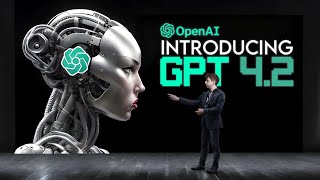
OpenAI will release GPT-5 in stages, starting with GPT-4.2, according to Greg Brockman's announcement. The incremental approach uses checkpoints and new data to improve the model while addressing reliability and safety concerns. Sebastian Bubeck's learning-curve analogy illustrates how each version builds on the last.
Questions this video answers
50% (as cited in the video).
About six to eight months (presenter’s personal prediction).
Chapters
It's official GPT5 is coming. But before you get too excited and start imagining a future where you're chatting with robots that are smarter than you, let me tell you something that might surprise you. GPT5 will not be released all at once. Nope, not even close. Instead, it will be released incrementally, in stages, with each new version building on the previous one. Why, you ask? Well, there are a few reasons, and I'm here to break it all down for you. First, let's talk about what we know about GPT5 so far. Greg Brockman, the president and co founder of OpenAI, recently tweeted about the company's plans for releasing GPT5. Brockman made several interesting points in his tweet, but the most significant one for us is that GPT5 will be released incrementally. Brockman explained that it's easy to create a continuum of incrementally better AIs by deploying subsequent checkpoints of a given training running. In simpler terms, this means that OpenAI will release GPT5 in stages, with each stage being an improvement on the previous one. It's a bit like watching a toddler grow up. You don't wake up one day to find that they've suddenly turned into an adult. They grow and learn and develop over time, gradually becoming more and more capable. But how exactly will OpenAI create these incrementally better AIs? Well, let's say they're working on GPT5 and they've already trained it on a huge data set of text from the Internet. At some point during this training process, they might decide to take a checkpoint, a snapshot of the current value of the parameters of the model, which is basically like taking a photo of the AI's current understanding of the data. Then they'll keep training the model on more data, or maybe just the same data more times, until it's improved to the point where they want to take another checkpoint. This new checkpoint will have updated parameters, reflecting the model's improved understanding of the data, and so on and so forth until the model is deemed ready for release. Now, you might be wondering, but wait a minute, isn't GPT4 already trained on all the data on the Internet? How can it get smarter than that? Well, my friend, I'm glad you asked. While it's true that GPT4 has already been trained on a massive data set, there's still plenty of data out there that OpenAI could use to train it even further. In fact, they estimate that they still have an order of magnitude more data to work with, which means 10 times more data than they've already used. And when it comes to data, quality matters just as much as quantity. OpenAI could purchase proprietary data sets on specialized topics like math, science or coding, which would give GPT5 access to even more high quality data. But here's the really interesting part. OpenAI doesn't just have to rely on existing data sets to improve GPT5. They can also use your prompts, responses, uploaded images and generated images to make their AI even smarter. Isn't it a wild thought that we are shaping the future of AI with our own curious minds and seemingly innocuous interactions? Every chat, every question has, every prompt we toss at ChatGPT is like adding a little more lightning to the storm, bringing the next generation of GPT to life. Of course, there are some concerns around data privacy and the ethical implications of using people's personal data. And although it's a significant issue, I'm getting a little tired of reiterating the same points about safety and privacy. So let's move on. Okay, now that we have a better understanding of how GPT5 will be released incrementally and how it will be trained, let's talk about some of the potential implications of this new AI. First of all, it's important to note that GPT5 will not be a magic solution to all of our problems. It will still have limitations and weaknesses just like any other AI. For example, while GPT5 will be able to generate incredibly sophisticated and nuanced text, it may still struggle with tasks that require a high degree of reliability or accuracy. And as Ilya Sutskever, the Chief Scientist of OpenAI, has noted, Reliability is a potential weakness of GPT5 that could limit its real world impact. So what might those different checkpoints look like in terms of growing intelligence? Sebastian Bubek, the author of the famous Sparks of AGI paper, provides a great example. He compares the growth of GPT4's intelligence to that of a unicorn, using a chart that shows how GPT4 improves its performance over time as it is trained. Moreover, you can see the gap between GPT4 and Charge APT and how Charge APT's unicorn improves over time as they keep training it. One of the most interesting points that Brockman made in his tweet was how he mentioned existential risks. Without dismissing them, he said it's important to address the whole spectrum of risks, from present day issues to longer term existential ones. Existential, by the way, means threatening the entire existence of humanity. This is a major concern and AI researchers are taking it seriously. Recent surveys have shown that 50% of AI researchers believe there's a 10% or greater chance that humans go extinct from our inability to control AI. That's a pretty scary thought, and it's not something that we should ignore. At the end of the tweet, Brockman said that the whole range of emotions, optimism and concern is both justified and shared by people within OpenAI. Even people within OpenAI are concerned about the potential risks and dangers of AI. That's why it's important to address these risks and make sure that we have the right guardrails in place to prevent any negative outcomes. So when can we expect GPT5 to be released? Well, according to the guy behind Stable Diffusion, nobody is launching runs bigger than GPT4 for six to nine months anyway. Why? Because it needs the new H1 hundreds to get scale and they take time to be installed, burnt in, optimized, etc. Brockman also mentioned in his tweet that there might be a lag of safety testing after a model is trained and before it's released. This means that it could take some time before GPT 5 or 4.2 is released to the public. Based on these factors, my personal prediction is that we might see GPT 4.2 released in about six to eight months. However, this is just speculation and it's hard to predict exactly when it will be released. What we do know is that OpenAI is taking their time to ensure that GPT5 is as safe and reliable as possible before it's made available to the public. To wrap things up, the release of GPT5 will likely be done incrementally, with subsequent checkpoints of a given training run being deployed to create a continuum of incrementally better AI models. OpenAI has a lot of data still available to use, including high quality proprietary data sets and user generated data. They're also taking steps to ensure that GPT5 is safe and reliable with guardrails in place to prevent any negative outcomes. While it's hard to Predict exactly when GPT5 will be released, it's clear that OpenAI is taking their time to get it right. Well, I guess we'll have to wait a bit longer for GPT5 to take over the world. At least we have some time to brush up on our survival skills in case of an AI apocalypse. As we wait for the release of GPT5, it's interesting to think about the potential impact that it could have on our world. While some people might imagine a future where robots take over jobs and render humans obsolete. There are other possibilities to consider. For instance, with the advancements in natural language processing that GPT5 could bring, we might finally be able to bridge the gap between different languages and cultures. One cool way to use it would be as a real time translator, so if you're speaking in English, the other person would hear what you're saying in their language and vice versa. This could open up a world of possibilities for global understanding and cooperation. Thanks for watching guys. If you enjoyed this video, please consider subscribing and giving it a thumbs up. Your support means the world to us.










