OpenAI's New SearchGPT Shakes Up the Industry, Google Stock CRASHES!
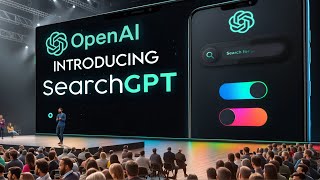
This content was created by LARRUZ. This content was uploaded by LARRUZ. This is a YouTube video titled "OpenAI's New SearchGPT Shakes Up the Industry, Google Stock CRASHES!" created on July 26, 2024. It discusses OpenAI's new AI search engine, SearchGPT, its features, and its potential impact on the search industry, particularly as a competitor to Google. The video also touches on OpenAI's financial challenges and Microsoft's support.
Questions this video answers
July 26, 2024
About 10,000
3.6% (after-hours trading)
About 90% of search engine traffic
Approximately $5 billion this year
Chapters
OpenAI has announced a new AI search engine called SearchGPT. Obviously it's powered by AI and it's setting up to be a serious competitor to the likes of Google and Bing. Let's unpack what this means and why it's such a game changer. So OpenAI is rolling out SearchGPT as a prototype to a select group of users and publishers. It's designed to combine the capabilities of OpenAI's AI models with real time web searches. What's different here is that SearchGPT doesn't just spit out a list of links, it actually organizes the information and presents it in a more user friendly way. Let me give you an example from OpenAI's blog post. Say you search for music festivals in Boone, North Carolina in August 2024. SearchGPT won't just throw a bunch of links at you, it'll give you a summary of the festivals it found, complete with little descriptions and links to the sources. They say their new search engine aims to make finding information online faster and more efficient. Everything is presented in a clear conversational format, which makes the whole experience a lot more intuitive. OpenAI is planning to eventually integrate these search features directly into ChatGPT, which could be a major upgrade for users who already rely on ChatGPT for various tasks. Now OpenAI is also addressing some of the major concerns that have come up with AI in search of We've seen other AI search tools like Google's AI Overviews and Perplexity face backlash from publishers. These tools have been accused of taking content without proper attribution, which can hurt traffic and ad revenue for the original sites. But OpenAI is taking a different approach by partnering with publishers and giving them control over how their content is used. They've even got big names like the Wall Street Journal and the Atlantic on board, which speaks to the level of trust they're building. One of the standout features of SearchGPT is how it handles attributions. When you search for something, you get answers with clear inline citations and links to the original sources. This not only helps users know where the information is coming from, but also directs traffic back to the publishers. This move is directed at fostering a more symbiotic relationship between AI tools and content creators. In the early stages, only about 10,000 test users will have access to SearchGPT. OpenAI is using direct content feeds and working with third party partners to build the search results. This approach is all about getting feedback and fine tuning the system before a wider rollout. The idea is to make web searches not just faster, but also more accurate and reliable. Now OpenAI's entry into the search market comes at a time when Google is facing significant challenges. The U.S. department of justice has an antitrust lawsuit against Google A accusing it of monopolizing the Internet search industry and this opens the door for competitors like SearchGPT to make a significant impact. Alphabet shares fell 3.6% in after hours trading following OpenAI's announcement of SearchGPT. Google, which currently dominates the search market with about 90% of search engine traffic, is facing a direct challenge from OpenAI's latest innovation. This development highlights the growing competition in the AI search space, particularly between Microsoft backed OpenAI and Google. Now OpenAI's new search GPT is a perfect example of why you actually need to know how to use AI to stay relevant at work. If you've been noticing a lot of people are losing their jobs just because they don't know how to use AI tools to make their daily tasks easier, the best way to keep your job and maybe even get ahead is to learn how to use AI and make yourself ten times more efficient. Now I've got something awesome for you. A ChatGPT and AI workshop hosted by Growth School. It's a three hour session all about using AI tools and ChatGPT and it's usually paid, but the first 1000 people can join for free. This workshop is a game changer for anyone working or running their own business. Our team gave It a perfect 5 out of 5 rating and you'll find the link in the description. It actually doesn't matter what you do, whether you're in tech, sales, marketing, HR operations, freelancing or running a business. This workshop will teach you strategies for getting a raise, job hunting, solving big data problems with Excel in just five minutes, personal branding, deep data analysis, and even business strategies. Hosted by GrowthSchool, this workshop has already helped over a million people. Supported by leading global investors. GrowthSchool was recognized as one of LinkedIn's top startups in 2022 and 2023, so don't miss out. Register now for free as one of the first 1000 participants. Click the link in the description to sign up. See you there. Alright, now back to the unfolding story of AI powered search engines. OpenAI's unveiling of SearchGPT has been seen as a significant threat to Google's search dominance since the rise of ChatGPT in 2022. In response, Google has integrated AI features into its own search engine to fend off competition from rivals like ChatGPT and Perplexity, which is backed by Jeff Bezos. Despite these efforts, speculation about Alphabet's potential vulnerability to AI competition had not materialized, as evidenced by Alphabet's recent double digit advertising revenue growth for its second quarter. SearchGPT, however, represents a more direct and formidable challenge to Google than previous innovations. OpenAI described it as a prototype designed to combine the capabilities of their AI models with real time web information, providing fast and timely answers with clear and relevant sources. Another really interesting aspect of SearchGPT is the visual answers feature. While full details are still a bit unclear, it seems like this will involve AI generated videos and images to enhance the search experience. This could be incredibly useful for visual learners or for topics that lend themselves well to graphical representations. OpenAI has been steadily moving towards tighter real time web integration for ChatGPT. GPT 3.5 was an early step in that that direction with more current information. Then came the Browse with Bing feature, a basic implementation but a clear signal of their intent. Now SearchGPT takes a major leap by making AI a central part of how we search the web. It's evident that OpenAI doesn't just want to compete with existing search engines, they want to fundamentally redefine how we interact with online information. By making searches more conversational and seamlessly blending up to date web data, they aim to create a smoother, more efficient user experience. Experience. This prototype phase is critical for working out any kinks and ensuring the system functions well for a wide audience before a broader rollout. They are obviously taking the time to gather feedback, make adjustments and deliver a polished product. It's clear now that SearchGPT isn't just about finding information. It represents a reshaping of the entire search experience to be more engaging, visually compelling and tightly interwoven with the ever evolving web. So what's next for SearchGPT? OpenAI plans to keep iterating and improving the experience, especially in areas like local information and E commerce. They'll be seeking feedback from both users and publishers to make the service even better. If you're interested in trying it out, you can sign up for the waitlist on their website. This SearchGPT release could really shake up the online search industry. With Google facing major antitrust lawsuits and new AI powered search tools like SearchGPT emerging, we're seeing big changes in how people will find and access information on the Internet. This is an area that's heating up, so it's worth paying attention as things are about to get competitive and disruptive. All right, now turning to a more critical matter. OpenAI is struggling with major financial problems. According to internal projections, the company is expected to lose a staggering $5 billion this year. That's right, $5 billion. To put that number into perspective, that's roughly the GDP of a small country. So what's going on? Well, it turns out that developing and maintaining AI models like ChatGPT is extremely expensive. The company needs to pay for massive amounts of computing power to process all the data and generate responses. And we're not talking about just any computers. We're talking about supercomputers that can handle enormous amounts of information. But that's not all. OpenAI has also been hiring a lot of new staff to help develop and improve its AI models. In fact, the company has doubled its workforce in the past year alone. And all those new employees come with a hefty price tag. Now, you might be wondering how OpenAI plans to make up for all these losses. Well, the company does generate some revenue from ChatGPT, but it's not nearly enough to cover its expenses. In fact, estimates suggest that ChatGPT only brings in around $100 million to $200 million per year. That's a tiny fraction of what OpenAI needs to break even. So who's footing the bill? Well, it turns out that Microsoft is providing subsidies to help cover its losses. But even With Microsoft's support, OpenAI is still struggling to find a way to make its business model work. The problem is that their primary focus is on research, not generating revenue. The company wants to push the boundaries of what's possible with AI, but that's a costly and time consuming process. And while ChatGPT has been a huge success, it's still not clear how OpenAI plans to monetize it in the long term. This raises some serious questions about the future of OpenAI. Can the company find a way to make its business model work? Or will it continue to rely on Microsoft subsidies? And what happens if Microsoft decides to pull the plug? The truth is, OpenAI's struggles are a reminder that developing AI is incredibly challenging and expensive. It's not just a matter of throwing a bunch of money at the price problem and hoping for the best. It takes time, effort and resources to create AI models that are truly useful and effective. But despite these challenges, OpenAI is still pushing the boundaries of what's possible with AI. And that's something to be excited about. With its talented team and focus on research, OpenAI has the potential to make some truly groundbreaking discoveries. Alright, if you liked this video, please give it a thumbs up and subscribe for more AI updates. Share your thoughts in the comments below. Thanks for watching and I'll catch you in the next one.










