OpenAI'S "SECRET MODEL" Just LEAKED! (GPT-5 Release Date, Agents And More)
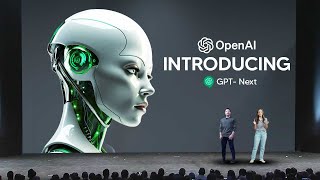
A May 24, 2024 YouTube video by LARRUZ reviewing leaked/under‑the‑radar announcements from OpenAI shown at Viva Tech. The uploader interprets a conference slide that labels the next-generation product as "GPT Next" (timeline: GPT-3 → GPT-4 → GPT Next) and points to a suggested release window around November 2024 (noting US election timing on Nov 5, 2024). The video also quotes Brad Lightcap on four OpenAI investment areas (textual intelligence, cheaper/faster models, custom models, multimodal agents), demos agent features (Assistance API, function calling, retrieval, code interpreter), and highlights comments from Sam Altman about compute scaling and forthcoming frontier capabilities.
Chapters
And we think that within maybe a year or two from now, the models will be unrecognizable from what they are today. And so this year we also plan to push that boundary even more. And we expect our next frontier model to come and provide, like a step function in reasoning improvements as well.
So there was actually a very, very interesting announcement that was made, but including myself, a lot of people didn't actually realize what the announcement was, and it was something that was quite under the radar. And. But in this video, I'm going to be showing you guys all of these secret announcements and some of the secret updates that are coming to OpenAI's models in the future. Well, in the very, very close future, including some of the key dates that were actually unveiled at a secret presentation. So one of the things that you can see here is this is an image that has been floating around on the Internet for the past 24 hours. And I've confirmed that this image is from the Viva Technology event, which is commonly known as Viva Tech. And it's an annual technology conference dedicated to innovation and startups. It's held in Paris in France and was founded in 2016 by the Publicis Group. And the event takes place at the Paris Expo. And it's pretty much the, or I should say one of Europe's largest tech and startup events. And it's mainly focused on tech innovation, along with some other key business insights. And from this image, it seems pretty simple, but there was something that a lot of people did miss. So we can see here that on the image that you're currently looking at, we have three main points. So what we do have is we have a situation where we have the 2021, which is the GPT3 era, the DaVinci model. And this was, of course, in 2021, you can see now. And this is actually super, super interesting. And this is why I think this video is remarkably important. You can see that we moved in 2023 to the GPT4 era, which is here. So you can see that this is around the time of GPT4 being released and being deployed. And what's very, very interesting is that it now shows a new piece of information that I would say is a little bit interesting. You can see that they describe this as GPT next. Okay, so I think that maybe GPT5 might not be coming. And when I say that, I don't mean GPT5. It isn't actually coming. What I mean is that GPT5, as you think of it, I think OpenAI are most likely planning a lot more than people think. And of course that is something that we even recently saw with the recently demoed GPTO. So it's crazy because it shows us that May 2024, which is, as you can see here today, and you can see it says May 2024. But what's crazy is that they've actually given us this release date for this GPT Next model. So you can see that if you look at this dot right here, we can see that this is actually November 2024. And this date is very important for a few reasons, which I'm going to explain in a moment. But I think one of the first things that, you know, really, really surprised me was of course the fact that this is called GPT next and not GPT5. Now, what's really, really crazy about this is that the craziest thing is that we can see that there is clearly some kind of increasing capability. So it is very, very hard to see this. But on the left hand side here it says Model Intelligence. So you can see that GPT3's intelligence was around this level. GPT4's intelligence, it doesn't really benchmark it, but I'm guessing that this is GPT4O. So you can see that there is a slight improvement there. Although the improvement is slight, the thing that you need to take into account is the fact that even if improvements are slight, it does mean that a lot of use cases are going to be pretty, pretty insane. Because if the model can get smarter and it can become more reliable, then it means the industries that it can impact are going to be a lot more overall. So I think one of the most important things that we could see here is that the model intelligence from GPT4O or GPT4 completely does a huge, huge jump. We can see that literally from this level to this level, we can see that it's that amount of jump. But from here it is a quite big jump. And in fact, I probably should be using some actual arrows. Apologies for my terrible drawings, but the point I'm trying to make here is that it seems that the kind of jump that we're about to get here with this GPT Next model, it looks really, really surprising. And it's something that they've constantly reiterated that these future models are going to be very, very intelligent in terms of how smart these systems are. And whilst, yes, there might be other features, this is something that we do know. Now, one thing that I did want to talk about about this GPT Next model, because of Course they could have simply put that this is going to be GPT5, although of course they don't want to officially announced it. It could just be a placeholder for GPT5. I think that it might not be GPT5, but I'm going to dive into that one second. But one thing I want you guys to know is that this release date right here of November 2024 is a key date because this makes sense for the release date of the next model, whether it's GPT5 or whether it's GPT next, whatever other models there are. I think it's important to note that this date has been said by OpenAI a few times. So one of the key things coming up this year, and I know some people don't live in America, so you might not pay attention, but There are the 2024 United States elections. This is going to be taking place on Tuesday, the 5th of November. And you might be thinking, okay, but those are the elections. What does that have to do with actual AI systems? Like, I mean, that's politics, this is technology. In fact, those things are very, very closely intertwined because OpenAI themselves, take did actually make a statement regarding this and the elections are actually a reason for the delay of GPT5, as many people did think that GPT5 was scheduled to be released in summer. However, you can see right here, OpenAI CTO Mira Moratti recently confirmed that the elections were a major factor in the release of GPT5. We will not be releasing anything that we don't feel confident or on when it comes to how it might affect the global elections or other issues, she said last month. So whilst yes, we did just get a pretty, pretty crazy demo of GPT4O, a multimodal AI that just completely, completely shocked the industry, it is pretty, pretty incredible that you can see here that OpenAI are really, really concerned with as to what the, the future models are going to be able to do in regards to the election. Now I think it's going to be either one of two things. One of the things is that because there is an election coming up, there are always different discussions on what could happen and the kinds of, you know, conversations going on around privacy issues and just a million different conversations that are going to be had. And the problem is, is that if OpenAI does release a model before the elections, then, then you could face a negative PR situation like the public could be negatively thinking about OpenAI. And of course, yes, this week OpenAI have had a huge, huge, huge amount of bad news. In their favor due to some of the things that have been going on at the company, from people leaving to Sam Altman doing, you know, some questionable things. Depending on where you stand, I think it's important to not release models during that time because it's at a time where if the technology is as truly advanced announced as the graph shows us, then it's definitely going to be more widely received as a model that is, you know, something that is threatening the individual democracy of the United States. Because if it has the ability to influence people, then some individuals might say that this was all timed. And you know, with politics, things do get really, really difficult really, really quickly. So I think this does make sense. Now, I could be wrong, but the fact that we do have the OpenAI CTO stating that they're not going to be releasing anything and the fact that of course, GPT Next is in quotation marks here, and that there's going to be that at November 2024, just after the elections, I think November 2024. And considering that previous rumors around that time also did say that, I think that this also does make sense. Now here's where he actually talks about the GPT Next models. This is a very, very fascinating clip. And there is also this graph right here. It is very, very, very hard to see. Like very, very, very hard to see. But if you zoom in, you can see that there is also this graph. You can see that GPT3 era GPT4, GPT next. And you can see that this one doesn't actually have the dates on it. So I'm guessing that before when they had the dates. So that may have just been a mistake based on proprietary information. But of course now the information is out there, Although we don't know what date it's going to be. We know that after November 5th up until the end of November, there's probably likely going to be some kind of model. But anyways, we are really excited for this, but I'm going to show you guys what he talks about here because it's.
There are four investment areas I'd like to cover. The first key priority that we have is textual intelligence. And our core belief is that if we increase textual intelligence, that will unlock trust transformational value in AI. And you can see on the screen here, These are the two major models that we offer today. GPT4.O, the best model with native multimodality that we just showed, and GPT 3.5 Turbo 10x cheaper, which is convenient for simple tasks where what you need is really things like classification or very simple entity extraction. And we really expect that the potential to increase DLLM intelligence remains huge. And today we think models are pretty great. They're kind of like first or second graders. They respond appropriately, but they still make some mistakes every now and then. But the cool thing that we should remind ourselves is that those models are the dumbest they'll ever be. They may become master students in the blink of an eye. They will excel at medical research or scientific reasoning. And we think that within maybe a year or two from now, the models will be unrecognizable from what they are today. And so this year we also plan to push that boundary even more. And we expect our next frontier model to come and provide like a step function in reasoning improvements as well. The second investment area for us is to make sure the models are cheaper and faster all the time. And we know that not every use case requires the highest level of intelligence. And so that's why we want to make sure that we invest. And you can see here on the screen the GPT4 pricing and how much it's decreased by like 80% and in just a year. It's quite unique, by the way, for a new technology to decrease in price so quickly. But we think it's really critical in order for all of you to build and reach scale with what you're trying to accomplish and innovate with your AI native products.
So I think that that short snippet from this tech conference was rather insightful because he actually said a numerous amount of different things in that short snippet, but I think some of them were more important than others. Of course he talks about the price decreasing, but one of the things that he did mention that was rather, rather fascinating, and this is someone that is from OpenAI, he actually speaks about the fact that literally within one to two years, the models are going to be unrecognizable. So that is something that even as someone who pays attention to the AI space and as someone who looks at all of the AI updates in many different things, that I literally don't even post on this channel, that this is still something that is rather surprising. And I think it's because humans do have a hard time at grasping the nature of exponential increases in terms of technology and intelligence. So I think this is going to be a truly, truly transformative period in terms of what is going to come out of this company within the next five to 10 years. Because if he's stating that literally the models are going to look unrecognizable within one to two years. I mean, in 2026, this isn't far away. You know, two years is a very short time period, especially for these kinds of technological developments. Now, something that he also said that I thought was also rather insightful was that he mentioned a step function in reasoning. And for the next models this likely means, as we've already discussed, that this is a significant discrete improvement in the AI's reasoning capabilities rather than a gradual incremental improvement. Essentially this just means that in contrast to the gradual improvement, that a step function implies a sudden substantial improvement at a particular point, which is followed by a new level of capability. And this change is most more abrupt and significant compared to the gradual improvement and with the reasoning abilities. Current models like the GPT3 and GPT4 have of course made significant strides in their ability to reason and understand and generate text, but their abilities to reason can still be limited in certain contexts. So the GPT NEXT models means that a step function in reasoning could mean that they make a substantial leap in their ability to understand process, understand process and generate more complex abstract and logical forms of reasoning. And because of that increased level of reasoning, it means that they've got improved problem solving. And this means that these models are going to be better at tackling complex problems that require multi step and logical reasoning. Of course this means enhanced understanding. This means that the AI could understand context and nuances in a more human like way, leading to more accurate and relevant responses. Decision making these models would likely be able to make more sophisticated decisions based on the information provided, similar to higher order thinking. And like I said before, this is just once again going to open up a lot more applications. They even spoke about how it's going to be able to do medical research. We've seen that Google has been pushing widely on that frontier with the Medical Gemini and they've achieved remarkable benchmarks. And I wouldn't be surprised if OpenAI are doing something in that realm. Now one of the things that I also want to talk about was of course the fact that this release date is rather fascinating. And the name of the model did actually make me think about something that was spoke about previously. You can see here that we have a model that is called GPT Next. But one of the things that I spoke about when covering the Sam Altman Lex Friedman interview was the fact that he said something rather insightful. He said that the future models that he releases might not actually be called GPT5. And of course there might be GPT5 because they did trademark it but he did state that, you know, whatever the next model may be, we're not sure when it's going to be released or what it's going to be called. Oh, that's the honest answer, is it? Blink twice if it's this year before.
We talk about like a GPT5 like model called that or called or not called that or a little bit worse or a little bit better than what.
You'D expect from a GPT5.
I think we have a lot of.
Other important things to release first.
I don't know what to expect from GPT5. You're making me nervous and excited. What are some of the. So right there you can see that Sam Altman is actively talking about how they are going to release a few things before GPT5. Of course, you know, we've seen things like Voice Engine, we've seen Sora, we've seen a bunch of other things. But you know, the way how he talks about how these future models might not even be called what we are expecting them to be called is of course rather fascinating too. Now, one of the things that you may have seen recently was this from Microsoft and this is basically where they talk about the levels of compute that they using to train the next frontier models. And currently we can see that the diagram they use sharks and marine life to I guess you could say, help us understand the scale of compute that they are currently using. We can see that we have a shark here, then of course we have an orca and then of course we have a whale. So I mean the stark increase in terms of the capabilities from this graph going back all the way to the first graph are very, very similar. The GPT3, the GPT4 technology is only a little bit. And then of course the next levels, I think maybe OpenAI clearly have discovered something incredible and they're probably going to shock the world because if you're using that much compute to train something and you've also improved your architecture, then I think the amount of capabilities that you can get is truly, truly surprising. And I think this is so surprising because not only do we have maybe not improved architectures in terms of the transformer, but I'm talking about certain techniques that OpenAI are pioneering and that using to advance the frontier in terms of the reasoning and the capabilities of their models. And I'm going to show you guys a short snippet from this clip where it's actually spoken about in great context about why this is so pivotal. And the only reason I'm showing you this is because now with the added context from this slide here where we can see that. Oh wait. And the only reason I'm showing you guys this clip is because now with the added context of this previous graph where we can literally see in terms of the capabilities jump, I think it's important to understand the compute side behind.
It, that frontier forward. And like we showed this slide at the beginning, like there's this like really beautiful relationship right now between the sort of exponential progression of compute that we're applying to building the platform, to the capability and power of the platform that we get. And I just wanted to, you know, sort of without, without mentioning numbers, which is sort of hard to do to give you all an idea of this scaling of these Systems. So in 2020 we built our first AI supercomputer for OpenAI. It's the supercomputing environment that trained GPT3. And so like we're going to just choose marine wildlife as our scale marker. So you can think of that system about as big as a shark. So the next system that we built scale wise is about as big as an orca. And like that is the system that we delivered in 2022 that trained GPT4. The system that we have just deployed is like scale wise, about as big as a whale relative to like you know, the shark sized supercomputer and this orca sized supercomputer. And it turns out like you can build a whole hell of a lot of AI with a whale sized supercomputer. And so one of the things that I just want everybody to really, really be thinking clearly about and like this is going to be our segue to talking with Sam is the next sample is coming. So like this whale sized supercomputer is hard at work right now building the next set of capabilities that we're going to put into your hands.
And yeah, if you saw it there, he said you can build a whole hell of a lot of AI with a large amount of compute. So I'm really intrigued with as to what a whole hell of a lot of compute is going to be giving us. But one thing I do note is that there is going to be a huge amount of capabilities. Now something that they also spoke about was of course, multimodal agents. This is going to be something that is here within the next level of frontier state of the art models. I think that maybe this year we get something. But there are also some other things I do want to talk about with as to why we might not get that. But they also demoed the multimodal agents and of course you can see that their investment areas are the textual intelligence, cheaper and faster models, the custom models, and of course multimodal agents. So I want to show you guys this short clip because OpenAI haven't really shown us that much in terms of the agentic workflows. But I think it's important to take a sneak peek because agents are truly going to change the way that we interact with computers.
We really believe that like in the future, agents may be the biggest change that will happen to software and how we interact with computers. And depending on the task, they'll be able to leverage text, they'll be able to leverage access to some context and tools. Again, all of these modalities that we mentioned will bring also a fully natural and novel way to interact with the software. One example of this that I personally love is Devin by the team at Cognition. They built essentially an AI software engineer and it's pretty fascinating because it's able to kind of like take a complex task and it's able to not just write code, but it's able to also understand the task, create tickets, browse the Internet for documentation, when it needs to fetch new information, it's able to deploy solutions to create pull requests and so on. So it's kind of like one of those agentic use cases that I really love. And in fact this tweet from Paul Graham earlier this year kind of caught my eye because he mentioned or realized that the 22 year old programmers these days are often as good as the 28 year old programmers. And I think when you reason about how the 20 year olds are already adopting AI and tools like Devin, it's no surprise that they're getting more and more productive thanks to AI. Another agent experience that I think this time is more towards consumer is Presto. And Presto is letting customers place orders with their voice. So using a voice agent. And of course there's not many drive throughs here in Europe, but what I found compelling about this example is that it's really helping a market where there's been a labor shortage. And so in turn that helps offer not only a great experience, but also lets the staff actually focus on food and serving the customers. But with that I'd like to dive into a couple more live demos to illustrate a little bit how you can build assistive experiences and agents practically today. So our first incarnation of so yeah.
With that you can see that literally one of the things that this AI powered drive thru system is is it's actually been impacting people because one of the things that you might not understand about drive throughs is that they're kind of limited to human intelligence. And one of the things I was thinking about when I saw demo in a weekly AI video I covered when someone was actually going through a drive thru with an AI system and they basically spoke about how it was so crazy because you know, an AI system is able to completely understand exactly what you want. It's able to understand exactly what you want in other languages too. And it's also able to converse with you in other languages too. Much more fluently than just someone who only speaks one language and isn't bilingual or able to understand other languages. And it's patient and it's fast and I think it's something that's going to allow a lot more unique experiences. So that's why agents are something that is very, very impactful because I think this is where you're really going to see that real life impact other than just in a day to day LLM interface.
Welcome to Wendy's. What would you like? Can I have a Chocolate Frosty? Which size for the Chocolate Frosty medium? Can I get you anything else today? No, thank you.
Great.
Please pull up to the next window.
So now let's take a look at some of these demos of these agentic workflows that you can actually use and do. And what they've shown us in this.
Presentation incarnation of agents for developers is what we call the Assistance API. And the Assistance API is a complete toolkit that all of you can use in order to bring assistance into your products. So in this case here I'm building this like travel app called Wanderlust and you can see there's look a map on the right side but there's also an assistive experience experience on the left side. And so this is completely powered by the Assistance API. So let's take a quick look. If I say top five venues for the Olympics in Paris, first of all, first thing to note I don't have to manage any of those. Let's refresh the app a little bit. Sounds like we maybe lost network top five venues for the Paris Olympics, the first thing to note is like I don't have to manage that conversation history, that conversation these trees automatically managed by the assistance API from OpenAI and so I don't have to kind of manage my prompt and so on. Not sure what's happening here. Let's take a quick look. Might have lost some WI fi or connection. Nope, let's try it one last time. Let's go to roam. Ah, there we go. Sounds like the Olympics was bad luck, but sounds like we're back. So, yeah, I don't have to actually manage any of those messages. The conversation history is automatically managed by OpenAI. The second thing that's really cool to call out here is that, as you could see, when I started to interact with these messages, the map zoomed automatically. And that's one of my favorite features when I build agents. It's called function calling. Function calling is the ability for all of you to bring knowledge about your unique features in your app and your unique functions over to the model. In this case, GPT4.0. So if I say, top five things to see in Rome, let's see what happens here. In theory, what should pop up here is once again an interaction between the tests and the map. Here we go. So now, as you can see, as we are talking to the model, it's able to actually pinpoint the map because it knows that this feature exists. So it's really, really cool. And that's like, already available as part of the toolkit of the assistance API. Now, another tool I wanted to call out here is knowledge retrieval. And we know so many of you want to bring like, factual data into the conversations with models like GPT4.0 and usually you have to to build a retrieval stack to do so. And we've learned from so many developers how complex that can be. And so we've made a ton of improvements in our retrieval stack. And so I'm going to try to see if I can actually demo this in real time. So I actually bought this book to prepare a trip to Italy from Lonely Planet. It's a pretty comprehensive book. It has like 250 pages, it's like 95 megabytes. So I hope the upload is going to work. Taking a bit of a risk here, but what's happening in real time is like, as soon as the file will be uploaded, it will be automatically embedded by the assistance API so that I don't have to think about any of these things to do, I will be able to just start interacting in the conversation and say, based on this book, what's the best photo spot in Lazio? So before I press enter, I'll show you a quick look at page 126, I believe. Let's go to page 126. So the page 126 talks about Lazio, right? And so I'm going to ask the question here, what's the best photo Spot in Lazio. And as I'm browsing the book, we're noticing here that, like the photo opportunity was mentioned on page 128 and it's supposed to be Pitigliano and boom, in real time, we were able to find in this book that this is exactly the place for Photo Spot. And again, I had to do no engineering work. I just had to upload the file in the conversation as well. All taken care of for me. Last but not least, there's also another tool that I wanted to highlight called code interpreter. And code interpreter is this ability to write Python code in the background to answer some very precise questions, usually around like numbers and math and financial data. So here, for instance, if I were to say in this conversation, we are sharing an Airbnb for four, it's €1200. What's my share? Plus my flight cost of, let's say 260. Now, by asking this question, this is not a typical thing that LLMs do great at by default, right? But what's happening behind the scenes is that we're actually computing all of this, including currency conversion and so on, by writing code in the sandbox. And once again, as a developer, I have nothing to do. But because OpenAI is managing this does not mean it's a black box. In fact, if I go here and if we refresh the threads, we should see here that this is the exact threads that we've been feeding. And you can see we're going to roam like all of the messages. We see the function calls that I highlighted to annotate the map. And here, this is the Python code that was written behind the scenes to actually answer the question, compute the currency conversion, divide by number of people and so on. So really, like the Assistant's API complete toolkit with conversation history, with access to retrieval and files, you can upload now up to 10,000 files in retrieval and even code interpreter and function calling. All of this where you can build on from day one.
So let me know what you think about future models. I mean, one of the things that is a little bit confusing is the fact that they do have GPT6 and other names trademarked. So I'm wondering if they're just going to continue with the traditional methods. But it is quite hard to predict considering the fact that OpenAI is a company that comes with a lot of drama and, of course, a lot of surprise. And with the rate that AI is exponentially increasing in terms of the capabilities and everything new being discovered, what feels like every week, I mean, you know, the capabilities trying to predict a year, two years, three years from now are quite hard. But I think from this, we do know that, you know, November, there's probably going to be a new model released. Whether it is GPT next, whether it is GPT five, I can say one thing is certain is that it's going to be a monumental leap in terms of the capabilities and usabilities of what we're about to see. Okay, that was.










