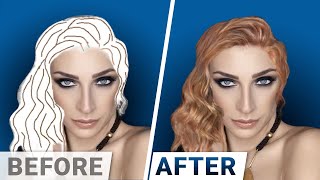
A Two Minute Papers YouTube episode (host: Dr. Károly Zsolnai-Fehér) that presents a new AI method for turning rough hairstyle drawings into photorealistic images. The video highlights the technique's speed and controllability (color, length, braids), shows visual comparisons where the new method outperforms prior approaches and sometimes even appears more realistic than the photograph, and notes remaining issues (geometry artifacts, slightly lower hair resolution). The episode closes with a sponsor mention (Weights & Biases).
Chapters
Dear fellow scholars, this is Two Minute Papers with Dr. Zsolnai. Today we are going to open an AI powered hair salon. How cool is that? But how? Well, we recently looked at this related technique from Nvidia that is able to make our rough drawings come to life as beautiful photorealistic images. In goes a rough drawing and out comes an image of this quality. And it processes changes to the drawings with the speed of thought. You can even request a bunch of variations on the same theme and get them right away. So here is a crazy idea. How about doing this with hairstyles? Just draw them and the AI puts it onto the model and makes it look photorealistic. Well, that sounds like science fiction, so I will believe it when I see it. And this new method claims to be able to do exactly that. So let's hit the pros first. This will go in and this will come out. How is that even possible? Well, all we need to do is once again produce a crude drawing that is just enough to convey our intentions. We can even control the color, the length of the hair locks, or even request a braid. And all of these work pretty well. Another great aspect of this technique is that it works very rapidly, so we can easily iterate over these hairstyles. And if we don't feel like our original idea will be the one, we can refine it for as long as we please. This AI too works with the speed of thought. One of the best aspects of this work. You can see an example here. This does not look right yet. But this quick iteration also means that we can lengthen these braids in just a moment and. Yes, better. So how does it perform compared to previous techniques? Well, let's have a look together. This is the input hairstyle and the mat telling the AI where we seek to place the hair. And let's see the previous methods. The first two techniques are very rough. This follow up work is significantly better than the previous ones. But it is still well behind the true photograph. For reference, this is much more realistic. So hold on to your papers and let's see the new technique. Now you're probably thinking. Karuj, what is going on? Why is the video not changing? Is this an error? Well, I have to tell you something. It's not an error. What you are looking at now is not the reference photo. No, no. This is the result of the new technique. The true reference photo is this one. That is a wonderful result. The new method understands not only the geometry of the hair better, but also how the hair should play with the illumination. Of the scene too. I am a light transport researcher by trade and this makes me very, very happy. So much so that in some ways this technique looks more realistic than the true image. That is super cool. What a time to be alive. Now not even this technique is perfect. Even though the new method understands geometry better than its predecessors, we have to be careful with our edits because geometry problems still emerge. Look here. Also, the other issue is that the resolution of the generated hair should match the resolution of the underlying image. I feel that these are usually a bit more pixelated now. Note that these kinds of issues are what typically get improved from one paper to the next. So you know the deal. A couple papers down the line and I am sure these edits will become nearly indistinguishable from reality. As you see, there are still issues. The results are often not even close to perfect, but the pace of progress in AI research is nothing short of amazing. With this we can kind of open an AI powered hair salon and some cases will work. But soon it might be that nearly all of our drawings will result in photorealistic results that are indistinguishable from reality. This video has been supported by Weights and Biases. Look at this. They have a great community forum that aims to make you the best machine learning engineer you can be. You see, I always get messages from you fellow scholars telling me that you have been inspired by the series but don't really know where to start. And here it is. In this forum you can share your projects, ask for advice, look for collaborators and more. Make sure to visit wnb Me Paperforum and say hi or just click the link in the video description. Our thanks to Weights and Biases for their long standing support and for helping us make better videos for you. Thanks for watching and for your generous support and I'll see you next time.