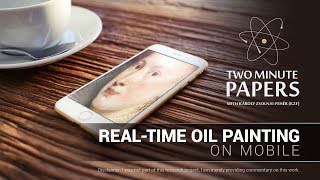
A short Two Minute Papers video (April 9, 2017) by Károly Zsolnai-Fehér summarizing a research paper that presents a real-time oil-paint simulator for mobile devices. Key features: adjustable pigment concentration, brushstroke direction control, a viscoelastic shallow-water simulator supporting multiple (even partially-dried) paint layers, and interactive lighting and gravity effects; a user study reported strong positive artist feedback.
Chapters
Dear fellow scholars, this is two minute Papers with zsolnai. It's been quite a while since we've talked about a paper on fluid simulations. Since my withdrawal symptoms are already kicking in today, I simply have to talk to you about this amazing paint simulator program that runs in real time and on our mobile devices. These handheld devices typically have a lower image resolution compared to desktop computers than Therefore, it is indeed a challenge to put together a solution that artists can use to create detailed paintings with and to accomplish this. This piece of work offers several killer features. For instance, the paint pigment concentration can be adjusted. The direction of the brushstrokes is also controllable. And third, this technique is powered by a viscoelastic shallow water simulator that also supports simulating multiple layers of paint. This is particularly challenging as the inner paint layers may have already dried when adding a new wet layer on top of them. This all has to be simulated in a way that is physically plausible, but we are not done yet with many different kinds of paint types that we are using. The overall outlook of our paintings are dramatically different depending on the lighting conditions around them. To take this effect into consideration, this technique also has an intuitive feature where the effect of virtual light sources is also simulated and and the output is changed interactively as we tilt the tablet around and get this gravity is also simulated and the paint trickles down depending on the orientation of our tablet according to the laws of physics. Really cool. The paper also shows visual comparisons against similar algorithms and clearly artists who work with these substances all day know exactly how they should behave in reality. So so the ultimate challenge is always to give it to them and ask them whether they have enjoyed the workflow and found the simulation faithful to reality. Let the artists be the judge. The user study presented in the paper revealed that the artists loved the user experience and they expressed that it's second to none for testing ideas. I am sure that with a few improvements, this could be the ultimate tool for artists to unleash their creative potential while sitting outside and getting inspired by nature. Thanks for watching and for your generous support and I'll see you next time.