Roger Reaves: Smuggling Drugs for Pablo Escobar and the Medellin Cartel | Lex Fridman Podcast #199
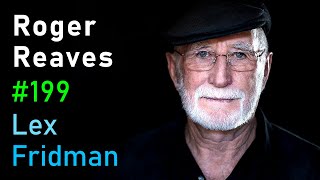
A long-form interview (Lex Fridman Podcast) with Roger Reeves, a prolific drug smuggler who worked with the Medellin cartel (Pablo Escobar, Jorge Ochoa) and with fellow smuggler Barry Seal. The conversation covers Reeves's motivations, logistics and routes for smuggling cocaine and marijuana, his relationships with cartel leaders, arrests, torture and multiple prison escapes, and reflections on family, faith, and the harms of the War on Drugs.
Chapters
The following is a conversation with Roger Reeves, one of the most prolific drug smugglers in history. He worked for Pablo Escobar and Jorge Ochoa, the leaders behind the Medellin cartel. Roger was the employer and close friend of Barry Seal, the infamous drug smuggler who was the main character in the movie American Made. Roger transported countless tons of cocaine and marijuana covering six continents. He escaped prison five times, was shut down in both Mexico and Colombia, and was tortured nearly to death in a Mexican prison. Through all of this, his wife Mari, the love of his life, was there with him, and when he was in prison, she waited for him. He recently got out of prison where for many years he worked on his memoir called Smuggler. This podcast is an exploration of his story. Quick mention of our sponsors Noom, Allform, ExpressVPN 4 Sigmatic and Asleep. Check them out in the description. To support this podcast, let me say a few words about Roger Reeves, Pablo Escobar and the War on Drugs. This conversation with Roger is unlike any I've ever done. In the eyes of many, including the law, Roger is a criminal, a bad man who has added to the suffering in the world. But he never directly engaged or participated in the violence. Unlike his bosses, Pablo Escobar and Jorge Ochoa, his crime was a transport of drugs. I thought about this and about Pablo Escobar, who was at once both a brutal murderer and a Robin Hood figure who helped the poor and was loved by thousands, if not millions, who sometimes idolize murderers and and destroy good, honest men. We give power and money to corrupt politicians and dictators that starve and murder their own people. Given this, I think about what makes for a good man and what makes for a bad man. And who decides? Sitting across from Roger, I saw a complicated man, but one who has kindness in his heart, a love for money and adventure, and a disdain for violence. Again, his crime was the transport of drugs. Since 1971, the war on drugs has cost us $1 trillion. Marijuana legalization alone would save and make $13.7 billion. That could send more than 650,000 students to public universities every year. Then there's the human stories of the 500,000 human beings sitting in prison for drug related offenses and the 1.1 million on probation and parole. Their life is damaged or ruined beyond repair due to the prohibition of drugs. There's a lot more to be said about the damage done by the war on Drugs. But when reading about Roger's story and talking to him, I couldn't escape the thought that while society wants to label Him, a criminal and a bad human being. There are much worse men out there who we give a pass to, even give power to, even men who hold political office or run companies. I also think about my role as an interviewer, sitting across a man like Roger in these interviews. In life, in many ways, I continue to be myself, a person who, like Dostoevsky, is the idiot, seeks the good in all people, but is hurt by it on occasion and maybe is destroyed by it in the end. I'm not naive, but I'm also optimistic and have hope for humanity. That's who I am, and that's what these conversations are. I hope you join me, and I hope you understand that I come from a place of love. This is the Lex Friedman podcast, and here's my conversation with Roger Reeves. You are one of the most prolific drug smugglers in history. What would you say motivated you? Money, Power? The thrill? Or was it something else?
Money.
But isn't there a point where you've had more money than you can possibly know what to do with? Or is it always more money?
You know, I had plenty of money, several times. And I think it's sort of like if you was in Las Vegas and you had the slot machine handled down and the gold coins was tumbling around you and you had sweepers bagging them up, when would you let it go?
But isn't some part of that the thrill then?
Oh, there was a lot of thrill, sometimes way too much.
You made certainly tens of millions of dollars, probably much more. What memorable experience did having that much money make possible for you? So there's one thing is the money, and the other thing is what that money can buy.
Well, I bought everything that I could hide. I bought seven farms. I owned the. The city, the land where the city of Marino Valley, California, is. I had an option on that land, did the planning and development of that. The most expensive corn in the world. Yachts, ships, airplanes galore.
That bring you happiness?
No, absolutely not. In fact, I think I'm happier now. I know I'm happier now.
So, looking back, would you do it the same way all again?
No way.
Really? Even the thrill of it?
Not even the thrill of it. It wasn't worth 33 years in prison being away from my lovely family.
So, money. What about the power? Just being on top of the world where nobody can, not the governments, the police, all the big bad agencies chasing you, and you could do whatever the.
Heck you wanted as far as having to look over your shoulder everywhere you went and every phone call you made, make sure that you was naked with somebody in the ocean before you talked. It's rather uncomfortable. Yeah.
I like to make phone calls the same way. What was it like meeting and working with Pablo Escobar, the leader of the Medellin cartel?
He was just seemed like a gentleman when I met him, just like you. And I sitting here, shook hands, and I had flown one load for a fellow and it didn't work out well. The fellow that I gave it to got shot. And it took a while to get my money. And they didn't put as many kilos on the plane as they're supposed to, so I wasn't going to work with them anymore. And my contact down there introduced me to Jorge Ochoa. And we went up and invigado. We went up, the gate opened, and we was escorted in. They must have been 50 men out in the yards, hitching rail on an old house. And we was escorted right in. And they was a beautiful woman in there. I mean, Gore, drop dead beautiful. And she made us a cup of coffee, then was ushered in to see Jorge Ochoa. And he had 12 telephones on his desk, and all of them was a different color. And he shook hands, was very friendly, spoke English. And he said that each one of those telephones represented another city in the United States. This is Chicago, and this from New York. If I ring, I knew who's calling. And so we chatted a while, and he asked me what type of airplanes I had and what experience I had flying across the US Border. And I told him, he seemed pleased with it. And he called the lady in and she went next door, and in came Pablo Escobar. And he introduced me to Pablo Escobar. And he asked the same questions again. And I answered him. And I says, and I asked him how much they paid. And they paid $5,000 a kilo to haul it. And so I said, how much you put on the plane? He's 300, 500. That's one and a half, two and a half million dollars for an eight hour trip. Sounded pretty good to me.
And we're talking about cocaine.
Cocaine.
We're talking about Colombia.
Colombia and cocaine and Medellin cartel.
And Jorge Ochoa was one of the. What would you say, founding members.
Probably the brains behind the whole thing.
The brains and spoke good English.
Yes.
And they were nice people, really nice people. Were you scared?
Not at all.
What's wrong with your mind that you weren't scared? Here's some of the most dangerous men in this world, and you weren't scared.
Well, I knew I was going to do exactly what I said I was going to do. Murray and the children were down there. They went down and they stayed in the hotel Five Star and treated royally on my first load. And they just did as security to make sure that I wasn't a DEA agent. So I did the first load. And they can say they were hostages, but they really weren't. It was just insurance.
So there was some integrity to the.
Way they operated completely. I mean, straight, straight up. The money was ironed and banded and just right. And the numbers were never once anything wrong with it.
What would you attribute that honesty to? Within their own moral system and their own set of rules, why weren't people crossing the line and shaving off the top and injecting chaos into the system to where it would be unpredictable and people would be dishonest and greedy and all those kinds of things?
That's true. Most people are. But there's certain people at the top of the food chain that they don't need that. And if they are completely honest, then they don't have to think of, remember the lie they told. And plus, they just honest to start with. They're. They making plenty of money. They was making as much money as I did. I. I'll tell you how that that came about. I understand that 10,000 people were killed every year in Medellin, Colombia. And what they were doing, they didn't. They didn't have any organization. And if One fellow had 10 kilos and he wanted it shipped to New York, he would tell his friend, his friend says, sure, I'll ship it. I have a pilot and I'll ship it up. And then he would look in the newspapers, oh, 40 kilos was busted in New Jersey. I'm so sorry yours got busted. Bang, bang, he's dead. So here comes Jorge Ochoa and three Ochoa brothers and Pablo Escobar and Gotcha. And they decided that we will make an insurance company that we would charge you $10,000 to take it to your contact in Miami if it gets lost anywhere between the time I put it on the airplane or the time you give it to us and the time we give it to your man, we will replace it in Columbia for you. So there was no way anybody could lose. And I understand they got 100 tons piled up under that insurance program. And I was right there the first day, so I had all the work I could do. I would land. And I said, when do you want me to come back? We waiting on you, senor.
Well, Let me ask a difficult question. Some see Escobar as a brutal murderer, and some see him as maybe a Robin Hood like figure who helped the poor. How do you see the man?
Both of them, I think he started out to be honest with help the poor. And then they had a war down there and they blew up and killed his people. And the country was divided almost equally three ways. They had the military, they were just as much into it as anybody. And then you had the fart guerrillas. They had about a third of the country. And then you had the conchers. It was like the white farmers. And they are the ones that I was dealing with. And they were at war with one another. And so if one of them started killing their people, well, I'll kill some of yours too. So that's how it happened. And then when I heard about Pablo Escobar blowing up that airliner and killing those women and children, I was sorry I ever shook his hand. That's. That's brutal murder.
So you would say Escobar is not a good man.
Not at all. It's terrible now, looking back on it. But when I met him, he was good, did just exactly what he said he would do.
Could he be a bad man and a man you can trust? Are those.
Absolutely. You could trust him, yes.
So from your perspective in terms of business, he was reliable, he was honest, had integrity, you could work with him.
He felt safe completely. We flew up and to his ranch and he brought out motorcycles to start with. And can you ride a motorcycle? Of course I can ride a motorcycle. So I took off across the grass and there was a little ditch there in the front wheel dropped in that thing. And I must have slid across that grass 20ft before I got stopped. He almost fell off his. His bike waiting, because they knew what it's going to do. And then we got on horses and went out there and pretended typed or round up some cows. And he put a Mac 10 machine gun, pistol over my shoulder. You know how to use this? Well, I never had, but it was all right. I think it was like, okay, you got 10 bodyguards. What do you need me for? So that's kind of time we laughed and talked and drove some cows over the stumps.
He said Jorge Ochoa was perhaps the brains of the Medellin cartel. What was he like and why do you say he was the brains?
Well, he was a gentleman. And I suppose he shipped no telling how many more times of cocaine than Pablo did. Just him and his brothers. You could tell by the they had on each Load. They was in duffel bags and his big football shaped fluffy stuff made with ether. And they would have three horns on it or a rattlesnake or 4x is on each bag. You kind of got to know in which was which was which. And they shipped a lot, so. And he was just a gentleman. I took the family, we went one weekend to his rancher, his palatial place out near Baron Kia. And oh, he just treated the family. His family had a. His younger brother made a bull fight and we had skiing and little airplanes on floats on the water. It was really nice and he was really nice.
How do you make sense of the tension that a man could be a gentleman, can have integrity, but also be a murderer?
Well, murder is a stronger word than killing.
Can you explain the line, the gray area we're talking about? I mean, I've just talked with Jocko Willink and we talked a lot about killing in the context of military conflict, in the context of war. So there, there's a line between murder and killing that you can draw. What's the line that you're referring to?
It's something similar. If you, if people shooting at you and you shoot back and kill him. I don't, that's not murder whatsoever. It's trying to get away or out of the situation. But if some woman don't pay you and you send a hitman over to kill her and her children, that, that's.
That's murder.
That's murder.
Was Jorge involved in those kinds of things?
I don't think so at all. It just, I mean, he was, he was just such a gentleman. He had a restaurant before and, and he was just smart. I understand that the first 10 kilos he sold, he was sitting on a motorcycle in the, in the sidelines in a parking lot when the DEA come in, he sped away. So he didn't come back to America. He was just smart. Some people just have. Are savvy. And he was such a gentleman. And the whole family, the mother and the father, the two brothers, their sister, I was there when she was kidnapped. And finally he kidnapped our, I guess 100 leaders of the FARC and said, all right, she don't come back. None of these are going to come back. So they made a deal.
Is there something you can say about the power structure, the hierarchy of the Median cartel that you interacted with? Was, was it a dictatorship where Pablo ran everything? Was there a bunch of power centers? Was it like a company, would you have, CEO, CTO kind of thing? And then there's like managers and all those kinds of things. What's the. Like. How did it run from a leadership perspective?
I understand that about five of them got together and made this. I will call it an insurance company, and now known as the Medellin Cartel. And I didn't see any difference. Each one of them had their own business, and their people from the jungle or wherever made the cocaine, gave it to them, and they shipped it. And so it didn't seem to be any power play between them at all. But my main contact was Jorge Ochoa, and Pablo Escobar was right there, and I hauled plenty of stuff for him, too.
It's strange that they didn't betray each other regularly. You know, greed makes men betray each other. How do you explain that? How much betrayal did you see?
I didn't see any. Absolutely none. If. If they shipped his hundred kilos, he got paid for it. If the other one shipped his, I'm sure they got paid for it.
How do you explain that?
Well, there was no need to. The money was just unbelievable. You think about 500 kilos in the plane at $50,000 a kilo at the time, and they paid $5,000 to ship it, and they made 5,000 without even touching it. They just had somebody to load it onto the airplane. I gave it to their man in Miami that gave it to whoever it belonged to, by the. By the marks on the duffel bags. So they was making just untold millions. Just. No reason.
But greed can blind men, you know, it's still. It's still strange to me that there was not more betrayal. It speaks to something else. Perhaps that's bigger than money. Maybe not. But it seems like, just like in the casino, like you mentioned, we get accustomed to whatever level of money we have. We get accustomed very quickly.
Yes.
And then there's a tension that's natural between human beings. And when that tension combined with money, combined with power, combined with, like you mentioned, beautiful women and a bit of violence, it seems that betrayal should be commonplace. But it's not.
It wasn't. Not at all. Carlos later, I don't know he betrayed anybody, but he started that he was running cocaine through the Bahamas and he had the island. I didn't do. I was offered to fly with a DC3 with that, but I didn't like it. So I had my route through the oil wells in Louisiana, and so I didn't want to change, but he. He talked a lot, and. I don't know, he betrayed, but they didn't like him.
Yeah. So as you Expand. There could be tensions that, that lead to conflict. Colombia was, like you said, an ultra violent place. How did you survive? Who protected you?
I was a hero. They, they liked me. I mean, I was just treated royally. All I did, I would come over El Banco, there's a radio station at the forks of the Magdalena River. I believe it was 7:20 if I remember right on the AM. And I'd fly in at 10,000ft and I'd see below me there'd be a Cessna and I'd wiggle my wings and he'd wiggle his and I'd fall in behind him. And we might go 100, 200 miles, not land on some jungle strip or banana plantation. And they'd fuel me up. I could eat steak in the night. It would just like treated royal and I mean take off the next morning whenever I wanted to. It was just like that was protected. And I was, I was honored guest. It wasn't anything like in that movie, putting you, putting a gun to your head and taking your sunglasses and betting. So one time I complained to Jorge Ochoa that the Runway was pretty short that they were using. And I went back down and it looked like Los Angeles International. They had bulldozers in it, had that thing 5,000ft long. Just like, just the next week it was all done. The jungle was gone and Clay put up there and.
And all the while you were not afraid. You were treated like royalty.
Yes, there I was. I was afraid when I landed in the United States.
Well, maybe, let's go back to the beginning. What was the first time you flew an airplane with drugs on it? Tell me the story the first time you smuggled drugs.
All right. I flew down to Jalapa Vera Cruz with a Cessna 182 and we landed the town. It was a lovely town, just an old town. Looked like Bible times. People, women, were washing your clothes in the streets with stone basins in the stream running through. I just was just dumbstruck. It was just so pretty. And I went in a church and a Catholic church and it had the stations of the cross all carved, magnificent. I'd never seen that. And I come home and told Mari about that. That just almost brought tears to my eyes. It was so beautiful. And three o' clock the next morning, I went out to the airport and taxi down to the taxiway and there was a guard came out and wanted to know what I was doing. And I pulled out. I was on the fire department at Redondo Beach, California. So I pulled out my, my wallet and it Was a fire department bash. And oh, he shook my hand, was so glad. So I tax it on down there and we loaded up about 400 pounds in the plane and came on back and I was running the headwinds more than I thought and I landed on.
A little strip you're talking about on the way back?
On the way back, on the way north after we loaded up early in the morning and for only time I ever got vertigo, the mountains were coming down in a. A 30 or 40 degree angle in the Milky Way was overhead and somehow I wanted that airplane to be level with the stars. And it got, it got me and it's a phenomenal pilot has vertigo. It's the only time I ever had it was on that load. So anyway, the wind was on the nose of that system. I wasn't going to make it to the dry lake where I had fuel. So I landed on a little bitty strip and there was a little house, it was caved in and it was a little boy named Lazarus, about 6 or 7 years old and he was herding some goats. So we put the marijuana in that house and the man stayed with it. So while I flew into some town and got fuel and came back and we sat down with the lunch that I brought back and little lad were sitting there and ate with us and we had a good time. We loaded on back and came home.
Oh wow, I wonder where he is now. What was it like to fly? Maybe describe the details of do you have to fly low? Is there details that are unique to this experience of flying an airplane with drugs on it on board?
All right, well one of the mistakes that just thousands, hundreds and hundreds and thousands of pilots make, they don't stop at the border going down and get their permit. Once you get a permit to be in Mexico, you've got it for six months. You can go anywhere, any fishing village, any little town, any little place. Show them this and you're welcome. If you don't have that, you go straight to jail. So you go down there and you think, okay, they're going to have fuel for me to come back and so forth. Oh, sorry senor, that was had a rusty leak in it. We don't have any. Well, you better be able to go to town and get it. Yeah, so that's what I did. And when I was coming back for several years I would fly, fly up at Mexicali and cross the border right at Calexico. Just I would act like I was landing on the Calexico side just after Dark. And then I would zip across the border and go to the Salton Sea and go below sea level one hundred and something feet, I believe, one hundred and seventy feet. And come on up and go out there above Palm Springs and land out 29 palms in the desert and put my stuff under a Joshua tree and fly into town and get my pickup and go on back out and get it. And that was fun. And then it got really dangerous. They had Operation Starlight, I believe was the name of it. And they caught a lot of pilots coming across the border. So I changed it. And by that time I was flying bigger planes. I was Flying Beach 18. And I would refuel in Mulahi on the halfway down on the Baja Peninsula. And then over in the middle, 20 miles from the nearest road was a. Was a goat ranch where they milked goats and made cheese. And I would go there and unload the load coming up out of anywhere in southern Mexico. And I would land there and a guy named Juan would. We'd put the. Put the marijuana under the trees and I'd fly into Mulahe and they'd wash my plane and gas it up. I'd eat a lunch and rent a room for a few hours and take a nap and a shower, then go back in the afternoon and fill up. And then I would go northwest out of there and fly 200 miles off the coast of the island of Guadalupe. And from there I would fly on and more northwesternly, heading about 300 miles out over the Pacific. And then I would come in behind the Santa Barbara Islands down low, and then I'd come up and go out in the desert land. And I did that for the rest of the marijuana trips.
What was the hardest part about flying those routes?
The hardest part was getting good marijuana.
So the hardest part isn't the flying.
Part like driving your car down. But then I had people that would bring me on strips that were just unworthy of an airplane. Like when I'd land on a highway and in this and in the rainy season, I would come back to land again and the guy wouldn't think about it. It have like little heels on both sides and the wings right there. Well, the grass and the weeds would grow up and it sound like. I mean, it sound like tearing the airplane apart when those wings hit, mowing the grass down both, both shoulders of the airplane. The weeds grow up high in the tropics, so some of that stuff was bad and all getting bad. Gasoline and telling me that land here in the light and knock the wheels off. When you land. Oh, you should have landed a little further up here, senor. They ditched down. Yeah, that sort of thing.
What was it like landing on a highway? And when did you have to land on the highway?
I landed a highway most of my life, most of the times in Mexico. First time I went down, there was a place called Piccio Lingi and it had a 900 foot strip. And I would fly down and I'd carry gasoline wing with me. And Mario and I would go to the grocery store and buy all kinds of little goodies and candies and toys to bring to the children. And that sand strip in the bend of a river was just too short to take off with a load. So there was a young man there named Pedro. Must not weighed much over 100, maybe 120 pounds. And he'd get in a plane with me and he'd direct me 20, 30, 40 miles away to a highway. And the people walking and the people would pull out in a 2 ton truck with a machine gun on it and a bunch of guys with their arms and they'd block the road and then another one would block it up about a mile away. And I'd land right over that truck. And they'd load me up like a bucket brigade with the marijuana coming. I'd shake hands with all of them. Then I'd take off right over the other trucks. And sometimes maybe 20, 30, 40 cars lined up. I one time I remember a patrol car, highway patrol car. He didn't have his lights on to go right over him. And then when I started flying to Louisiana, the bridge over the Mississippi river, there were several contractors that went broke. And that thing was out for years. And about five miles from the river was flashing red lights in a detour. And then they swamp on both sides of it. In the middle of it were grown up with 20ft trees. And that was like an international Runway from anywhere in the world. So I landed on that and over and over those red lights just like the end of a Runway. And then the next morning we'd go out there and scrub the marks off the highway where I'd landed before daylight.
Wow. Let's go to somebody you've known well, somebody who is, who's also a drug smuggler. Is Barry Seale call. Who is Barry Seal? How did you meet him?
Barry Seal is a friend of mine. Murray and I and the children went down in Honduras and we went up Lake Azul, I believe it was, and we're looking at a ranch to buy. I was looking for something In Central America, where I'd have a halfway place. Oh, it was lovely. We stayed up there for some days and our clothes got muddy and we went in the river and all kind of thing. So we got to San Pedro Sula and we was going back to New Orleans, so to the cleaners to get our clothes. And most all of them was in there. And the go, senor, they'll be ready tomorrow morning. We're not ready now. Well, the plane leaves at 9 o' clock or whatever. So I told Mari for her and the children to go into the airport because it'd be easier for one on a standby flight. So I went to the Laundromat for the clothes and they were ready and they was a pile of them and I put them on my back and got in the taxi and the old taxi would drive him with it and I'd give him a hundred dollars to go faster and he just blew his horn more rapidly. We got to the airport and I jumped out and ran around on the tarmac and here's a brand new 727 taxiing out. Oh no. So I'm waving to the pilot and he's young fella, he waves back. Then I see Mari's face in the cockpit and the nose goes down where he puts on brakes and he laughs and he puts some stairwell out and I run for the stairwell and he pulls it back up and goes like a hitchhiker. Gonna pick you up and go again. Then he put it out and I got on and whole crowd clapped and I'm coming over that load of clothes. So I go way down in the middle and the planes full and miriam, daughter's about 9 years old then and she was sitting in the middle and by the window was Barry Seal. Course I didn't know it. And I sit in the middle and we took off and the wheels come up with clunk. Then I got up about 5,000ft, we had a little clink and she said, what was that, Daddy? I said, he just turned on his autopilot, that fellow reached over and I looked at him, I said, he looks like CIA or FBI something. He ain't supposed to be here. Clear blue eyes, gentleman looking man. And he said, you fly these things? I said, I got a few hours, mister. He said, I fly them to something other. And he said my name, Barry Seal. And he reached over, Miriam, shook hands and we got to talking and I thought, there's no choice of seats on this, it's just open seating. So. But I don't believe him one bit. And he started talking about he just got out of jail that morning, just got out of prison. And I said, huh? And he told me he had been a pilot with TWA and this and other and told me what he was for. And so we had a nice conversation for a couple hours to New Orleans. I didn't believe him. So he got off in front of us and what a crowd of people to meet him. An old mother and a wife and little children hanging on to him, crying and hugging and kissing him. I said he was telling the truth. So I reached over and gave him a little piece of paper. I had Mario to write it out with our address. I said, barry, I might have some work for you.
What was he in jail for?
He got caught with 100 kilos of cocaine in a small plane. And so he served a year.
And that was from Columbia.
I don't know where he come from. He got called in Honduras, probably refueling, but he'd. He'd been in prison down there before for bringing explosives to the Cuban Contras. And he lost his job with the airlines. And then later on I found out he was ex CIA and George Bush Senior's protege and had a thousand parachute jumps and was there. He was a hot shot.
There's a million questions I want to ask here, but maybe can we linger on a little bit longer? What was your relationship with him like? You, you were a drug smuggler, he's a drug smuggler. Your friends, how often do you guys talk? How often do you work together? What was the relationship like?
Back up. And just finished where I started off there he. I gave him a things to bear. I may have some work for you. I know I got some work for you. And I says, come out Santa Barbara. And so I don't know, a week or two later he flew out and went to our house and stayed with us a couple of days. And I had a. Almost brand new Aero Commander 690B. That thing was turboprop and it was hot. It was the hottest thing I'd ever had. So I said, let's go, Barry. Let's see what you can do. So I'm sorry I said that. We got about 10,000ft and he was like one of them blue angel pilots. He wrung that thing out and I said, that's enough. And then he did a falling leaf. That's where you cut the engines and the plane falls from side to side. I saw Bob Hoover do that in the air show once. And that's the only person I ever saw do it. And I was. My hand was white knuckle hanging onto the seat.
He shut off the engine?
Yeah, he shut off the engines. And landing, flying side by side like this.
How do you explain that? Was he just a wild man or was he sufficiently skilled to where he was sufficiently skilled?
Absolutely. He knew what he was doing. I can get a plane from one spot to another and I guess I'm known as a good pilot. But that guy was aerobatic. So anyway, he stayed with us a couple of days and then I told him, I said this plane needs, needs tanking. I said I got some work down in Columbia, needs to come back to Louisiana and I need 2500 mile range. He said I got somebody in Mena, Arkansas do that and keep their mouth shut. So I gave him $10,000 and he flew away. And in a few days he called me and says, come to my house in Baton Rouge. So I went out to his house in Baton Rouge and I stayed with him for a few days. And that plane was tanked. I mean beautiful from stem to stern. I could went from Bolivia to Canada with him. So he was. Then I hired him to fly. And he was funny. I paid him a million dollars a trip. I paid him $2,000 a kilo. So about a million dollar trip. And I didn't get paid until the people received it. They had to ship it to Chicago and New York and then the money come back. So it was a couple of two or three weeks pipeline. Well, I was. Had to pay him before, before he'd go again, I mean. And he barely ache. I mean he had moaning grown. So one time I. I gave him a million dollars and I put it in a box real nice.
So how big is a box that contains $1 million? So we're talking about $100 bills.
Hundred dollar. It's not very big. You can put it in, it weighs exactly 10 kilos. H bill weighs a gram. So you can weigh your money and almost get it. Exactly.
10, 20 something pounds is a million dollars.
22 pounds.
22 pounds.
A hundred dollar bills. But a hundred in one dollar bills, it's one ton. 2,200 pounds. We didn't even accept them.
Were you the one that introduced Barry Seal to Pablo Escobar?
No, I didn't introduce him at all. And our deal was that you don't meet my people. I mean we just kind of cross you working for me to fly the airplanes. So he wanted these Panther conversions cost $400,000 each with a storm scope and radar on anything you want.
What's that mean? Sorry to interrupt. Panther conversions.
Panther conversion was these people called Panther. They took everything out from the firewall, the instruments and all, and converted them and put Q tip propellers on a full bladed. And you very quiet. And the CIA developed those in Southeast Asia for running behind the lines. And that's where Barry had flown those things. So he knew about them. So that's what he wanted and that's what we got him.
How does that connect to Pablo? And so he worked for you and you got those upgrades.
I think he flew about 30 loads for me. And then I got arrested and was for everything in the world, got 35 years sentenced. But let me back up a little bit. Barry was our friend. Mari and I both friend.
We should pause real quick and say Mari is your wife. And hopefully we'll convince her to join us in a little bit. She's the love of your life and sort of she weaves in and out of many of these stories that you tell.
Yes, she was there. She was behind the scenes, but I kept her out of it completely.
And then also you mentioned Miriam as your daughter.
Yes, Rhett, our son was a. Was a baby. And I remember we went out to the festival. Was my favorite restaurant in Carl Gables. Oh, God, it was good. And Barry knew about it. Anyhow, we went out to dinner and so we came back and there was no rooms. So Barry will spend the night with us. So he goes to our hotel room with. And we got two. Two big beds in the Omni Hotel. And he lays over there and gets down to his stripy undershorts and his T shirt. And he puts the baby up on his belly and gives him the bottles. Ain't that good, Red? Oh, my. He just feeds the baby. We laugh and talk. That's how close we were that we could all stay in a hotel room together.
And would you say he's a good.
Man, a wonderful man, a gentleman, Southern gentleman, just looked after his mother, his family, everybody around him. Everybody loved Barry. He just had a. He had a little. Little smile on his face always.
So you got arrested and then what happened to Barry?
Well, Barry knew the. The people that unloaded. Of course, he sent the cars down, all that. So he met the unloader, guy named Leto Louis Carlos Bustamante of Venezuelan. And so he just kept on flying. But he, he. I believe he had three of my airplanes at $400,000 a piece. And they owe me some money. Well, he collected a lot of that and gave Mari the money and put it in his safe and took her to his house and all. After I got arrested, sent a lawyer in. He got me the best lawyer in the country. Albert Krieger. He was head of the defense team for all America. Wonderful man.
Can you tell the story of the months that led up to Barry's assassination? What, what, what, what did you know? What did you sense? What did you think?
Okay, when I got up prison, I hadn't been out long. I was watching, eating breakfast and there was Ronald Reagan's face right in the television. We have absolute proof that the communist Sandinista government is in the cocaine running business. And there was that fat lady, the C2126 on the Runway with the bellied in. And I thought, oh God, he had done it. So I had heard that Barry might been working with him. So it wasn't long working with. With the dea, whoever he. He was no longer on our side, you know.
So can you clarify how you got that from the Reagan making a statement about.
We've heard, okay, there was his plane, there was Barry's plane. And okay, on the way north, we could stop in Nicaragua and land on a military base or on a. A base that they used as crop dusters and all and refuel.
Yeah.
And so that shortened our trip. Would go further into the jungle and come up. And that was what Pablo Escobar and Ocho and them. And they had to. They was associates with the people in Nicaragua.
So Barry was. If that plane was there, that means Barry was feeding the DEA information.
He was working with him at that time. But let me back up a little bit. When I was flying and I told Barry we would refuel in trains, airplane, the loads in Belize where I had a spot up there. And then that's when the. They told me we can refuel in Nicaragua and then you fly all the way. And Barry couldn't believe it. He says, all right, but I wanted to land. I had a place in Louisiana for $10,000 that I could unload and sheriff and all of them was paid off. And he said, no, no, no, I can't get caught in me in Arkansas. I said, what do you mean you can't get caught me in the Arkansas? You get caught anywhere. He said, I can't, but it's going to cost you $50,000 every time my wheels touch the ground.
Why? Can you explain why he can't get.
He said he was. He was hooked up with the very top. And he even said I'm going to have dinner with the governor tonight.
That's at that time. Mr. Bill Clinton, undoubtedly.
And it's like, did Bill Clinton. Did you give him any money? And I said, no, I never give the man any money. But it was like the money that I had went to Grand Cayman Islands, and I told my lawyer, I said, I never touched that money. He said, you don't have to fondle it to be guilty. So what.
I mean, there's a lot of conspiracy theories around the relationship between Perry Seal and the Clintons.
Absolutely.
What evidence do we have? What would you say from your best understanding of what was the relationship between Bill Clinton and Barry Seale?
Barry said, and he knew that he couldn't get caught in Mena, Arkansas. And when that movie was gonna come out, be called Mena, somebody stopped it. I mean, they stopped it dead in the tracks for two or three years. And the producer even quit.
You mean the American made with Tom Cruise movie?
It wasn't.
It was gonna be called Mena.
It's the name that was written and produced in Mina and waiting on Hillary to be elected. They would not let that movie out. And that movie was changed drastically.
But to push back on that, that doesn't mean there's truth there. That means they were worried about the power of the conspiracy theory. Which stuck.
Exactly. I don't know.
I mean, you know, some conspiracy theories, just because they're popular doesn't mean they're true. And ones that. But it also doesn't mean they're not true. And there's ones that are not very popular that could be true, but that one really stuck. I mean, what's your sense?
Well, I paid one and a half million dollars for buried land at Mena, Arkansas. So I was pretty well assured that he couldn't get caught. And I said, well, I can't get caught in Columbia. We can't get caught in Nicaragua. I guess we got a license, so we went for it.
So when you say I can't get caught, just to clarify, there's a. There's a sense where this is a safe place to land.
Yes. Like completely safe.
So you don't think he was referring to some kind of, you know, like my grandfather who fought in World War II would talk about bullets can't hit him. So it's almost like believing he was.
Taking that $50,000 and giving it to somebody.
To somebody.
And Barry was honest, so he wasn't just taking it from me because he was making a million dollars. He didn't care for the 50,000. Oh, man.
Taking the story forward the months leading up to his assassination what, what, what? Do you understand why he was assassinated? Who were the players involved? Maybe. Could you have stopped it?
Well, I'll tell you. After I saw Reagan's face on the television saying we have the absolute proof. The phone rang and it would Barry. I hadn't heard from him in a couple of years. He said I'm coming out tonight, Roger. And oh boy. So he came out, he said I'll meet you in this French restaurant, I don't even know it, in Santa Barbara. And I walked in, there's about 20 or 30 people in there. And he was all 30, 40 years old. Women would plastic or leather skirts and me and the blue jeans. And I looked around and Barry was at the back. He was leaned up, he'd gained weight. And I walked up my said, barry, you wired? He said no. I said, well, I'm not going to talk of these DE agents. He said, every one of them.
With jeans and skirts. I like it.
I said, well, Barry, I'm going to set you and you just talk to me buddy, and tell me what's on your mind. And he sat there and he just went to talking and he told me about that he was left holding the bag and that.
What do you mean by that? Like that nobody's supported him or another.
He was. And I don't know this, I mean this is just what happened, putting it all together that he had some CIA buddies that was pretending we going to supply Oliver north with arms. And with that you can land cocaine back here by the ton. So he's taking his little planes and putting some AK47s and maybe ammunition or whatever and takes it down to the Contras against the Communist Party of Nicaragua where we've been landing. And Oliver north was involved in this. So when, when all that. And so his CIA buddies was certainly involved. We know they were. And Barry had been in the CIA earlier when he first got out of school. So when as I say, the shit hit the fan, they all fled and left Barry holding the bag.
The CIA and the dea?
Yeah, not the dea, the CIA. The DEA wasn't in on it. CIA was, was selling that cocaine, bringing it in.
And just to clarify it, what's Iran Contra scandal? What was the alleged involvement of the CIA in using drug trade to fund things? What do you know? What do you think is true? What should we know?
Well, what I know is true that Barry was taking a small amount of arms back to Central America and giving them to whoever Oliver north group. Group were. Who's Oliver north was a colonel that Got implemented and almost brought the government down. And so they said, all right, we're getting the guns from Iran and we're taking cocaine to pay for. And since Congress won't give us money to fight this war, we're going to circumvent it. So that was a whole thing.
So it was CIA's effort to circumvent the funding mechanisms of government by selling drugs?
Yes, but it was a handful of renegade CIA agents. It was Barry's friends that was making a load load of money, tons of it. Come up if you would like to read the book, the Big White Lie, the CIA and the Crack Cocaine Epidemic. The CIA put, according to this, the book in Michael Levine, I didn't remember his name last time I talked, wrote that book. And he was a head CIA agent. He was a head DEA agent that exposed this. And the CIA tried to kill him. And he says they put crack cocaine. They developed their, their chemists developed crack. And they put it in every country, every city in the United States on one weekend. So they were bringing it up by the tons, and that's for sure. And Barry was bringing it.
Can I ask you a small tangent question? Do you think the public should trust the CIA and the dea? Do you think they're mostly good people that are carrying out a good mission? Yes, because this kind of makes it sound like there's renegade agents that are just doing whatever the hell they want and with sometimes no regard for human life.
Well, that's certainly true, but that's not everybody in there. That's just sometimes you get a few policemen in the department that do these things. I don't believe. I believe that our government is. Is good. I think we got some fools running it. I don't know how we get them there, but I don't think I know.
Okay, so what was Barry's involvement here?
So Barry, Barry leaned back in that chair and he told me that, you know, he got caught with one and a half tons and he bellied it in the Runway in Nicaragua and had cameras flashing inside and out. And then he flew it back to Homestead with an agent there. And he brought the agent over, Jake Jacobson, really nice fellow. I think he was a crop duster. And we'd have got along if we'd have been on the right side. And so we sat there and drank Chevy's Regal until I got pie eyed. And Barry told me about it. He said that he went to see Edwin Meese. He got out on bail and he flew his Lear jet up to Washington and Went in to see the Attorney General, Edwin Meese, and they run him out of the office. The next day he went back and said, I have absolute proof that the CIA is bringing tons of cocaine, or they're running sons of cocaine into the United States. And Edwin Meese put him up with this Agent Jacobson, I believe it was. And they went down and got one and a half tons. And on the way back, they bellied it in. And Pablo Escobar and some of the other ones on General there in Nicaragua, you can see them toting it from one plane to the other. In the book called the Big no Kings of Cocaine. It's got a mention of me, too. And also the other one has a mention of me in it. Said, I'm in more files for the DEA than Noriega.
So who wanted to get rid of Barry? Who wanted to get rid of Barry more, the cartels or the CIA?
The cartel. But. So Barry leaned back and he told me the story. And the tears came down between his fingers, and he put his hands over his eyes and he said, I just couldn't do it, Roger. I just couldn't do three life sentences. So I've told him everything. I went to Congress and I've testified before Congress. And he testified before Congress for all these things that he'd done. And he said, I told him all about you, but you're under my umbrella. You got to testify with me before a grand jury in Miami. And so the guy said, you can come down. The DE agent said, you can come down tomorrow with Murray, first class, or I'll take you down in chains. And if you don't testify with Barry, the only place you'll ever see your wife and family again is in a federal prison visiting room.
Was that a difficult conversation?
Oh, looking at him, my guts was just like ice water. I can't testify against my friends. I just can't do it. How am I going to do it? I just. I can't work with people. And he was honest with me. How am I going to testify against them? I can't spend the rest of my life in a federal prison. What on earth? What a mess, Barry, you got me into.
So is that a kind of betrayal there?
Yes, but it's still. I wish he left me out of it. I understand him getting his in such a mess that he told. Because if the CIA and whoever else would find him betrayed him, then he's going to tell everything. If you. So I says, all right, I'll be to Miami. So, Martin, I flew down first class. And I. And I went to a lawyer, one of the biggest lawyers in Miami. And I said, man, I am in a mess. This fellow's told everything, and I've got to say something, but I'm not a snitch, man. I mean, I can. What can I do? And he said, well, being a snitch is like being pregnant. You either are or you're not. And he says, I don't represent snitches, but if you want to fight this case, I'll do it for $600,000. And, boy, my face turned red. Well, I'm not a snitch. He said, well, that's what you're talking about. He said, let me tell you something. If you go in there and say one thing and sign that paper and you don't tell them everything you know, then they will convict you of everything you've ever done. And you tell them so you can't do it. So I said, barry, I'm having trouble with a lawyer. Give it. I'll go tomorrow. Let's go. So. All right. Use my lawyer. And he gave me his card, the lawyer's card. So Mario and I went to the Festival restaurant that night. And Barry and Debbie came in. She would dress pretty, and Barry was. And so we started about finished, so we had dessert together. And I said, barry, they're going to kill you, friend. He said, no, they ain't gonna kill me. So. And so such and such is gone. And this and the other. I said, barry, they gonna kill you, man. Ain't no. You can't deny it. And I didn't tell him I wasn't going to testify. So I hugged his neck I really like. And we fled to Brazil. I took Mari and the children went to Brazil.
So you decided there you're not going to.
I knew I'm still. I didn't know what I could do. I talked to a lawyer. I mean, I just didn't. I didn't know what. What I could do. But the best in Miami said what he told me, so I had to go.
And you went to Brazil.
We went to Brazil.
Did you have a conversation with anybody at the cartel? Just. I mean, that's such an interesting moment that tests the man's character to not snitch. And did you have a conversation with anybody Pablo with. About it, like, so it's just understood.
I just didn't. Couldn't do it.
But how many men like you are there?
Not many. I had all my friends testified against me at 11 friends. And everyone put their Finger up. Roger did it. Now I was facing life. Continuing criminal enterprise.
Still, you couldn't do it.
I just couldn't do it.
Do you ever get respect from the cartels for that? From the cartel.
Time I got back and stuff, they owe me money and I can't get it, so.
Well, that's about money. I just mean about human beings.
Oh, I think so. I mean, I've been back down there and I've been welcome. I have my contact. And when I was in Brazil, I was trying to get this money. They owe me three and a half million dollars. So I called up there and he was going to pay me. Oh, I got 600,000 today, and I'll get you some more tomorrow. And then the next week, I called.
Hey, hey.
Got great news. Great news. Barry Seale's been killed. So. Oh, no. And I went back to the hotel. We was up in northern part of Brazil, and where was it? Muddy? Yeah. And so went back and I told Mari and Miriam, and they cried and I cried. I really cried.
How is that great news from the cartel perspective?
Well, now there's no case against me and him and them.
Do you know who killed them?
Yes. I'll tell you about that story. On the first load I did, I landed at a banana plantation. And it was raining, and it was a muddy strip. Clay. And they put the 300 kilos of cocaine in the ugliest man you can imagine, named Ronaldo got in there with a Mac 10. And he was making sure I took it to Louisiana.
So this is many years before.
Yeah, couple of years before. So anyway, he. We took off and the mud got up in the wheel well so. So thick until the wheels wouldn't come up. Well, I'm going 200 miles an hour instead of 300 miles. Wheel coming down. Well, I can't go back there. If I do, I'm in the same situation till the sun dries it out in a few days. And so. But in Belize, I had a Runway that had been used for $10,000, used to refuel. So I told the guy, listen, we got to land in Belize to refuel, and no, no, no. He put the Mac 10 and I'll shoot you. Go ahead, fool. You're going to die, too. So, yeah. Who's in the turf?
So he wasn't just ugly, he was also.
He was bad, bad killer. Yeah. So he's the one to actually kill Barry, the one that went up on the first load with me and Ronaldo. And he's in doing life, he's Just a killer. Yeah. He's doing life in Louisiana.
I wonder who is. Is it known who made that decision?
The younger Ochoa brother. I understand Fabio was the one paid for the hit. I don't know that, but that's what I've heard and it probably sounds about right. He's down in Jessup, Georgia, doing a long, long time. I think he's about to get out. He's been in 30 years or whatever.
The movie American Made, what do you think that movie got right? What did it get wrong?
Almost everything wrong. It was disgustingly wrong.
Okay, which parts can you. Can you.
Maybe elaborate about? Barry Seal? And it just didn't even. It was nothing. And whoever wrote it had no idea who Barry Seal was. They sit in a rocking chair and just try to think of what was some baby bashing drug dealer doing. And it's just like, God, just. You just don't have any idea of the spirit of the man.
So they wanted to try to tell a fun story without actually studying the story.
They didn't know him. They just had no idea. And Barry was such a nice person, such a really nice gentleman person.
They talked to you or. No, no, the people that made the movie.
And I see all these people telling about Barry. Never met him. They telling all about him. I think that's just ridiculous.
Yeah.
And for one thing, for his character coming out of whorehouses and all that, that was just like ugly. And then down in Colombia, putting a gun to his head, going to take his sunglasses, and then he put 25,000 million dollars worth of cocaine on his plane. And then they're going to bet $100 he don't have enough room to take off. That's just insane. Just the whole thing. And then he's talking to the DEA agents when he's coming up. You don't know what frequency they own, how he's got five planes and they all split when the DEA comes out. These are just somebody. Just fantasy.
But those are like. Those are details of the man, details of the story. Is there some big profound things they missed about just this whole period about. That's something that's really important to you. That was missed.
Yes. They just try to sensationalize on little things that people remember and it's just not true. It's just. It was just like a business deal and, and good people and good airplanes and good flying. And it was like a good watch that was made. It just clicked and it just went on. And they missed all that. They tried to make it sound like it's something very ugly.
Do you think it was a story that could have been told way better and still be a hell of a.
Yes.
Well, there's a. There's a series called Chernobyl done by hbo, and because I have sort of family connected to that period, you know, they did an incredible job of being historically accurate and only not being historically accurate when it helped the story. Only in those rare cases when they on purpose left the story to. To make it easier for people to understand. But it was. It was still somehow accurate. And even though all the actors were British actors speaking English with a British accent, even, it was still somehow accurate. Like they captured the spirit.
Yes.
So it was historically accurate and the spirit was captured. That was one of the most incredible, like, series I've ever seen. It convinced me that the movie was made by non Russians. It convinced me that if you really care about a story, you don't have to have been brought up in it. You don't even need to speak the language, if you're truly a scholar of it.
You.
If you talk to a lot of people, if you learn, if you just pour your heart and soul into it, you can create something really special. And so your sense is you could do that with the story, with this period of time.
Oh, yes. It was a story that needs to be told. It need to be told in the correct way. Not like we're trying to bash a certain angle. Yeah.
Well, if Netflix or HBO are watching this, you need to tell the story of Roger Reeves, in my opinion.
There you go.
This is Young picture you.
Yeah, there you go. That's from National Geographic.
Jorge Ochoa, Pablo Escobar. That's you. Roger and Barry.
Yeah.
Smuggler. A memoir. Yeah. I really do hope that they make a movie of this one. There's a movie called Blow that tells the story of George Young. Boston George. Did you know George Young? That's one way to ask it. The other is, what do you think of the movie Blow?
I didn't know George Young, but it was a wonderful movie. Absolutely. It captured it.
It did.
Yes, it did. That's the way it should be.
So he was a little bit before your time.
Exactly the same time.
Exactly the same.
Same. He was using Stuart Estes to fly the marijuana out of Manhattan Beach. And I was on the fire department In Redondo Beach, 10 miles away, flying it up, sending it back. Somebody was sending it back. He might have been sending it back, but he didn't have near the excitement that I did.
He.
I was shot down twice. I Escaped from five different prisons. I was tortured almost to death in a Mexican prison. So he didn't have all that fun that I had.
Fun in quotes. Yeah. So yours is a heck of a fun adventure. Just to linger on a little bit. So Johnny Depp plays George and Ray Liotta plays his father. And there's this son father kind of scene at the end. I don't know, it's. It's heartbreaking. Like, that scene paints a picture of a life that could have been had if none of this wild drug smuggling happened. I don't usually. I mean, I don't. I almost. I really never get like teary eyed in a movie. But that. That got me. It's almost like confronting at the end of your life what your life could have been with your father. The way he calls him Georgie. It like, you fucked up, Georgie.
Yes, I did too. I really, really did. Murray waited for me all those years and the children raised them without me. Visiting me in prisons all over the world. Just unbelievable. Just nothing's worth that kind of money.
Yeah. Can you tell the story of when you were tortured nearly to death in a Mexican prison?
I sure can. And I'm smiling, but with nothing to smile about, I can tell you. I was. I was in a pool and a gentleman came over and shook hands with me and put handcuffs on me. And I thought, what in the world that was that one of the nice hotels. They put me in a. In a jail cell. And I sat there and all the trunks and thieves and stuff kept coming in and they had a bucket near overrun. And I said, 18 people in a room about 12. 12 foot square. Oh, it was hot. And I thought, somebody's got to come get me. This. This ain't real. I hadn't done anything. It's like it was a pilot coming to see me up in Hermosillo. And he stopped and he made a mistake and went to the international Runway instead of where he was supposed to go. And he had my phony name in his pocket. So they got me. So they said I was a drug smuggler. So after about three days, they put me back into the. Into the back. And it was a torture place. And they put me in a little cell like. I guess it wasn't hard even. It wasn't 6ft. Must have been about 5ft square and about 12ft high. And it was June, end of June. And it was hot. I mean, hot. And they left me in there for, I guess, a few days. You didn't know they. Every once in a while they come drag me out and first off, they put my head underwater. And it had seltzer in it or some kind. And I took one whiff of that and three or four of them couldn't hold me down. So then I learned it just before you have to breathe, tear loose like that and they'll let you up. And that was the first treatment. And then they started beating me and they beat me with blackjack rubber hose until I was black and blue and yellow from the bottom of my feet to my head.
What did they want from you?
They wanted to sign me to sign a confession that I was a drug smuggler. And they put the papers under your. Under your nose. This is all over if you'll sign. Well, I knew if you signed, you got six years. I wasn't gonna sign. I wasn't gonna sign.
So they didn't want you to snitch on anybody. They wanted to say they just want.
Me to sign that paper.
And you still didn't.
Bout to. A beating ain't that bad. So. So anyhow, he's getting into the good part. So then they come and they take me out. I'm bug naked and they bend me over and they have things to pull you, like change. Click, click, click, click, click. And they bent me over and they put butter on my bum. And they commenced to put hot chili pepper up there. And that stuff was bad. I mean, it was red hot. And that was. That was awful.
And still.
Just awful.
Yeah, but still you didn't.
I think about it. I guess if I'd have known he's going to kill me, I wouldn't have done it. But. But I wasn't about. You get hurt bad enough, you'll pass out. So I didn't pass out. So I was all right. So then the last thing they did was they brought a dead man in there. And he was wrapped. He was frozen and he was wrapped in newspaper. Little strips about a half inch wide, just like a mummy. And he was frozen. And they hung him on the wall with a meat hook and. You next, son of a bitch. You next.
Yeah.
And so he's sitting there like this and as he starts to fall out, which is pretty quick, it looks like he's crying and it looks like he's peeing and the paper start unraveling on him and the formaldehyde puddles on the floor.
Yeah.
Who.
What a smell that. Rotten insides and the formaldehyde. And there was a little space, it wasn't even a half inch high under the door. And I lay on that filthy floor my cheek and put my lips right up under that door and was sucking that fresh air. And I went to sleep after some time and I know where Walt Disney gets. Gets his ideas. I saw white pink pigs with wings on them, all kinds of stuff flying around. So when I woke up, I didn't know which was real and which was the nightmare. It took me a minute to figure out where I was and what was going on.
How did you stay mentally strong through that time? Like what?
I don't know that I did. I would. Yeah, I was mainly strong. So I was just like I am now.
Stubborn. I mean you could be that man. They could have killed you. Yes. So what gave you hope? Did you have hope?
Yeah.
Or you're just a stubborn son of a bitch.
I think some of both of it. And I think they aren't going to keep you here forever.
Yeah.
You know, you're going to get out into the prison or they're going to let you go or something. If you sign that paper, you ain't going nowhere. And I want to go home. I got shot down a few weeks before that. I got shot my sky 80 bullets through the plane. Killed a fellow on the ground. Shot, shot the leg nearly off the man in that little place of peachy Lingi.
And they were shooting you from the ground?
Yeah.
Yeah. All right.
A little 900 foot strip there. Peachy Lingua. Poor, poor village with starving donkeys. That's where they. I'd give them $17,000 for load and I'd go over on the highway and load along. On day 13 I did a load every day for 13 days. They had a bunch of marijuana pretty good piled up and I was going load a day. And on day 13 I had that little warning sign going off in my stomach. Uh oh, don't do it. But I asked this walking. Oh we had the federal has paid off nowhere we were. So I spent the night in a hammock and walked down to the airplane just as it getting daylight. And 10 or 12 men walked with me. And Pedro got and I brushed my teeth in the little stream was about foot deep. Little river coming through there. Got in the airplane and I fired her up. Bam, blah blah and bam. I thought a tire blew out. I looked over see if still ain't dawned on me. And Pedro's yelling police see her. Police see it. Roger police. See ya. Well it dawned on me and I shoved it the throttle to the firewall and I only had.
So that was a bullet.
Yeah. Somebody there's off the side they'd shot. They'd shot just a warning like, get out, stop. We're going to rob you. Whatever. That's what they do. It's taking the plane and me and put me in prison, the whole thing. So. But I. Even though I had papers, so I just shoved it, the fireball. And there wasn't enough room to take off on that strip. And there's half of it was behind me, or some of it was behind me. And so just at the end, I'm just like. I think that thing stalls at about 50 miles an hour just, just turning 15. I just pulled it right up and put the flaps on. And as I pulled off the ground, they opened up on both sides of me with machine guns and they riddled that airplane. I mean, the windshield came out. I got hit three times.
You like your body?
Yeah. And I didn't know I was hit. I mean, it was just the adrenaline, the gasoline just pouring in. The world turned yellow. I must went into shock. So it just stopped in slow motion. And one bullet hit the strut right by my head. And it just. Parts of that bullet just went all over me. I just looked like I'd been peppered with lead. And the gasoline would just pour in. I mean, just pouring in where they'd shot the wing up above and the windshield's gone. I mean, I can. It's just like a hail storm.
So I got airplanes. The stall or.
No, I was in a stall anyway, and I didn't realize it, and I guess you wouldn't unless you trained for it. But when you in a stall, the elevator is kind of flappy. And I didn't realize at the time I thought they had shot the elevator cable into. So I thought, oh, God. So I just reached over and switched it off, switched to pull the mixture, pulled everything. And in the river there was rocks about as big as this table. And they were like the turtle back all the way up until there was a waterfall there. Quite a pretty place. And I crashed straight onto it. I thought, if I get those rocks. And when I did, the first time I hit, the wings came off and then it bounced. And the next time the nose came out and came under the plane and I'm sitting there, I must have been knocked unconscious, called Pedro, shaking me. Come on, Roger. Come on, Roger. So I stepped out into the water and here comes these four federalists still shooting at us. And I bully the two hit the airplane. And I kept a nine millimeter Browning, high power taped to the top of the radio in Case I ever needed it. So. Because you didn't one of those times. Didn't want it in the airplane. So I just. It was just handy just laying there. So I took and popped a few caps at them and they ran into the rocks. So we took off, up, off running. And then I looked and Pedro's foot nearly shot off. It shot him on one side, the ankle. And it just blown out the other side. And it wasn't even hardly bleeding, it. The shock of it. So I took my T shirt off and gripped it and tied it best I could.
But yet still bullets in you so, like, you could still run.
I shot the top of my toenail off. Yeah, I shot a job across my head and my kneecap. So I was just nicked.
Okay.
It was very painful later on, but right that time I didn't. It was. It was just hot. There's a bullet still in my foot from it. A piece of a bullet. Good sized slug. So we went on up the mountain, through the cactus and running, just going. I want to go down. No, no, they are. Federalis are going the easy way. Let's go. This young fellow. And we came to an old donkey. She must have been 30 years old, long and way back. Long hair on her. Charlotte. Charlotte. And he pitted the donkey. And we jumped on and we rode.
For like an actual donkey.
A donkey. They were donkeys all over the place. Anyhow, he knew that was from the village. And so we rode seven miles, two of us on a donkey with no bridle, no saddle, nothing. And we came to a little man plowing. A little horse and a little ox. They was both of them spotted. And the ox was. The yoke was across her back this way. And he's plowing with a little plow amongst dumps. It was like one of these people clearing a little piece of land. And he had a little. Little house there. And so we went into his house and his wife and his daughter, they put like cloth over my wounds and on Pedro's. It was terrible with terrible. And they poured diesel all on it to keep the flies off. Covered in diesel. So the man left and he was going all day. And then about dark, he showed up. About 15 or 20 horses and mule showed up in the yard, walking fast. And the doctor got out. He said, I'm Dr. Benjamin, so. So with Red Cross. And he worked on my foot and he worked on Pedro. He gave us a shot of morphine and tetanus shots. And he said, you got to get the hospital. He said, pedro will die. If he don't get to hospital. He said, they are looking for American pilots been shot down. They think he's dead. There was a lot of blood in that airplane. And so they rode. I don't know how far we rode, but we rode miles. And we'd come to a road, and there was a big truck and it was loaded with corn in the ear. And they dug holes in that corn, put us in it and covered us up. And the road was rough. And every time we'd hit a dirt road, that corn would cover me up. They'd scratch my face out again. And when it came to the highway, we went into a house. And they got me some clothes. Mine was messed up and white basin. And they must have brought 20 jugs of water. Different times. I kept washing and washing my foot till all the blood and the crud got off of me and put on those clothes. And somebody went to. They said, you can't go north. The road's blocked. They're looking for the pilot, so you got to go south. So they found a taxi in Mazatlan, and it was a rather new taxi, and the fellow would. Would take me to Guadalajara, which was, I don't know, seven, eight hours south. So we got in that taxi and they propped me up with sheets and blankets and pillows in the back seat and gave me these great big white pain pills. And I was quite content. Then I was shot down in. Shot down in Columbia also.
What can you tell that story?
I sure can. All right. I was. Went down for load them load of marijuana. And we got to the place and we got there too early. And the gorillas scream, you got to get out of here. Got to get out of here. And so we went back to the place where we staged from and refueled. I had a beautiful DC3 carry 3 tons. And so while I was waiting, I. I ate something for lunch and I went around behind the house. We refueled the plane up. I had to wait till late in the afternoon. They wanted me to come just at dark so the military planes couldn't see me on their strip. So I'm laying in the hammock asleep, and I hear this terrible roar. And I look right up through the trees and at the ass end of two military jets going straight up and they do a dive over. And they came back down the strip in front of that airplane and they just tear it up with 50 caliber machine guns. They just showing out. So I run for the airplane, just give that guy $80,000. And he ran for the Truck. And all the rest of them ran for the truck. I should have ran with my money, but I didn't. I ran for the airplane and the co pilot got in. The name was Al. He got in with me, and two fellas got in the back. We had drums of fuel in there to refuel when we got down to the gorillas. So we took off and I couldn't get the gear up because I'd taken off in such a hurry. These. These pins in the struts of a DC3 and with big flags on them. And you have to take them up so that the plane won't come up. So these jets swarmed on me and they tried to get me to go. They kept telling me which way to go. And the pilot would be just as close as just right over there. I could see him. I just held up the old hippie piece. I didn't think they would shoot. I really didn't. Nobody had shot before. So I kept flying out and I kept getting slower and slower, and they kept slowing down, down, down, and the black smoke rolling. And then they. They started shooting up under me, boom, boom, boom, boom. With them 20 millimeter cannons. And then in the tracers just going up. They looked like they're curving up front. And I. Whoa. And I pushed the nose over so they couldn't get under me. And later on I heard they thought I tried to ram them. So one of them went for fuel and I kept on going. And the one just tore the left wing. Wing tip up with the.50 caliber. And then he come back again and shot tail up. He's warning me. And I tell the fellow, and I says, you know, if you bring me enough water, I believe I can fly this thing. My mouth got quite dry, so I went on and I landed on a big pasture. And it was huge pasture, and it was rougher than it looked. And the wings just flapped. And I come to a stop and jumped out and pull those tabs out, threw them on the ground so I could get my gear up. And I understand that during the 1980 World Series baseball game that it says, American DC3 has just been shot down by American jets, by Colombian jets. You know, it's the first plane shot down on Reagan's new war on drugs. But he's up. He's up and away, ladies and gentlemen. We keep you posted. So I took off again, and I went into a thunderstorm, and they came close to the mountains, so I spiraled up, and every time I'd come out, that jet was there. Boom, boom, boom. And I dove back into that storm. Boom, boom, boom in there. And at 20,000ft, I started icing up. So I went out one last time, and he was right there waiting. He had me on radar. So I went back in and I kicked it over and put it into a spin and went straight down to 2,000ft and come out under it. And I was flying along the Guayviera river, and it was 20ft above the water. It looked like a pasture. It was just grass. And I made several runs to tear the grass down, and it looked like. And it felt hard. That old DC3 weighs 30,000 pounds. And I put it down on the fifth run. I said, all right, we're going to land now. And as.
So you flew like, close several times.
I put the wheels down.
Oh, you put the wheels down without landing miles.
And just so I'm making.
So you. Okay, so you're. You're. You're being tracked by a jet. He's trying to. Well, before that, I'm just like retelling this story, how insane it is. So he's trying to shoot you down, and there's a thunderstorm that you're escaping into, and then you do a spin down to what, 2,000ft, whatever you said, like somehow escaping all of this. And then you try to land on a pasture on a giant heavy plane that carries three tons by touching down five or six times to make a. To make a landing strip for yourself.
Yeah, the grass was three or four feet, so it looked really good after about after a few times. So then just before it stopped, I said, I'll take your feet off the brakes. He said, I don't have my feet on the brakes. Well, I knew I had broken through the crust and I put full power on, but it didn't. That old big plane just come on down and it just did a head. As it came to a stop, it did a headstand 90 degrees to the ground, and the engines held it up and the nose and all just crushed in right on it. We fell between the two seats to keep from getting killed.
Wow.
And when it come to a stop, all that fuel was pouring out on those hot engines. And there's an escape hatch at the top. I just stepped out, took my suitcase with me.
Did it. Was there fire?
No fire. The plane left the plane there and the two guys. It was in the back when I broke his thumb. And it was with the barrels. And they had to put a hoses, tie gas hoses together to shimmy down to get Out.
Yeah. So that's an incredible story.
Well, let me just tell you. It had a little bit more to it. I learned to fly with the idea of being a Missionary Aviation Fellowship pilot. Fly the missionaries in and out of the jungle. Well, I went 11 days through that jungle. The rest of them went on down the road and went to prison. I said, I'll crawl on my belly six months in here, a year eating snakes before I'm going down the road. So I went in there, and I was 11 days in the jungle, and I finally came to his place, and it had airplanes. I kept asking the Indian, donde esta avions? I wanted to steal an airplane and get out of there. And when I came to the place, I asked, what is this place? Lovely place. It looked like Honolulu in World War II. Was a Runway there. Said, you don't know? This is Loma Linda headquarters for Missionary Aviation Fellowship for the Amazon. And they flew me out.
Wow. You escaped from prison five times. So what. What stands out to you as the most difficult or miraculous escape in the bunny?
The most black miraculous was when I was in the courtroom in Spain, I think I was on the third floor of real high. And I ran across the courtroom handcuffed, kicked a window out. And I looked down, and it was above the palm trees. I thought there might be a power line or something I could grab on as I went down. There was nothing. And there was a car parked, a station wagon on the street.
You just jumped out?
I jumped out from 31ft on top of that car, and it exploded in the street. The windshield went over three or four cars, and it looked like snow going up. And I looked like Donald Duck with the thing in handcuffs. And I got out.
I just kept running.
Yeah, I kept running. They ran me down, though, and hit me in the back. I still got a dead spot in my back where the policeman hit me with a shotgun. And they brought me back. Maury was there and he was saying, your husband is crazy. That was spectacular. But I escaped from Lubeck Maximum Security Prison, and I cut out of there and got out. That was a miraculous. In Lubeck, Germany.
What was. What was that escape like?
I was there, and it was going to extradite me back to the United States where I still had all these charges and 25 years special parole. And I was cleaning the lawyers visiting room. And on it was bars that look like piano notes or this way to make it pretty, but there was a little bit. So I got a rope from a guy where they made boats in there. And I had 20 minutes. So I went in there and I wrapped it around and I put a broom handle in it that was cut off and wrapped it around until they pulled the bars together on that side and then I pulled them together on the other side. But that only put me inside the prison yard where the soccer equipment was kept. But they were putting new windows on one side of the prison and they had it scaffold up to the fourth floor. So there was a little recess there. And there was guard towers every hundred feet or so. I mean, they would shoot and kill you. So I got behind that and climbed up, holding to the brakes on one hand and the scaffolding on the other, and went to the roof. I lost my shirt and most of my clothes going through the window. I got all the skin off of me. I thought it was going to die. And I was trying to go sideways like this. And finally I got a grip and the bars let me through and took all the skin off of me. So I got up on that roof and I have asthma. And I just lay there trying to catch my breath. Didn't bring manhaler. So with blood everywhere. Oh, I would bloody. Yes. And so I got down to the end and on the end, the reason I did it, they would put it. They was putting a new wall again around the prison to make it larger. And they had taken all the wire off above the sally port where they could join the two walls together. And I saw that when I came up and there was a guard half of a. Like a dome sticking out of that brick building where there's a guard there with a gun, he'd kill you. I mean, he was made. He was surely trained to kill you. And we had some bad people in that place. So I lay up a one, one floor above it, and I saw a guard and his wife come with a double umbrella. It was just pouring down rain. Here I am without a shirt on, bloody. And he had a little boy. She had a little boy with him under that double umbrella. And I knew him. And when he come and she started back from the sally port, I hit the top of that guard tower, bam. With both feet. And I jumped. I guess it's three more floors. I jumped. There was a pile of sand, like a cone where they were digging it there. And I hit that in my feet, buried up to the knees, but I didn't fall. And I ran straight towards her so he couldn't shoot me. And then I went around some bushes and went downhill. And then I heard bam, bam, bam. Bam. Blam. Behind me. And I looked and that fool woman was in a big old car and she was knocking down the parking meters behind me. She was trying to run over me. And I ran behind a car and she tore the fender off of her car, trying and yelling, yeah, yeah. Yapping a terrible, evil looking face at me, screaming at me. And the sirens going off into prison. And there was a fence there, a wall, and I jumped up on it to jump over, and it was. Had glass embedded. And I cut my hands and my arms all up getting over that. And I hit the ground on the other side. And it was like. It was that muck where some farmer had dug it. I dug in there and Maury had slipped me $200 into prison. And I had that in my shoe and I lost my shoes in that muck. Anyway, I got out there and got to Holland. Really heck of a story how I did that.
What was prison like, whether it's Germany or whether it's Australia? What were some of the darker moments in prison?
The United States prisons are awful, awful, evil places now. Just really, there's nothing nice about them. There's the guards in LA and everyone. Everyone I went to, it seemed like the further east. I went to Oklahoma and it was nicer. But all of them on the west coast, they was hatred there. And they got really stupid people hired just incredibly hatred by the guards and the inmates. Like, I speak Spanish. And I walked in to the Spanish TV room and it was in your. No, you can't come in here. And I walked across to the black. Hey, get out of here, white boy. It was just like, what, man? I like all you people, you know?
Yeah.
And so I walked down to the white people and said, show us your paperwork. You can't come in here until you show your paperwork. We don't let snitches and homosexuals and all this sort of stuff in here. So they have. So it's just like, man, I don't want to be in here.
I mean, it sounds absurd, but you're saying, like, the basic humanity is gone.
Completely, completely in the guards. It was just like, come here, Reeves. And I walk up to him, get the out of my face. He sticks his chin out, like for me to break his jaw.
Yeah.
Like, what in the world, man? I love people. And it's just, yeah, you.
You got this joy to you. Yeah, you have a joyful nature. How. And it didn't seem like that broke you.
Not a bit.
How did you persevere?
Did you know? I didn't even think I persevered. But I try to enjoy my life wherever I am every day. I do. I ran every day. And like I told you, why do you run? So, Roger, I said to help me suffer these fools. And I played a game of chess every day almost of my life in there. And I read two books a week and I talk with people, storytellers. Guys would come in, tell us another story, Roger, give us a poem. Tell us one you never told us before. And so it was just nice. A lot of them Aboriginal boys, they picked their country music and it was all right.
Red Morgan Freeman's character in the Shawshank Redemption says the following. These walls are funny. First you hate them, then you get used to them. Enough time passes. You get so you depend on them. That's institutionalized. Is there truth to that?
100%. I couldn't even see the walls except whenever I was planning on escaping.
In Shawshank Redemption, he spent so many years in prison that he almost didn't know what to do with himself. With himself once he left. Once, once he was a free man. That's the. You get so used to the, the system, the, the rituals, having to follow orders, even being treated poorly. All those kinds of things that you become dependent on.
Well, down in Australia, I spent the first, a little over a year in the shoe. It was like. Did you see the movie the Silence of the Lambs? Thank you, Monty. And he's there. I had five or six guards looking at me with a one way mirror.
Yeah.
And that's whenever I thought I might never get out. I got a life sentence. I had all this time waiting here in Germany. And so that's. They had a. They had a computer in there, but it didn't have a program on it. And I wrote. So I just started writing these little stories of stuff I did in my life. And I wrote one line and I wrote over a million words with them looking at me. So it was after a year, they let me out. It wasn't long before they put me in a place called Self Care. And particularly I was in what they call the lifer's pod. There was 268 men self care there. And it was, it was unbelievably good that we were left alone. Basically they was there, the guards were certainly there. But they had their shack. And we had apartments, four apartments to the building and six men to the unit with your own door and a key to it in a kitchen, dining room, freezer, refrigerator. And they gave you. Allowed you $360 a week to buy groceries. And I cooked for about 16 years and learned to cook good. And the people and other people have their specialties. And so that was, that was quite. It wasn't so like being in prison. It was somewhat living with me and it was difficult, man. I had some good, good fights and carry on, you don't get along with everybody. But then whenever I came back to the United States, I was laughing and talking and when I got off the plane in L. A I had three, three marshals with me from Australia. I was slammed upside the wall, I mean hard put ankle bikes on and handcuffed so tight that he cut my vein off. Face forward, face forward, lands apart. Good gracious. And walk me 50 steps and turn me over to the marshals. And they took part of that off. That was a border patrol that was there over my marijuana charge from 1977. Yeah, I did 11 years for parole violation. Now they want me for more violation. And they put me in, down in Los Angeles, they put me in the marshes, put me in there and they put me in isolation. I thought what in the world it got me for isolation for I done anything.
How long did you spend in isolation?
More than six months. So after three or four days, the little Judas window slide open and a man, a nice looking man in a suit come there. Hello, Reeves. I want to. Just want to see what you look like. I saw you a National Geographic documentary and it does me pleasure to keep you in isolation. And he slammed the thing and I couldn't get out of there. And By Law the U.S. parole Commission is supposed to give you a hearing within 90 days. So Mari paid a lawyer $7,500 and he never picked up the phone. Somebody got to him.
Who's that somebody you think?
Christopher Cannon was his name? And I don't know who got to him, but some he didn't, he didn't do anything to get me out of there. Yeah, I got one 15 minute phone call a month and I couldn't get out. So then after six months they shipped me to put me on Con Air, double shackled and black box on my hands. And I went to, went to Oklahoma and they let me out on the, the, on the floor. I couldn't imagine then I could call after a couple of days and they said there was a man here from Washington give you a parole here and you only got here at 3:30. So he left. He said he'd be back next year. What I've been in now over six months. So Then there was a lovely little lady, she was a case manager or something. She said, you can ask for parole on the record. And I said, please do so. I'll send them an email. And the next day I got my parole. 90 days later they sent me to Terminal Island. Put me in the place there with the infiltrate. I guess I'm as old as I am 78 years old. So they put me into people in there dying and wheelchairs and legs off and arms off and cancer. So I was in there and I pushed the fellers around and I went, come out of the chow hole there. And I went to go to the right to get me a haircut and two Mexican guys there, Lieutenant, another one walk between us and he went like the boop, boop, boop. And I said, I could outrun you. And they slammed me, put me on the ground, handcuffed me and put me in the shoe for a week. I got out, man, they put me in the. Back in the place. They treated me rough. So I got in a little more trouble and they put me back in, in the shoe and I wouldn't come out. They had that the virus was out killing people. So they killed eight people in that unit I was in.
Oh, wow.
So, I mean, I wouldn't even come out to take a shower. I had, I had a little straw that I put in a. In the sink and I, I take a sock that I had and scrub myself with it with some soap and glass water over my head and then clean the floor up, put it in the toilet.
So that was your time during the coronavirus pandemic.
I got out last April, right in the middle of it and they were dying bad in there. So I was treated worse for that last year in America than I was for the whole 20 years in Australia. 18 years in Australia and then you.
Were a free man. At the end of that year they.
Put me out and sent me home. And the parole officers couldn't even come. They weren't working. They were just doing everything by video. Better not have a drink. The only constitution thing was I couldn't even have a drink of wine. So after a year they, I had. I had to take psychiatric treatment every week. I had to go talk to the psychiatrist, psychologist and me and her got along great. She was a good Christian woman. We just chatted and talked. Nothing they said. So I had to pee in the bottle every week. I said, I've been in 33 years. How many piss deaths do you think I've had? Never been dirty. Only thing if you all want a clean one, you come get me.
Before I talk to you about love, let me ask you a difficult question. You write in your book. I don't consider myself much of a criminal. I don't lie, cheat or steal. And I always take up for the underdog. Violence makes me sick, yet I know I'm an outlaw. And those that break the law must be punished. I think many people listening to this, or some people listening to this will see you as a criminal, as a bad man who increased the amount of suffering in this world. What do you have to say to them?
I would like to tell them that they have been indoctrinated by the spin of news and politicians and they don't know the truth of the situation. You lay the truth out there in an envelope. Let me open it. Besides something else that is false and it's staggering. The truth is that I was a tobacco farmer. And tobacco kills 500,000 people a year in America. And 6 million have a debilitating diseases because of it. Drugs, all drugs combined kill between 10 and 15,000 people a year by overdose. And 60% of those are pharmaceutical. Now then, when I was a tobacco farmer. Come sit on the front pew, Mr. Reeves. Come on up here. You a gentleman. You just joined the Masonic lodge. And you join our church. And you just come on and sit down with the good people. You grow to marijuana plants. Get out of here, you scumbag. And the marijuana doesn't hurt anybody. It's just. That's the truth of it.
And so in your career you were. You walked amidst violence, but you never participated in the violence.
I didn't even see.
It.
Just didn't happen around me. In prison it did. I sewed people up. They called me Doc. I had dental floss. And one time I had to get a blade and try to help keep them from my patient from getting again. But I don't. Was just like if I shot at those people, I shot him to keep them from killing me. I did. I certainly didn't mean to kill them. So that's just some people are evil and they will kill you and hurt you, lie to you. I just don't do any of that. It's just. It just makes you sick. I've seen it.
I was.
When I was in the shoe, three guys tried to kill a guy and they stabbed him so many times. But they stabbed Blake and the blood getting out of the room. You're going to kill him. You're going to kill him and save his life. Drug him up there where the guards could see him. There's stuff like that. I'm just not of that nature of those people. They're just evil. There's people born evil, I believe.
Yeah. It is heartbreaking to hear that the basic humanity has gone in prison in the United States. That's heartbreaking because that basic humanity is actually the light at the end of the tunnel. It's the thing that saves us as opposed to when it's absent. It's the thing that destroys us.
The prisons are filled, absolutely filled with people that have some mental problems. Now you see tent city all the way up and down here. I guarantee you every one of those people have mental problems some degree, however little it is, but they are a little bit off. Now then you get a DEA agent that wants to make a name for himself. He goes down there and gets two of them. One of them to sell a little two grams of methamphetamine to the other one, and he gets a conviction. And a young prosecutor, he gets a conviction. He wants to make a judge. And we got the judge. And where was it? I'm going to give a million what his name, Gilbert, I'm going to make. I'm going to give me in a million years before I get off the judge. You get fools like that in charge, you're going to fill prisons up with pitiful humanity. And those are the ones. And then the other is people over drugs. And drugs should be a health issue. You cannot police it enough. It's just they know, like, the only thing that overdoses is opioids, the heroin. And if they can give it to them, it costs about a dollar a day to give. The worst attic is his fix, but they'll give it methadone, which is from a pharmaceutical company which. Which is just as bad. Why in the world. We tried it all over the world in Portugal and England. And when they give the girls cleanup, no more stolen cars. Why? Who, who wants to keep this farce going? They just perpetuating it. Like, oh, every little police place is getting all these suits and armor and machine guns. It's just like, oh, it's such a spin. It's sad.
Do you think all drugs should be legalized?
I don't know about that, but they certainly should be controlled. If a person is an addict, he should be able to go down and get his fix with somebody there to help him with a clean needle and a glass of orange juice. It's so much cheaper than prison. So much cheaper than him stealing cars or prostitute having to go to Work. That's sad.
You've lived one heck of a life. Looking back, there's, there's a lot of young people that listen to this high school, college students. What advice would you give them? How to live, how to have a successful career, how to have a good life, how to be a good man or woman.
To be a good man or woman. If I had it to do over with, I'll just tell you what I'd have done. I would have paid attention and studied my lesson and did the best I could.
In school.
In school, yes. And went as far as I could have. I would have liked to have been a doctor. I just didn't have the stickability or anybody to tell me, hey, go there and do that. And if you can do that at a very young age, start in a trade, learn to do something. It doesn't matter what it is, it's. If you learn to do something good, there is a great demand for you. And I would say that in prison, the prison system should come in and you get a thief. Young fans of thief robber and you say, all right, we need, we need carpenters, we need plumbers, we need electricians, we need sheep. Send them, sentence them to that trade. And when you get an A plus in that where you can go out and make you $30 or $50 an hour, you go home. Now you can, you mess around 10 years if you want to, or you can do this in two. I think that would, that's just for the prison. But anyway, I would say that they find somebody and be true to them, that we have just be honest and true in your life.
You mean like relationship relationships?
Yes, I mean so many, so many people, particularly our children are from relationships where they not wanted their divorce, their father's left, they don't know who their daddy is. They dis in foster homes. 500,000 children in foster homes in America today. And we have, our government inadvertently is encouraging those people. My daughter is a doctor and she delivered a couple of years ago a baby from a 10 year old child. That child, and she said in the individual room is four generations, all of them on welfare. Now we got one more and it reminds me of Elvis Presley's song In the Ghetto.
So for an individual, learn a trade, become a craftsman of sorts and find somebody to love and who loves you.
That's right. Have, have a family and, and stick with it. Surely you're going to get angry, you're going to get disappointed, you're going to get all kinds of stuff. But come back and make up before. Before you go to sleep.
Well, I did half of those things. I got the first one and working on the second one. I appreciate the advice. Well, Mari, thank you so much for joining us. Can you tell me the story of how you two met?
Well, my parents, every summer would go to the lake in. In Canada, and the place was called Turkey Point, which is on Lake Erie, and just have a nice summer holiday there. Water skiing, swimming, you know, sunbathing. This was back in the 60s, and I was sitting on the pier with a few girlfriends and telling them my story, you know, and then all of a sudden, I looked up and I saw this figure in the distance coming onto the pier. Now we're all dressed in bathing suits and swimwear. We're swimming and this, that, and the other. And here he comes. Dark trousers. In fact, they were black, white shirt and a tie and a straw kind of a Panama hat. And, you know, so he was very. He stood out. And so I invited him to come and sit down. And so he continued to talk, and we just talked and talked and talked, and then later moved to the beach. And I think the next time I saw him, he was talking to another girl. And I thought, yeah, you know, man, I know. I was, okay, okay, next. Well, about six months later, I receive a letter, and it's a letter from Roger. And then we start this lovely correspondence, and we just start writing. You know, in those days, you just wrote everything. And then the next summer, he was coming up again. He was on his way to Alaska, and he says, I would like to come by and see you. And I said, well, I'll be in the same place that I met you last year. And so when he came up this time, for some reason, Roger reached for my hand, and I reached for his. And, man, that was. Was like love at first touch.
That was love.
It was just like a silence, you know, and, oh, my gosh. And we didn't even look at each other. It was just, oh, my goodness, what happened here? And I was the type of person, I never wanted to get married. Not way, way, way down the road, never have any children. And I wanted to see the world first and then do all that, you know, and.
But that was it. That was love. And you've been together ever since?
Yeah.
Well, the thing is about the love that the two of you have for each other is I had to persevere through quite a heck of a journey. So how did Roger's drug smuggling change the nature of your love and your relationship?
Well, Lex, that remained Steadfast. It endured. And since Roger's been home, I think we've rekindled the love that we had when we first met.
Yeah.
What?
But. But I think my faith, you know, my faith, my steadfast faith, and also the fact that Roger and I communicated. We wrote letters, you know, he. He never complained. I know there were the children there. He never had mistreated me. I love this guy. And we had a lot of experiences. It was just.
Even though he's good looking, charismatic, he's pretty, you know.
Yeah. And he's Advent, he was adventurous, you know, and. Would you say that again? But yes, it was just. I know I. You know, I missed him physically, but he was just. We were just so strong in spirit, you know, and we could talk to one another. Yep.
What was it like, Roger, when you're a free man? Seeing Mari for the first time in.
Person again, I. I cried for three days.
Everything.
I had to look at a picture of her. I came home and there she prepared a meal for me. And it was the old oak table that I'd redone and the chairs, the same one. And the green placemats in the same china that we had in the same silverware. And it just is. All of it just brought back the same paintings on the wall. It was just like, unbelievable. After 35 years, she had all my clothes cleaned and my shoes shining, and I put the shoes on and I walked out on the strings almost in. The soles came off with the shirts and all fit perfect and everything. So it's just wonderful. And just. Just to see her and then just to think about. See her picture of her 50th birthday or 60th birthday or 70th birthday, I wasn't there. And the picture of her with the children, it just. It was heartbreaking. And about the third day, I thought, man up. I mean, you've got to. So I got over and quit. Quit with the. Quit, the tears. It was. It was. It was. Everything was just pulsating with life. It was just unbelievable to get out of that place. It really was.
Is there. Do you regret the drug smuggling that took you away from the woman you love?
Oh, yes, 100%.
Just.
No, I wouldn't have done it again if you don't think you're going to get caught. And it's just. No, it's just. I did it for money, and I had everything in the world I wanted before I did that.
So the adventure, I mean, it was one heck of an adventure for the two of you. For the both of you?
Yes.
Were you able to enjoy it, or was it always danger? Was it always something that threatened your relationship, your love, your family? Are we able to enjoy the adventure of it? You know, we all die. Life is short. And to live that kind of adventure.
Well, whenever I did the first loot, I got $10,000, and that was just about, that was just about two years pay on the fire department take home. And I brought that home, and I.
Put my hand over my mouth.
I said, shook it on the bed like, oh, my, what in the world?
Roger said, let's go have dinner. And so we went to the restaurant that we would nor we would go to, you know, and he said, and don't you dare look on the right hand side of the, of the menu. He said, just order anything you want. And it was just as we were in the restaurant, you know, it was just. We were giddy about it. Yeah, we were. I was giddy about it.
And were you afraid that, I mean, did you think about the fact that it's illegal and Roger can end up in, in prison?
Oh, yes.
Did you guys talk about it?
Well, I just, I kind of thought I was bulletproof. I mean, they didn't catch you? I thought if they didn't catch you, you was all right. It was hard to get you. Hard to catch you in, in the air?
Yeah.
So you never thought hard to catch you in the air.
I didn't know that if your friend told on you five years later, you'd still go to prison. Right? That was a problem. I didn't know that.
Did you, did you guys ever talk about walking away?
I asked Roger to walk, to walk away, and he says, I can't, Mario, just now, you know, and then of course, the, the amount of people that he began to support the family and the gifts and the deals. The deals. Yes, the deals.
Big ones, yes.
And then you always want to do, what do you do with the money? You know, so you want to, I guess you clean it up or you want to invest in a, in an enterprise or in a business. Well, it just doesn't work. They know the source of it, and they take it and run.
Every one of them.
Yeah, yeah.
But he was very generous, extremely generous and benevolent and, and when I started.
I, I, I would ask about it. I went to a lawyer and a good, good people, number of people in California at that time wanted to legalize marijuana back in 1973. And I went to a lawyer and I says, Mr. Lawyer, I put $100 on the table. What. What would they do if I caught me bringing marijuana across the border? He said, if you have a criminal record. I said, no, I've never had a speeding ticket. Not. Nothing. Not. Not even a traffic ticket. He said he worked for the fire department. I didn't know. I said, yes, sir. He said, you'll get probation. The worst you'll do is you'll get one year and you spend four. Four months raking leaves on a military base. So my mother. My father died some years before, and I brought. Mother and baby sister came out and I took them down to Disneyland. And she said, what you doing, boy? I said, I'm hauling pot, Mom. She said, how much you making us? I'm making $40,000 any day I want to go. And she said, what do you do if they catch? And I told her what the lawyer said. Four months at the most, raking leaves. That's. What do you think? She said, do you need a co pilot, son?
Yeah. Money is money.
Yeah.
Is. So your relationship persevered through some. Some big challenges. Is there advice you can give about what makes for a successful relationship?
Well, you know, I think the initial igniting, meeting someone you know, that. That's the love. That's it. And that. That. That little fire just. That fire just keeps burning and burning and burning. You can't put it out no matter what. It's the. The love fire.
But it gets difficult.
It does.
It's funny. The love fire. So you're saying the love fire is all it takes to. To persevere through the difficulties?
Well, no. Well, that's a huge part of it. And also, I contribute my. My individual situation to. In order to endure what the prison years is my faith.
Faith in God.
Yes. And friends who were unconditionally still loved me no matter what. Yes.
So she had love around you in general.
And my children, they. You know, and that was a real purpose to guide them and to love them and to help them become citizens.
What about you, Roger? What advice would you give?
I just don't know how to do it. But I do know that you have to work on a relationship. Mari and I's had problems. I mean, we get. Really.
You guys get in fights?
Oh, yeah. Oh, yes.
But not. They don't let them last long.
Yeah.
You know, but certainly we are so.
We're the same, and yet we're so different. Yeah.
Like little stuff.
Little stuff.
Yes.
And it might be big, but I usually win her over, you know, but it's. But anyhow, I just feel like Mario was Always there. It was like she was my anchor. I was coming home. I was always coming home to her and the children. And you can see throughout my life, I'm working on getting there.
Are you afraid for his life, by the way?
Oh, yes. Oh, yeah. There are times. Yeah. But, you know, I had faith in him. He was an excellent pilot. For example, I always said, roger, if the ship's going down, I'm jumping in the lifeboat with you because I know we're going to get to shore. You will save us. And so I have that faith in him, you know, I mean, he's a man, but yet he's the one you want to get into the lifeboat with.
Definitely. But then there is, you know, Pablo Escobar, one of the most dangerous humans in history, plus the US Government.
Yep.
Very difficult, very difficult to get away. In terms of your faith, how has your faith helped you to be the woman you are in this relationship, in seeing love the way you see it?
Well, I think my faith gives me hope. I have lots of hope. It helps me to dwell on the good side, you know, whenever I meet someone and there's some negative, I try to see why they are like that or what's the source of all that. And I try to pull out the good. I really do. Not that I'm a goody goody, but that's what your faith does, you know, you see them as God sees us, you know.
How has he changed over the years, Roger?
Yeah, he's still the same. Actually, I like him better now. He's a little calmer, you know. Oh, yeah? Yes. And happy to be at home. Or he'll say, mari, I am just so happy to be with you here in this condominium. I'm content. Because I used to call him my homing pigeon. I just have to let him fly. He has to fly. But he always came home.
Do you think about the end of this ride? Our mortality? Do you think about your death?
I do. Particularly. I'm going to have a heart valve replacement in about seven days where I could not make it. You know, it's a very serious operation, and I think about that very much. And I ask for peace. I just lost my brother about 10 days ago, so unexpectedly. And that really put, you know, makes you think of your mortality.
Are you afraid?
Somewhat. And some. And. And yet not. Yeah. I want to live, Lex.
I want to live, you know, this life is fun.
Yes.
Do you think about your death, Roger?
I have visions. Visions. And they often happen. Very, very clear. Like what I have seen in the future, scientists might call it wormholes, or in the Old Testament they called it prophets. But I see sometimes into the future around the corner. It's clear as we're sitting right here.
What's that look like?
I was on a porch, and I believe I was in like, Central America place. I was an old man with khaki pants and a white shirt, and it was a chair with wide arms and it was straight and there's like the beams coming out above my head and I'm on the porch.
Boughten B. Yeah.
And. And I. I come. I have out of the body experiences also. And I came out of my body, just. I just floated out of my body and went into a veil and like into a mist. And I believe that's probably why it happened.
You talk about. You talk about like it's in your past. This is your future.
This isn't my future.
But this is something he has seen.
You know, in the past.
Yeah, no, I know, but it's funny, just. Yeah, the tense you use. It happened, and yet it's something that will happen too. Both are true.
It's just unbelievable. And I don't know how many people have it, but I have it. I walked out of my body just like. Just where I could come up to you and look and sit up on the radio. I used to be at work on the railroad, and I had them there.
How do you explain that? What the heck is going on in this universe that's possible?
Oh, I don't know. But certainly a phenomena that happened. And there's a guy, Bill Monroe, that wrote the book on it. Out of the body, he tells about it. And who was the guy that writes the alchemist? Those things. He has them also, just like that. And he tells about how it happens on him. Might happen differently, but you certainly can come out of your body.
What do you think the meaning of this life is? Maybe from. From. From your faith, but also from just the amazing adventure that you live through. How do you make sense of why the heck we're here?
I don't know. I just. It's just kind of like who you are. Even when I was a child, I was like, I'm different from other people, you know, and just as a boy, I was like, I.
Could you put into words how you were different or was just a feeling?
Yeah, like my brother. I mean, he kept his hands clean and his shoes shining. Here I was barefooted, catching a wild hog or a Wrestling a. A horse trying to get it down. You know, I saw pictures of you.
Climbing a tree recently when I first.
Got out of prison, Always something like that. Yeah, it's just so. I don't know, it's just that. And I noticed that something about me is sometimes in prison there'd be a knife fight and people just. You see them rough guys that turn white from. I just kind of almost like smile. I mean, unless if they come at me, I turn white and get away. But it doesn't bother those things that sudden bother me. I just. Prison didn't bother me.
So you don't know what the heck the meaning is. You just know you're a bit different than the others.
Yeah. Might be a little spooky.
Well, maybe the. The whole point is you want to realize. You want to let that madness flourish, that uniqueness flourish. That's the whole point of life. We're all different in our. In like very interesting little ways.
Yes.
And the more different you are, you want to let that. You want to let that become. You want to let it be its full.
It's like a garden, you know, all the different flower.
Yeah, like you did mention you weren't sure if there's a free will or not. Do you think it's all predetermined or do you think we make our own.
Choices, make our decisions? I just said if it is. But I know that we make our.
Decisions and I agree.
And I know that we are spirits that are living in this. In this flesh that's beyond a shadow of a doubt with me. If you walk out of your body and have out of body experience, you will know it.
So the body is just the temporary.
Spirit, lives on eternally with no beginning and no end. It just. And that's hard to fathom. Yeah, this is just a little shell. This is a shell to contain that spirit. You know, this is the way we work on earth, you know, but yeah, I know. I'm an eternal being. So are you.
Do you think there's a why to it? You know, do you think there's a meaning to this life?
Well, I think the why is beyond my capability of understanding. It's someone greater than me. I don't understand it, but it's awesome. I just know that it's awesome. And one day we will know the answers. Once we get to that cross over to the other side, I think we will understand. Clearly. It says, you know, now we see through a glass darkly. But then when we are face to face with God, we will understand.
And until we know, let's just enjoy this beautiful life while we Got it.
And we're meant.
That was my gift. I love everybody and everything I do. And it just. And I'm sorry if I put a stumbling block in anybody's way. I wouldn't want to, but these are these things and I just think about, oh, what a hypocritical world we live in. Though like most anybody out there. Listen. Okay, He's a drug dealer. And I would say most of my. Committed adultery. That's a cardinal sin. Yet they move through rocks at me for moving marijuana or cocaine across the road. Yeah, it's just. If you saw the two different things, you'd say what a terrible difference it is. But we become conditioned with this mad society that we have.
You mentioned that your daughter Miriam wrote you a poem. You mind reading it?
I'll be glad to. I was doing 11 years up in Lombok Penitentiary. Maximum security prison for parole violation for possession of marijuana in 1977. They should have given me six months, but they gave me 11 years because they wanted me for what they call silent beef. Anyhow, while I was in that dungeon, I received a letter from my daughter Miriam called Daddy's poem. A year ago I became a poet when I wrote your birthday prose. And here I am today ready to give it another go. First, I would like to wish you a very happy birthday to be and to thank you so very much, for without you I would not be me. Secondly, I want to say that your support has been immense. It has been true, honest, loving and free of all pretense. Thirdly, it goes without saying your love has surpassed all my wrongs. And you always made me smile with one of your old country songs. I can remember on Cuervo, Daddy, with you holding me in your arms as you sang Jim Reeve songs and talked about the farm. I can see you walking through the door from one of your travels far and wide. And the thought of you coming home. Daddy kept a twinkle in our eyes. I can smell you as I did when I used to climb into your bed and you would talk to me again about one of the adventures that you led. I can see me and Mario asleep in one of your airplanes extraordinaire. And remembering, wondering to myself why there wasn't an available chair. I remember having to meet you and worrying that you wouldn't be there but you would pop from behind some counter and give us all a happy scare. You gave us presents in Key Biscayne and hotel's pleasure galore and three dozen roses. We came through the airport door. I can see your face In Amsterdam with the luggage carousel. And you look like a boy with a secret that you were just dying to tell. You taught me mathematics in the sands of faraway places and taught me to sail. And we left without any traces. We climbed glaciers in Argentina and saw the blue of the beautiful caves and witnessed the majestic beauty of such a jaggling maze. I learned how to change this and taught me to sail. And we left without any traces. We climbed glaciers in Argentina and saw the blue of the beautiful caves and witnessed the majestic beauty of such a jaggling maze. I learned how to change gears on the dirt roads of Brazil. We ate hot dogs in Paraguay, a memory we smile over. Still we talked about lions, elephants and bears on a hacienda in Uruguay but decided it was better if to Europe we did fly. Oh, the old World in all its luxury, what a good time it was From South America to the Krasnopolski I think we fell in love. The year's gears on the dirt roads of Brazil we ate hot dogs in Paraguay, A memory we smile over. Still we talked about lions, elephants and bears on a hacienda in Uruguay but decided it was better if to Europe we did fly. Oh, the Old World in all its luxury, what a good time it was. European Jaunt well, it is considered a book in itself, but it's a story about beauty and knowledge, suspense and worldly wealth. We went from Holland to Sweden and we went from France to Spain. And I promise you, I have no regrets. I. I would definitely do it all again. I would see the world with you any time, sir. There's no doubt in my mind. Because being by your side, Daddy, always ensures a wild good time. So our past took a turn and we're back in the US of A. But life here isn't so bad. And I'm plumb content to stay. I'm happy to be near you, although I'm not as close as I was before. But because of your loving encouragement, I've been able to open you From South America to the Krasnopolski. I think we fell in love. The European Jaunt well, it is considered a book in itself, but it's a few doors. I'm grateful to be in school and I'm generally happy where I am. And I even like when you call and tell me to study for the next exam. What a life you've given me, Daddy. It's a tremendous and a magical gift. We already have so many stories to tell. There are far too many to list, but I want to thank you again this day with a very big happy birthday to you and to tell you just a few more things that I know in my heart to be true. That I love you, Daddy, with all of your wrongs and your rights. That you're ahead of our family and you've kept us all bound tight. That you have honest love in your heart for God and all mankind and you truly do believe in yourself when you say it will all be fine. I know you will be there to catch me if ever I waver or slip. And I know I'd want you as captain on any sinking ship. I also know a new chapter is written. It's almost time to move on. It's time to sail another sea and to witness a brand new dawn. It'll be good to see you at the helm again as you point out our destination the laugh and dance on the upper deck while the boat glides through. It'll be good to see you on the go as I know you like to be and to know you can open any door without any key. But while we revel in our days together, we will know better than to hurry because as you told me many times, life is an incredible journey.
That's beautiful.
Yeah.
Roger, I'm really honored that you would take the time to visit me in Texas and to sit down and talk with me. Thank you so much, Roger.
Thank you so much, Mari. Thank you. It was a pleasure.
It's been a real pleasure.
Yes.
Beautiful. Thanks for listening to this conversation with Roger Reeves. And thank you to Noom, Allform, ExpressVPN, Four Sigmatic and Eight Sleep. Check them out in the description to support this podcast. And now let me leave you with some words from Pablo Escobar. All empires are created of blood and fire. Thank you for listening. I hope to see you next time.










