Sam Altman Drops GPT6 BOMBHSHELL, Creating AGI GOD, NEW Multimodal AI SYSTEM and more
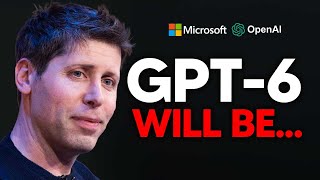
LARRUZ reviews recent AI news including Dario Amodei on AI power concentration, a new multimodal model called CORE for video understanding, and Sam Altman saying current models aren't smart enough while previewing future checkpoints for GPT-6 and GPT-8.
Chapters
So with an absolutely crazy Monday in artificial intelligence, this is going to be all the news stories. You need to stay up to date with exactly what's going on because there was quite a lot of AI news that you do want to know about with GPT8.
Maybe people are like, you know, this can do some limited, maybe not so limited tasks for me pins.
And if you aren't sure what those are, I'm pretty sure you've heard by now, it's basically an AI wearable device that you can see right here on Marcus Brownlee's jacket. Now, essentially what we have here is the review. Now, so some people would tout Marcus Brownlee as the person who dictates whether or not your technology product will succeed or not, because the last time this guy did a review on a car company, that car company basically went bankrupt. So it's pretty important to have him talking highly of your product if it exists. Now, unfortunately, he did a review of this humane AI pin and, and some things that he had to say were just not good. Now, I'm wondering to see if this reflects badly just on humane or on the wider AI community in terms of AI devices. So take a look, because his tweet says, this clip is 99% of my experiences with the pin. Doing something you could already do on your phone, but slower, more annoying, or less reliable and accurate. And it turns out that smartphones are pretty incredible.
Incredible.
But there are occasional small glimpses of a future where this product could actually peel you away from your phone, reduce your screen time and help you live more in the moment. And I can't be mad at that, but take a look at what he's actually saying here. Look and tell me what this is.
Or I'll just do this, I guess.
Ah, it's a cybertruck. Photo is of a cyber truck, an.
Electric pickup truck produced by Tesla.
Yep. So you can see from that demo that it actually took him way, way longer to use his humane AI pin in order to find something. And these kinds of demos aren't exactly the most flattering because they show us that pretty much, you know, this product isn't needed at the moment. Now, I going to say something here, and it might be controversial, but I think the humane AI pin does make sense. And you might be thinking, what on earth are you talking about? Well, I think this company, from a business standpoint are actually in probably the best position because we know that right now, yes, these AI systems are slow and yes, the APIs take a long time to load in and currently these systems cannot exist on device. But what happens in the future when these systems get a lot faster? Their inference is absolutely incredible with systems like Grok and we can manage to load these LLMs locally on the device so that it's basically instant or near instant. And I think that is going to be a super big game changer. And in the future, the only thing that people are really going to have to do with these devices is simply in terms of some software. They're just going to have to update their software. And I think that is going to be a real game changer for these devices in the future. So while some of these devices don't seem to be that fast, I do think that in the future, once the API gets updated, I think it will be game changing. But let me know what you think about this because I'm half and half. I really do want these products to succeed. But right now it just doesn't seem like it's worth it. Especially considering the fact that it is $700 and then on top of that it's $24 a month. I just don't think your average consumer is going to be able to afford this, especially in this economy. Now there was a New York Times interview where he actually spoke to Dario Amade. So Eliza Klein. To Dario Amadei, the CEO of Anthropic. And my, oh my, I think I'm probably going to do an entire video on this because some of the things that he said about other companies and AI systems, it's just so much to talk about. But I'm only going to give you one of the key points here. But it's so fascinating at how the top end of these companies, what they truly believe in terms of where we are heading in the next 10 years. And this is why I'm so excited to be part of the space. Because I don't think people are truly realizing where the future is headed now. It's an hour and 32 minutes. I've read the entire transcript. I picked out a couple of things, but there is one quote that I do think you guys should be aware of. So one of the things that he actually did say was he did actually talk about the Sam Altman thing. And this was something that we wanted to know because this was something where we were left in the dark. Now, of course we are not entitled to any information. Whatever goes on inside a private company goes on inside a private company. But when you're dealing with something as powerful as an advanced level AI system and it leads to one of the top leading AI labs disintegrating. I think people have a right to be, I guess you could say, intrigued with as to what that reason was. So you can see here it says, and at some point everybody is going to look up and say, this is actually too much. It's too much power, and this somehow has to be managed in some other way. And even if CEOs of the things were willing to do that, which is a very open question, by the time you get in there, even if they were willing to do that, the investors, the structures, the pressure around them, in a way, I think we saw a version of this, and you can see it says here with a sort of OpenAI board, Sam Altman thing, where I'm very convinced that it wasn't about AI safety. I've talked to figures on both sides of that, and they all sort of agree that it wasn't about AI safety. Now, of course, I do want to say that this is from the New York Times, and they do have a bone to pick with OpenAI. Sam Altman so this isn't the best source of information in terms of where their bias may be, but they are some really, really good journalists because they do do exclusive interviews and stuff like that, which means they do have some proprietary information that others don't. And essentially what they're talking about here is that it's pretty, pretty crazy in terms of the power struggle that probably went on at OpenAI because of the type of technology that they are developing. And I guess they're starting to realize how powerful this is. And this brings us to one of the questions that I just keep on asking. At what point does OpenAI or Anthropic, a company like that, you know, get controlled by the government? And what I mean by that is, you know, at some point, these companies in the near future are going to generate a system that is largely going to be the most powerful piece of technology on the earth. And in doing so, I guess the power dynamics may shift from OpenAI or even the government to OpenAI, because if you have a system that is as smart as artificial general intelligence or artificial superintelligence, then as long as we manage to retain such a system in terms of the constraints of the model not being like, you know, going rogue and stuff like that, I think how on earth are we not going to govern that in some kind of way? I mean, you know, these are private companies, and I'm wondering if the regulations are going to catch up to that and how that's going to work. It's going to be really interesting to see if certain developments and you know, just the kind of things that are going to be worked on because it's like private companies are in an arms race. But of course we know, you know, governments are the ones in control of nukes at the moment. So that is something that will be kind of fascinating to see how that does develop. And then this is where Dario Amodei said, you know, there's something undemocratic about that much power concentration. He says, I mean, the whole technology, not just the regulation, but the oversight of the technology, like the wielding of it, it feels a little bit wrong for it ultimately, you know, just to be in, you know, a few people's hands. He says, I mean, it's fine at this stage, but to ultimately be in the hands of private actors. And I'm guessing that's what I'm saying, like, you know, who's going to control AGI? Is it going to be like 100 people sitting on a board? It going to be the United Nations? Is it going to be the U.S. government? I mean, it's going to be an interesting conversation because the struggle for power is one that is absolutely incredible. Now, in terms of other news, the AIC CEO, the founder, well, not the founder, but the CEO Arthur Mensch, said the obsession with creating general AI is about creating God. And this is where we start to enter a different kind of discussion. Because, you know, if we argue that artificial general intelligence or artificial superintelligence can do what it says on the tin, and I just mean that like it's pretty much, you know, better than humans at 99%, it can recursively self improve. It could pretty much do anything. You know, at what point is that? Are we creating a God for ourselves or potentially something even worse? So it says the AI CEO doesn't believe Elon Musk and Sam Altman's predictions the AI will surpass human intelligence. And Mensch warns of tech giants imposing AI standards that conflict with global cultures and values. So it's a pretty, pretty crazy statement. He said, you know, he doesn't believe in God and therefore he doesn't believe in artificial general intelligence. And he says, you know, it's yet to be achieved. And of course, if you don't know why this company is so good is because they've managed to create some open source models that are really, really effective and slowly but surely catching up to GPZ4. And he said the whole AGI rhetoric is about creating God. He says, I don't believe in God. I'm a strong atheist, so I don't believe in AGI. And that's a perspective that I've never heard before. You can see that some people are, you know, even referring to this AI thing as God. He said, here we're creating things that can see everything, be everywhere, know everything, Levandowski said in the interview, and maybe help us guide in a way that normally you would call God. And of course, essentially he's building a church with people who want to build a spiritual connection with AI. I think articles like this are kind of fascinating because as we climb up the scale in terms of the abilities of these models, I think there are going to be more and more questions raised like this and more and more statements about religion and spirituality and consciousness, because these systems are only increasing in capabilities. And as their capabilities, you know, pretty much surpass ours, people are starting to wonder if we're starting to create higher beings or whatever. There was also this, which is surprisingly underrated at the moment, but it's rer CORE or REA core. And it says our best, most capable multimodal model yet. It's been a few months in training this model and we're glad to finally ship it. It says CORE has lots of capabilities and one of them is understanding the video. Let's see what CORE thinks of the three body trailer. So essentially it's watching the three body problem trailer. I'm pretty sure that most of you have probably watched this show considering the fact that it's a sci fi show and what I've seen from the AI community and there have been a tons of memes about this, but it's just a show about, you know, an advanced alien race and you can see that it's able to describe the scene. Now, I don't want to click play because the problem is, is that this video is going to be like block world blocked worldwide because of how Content ID works. It just like kind of scans the video that's going on and then Content ID just, you know, blocks the video worldwide. Sometimes it literally just happens. But essentially you can see it says the video shows a man standing in a dimly lit room, yada, yada, yada. And it's pretty good in terms of, you know, being able to describe exactly what's going on. And it says, you know, write me a Python script to visualize the three body problem here. You can see it's coding and it does that pretty well. And overall, in terms of what this system is, this system is essentially a multimodal system that is natively multimodal, as in this is what they're building. It's not chatgpt, it's not like an image, text to image. This is a multimodal system that is mainly built for video. You can see right here that they evaluate core on standard benchmarks for both text and multimodal, along with a blind third party human evaluation. And that's kind of like the leaderboards. I don't know if they use the leaderboards just yet because this is really, really quick. I'm trying to record this as quick as possible, but we can see that the rankings on the human eval puts it actually above GP. In fact, not above GPT4 vision, but above Gemini Pro 1.0 and of course above Claude Opus, which is actually pretty surprising considering how highly touted Claude Opus is compared to some of the other models. And of course Google's Gemini, we do know that is the model that is touted as the mainly multimodal one. Now you can see here they do have a blog and the blog is of course compared to some of the other systems. We can see that they Compare it to GPT4, Claude 3 Opus, Claude 3 Sonic, Gemini Ultra, Gemini Pro 1.5 and we can see that it does pretty, pretty, pretty well compared to these other systems. I mean, if we look at the, you know, the mmlu, I'm wondering how this AI company managed to fly under my radar because I actually try and do as much research as possible to gain the widest perspective possible on AI so that I can up to date, you know, just pretty much stay up to date on exactly what's going on. But you can see here that it's pretty much on par with the Frontier models in terms of, you know, the VQA V2 and the perception test, which is video. So I mean, considering the fact that GPT4 doesn't even have a video input, and the same with Claude 3 Opus and Sonnet, this is something that is pretty game changing in terms of user applications. I mean, currently a problem with Gemini Ultra and Gemini Pro 1.5 is that it doesn't have access in some parts of the EU and some parts worldwide. So if you were struggling with that and you wanted to use something that was arguably better, you could use something like this because it seems to just do really, really well in terms of the multimodal understanding, the reasoning abilities, the coding abilities, the multilingual, and of course, an128,000 context window. So it's going to be pretty Fascinating. Of course, I'm going to do some demos on the second channel, but it's going to be pretty fascinating to see how exactly this all works out, because there's a new player in the game and they are pretty, pretty on par. Now, I don't usually talk about small software updates like this, but this is something that I think is going to save me a ton of time, genuinely, because I don't know about you guys, but as someone who uses AI every single day in their workflows, I mean, I literally use AI all the time because I find it incredible that we have systems as smart as we do for literally $20 a month. And as a person who's trying to read as many books as possible, learn about much about technology as possible as it evolves rapidly, this is a new feature that's going to help you out. So it says, today we're adding an important new capability in PO to multi chat, which is multi bot chat. And this feature easily lets you chat with, you know, multiple bots in a single thread. You can see here that you ask it a simple question and then you've got Claude three Opus responding. Then you can go ahead and you can just literally Compare it to GPT4 and you can see that GPT4 responds in a different way. Now, I really, really like this because I have to switch tabs so many times and I have to copy and paste the answer so many times. And PO aren't, you know, paying me to say this. I don't even have an affiliate link. I genuinely can't even be bothered to put one in the description. But the point is, is that this is something that's going to save me a lot of time. And if you are someone that's like me and likes, you know, compare which AI models are for which tasks, because sometimes you want to refine your workflow. You want to be able to use Gemini for your copywriting, you want to be able to use GPT for maybe your blog posts or maybe, you know, reviewing certain things. I mean, it's important to see which system is actually the best, because whilst yes, they might do well on certain benchmarks, these systems are actually different when it comes to certain categories. I think GPT4 and Claude Opus don't do well in terms of copywriting, and that's just writing things that are very persuasive and salesy. But Gemini Pro actually has really creative ideas and really good in terms of creative writing. And that's something that, you know in areas that you haven't tested yet a system like this could potentially help you now. This is pretty crazy. This is pretty crazy. Okay, I can't wait for this. So, yeah, you could see that this is pretty crazy. Now, hopefully I was still able to keep that clip in. I mean, hopefully it's not cut out because they used some copyrighted music, but essentially, if you didn't know, this is pretty, pretty insane. So you're able to pretty much make small changes using generative AI and, and I think this kind of stuff should have been done already. I don't know why Adobe so slow, but pretty much if you're in the creative industry, you know that there's no other tools you can really use in terms of, you know, at entry level and you know, what's industry standard, which is the Adobe suite. So these kind of things, we do have to wait for Adobe to just do that. But I think stuff like this is going to be really, really effective because so many times you might have the wrong shot, you might want to make small changes and stuff like this allows you to be so much more creative. And in addition, you know, stuff like this where you're able to just simply remove stuff from your video, you know, people have actually been doing this for quite some time and if you don't know how, basically Photoshop's got a generative fill feature and people just use that on a video where only one part of the video is moving and they've been removing objects with that and then making these crazy, crazy landscapes. There's a tons of demo and stuff like that. I'm not sure though, if this is going to work in videos where there's a lot of motion. It does work in videos where there is only static videos, because essentially with that you're going to have to do motion tracking for every single frame to ensure it stays the same. But essentially with this, why this actually does work is because it's just one video. So this right here, it's just one image. I don't need to actually change this. It's literally just an image. But with this, it's actually moving and it's quite dynamic, especially in dynamic scenes, dynamic lighting as well. I'd want to know how that actually works. I'm guessing that's why probably it's still in beta. And this right here, that demo, and this demo right here as well, of you being able to generatively edit, you know, certain things like, okay, I wanted him to have a tie, let me put a tie on him. That stuff seems to be very, very effective. And this right here, the generative extend, Honestly, I think this feature is going to save people so much time because, you know, as someone who, like I said before before, made a bunch of short films, you know, trying to think, oh, my God, I should have recorded this. I wish I had, you know, 10 more seconds, three more seconds of this. It's just, honestly, a lifesaver and it makes things a lot easier. So I think these kind of workflow changes are going to be kind of interesting. And I'm wondering as well, considering there is a rise of private startups that are trying to disrupt the AI space. I'm wondering, you know, how the integrations are going to compare to the ones that we're seeing here, because we're seeing them now collaborate with companies like Pika, and we're also seeing Adobe's own video model that they've been working on that they haven't actually spoke about. So I'm really interested to see how that compares to OpenAI Sora, where it is, is it better than Runaway? Is it better than Pika? Just how good is this system? And of course, they actually talk about, you know, Sora right here. They literally show us that they're going to be giving private access or early access to generating videos with OpenAI's Sora model. So that's going to be something that I'm sure a lot of people honestly cannot wait to have, because so many people do want Sora and there was a lot of fear around it. But I'm sure the OpenAI has managed to make meaningful collaborations and actually change the narrative on what sora is now. OpenAI have been expanding globally. Apparently they've been, you know, on a hiring speed, hiring up to as much as adding 500 people to the workforce. Now at around 1300, it's pretty big operation. And I'm wondering just how much OpenAI is going to grow over the coming years. And we can see here that they're introducing OpenAI Japan. And it says, we're excited to announce our first office in Asia, and we're releasing a GPT4 custom model optimized for the Japanese language. And it says here that. It says, we're excited to be in Japan, which has a history, a rich history of people and technology coming together to do more. We believe AI will accelerate work by empowering people to be more creative and productive while delivering broad value to current and new industries that have yet to be imagined. And of course, they actually manage to do a custom GPT4 model that is for Japanese. So it Seems that like, you know, even across all bounds, OpenAI is really, really coming for everything. And I said that before. I said, Look, OpenAI is coming for the full stack, so you better be prepared because who going to see a lot more of OpenAI. And I do think that this company is going to be, you know, really, really valuable in the future. Like, you know, probably maybe the most valuable company in the future after Nvidia. And of course that is a bold claim, but I really do think that it's going to be up there in at least the top five. Just with the strategic decisions they're making, I just don't see how they lose. Now, Sam Altman actually did an interview where he spoke about GPT6 and how he spoke about its deployment. And I'm going to talk to you guys about this because this is by far one of the most interesting interview segments I've ever seen from Sam Altman. So I'm going to show you guys the first part right now.
External world do you think the strategy.
Of iterative deployment will still be possible moving forward? As you get bigger and bigger? You see obviously a Fair and Llama released some on like medical scientific writing and they got terrible blowback and they had to pull it away. Bard obviously did theirs and they got an 8% reduction in share price. As you get bigger and bigger and bigger, releasing an imperfect product can have such ramifications. Is that iterative deployment still possible over time?
I think expectation setting matters a lot, but with the right expectation setting, I think it is possible.
Yeah, I would agree with that. I think we learn a lot also. And so when we release Sora, for example, we get an incredible amount of feedback from the creative community, from media, from industry. And we actually started now to kind of incorporate that feedback into how we think about our research roadmap for that specific modality. And so in a way, we kind of start with expectations really low. We just try and learn and we really kind of just listen to the world and then we try and incorporate that as best we can so that by the time we actually have something we want to share, it's something that really feels useful and people have kind of natural familiarity with it and it almost feels like it was kind of built more for them. And I think that's like kind of the mode that we'll operate in somewhat here.
Sam Altman and Brad Lightclap so right there you can see Sam Altman and Brad Lightcap actually talking about how they plan to release future models. And as they've stated before they keep reiterating that future models won't feel like a big jump in capabilities. Which actually leads me to believe that potentially with the upcoming GPT5, you know, release during summer, I do think that it's probably going to be the same how GPT4 was released in the sense that we'll probably get a system that is released in subsequent parts. We'll probably get a nice demo showing, you know, an increase in benchmarks and increase in, you know, other features. But I think what we will get is checkpoints of releases. So for example, with Sam Altman last week, and I was honestly supposed to add this into a video, but it just slipped through the schedule honestly to manage things better. But the point is that with all of these things coming in the future, I think the point is that we're probably going to get these checkpoints off. So probably they'll release a version of GPT5 that has advanced reasoning and multimodality. Then a month after that we'll get personalization. Then, then a month after that maybe we'll get some agentic capabilities and then maybe we'll get some additional reliability. I think it's going to be like a checkpoint system because like they said, they don't want to release models that feel like one shock update because the world is evolving much slower than AI and it just needs time to adjust. And it makes sense because, you know, they've obviously received a lot of backlash from previous models and they don't want to lose the public consciousness in terms of, you know, that AI is good for the future because once that happens, the company goes up in smoke. Even if they do manage to do some crazy stuff because we know that humans are very tribal and since this is such a sci fi level technology that we're going to be experiencing, I mean it's probably going to be the technology that shocks people the most. I think it's probably the most susceptible to that kind of reaction is is.
This, it is really iterative and it really. Is this kind of more code development with the world, maybe more than the world appreciates.
Can I ask one final thing? And then I do want to go on to gtm, but you mentioned obviously the medical advisor earlier. I hear you've got a passion for how bunny AI can solve cancer and specifically certain medical.
Well, it's more like I have a passion for how AI can help. I don't want to say solves help, like greatly increase the rate of scientific progress and curing cancer would be a great example of that. But I, I do generally believe, and this is like, you know, there's definitely just a personal element of excitement, but I think science is awesome. But I genuinely believe that scientific progress is like the highest order bit of progress for society. Economic growth, quality of everyone's lives, all of that. And if AI can help people meaningfully increase the rate of scientific progress, which I believe it will, I think that will be a triumph.
What do you think is the biggest barrier to that happening?
I think the models are just not smart enough, which sounds like annoying, low information kind of cop out answer I think is like deeply fundamentally true. Like the models just aren't smart enough. You fix that one thing, all these hard things get better. There will be all these ways that we have to figure out how to integrate tools into people's workflow and you know, model ability in different areas will, will matter a lot. But if you zoom out, you know, doing scientific research with the help of GPT2 would have seemed fairly laughable. With GPT4, people do use it just in very, to help them do science just in extremely primitive and limited ways. And with GPT6, I think people will say, hey, this is like helping me as a general purpose tool in all these ways. And then with GPT8 maybe people are like, you know, this can do some limited, maybe not so limited tasks for me.
But yeah, the title, Listen clickbait. He actually does talk about GPT6 and GPT8. And I think why this is so eye opening is because it shows us the roadmap on where AI capabilities are going to be. Now does that mean that Sam Altman knows exactly what the future systems are going to be like? No, but he probably has the best worldview for, you know, what the future systems are going to be like because they're at the frontier of this development. So why I thought that was so interesting is because of course we know that, you know, scientific discovery is the main thing that pushes across everything. Okay. It's like, you know, once we get a certain breakthrough, you know, the breakthrough of the steam engine managed to lead to the industrial revolution which led to a huge of other factors which just led to society changing completely. And if we could get like scientific developments like that, you know, every year or every couple of months, just due to AI and just putting all the compute into that, society would transform radically. And it's going to be interesting to see how that does happen because of course healthcare is one of them. You know, you've got longevity research, biomedical stuff. That's something that I talked about you know, on the second channel and post age economics that's going to be huge in the future. You know, careers in there are going to definitely be booming. But the point is, is that systems like GPT6 and GPT8 will largely be to be able to think so much smarter than our current systems. And of course working on the smartness of the system involves many different things. Number one is of course going to be data. Number two is going to be compute. Number three is going to be of course the way the model thinks and how it reasons. There's just many different ways to make the model a lot smarter. And we do have to remember that GPT4 is actually a pretty old model by today's standards in, in terms of where we are in the development cycle. So I think considering the fact that they're talking about GPT6, Sam Altman saying that GPT6 is going to be able to help out a lot more than GPT8 is going to be able to do certain things for you, I think it shows us that yeah, things are probably not going to be slowing down anytime soon.










