Sam Altman Reveals EVEN MORE About GPT-5! (Sam Altmans New Interview)
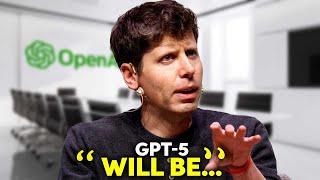
Sam Altman discusses OpenAI's Project Stargate data-center build, the rising costs of training GPT-5 and GPT-6, and why the company is willing to burn cash at scale. He expects yearly capability improvements and warns that AI deployment needs to be gradual to avoid shocking society.
Questions this video answers
A $100 billion data center intended to support AGI development (mentioned by creator as likely purpose).
ChatGPT‑3: claimed ~$100 million; GPT‑4: claimed ~$400 million; Google Gemini: claimed ~$194 million.
"You burned $520 million of cash last year" (interviewer statement cited in clips).
"Whether we burn 500 million a year or 5 billion or 50 billion a year, I don't care," so long as value created exceeds costs.
He frames AGI (his benchmark) as systems that can do autonomous AI research and make scientific breakthroughs.
Chapters
So Sam Altman recently did an interview at Stanford University and it was genuinely by far one of the most insightful interviews ever. So in this video I'm going to be diving into nine of the things he said and breaking down why they're actually so insightful, because this is truly a remarkable interview. So without wasting any more time, let's actually take a look at the first thing in which he talks about Project Stargate.
I mean, I think other people are talking about that, but we're probably like looking at it through a lens that no one else is quite imagining yet. I mean, we're definitely wrestling with how we when we make not just like grade school or middle schooler level intelligence, but like PhD level intelligence and beyond, the best way to put that into a product, the best way to have a positive impact with that on society and people's lives. We don't know the answer to that yet. So I think that's like a pretty important thing to figure out, if you believe, which we increasingly do at this point point, that AI infrastructure is going to be one of the most important inputs to the future. This commodity that everybody's going to want, and that is energy, data centers, chips, chip design, new kinds of networks. It's how we look at that entire ecosystem and how we make a lot more of that. And I don't think it'll work to just look at one piece or another, but we got to do the whole thing.
So I know that this first clip was actually quite vague. Sam Altman actually does do that sometimes, because the details of what he is essentially doing is quite under lock and key, so to speak. And that just essentially means that while Sam Altman is talking in this interview, he doesn't want to give away too many key details. But what we do know he's most likely referring to here is of course, the infamous Project Stargate. For those of you not familiar with Project Stargate, it's a $100 billion data center that would likely be built over several years for the purpose of building artificial general intelligence and beefing up Microsoft and OpenAI's joint collaboration efforts to basically become the AI powerhouse that they could potentially be in the future once AGI does arrive. Now this is what Sam Altman is talking about here. And he basically, you know, later on in the interview, although I don't include the clip in the video, but he actually does talk about how in the future this is pretty much going to be one of the most valuable resources on the planet. And I think that that is something that is quite incredible to state because increasingly in the future, as the technology gets better and better and as the intelligence is more increasingly reliable and more increasingly intelligent, the capabilities are too so going to increase, which means that access to this kind of technology is going to become something, I guess you could say quite like the Internet. You know how right now we use the Internet for a lot of our daily needs and if you don't have the Internet, it's pretty hard to function. I think in the future AGI is definitely going to be a resource like that, which is why he's talking about right now building really, really big computers is of course a problem and it's something that they're working on and does.
It grow so you know, in terms of just like the compute cost. Correct me if I'm wrong, but ChatGPT3 was, I've heard it was $100 million to do the model and it was 175 billion parameters. GPT4 cost $400 million. With 10x the parameters, it was almost 4x the cost, but 10x the parameters. Correct me, adjust me.
You know it. I don't.
I do know it, but I won't.
Oh, you can.
You're invited to.
This is Stanford Sam. Okay, but even if you don't want to correct the actual numbers, if that's directionally correct, does the cost, do you think, keep growing with each subsequent. Yes. And does it keep growing multiplicatively?
Probably.
I mean, now the reason I've actually included this here. Now the reason I've actually included this clip here is because this actually touches on a fundamental aspect of AGI and AI level systems. In the future that we are yet to build the kind of infrastructure that is probably going to power the US economy and the Western Hemisphere is something that we truly haven't seen yet. And I think this interview gives us the first glimpse on how much is actually going to be going into this very, very interesting future. Now the reason I say that is because he talks about, you know, increasingly more investments in AI. And of course, as you're going to see later on in the video, he does talk about certain figures which I'm yet to disclose. Now this is something that is pretty incredible because, you know, GPT4 was allegedly $400 million to train and apparently the future models, the future frontier models, are going to be even more expensive than that. And there have been some industry people stating that models are going to cost a billion or even $10 billion to train in the future. And some people. And the reason this is Why I brought this up, some people are stating that, you know, models being more expensive in the future could mean that we're using the wrong architecture to train these models. But I would kind of disagree because we've definitely achieved a lot by scaling up our technologies, as many of you may know about the better lesson which actually touches upon this subject. But I think it's so interesting to note that 400 million for an AI system and we've seen that Google spent like literally 194 million, I do believe, on Google Gemini. And it seems like companies are going to have to even spend more in order to deploy and train future models, which is definitely something that is pretty incredible because it means that potentially we're about to enter a new age of AI.
OpenAI is phenomenal. ChatGPT is phenomenal. Everything else, all the other models are phenomenal. It burnt. You burned $520 million of cash last year. That doesn't concern you in terms of thinking about the economic model of how do you actually where's going to be the monetization source?
Well, first of all, that's nice of you to say, but ChatGPT is not phenomenal. Like ChatGPT is mildly embarrassing at best. GPT4 is the dumbest model any of you will ever, ever have to use again, by a lot. But you know, it's like important to ship early and often.
So I mean, it's clear why I included that clip. He literally stated that GPT4 is the dumbest model that we will ever have to interact with again. Now the reason I included this one, and I'm pretty sure maybe this is even included in the title somewhere, is I don't think people fundamentally understand what this means. And, and I think that's because people are forgetting how much of a shock it was when GPT4 was released. If you were around at the time of the GPT4 demo, that thing literally broke the Internet in terms of how people were so surprised on what it could do. Now remember, Sam Altman here is clearly stating that GPT4 is dumb. This is not the only time he said this. If you've watched Alex Friedman podcast, he frequently talks about, you know what, he only mentioned it once, but he did state that, you know, GPT4 is quite dumb. He looks up to the ceiling and he's like, ah, yeah, GPT4 is quite dumb. You know, it's unreliable, it's pretty bad. And he's talking about it, you know, a product that many people, including myself, use on a day to day basis for a variety of, I guess you could say, intellectually demanding work in some very light regards. Of course, not many intensive regards, but in some, you know, light regards such as analysis and stuff like that. But I think what it shows us is that the next frontier of model is going to be completely different from GPT4. Because for Sam Altman to say, not that things are going to be a slight improvement, but to call GPT4 actually dumb, shows us that whatever they are currently training, whatever new system they're currently using, whatever frameworks they've implemented in their AI system, however they've trained it or however they've fine tuned the model, it's clear that they've made some kind of internal leap. Because stating that a model is dumb means that potentially whatever they were doing beforehand, they've realized the clear mistakes and they've realized that wow, what we were doing was actually dumb and what we did is bad. So that means that whatever they've got now is clearly much far superior. And the reason I think this is so surprising as well is because if we take a look at some of the other companies that are actively participating in the space, companies like Claude, companies like companies like Google, they are really trying to compete with GPT4. And many people are even like, oh wow, this model is just as good as GPT4 or even better, this model I'm going to use on a day to day basis, this is so amazing. But the CEO stating that GPT4 is dumb, I mean the writing is literally on the wall for him to say that. You know, I think it's going to be clear to us that GPT5, although they don't want it to shock us, I think it's definitely going to be a major surprise and a major surprise to of course many different AI critics because many people are stating that LLMs aren't a step towards AGI and many people are stating that LLMs are fundamentally not even that good because they hallucinate and they do XYZ. But I think whatever OpenAI are cooking up and whatever they are doing, I think that it is truly going to surprise us. And I find it truly hard to believe right now what kind of system would make GPT4 look dumb. I understand hallucinations reliability, but I'm guessing that they're probably going to use something, you know, really advanced that's definitely going to take the industry by storm.
So I think it's important, given what we believe is going to happen, to express our view about what we believe is going to happen. But more than that, the way to do it is to put the product in people's hands and let society co evolve with the technology. Let society tell us what people it collectively and people individually want from the technology, how to productize this in a way that's going to be useful, where the model works really well, where it doesn't work really well. Give our leaders and institutions time to react, give people time to figure out how to integrate this into their lives, to learn how to use the tool. I'm sure some of you all cheat on your homework with it, but some of you all probably do very amazing, wonderful things with it too. And as each generation goes on, I think that will expand. And that means that we ship imperfect products, but we have a very tight feedback loop and we learn and we get better. And it does kind of suck to ship a product that you're embarrassed about, but it's much better than the alternative. And in this case in particular, where I think we really owe it to society to deploy iteratively, one thing we've learned is that AI and surprise don't go well together. People don't want to be surprised. People want a gradual rollout and the ability to influence these systems. That's how we're going to do it. And there could totally be things in the future that would change where we think iterative deployment isn't such a good strategy. But it does feel like the current best approach that we have. And I think we've gained a lot from doing this, and hopefully the larger world has gained something too.
So one of the key points that Sam Altman actually talks about here is the fact that there's going to be no more surprises. Now, I don't mean this in the literal sense, that there's. The next AI systems might not surprise us. I think what he's talking about, as we saw with Zora, because that was definitely a huge shock. AI and surprise just don't go well for the human, you know, psyche. Like, it's just something that, you know, we can't really comprehend. And it's something that our mental health doesn't really take well because it's something that is essentially a new frontier, something that we haven't really seen before. And it kind of warps our understanding of what technology is and how we've come to understand it, which is why AI and surprise don't really go well. So essentially here, this is something that we've talked about many different times before, is that of course there might be, like, model releases and model upgrades. But unlike previous releases, they don't aim to do stuff that actually shock us, that put us in a sense of, wow, this is crazy, and evoke some kind of social response, because that would essentially mean that a public outcry could force government regulations or certain policymakers to enact certain laws that I guess would be based out of fear, rather than actually regulating technological progress in a normal manner. So this is something to where we're not going to get any more shocking surprises. And I don't think that this is a bad thing. I think that basically what he's stating here is that models over time will gradually get better and incrementally and it's going to allow you to, you know, adjust to the model, allow your workflows to adjust to it, and of course, allow the public to adjust to what is now the new normal. And what was crazy was that an OpenAI employee actually said that Sora's release was basically getting us ready for what's to come because they wanted to show us how crazy AI capabilities are. And even then, Sora definitely did break the mold in terms of what we saw, because it was their first video model and it truly did surpass every other one that was on the platform, which pretty much goes to show just how crazy OpenAI is, especially when they put their mind to something. So I think it's important to understand here that there won't be any surprises. But these incremental updates that you do see on OpenAI's Twitter feed, where you're seeing them post about small update here and a small update there, that is something that you can be expected to have. But of course there will be the model updates, but they just won't be surprising. I think what would likely to be happening is that in the future, we're likely going to see incremental updates for these models. So with the GPT5 release, I suspect that we won't have one entire release like we did before. We're going to have GPT5 released, and there's probably going to be checkpoints along the way where they update that model incrementally. And I think what this is probably going to be as well is it's probably going to mean that they are probably on like, GPT6, probably training GPT7, right as GPT5 is, you know, its later stages, which means that they're going to be far, far ahead internally than they are externally, if they are releasing things much more incrementally. And remember, OpenAI can do this because they are the market leaders. So they're not going to have a problem at all.
Whether we burn 500 million a year or 5 billion or 50 billion a year, I don't care. I genuinely don't. As long as we can, I think, stay on a trajectory where eventually we create way more value for society than that. And as long as we can figure out a way to pay the bills like we're making AGI, it's going to be expensive. It's totally worth it.
Now, most people actually look at this, and I think they look at this the wrong way. I think Sam Altman is looking at this from a winner takes all scenario. And I've said this before, but some people still don't get it. The point here is that he's stating that, look, we're making AGI, it's going to be expensive and it's going to be worth it. The point he's trying to make here is that you shouldn't really try to like, scrimp and save when it comes to building AGI, because the initial bet here is that if you get to AGI, a true AGI system that can do autonomous research, okay, and let's say you can account for 5 to 7% of the economy's total GDP, okay, which is pretty crazy. But let's just say that that is something that AGI could capture. And as of 2022, the global GDP amounted to over US$100 trillion. That could mean, okay, that this is a winner takes all scenario where if they get like 5% of that, that's $5 trillion of economic value that one company is capturing. That is absolutely incredible. So if they spend a few billion dollars making the AGI system, they could surely after get to artificial superintelligence, which is winner takes all scenario, meaning that, you know, they could pretty much take over. They could do robotics, and if they get an AGI system to efficiently scale robotics and do robotics, they can pretty much do anything. Okay. Like, if a human is able to do a lot of the things that we do now, if they're able to effectively, effectively, efficiently scale robotics after achieving AGI and ASI, then it's pretty much open season for OpenAI on any industry that they want. They could just choose the most profitable one and then go from there. Now, I do think, interestingly enough, there's definitely going to be some new industries, maybe like, not on the level of manufacturing Dyson spheres, but I do think that with that kind of technology, the breakthroughs that occur after that would definitely have the Technology prioritizing, some crazy stuff and not just the standard basic jobs that we have now. But I think that what Sam Altman is stating here, that looks he's going to spend $50 billion, it doesn't matter because once they get to AGI, that's it, okay, They've won the game, it's over now. And, well, not essentially over, but those are the companies. How on earth are they going to even try and catch up? When a company is advancing exponentially, it's pretty, pretty hard to do that. So I think it's a winner takes all scenario and I think the investors know that and I think Microsoft are definitely prepared to invest as much as they can in order to ensuring OpenAI get there first and, and of course they reap the benefits.
And so do you have a. I hear you. Do you have a vision in 2030 of what if I say you crushed it, Sam, it's 2030, you crushed it. What does the world look like to you?
You know, maybe in some very important ways, not that different. Like we will be back here, there will be like a new set of students, we'll be talking about how startups are really important, technology is really cool. We'll have this new great tool in the world. It'll feel, it would feel amazing if we got to teleport forward six years today and have this thing that was like smarter than humans in many subjects and could do these complicated tasks for us and you know, like we could have these like complicated program written or this research done or this business started. And yet like the sun keeps rising. The like people keep having their human dramas, life goes on. So sort of like super different in some sense that we now have like abundant intelligence at our fingertips. And then in some other sense like not different at all.
And you mentioned artificial general intelligence, AGI.
I think Sam Altman might be downplaying this one here. Or it's probably realistic because he's always often said that like when you get to AGI, it's probably gonna happen and then everyone's gonna go about their daily lives. And I think what he's stating here, that like, even if they do Crush it by 2030 and they achieve AGI by 2030 or in 2030, I don't think life changes instantly. And I think that is probably kind of true. I know that people might think, boom, we're just snap your fingers and we're in some singularity type world of flying cars, you know, these tall white buildings that are completely smooth over and there's like These insane structures. I think even if that is our future, I think that that will take some time. So I do think that by the time AGI is achieved in 2030, which many do predict it might be 2028 or 2029, I think that it's still going to take some time to build out the infrastructure for future societies, the new social contracts and, and how things are going to work after that. So, I mean, I guess, yes, this does make sense, but it's something that's definitely very hard to predict.
I think we need a more precise definition of AGI for the timing question, because at this point, even with like the definition you just gave, which is a reasonable one, there's.
That's your. I'm parroting back what you said in an interview.
Well, that's good, because I'm going to criticize myself.
Okay.
If you.
It's too loose of a definition. There's too much room for misinterpretation in there to, I think, be really useful or get at what people really want. I kind of think what people want to know when they say, what's the timeline to AGI is when is the world going to be super different? When is the rate of change going to get super high? When is the way the economy works going to be really different? When does my life change? And that, for a bunch of reasons, may be very different than we think. Like, I can totally imagine a world where we build PhD level intelligence in any area and, you know, we can make researchers way more productive, maybe we can even do some autonomous research. And in some sense like that sounds like it should change the world a lot. And I can imagine that we do that and then we can detect no change in global GDP growth for like years afterwards, something like that, which is very strange to think about. And it was not my original intuition of how this was all going to go. So I don't know how to give a precise timeline of when we get to the milestone people care about, but when we get to systems that are way more capable than we have right now, one year and every year after. And that I think, is the important point. So I've given up on trying to give the AGI timeline, but I think every year for the next many, we have dramatically more capable systems every year.
So I think there were two things that were really important in that clip. And I know that was a little bit longer than normal, but I think that one was pretty crazy because he literally said that every year from this year there will be increasingly capable models and that is something that I think most people can't really comprehend, including myself, because humans don't have a great time at comprehending exponential improvement because it just doesn't fit into how we naturally see things growing. So it's something that's going to be pretty hard to comprehend. But I'm guessing maybe as time increases, we may have a better understanding of how that looks in our day to day lives. Because it's. If you were to show GPT4 to someone two to three years ago, they might be like, what on earth is this magic? And this is of course a recurring problem with AGI is that many people have always said that there's not a definitive state of where AGI is. And I agree with this completely because AGI is not a thing. It is a scale of intelligence that is increasingly better. And I think the lines are going to keep getting blurred because right now, as many would argue, GPT4 is a low level AGI system. But in the future, when we have vision systems, audio systems, video model systems, I mean embodied AGI as well, I think we're going to increasingly get further down that scale where we get useful AGI. And Sam Altman's personal definition was when a system can do autonomous AI research and make scientific breakthroughs. So that's Sam Altman's definition. And I think that definition is important because it gives you guys a benchmark on where he thinks that a true, true level has been reached. Fundamentally where breakthroughs are.
I don't know yet. I mean, this sounds like a cop out answer, but I think the most important thing about GPT5 or whatever we call that is just that it's going to be smarter. And this sounds like a dodge, but I think that's like among the most remarkable facts in human history that we can just do something and we can say right now with a high degree of scientific certainty, GPT5 is going to be smarter than a lot smarter than GPT4, GPT6 is going to be a lot smarter than GPT5. And we are not near the top of this curve. And we kind of know what, know what to do. And this is not like it's going to get better in one area. This is not like we're going to, you know, it's not that it's always going to get better at this eval or this subject or this modality. It's just going to be smarter in the general sense. And I think the gravity of that statement is still like underrated.
So the reason I've included this clip. And I think if you're going to take one thing from this video, take this from the video, okay? And because I think most people don't understand what Sam Altman means and like he said, most people think that this is a cop out answer. This is not a cop out answer at all. I think him stating that the model is going to be smarter shows us that potentially there might even be some new architectures involved. But I think the main thing that we can take away from this is not that the model is just going to be smarter, because that is kind of vague, but that is of course the definition. But when I break it down for you, basically this means that this model is just going to be so much better at reasoning, understanding, comprehension, context awareness, all of these things are truly important to basically being useful. Like so many times we ask GPT4 to do complex tasks and it just really can't. And I think in the future we're going to see how smart a system can get in terms of actually being able to respond to exactly what we want. And, and I think this is what Sam Altman is talking about when he says that systems are going to be smarter because GPT4 has very limited reasoning abilities, although it does do some reasoning tasks very well. I think future tasks like planning agentic behavior, trying to model the world, theory of mind, all of these things are increasingly intellectual tasks. And for an AI system like GPT4, those are areas where it is pretty rudimentary. So I think those areas in the future mean that this kind of system is going to be more widely used because it's going to allow for essentially more wild scale deployment. If there's less snutation, a lot more planning and a lot more complex reasoning, it's definitely going to be used a lot more because it means that this system is just truly going to be smarter. And this isn't something where, you know, you're looking at the benchmarks and trying to see that, but definitely we could be reaching an area where these systems really, really do, you know, max out the benchmarks in terms of what's possible. And I think that Sam Altman stating that this is essentially going to be where we're at in the future. I think this actually gets me really excited for what this future model is going to be because I think that OpenAI are on a completely different path to many of the other AI companies that we look at on a day to day basis because they're still playing catch up and OpenAI are playing, let's Set the bar higher. So having a model that's this smarter and them guessing that, you know, they already know where GPT6 is going to be is of course something that you should watch out for. So I would say that if you're someone that's building a company, definitely plan with in mind that GPT5 is actually going to be smarter, which means it's going to be applicable for a lot more things. And maybe there are certain intellectual tasks that might disappear with this, and I definitely think they will, because if this model gets even smarter than it is now, it's definitely going to be doing a lot more cognitive tasks, which means a lot more cognitive jobs. Cognitive, intense jobs are definitely going to be on the line. So that is something that you do need to prepare for because I think it's something that, you know, it wasn't really talked about in this interview. But, you know, as someone who's looking at things across the spectrum, it's just.
A heads up from me, increasingly worried about how we're going to do this all responsibly. I think as the models get more capable, we have a higher and higher bar. We do a lot of things like red teaming and external audits, and I think those are all really good. But I think as the models get more capable, we'll have to deploy even more iteratively, have an even tighter feedback loop on looking at how they're used and where they work and where they don't work. And this world that we used to do where we can release a major model update every couple of years, we probably have to find ways to increase the granularity on that and deploy more iterative than we have in the past. And it's not super obvious to us yet how to do that, but I think that'll be key to responsible deployment. And also the way we kind of have all of the stakeholders negotiate what the rules of AI need to be, that's going to get more complex over time too.
So here we have the last clip where Sam Altman actually talks about, and that's just not where I want to stop the video, but he talks about, you know, responsible AGI. I think this is probably the hardest thing to do because they might actually have to have some kind of AGI system where it's mathematically impossible for it to be jailbroken or go wrong. I know that sounds like sci fi and what, whatever, but I don't think there's any way currently, you know, whilst looking at the future, any current way to safely deploy an AGI but like they said, they're probably going to have to do it granularly, which means they're probably going to have to do it narrowly. Like some narrow versions of AGI which are, you know, maybe only working for finance, restricted to finance related tasks, or one that are only related to marketing related tasks, one that aren't really general because I think, you know, as models have been jailbroken before. If an AGI system is jailbroken again, if it's that smart, considering if we extrapolate out to like GPT8, then it could definitely be used for some pretty heinous stuff. So I think that that is something that is, it's, it's, it's, it's a problem that I'm glad I'm not working on because it would definitely keep me up at night. But I think that this interview was really insightful and I think we can all look forward to the GPT5 release in potentially two months or less. So let me know what you thought about this, what you thought about, you know, Project Stargate. We thought about the compute poor and compute rich. What you thought about the GPT4 being completely dumb, which is pretty crazy. No more surprises, of course. The winner takes all scenario, AGI by 2030, the actual AGI timeline and GPT5 and GPT6 getting increasingly smarter.










