Sam Altman’s AI Superintelligence and His New Ultra AI Device is Imminent! (Are We Ready?)
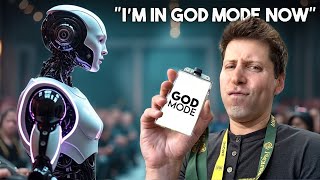
Sam Altman is working with Jony Ive on a new AI device and predicts superintelligent AI is coming soon. The video examines what Altman envisions for personal AI teams and the societal challenges ahead, plus recent security issues at OpenAI.
Chapters
What if super intelligent AI, massive prosperity and game changing AI hardware were just around the corner? In this video we'll break down Sam Altman's vision for a future powered by AI from personal AI teams and new AI device designed with Joanie I've to OpenAI crypto scams and Sam Altman's so called God mode of AI. Is this the dawn of a new era or just overhyped? Let's talk about it. Sam Altman has laid out a pretty bold vision for where artificial intelligence is headed. And it's a future that could reshape everything about how we live, work and interact with technology. He believes that superintelligence AI that's more intelligent than humans could be just around the corner. We're talking in just a few thousand days, roughly within the next decade. And Altman is confident it will bring what he calls massive prosperity along with it. His blog post paints a picture of a world where AI isn't just a tool, but an integral part of society, solving problems we can barely begin to imagine today. The core of Altman's vision rests on the idea that we as humans have gotten smarter and more capable, not because of genetic evolution, but because of how society itself has grown more intelligent. Today, society operates as a form of collective intelligence, where the infrastructure is smarter than any single one of us. AI is seen as the next step in amplifying this collective intelligence. Altman envisions a future where everyone can have access to their own personal AI team, virtual experts embedded into everyday life, helping us make decisions, solve problems, and even handle complex tasks. Think of these AIs as highly specialized assistants that work together to handle everything from coordinating medical care to to optimizing educational learning for individuals. It's not about replacing people, but enhancing our abilities far beyond what we can do on our own. Altman believes AI will have the capability to tackle the hard problems, the kinds of issues that have stumped humanity for years. From advancing medical science to breakthroughs in climate change mitigation, AI will fundamentally change how problems are solved. These aren't just vague promises either. He suggests that AI could help create new scientific discoveries, improve the efficiency of industries, and lead to a global economic boost that we've never seen before. This prosperity, Altman argues, could lift everyone's quality of life to levels that seem unimaginable right now. The key is that AI isn't just another gadget or trend. It's the engine for a new era of human progress. But this isn't all about pie in the sky optimism. There are real challenges ahead. One concern is infrastructure. Altman stresses that if we don't scale up our ability to compute, meaning if we don't have enough chips, data centers and energy to power this future AI could end up as a scarce resource, accessible only to the wealthy and powerful. This could lead to inequality or even conflicts over who controls access to AI resources. He insists that making AI abundant and affordable is essential to prevent it from becoming a tool for only the elite. There's another aspect of AI that's generating buzz Altman's collaboration with Jony I've the former Apple design genius behind the iPhone. Together they're working on creating a next generation AI device that could completely change how we interact with technology. While details are still under wraps, this project is reportedly backed by Laurene Powell Jobs Emerson Collective, with plans to raise up to $1 billion by the end of this year. The goal seems to be blending the sleek, intuitive design that I've is famous for with the groundbreaking potential of AI. The idea is to make AI not just something we use, but something that's integrated into our lives in ways that feel almost seamless. It could be a touchscreen device or something entirely new, but the focus is on creating a more personalized, intelligent user experience. The team working on it is small but packed with talent, including people who helped design the original iPhone and Apple Watch. This combination of hardware design and AI could lead to the next big leap in consumer technology. However, Altman's utopian vision hasn't come without skepticism. There are critics out there who think he's overhyping AI's potential, comparing his claims to grand promises that lack substance. Gary Marcus, one of AI's biggest critics, has publicly picked apart Altman's blog post, calling it more of a sales pitch than a grounded analysis of what AI can really achieve. Some critics even suggest that while AI might help in certain areas, the idea of it solving all of humanity's problems and the talk about the development of space colonies feels too ambitious. They argue that while deep learning the technology driving AI's recent breakthroughs is indeed powerful, we're still a long way from realizing the kind of superintelligence Altman is forecasting. Interestingly, despite all this talk about AI's bright future, there have been some pretty serious security incidents that show the dangers of this tech driven world. Just recently, Altman's own OpenAI X formerly Twitter account was hacked in a crypto scam where hackers promoted a fake token called OpenAI. This phishing attack tried to steal crypto wallet credentials from users. And it wasn't even the first time OpenAI related accounts were hacked. There have been similar scams involving other high profile OpenAI employees, including the chief scientist and a top researcher. The fact that even these top level executives are being targeted underscores the security risks that come with this increasingly digital world. And it shows how important it is to be cautious even as AI moves forward. At the same time, OpenAI isn't slowing down in its innovation. They're working on a new Voice mode for ChatGPT aimed at giving users more interactive, real time voice based conversations with AI. It's another step toward making AI more accessible and useful in everyday situations, from asking questions to handling more complex tasks. The goal is to make AI not just a text based assistant, but something that people can engage with on a deeper level, enhancing both accessibility and usability. Altman's perspective on the labor market is also worth noting. He acknowledges that there will be disruptions as AI continues to evolve. Some jobs will disappear. But Altman believes that society will adapt just as it has during past technological revolutions, like the shift from agriculture to industry. He's optimistic that AI will not only eliminate repetitive, mind numbing jobs, but also create new opportunities for people to contribute in more meaningful ways. The nature of work will change, but Altman is confident we won't run out of things to do. He points out that many of the jobs we have today would have seemed pointless or impossible to people hundreds of years ago. He sees AI as part of a positive sum game where the overall pie keeps growing, creating more value for everyone. What's critical here is understanding that AI isn't just a technology. It's the foundation for a new era of human capability. Altman calls this the Intelligence age, and he's not shy about predicting that it will bring astonishing achievements. He talks about fixing climate change, establishing space colonies and and unlocking all of physics ideas that sound almost too good to be true. And yet he believes that with nearly limitless intelligence and abundant energy, AI will help us achieve these once impossible goals. To get there though, we need the right infrastructure. That's why so much focus is being placed on scaling up the compute resources necessary to support these AI models. Deep learning has worked exceptionally well so far, but it needs more power, more energy, more chips, more data to keep getting better. Without these resources, Altman warns, we could end up in a situation where AI is limited to those who can afford it, creating even greater divides in society. Sam Altman's latest vision of AI has even been described as him going beyond just founder mode and entering what some call God mode. In his recent post, Altman paints an almost divine picture of what AI can achieve, hyping its world changing potential. He presents AI as the ultimate solution to humanity's problems, from climate change to space colonization, as if AI itself holds the key to all our future progress. Critics, however, see this as excessive and even warn it could backfire. Some argue that Altman's promises might invite skepticism instead of admiration, with many questioning whether we're actually heading toward a technological utopia or simply seeing another iteration of grandiose tech hypothesis hype. This God mode idea raises the stakes considerably, as Altman positions AI not just as a tool, but as the driving force behind a new era of human advancement. The real question becomes whether AI can live up to these monumental expectations, or if we'll discover the limits of its promise. The question is not if AI will change the world, but how and who will benefit most from this transformation. There's a lot riding on getting this right, but if Altman's predictions hold true, we could be in for an age of innovation and prosperity unlike anything the world has ever seen. Alright, if you're interested in more deep dives into AI, robotics and the future of tech, make sure to like subscribe and leave a comment. Thanks for tuning in and I'll catch you in the next one.










