Side Hustle Ideas With Nick Loper
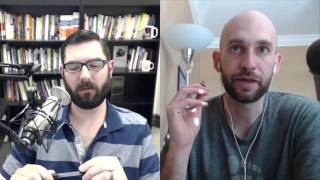
Nick Loper built shoe affiliate sites into a full-time business before shutting it down in 2014. He started with door-to-door sales at CollegeWorks Painting, then moved to e-commerce and freelancing. He now runs the Side Hustle Show, using podcasting as a credibility tool to reach people exploring Uber, TaskRabbit, Amazon FBA, and other income options.
Chapters
All right, cool. Let's go ahead and get started then. Why don't we start by getting a little bit about your backstory. How did you become an entrepreneur? And I know that's a pretty deep topic and could probably take up a whole episode on its own, but let's get the CliffsNotes version of how you got into business for yourself.
We could go way back. We go back to like the end of the driveway, like, you know, in elementary school, like, trying to sell baseball cards and stuff like that. But probably what really hit me was in college I took this internship with a company called collegeworks Painting, where basically we're going to assign you a zip code, and your job is to go out and paint as many houses as you can over the course of the summer. And of course, they give you some. How to estimate a paint job. They give you some training on how to actually deliver the work. But it was primarily a sales organization. How much can you go out and sell homeowners that you know what you're doing, you're not going to screw up their biggest investment investment, and how are you going to get this done? And so for me, it was the most stressful and rewarding experience because it was like everything that can go wrong would go wrong. A bunch of 19 year olds with paint sprayers, what could go wrong? But I remember sitting in my truck, driving around in March, this is back up in Seattle, kind of a gray march, you know, afternoon, evening. And like, I'm, you know, I've circled my territory now a couple of times, like, nothing is going to happen until I get out of the car and like, knock on that first door. And that was, you know, probably 15 minutes of like trying to psych myself up and be like, you know, going over my script. And, you know, it was very, especially for kind of like I would consider myself an introvert, like, trying to get over that inertia and say, like, look, you're, you're going to have to go make this happen. But by the end of the summer, like, you have your first taste of like working for profits and not wages and, and seeing like the direct impact of your efforts to the bottom line. And so that was like my first probably like real entrepreneurial experience or that's when the bug hit me for good.
Yeah. Yeah. So do you think that having sort of door to door sales experience gives you kind of a leg up against like, other entrepreneurs trying to get into the marketplace?
I don't know. It's one of those things where it's like, you Try and develop a thick skin. And it sounds horrible to me. Like, it sound even like as we've become more like everything is electronic, you know, this was in 2002, 2003, and it was painful then, but it's like now that seems even like, you know, I don't know, like you'd have to pay me a lot to go door to door cold calling. But it's like the, you know, the, like it's not life threatening. Like, it's, it's scary, it's intimidating, it's uncomfortable. But like the worst thing that happens is somebody slams the door in your face and it's like you move on. Actually, actually would jog in between the. For like multitask, like productivity. I could go, I could cover more ground. I felt like I was getting a little bit of exercise and I thought that if somebody happened to be looking through the window, they would say, well, this looks better than the guy, like trudging up the driveway with a clipboard.
Yeah. So they probably answer the door thinking, oh, this guy probably needs some water.
And especially it's like at the end of a hill, like all like panting and stuff. They're like, what is wrong with this dude?
So what did you do after you were doing the door to door sales stuff? Where'd you move to next?
So after. So that was the first couple years of college after school, I did what you're supposed to do and got a job at, I was working at Ford. And so they moved me from Seattle out to the east coast and at that time didn't really know anybody outside of the office, outside of work. So that kind of gave me a lot of free time, nights and weekends, especially weeknights, to, to try and build a business. And thankfully had started actually a little bit before that with these like, direct link text ads, direct pay per click advertising, affiliate ads for specific models of shoes. And I'd interned at a shoe retailer in Seattle as one of like the pioneering online footwear retailers. And that was my first introduction to AdWords and SEO and e commerce and affiliate marketing and all this stuff. And so it was a ton of fun. And at that time, you know, I started out with a budget of like a dollar a day. It was like in college trying to figure this stuff out, but ultimately had some success there. And success being, you know, 2, 3, 400 bucks a month. And then trying to figure out after getting that corporate gig, like, maybe there's, maybe there's something to this. Maybe there's, you know, could this, you know, Grant Cardone, how could I 10x this thing? And figured the way to do that would be to have a full scale, like website build. And so that's where I, you know, finally got up the nerve or the investment to plunk down, hire developer and see if we could build out this whole like database driven thing.
So right now, I mean, so you were working at this other company. This was, this was a side hustle or was this. Did you decide to jump ship and start on a new business?
The shoe business was my first official side hustle.
Okay, got you. So this was still on the side while working at Ford.
Yes.
Okay, cool, cool. So then where did it evolve to from there?
Three years of nights and weekends. It evolved to a full time thing.
Oh yeah. Nice. So is that what you're still doing today? Does the shoe company still go? Is it still making you money?
I like naively thought that this would continue in perpetuity and this could be my thing. I could do this. It died kind of a slow and painful death. So it lasted, I mean, had a pretty good run. It lasted around almost 10 years, but I shut it down summer of 2014. So when my virtual assistant started earning more than me, I was like, okay, this thing has outlived its useful life. It had a good run and it was the vehicle that let me quit my job and definitely learned a ton while, while selling a ton of shoes.
And that was, that was kind of your introduction to the sort of side hustle concept working, you know, starting a business while working a day job and trying to ramp that up to something that can be bigger than your day job.
Yeah. And it was something that I was really excited about, you know, talking about with other people, the idea of income diversification, the idea of like, you know, lower this lower risk brand of entrepreneurship, like you don't have to jump off the cliff into the unknown. And I don't know if, if you know, it was the same way when you started your thing, but it was. You know, that would have been a really scary proposition to just say, I don't know where rent's coming from, I don't know where my groceries are going to come from, but here I go. So other people can do that very, very well. Like, I need to burn the ships, otherwise I'm not going to be motivated enough. But that wasn't me.
Yeah, yeah, yeah. I mean, for me, I was, I did the scary thing of quitting my job, not knowing where my money was going to come from. But, but here's the thing. I Was working a day job. But I started blogging in 2007, I think. So from 2005 to 2007, I was doing web design on the side for companies. From 2007 to 2009, I discovered WordPress and blogging and this easier way to sort of get eyeballs online. And so during that I started putting some AdSense on my website, making some money off the AdSense. And I think when I quit my job, I was making about $200 a month on the side from my job, which I had a mortgage, I was married, I had, you know, like, I had expenses. And I jumped ship making about $200 a month, thinking, all right, if I jump ship, I'll figure out how to ramp this thing up.
Yeah, you've got a very, very loving wife as well in that list of assets.
Yeah, she, it was, it was a scary time. She, you know, she obviously had an income as well at the time, so that definitely helped. But, but yeah, I mean, so I guess I was side hustling in the, in the sense of a couple hundred bucks a month on the side before I jumped ship. But I definitely had to put my back against the wall to motivate myself to make it into a, you know, four figure plus business per month as opposed to a three figure a month business.
And what I found is like, that, even that first taste, even that first 200 bucks, even that first sale, I mean, I've had people send me emails like, I made my first, you know, a buck 75 on like an AdSense click. And it's like, you know, that's, it's really empowering to say, like, look, I'm more than just my paycheck. I'm just more than just my job title. And it's pretty, it's a pretty cool moment.
Yeah, I mean, once you see like that first dollar, that first $5 or whatever, something, I guess like a shift happens inside of your head where all of a sudden you realize, okay, this is real, this is actually possible. You know, So I think, I think a lot of people, you know, all the, all the skeptical people out there are the people that haven't really had that shift of saying, okay, cool, I made a dollar. So let's just figure out how to do this 100 times a day instead of once a day. So let's talk about the term side hustle for a second. How do you, do you have like a definition that you give people when you use the term side hustle?
I probably should write one down. I would say you know, it's something you do to earn money outside of your day job.
Okay. All right, so Your website is Sidehustlenation.com which right now it seems like you kind of own Google. I actually did a Google search right before we jumped on the call and typed in side Hustle. And your site was the very first one that popped up at the top of Google.
For me, my SEO is working. My SEO of kind of ignoring SEO is working. That's good.
Well, I think you've got a great domain name there too, so very cool. Let's talk about some examples of some side hustles, because if you do like a quick browse of your site on side Hustle Nation, I mean, there's so many different options and so many different things. Let's start with this. What would you think would be kind of a good sort of entry level side hustle that people could try to get started in, you know, if they have a day job and they've only got like a couple hours in the evening to spend on something?
Well, let's go through probably two or three of these that are kind of like the, the low hanging side hustle fruit. The first you already mentioned was freelancing, right? I was doing web design on the side or web development on the side. And so that's where I see a lot of people start and actually kind of like maybe the first step in this path where it's like, okay, I have skills in this certain area. I know that there are other businesses or individuals who could use those skills, especially if it doesn't even need to be necessarily related to your day job. But a lot of times it can be, if that's not a conflict of interest. And then I often see that scaling into, you know, part time freelancing then to I'm going to take the leap and go full time or if given an extra 40 hours a week, I think I can make this work. And then I see people, you know, if they're really ambitious, they'll scale that in to an agency, you know, where they have enough margin built in to scale or to hire people underneath them to deliver the work. And then, you know, I see people going into products and software after that where it's like I can somehow productize this knowledge or hey, you know, we've found a niche serving real estate agents and we found that they have these common problems and so we can start solving that with software. And we kind of like each step of the way you're kind of scaling up, you're Removing more and more of your time from the equation and building in a little bit better margin. The second option or the second kind of low hanging side hustle fruit that a lot of people get started with is kind of like the sharing economy, which is the broad scale term for like the Ubers of the world, the Lyft drivers, the Airbnbs, the TaskRabbit. Yeah, TaskRabbits and dog vacays. A friend of mine sent me a note the other day, like, I'm making a couple grand a month on dog vacay. What is this? It's like, it's Airbnb for dogs. I was like, dude, that sounds awesome. So there's, there's a ton of these and it's kind of, you think it's like, it's peer to peer commerce, which, you know, if you go back 200 years, that's, that's what commerce was. But we've kind of, you know, big companies have come in and kind of removed that. And with the rise of the, you know, app marketplaces and all this stuff, we've seen kind of a return to that, this intermediation and I think it's kind of cool. There's definitely some pros and cons to it. And I know Uber has been in the news for continually cutting driver rates and stuff, but it's pretty, pretty quick to get started with a lot of these and it can be a cool way to make some extra cash after hours or in your spare time.
Yeah. Now are you, do you do any of those kinds of things yourself? Do you do any like Ubers or TaskRabbit or have you, have you played with any of those?
I haven't done any of like the driving one. Like my car is too crappy probably to get approved. If I get a new one, I would love to do that and then be able to report back.
Do they actually have an approval process like, oh, you drive a 1985 Toyota Tercel, so you're out kind of thing.
Or I talked to a guy, my friend Harry branded himself as the rideshare guy and I think it's the rideshare guy.com, and when I was talking with him, he's like, okay, you gotta have 07 or newer and now it's a couple years later. So maybe like 0809 or newer, you know, four door clean condition. Mine is borderline clean condition and stuff like that. So thankfully there are some, some requirements in place to safe, I guess, safeguard the passengers mostly, you know, their, their user Experience.
Yeah, I've never really explored too much into the Uber, Lyft, that kind of stuff. I. I live, you know, I live north of San Diego in a very sort of suburb. It's. There's not much Uber or Lyft where I'm at, so.
Yeah, me too. We're out in the burbs. And so I was kind of surprised to pull up the app and see there actually were some cars around. So that was, I guess, encouraging to see and talk to somebody else who's like an Airbnb expert. And I was like, we're out in the burbs. Like, there's nobody, you know, who would want to stay here. He's like, well, are there hotels in your town? I was like, well, yeah, actually there's like a whole. Whole host of hotels, like, probably less than a mile from us. I was like, okay, maybe there is demand here.
Yeah, yeah, yeah.
So there's a lot of cool different ways to go there. And then kind of the. The third way or kind of like the hot side. Hustle du jour is like the e commerce world. And one of the easiest ways to get started with that is through a service called Fulfilled by Amazon, Amazon fba. And how it works or how I've kind of started it. It comes in, like two different flavors. The first is, like, sourcing inventory as cheaply as possible locally. Like clearance section of Walmart, like garage sales yards, estate sales, goodwill stores, like, all this stuff and sending that into. Sending that into Amazon and having them sell it on your behalf. And so they'll take a fee and you kind of get the spread. And all you really need to get started with that is like the Amazon Seller app, which is free, once you create a free Amazon Seller account. And, you know, so even while I'm just out shopping, like I'm at Home Depot or something, like, I'll go, oh, they heard, they make it very nice. They have a clearance section, like, on the end cap. And you're like, well, let's see what they got. And, you know, just, you know, scan a couple items, see what that is going for on Amazon and, you know, send this stuff in. You know, bundle it up, send it in. So that one's kind of fun. And then the way that business scales a couple of different ways, actually. So I had a guest on the show recently who is kind of specializing in online arbitrage, which seems crazy to me. It seems like as someone who used to run a comparison shopping engine, that seems nuts to me. It's like Wouldn't you just buy it from whoever has the lowest price? But apparently most people or many people just start their product search on Amazon, right? So if you can acquire this thing for half off at some other obscure website or some local store, you know, there's a margin opportunity there. And really one of the hottest ways to get into this business or scale up this business is through importing, through private labeling and stuff. So this is where you're seeing what categories or what products might be hot sellers on Amazon and then trying to source those from Alibaba or some other manufacturer and make the margin in between. And at that point you got like a full scale business, especially if you're creating your own branding and packaging and stuff. So it's like there's some people doing crazy numbers with that. And actually I think somebody gave me the stat that 40% of the inventory on Amazon.com is not owned by Amazon, it's owned by sellers like you and me just kind of doing this on the side or as a full time business.
That's awesome. Yeah, I didn't. I mean, it's funny because my wife and I, we had a garage sale a couple weeks back. We're actually selling the house that we're in right now. And we had a garage sale because we're trying to get rid of a bunch of stuff. And a woman came up and she pulled out her iPhone and she was picking up like every book we had, every board game we had, you know, every like, like Xbox game that we had and was scanning them all with like her phone. And she'd pick one up, she'd pick up something, scan it, put it in one pile, scan it, put something in a different pile. And then she walked away buying like a hundred dollars, like stack of books and board games and video games.
Okay.
And so we, we asked her about it and she's like, yeah, I take all this stuff and I send it to Amazon and, and then Amazon stocks it for me and sells it and then just kind of sends me a cut back of everything they sell. And I didn't realize it was that simple. I mean, obviously I knew on Amazon people sold like used stuff and people drop shipped stuff. But I didn't realize that you can go buy used stuff and have the used stuff be fulfilled by Amazon. That was a completely new concept to me.
Yeah, I've only done new, so that's. And it's far less awkward to like, you know, be standing in the aisles of Walmart doing that than it is like standing in front of somebody's like a garage sale. It's like, okay, I can, I can totally see what you're doing there, like what's going on. But that's funny. One of my former Mastermind members is in San Diego, so I'm like, now I'm curious if that was her. She was like trying to focus on books and stuff.
Yeah, it's funny that there was a couple people that came up and were kind of doing the little scanner thing with their phone. She was the only one. We asked about it and she, you know, she was just kind of told us the whole story about it and I, you know, I told her what I did and told her about the podcast and stuff. So she may even be listening to this episode because she said that she was gonna go start tuning in. But yeah, that was a completely new concept. I didn't know that you can buy stuff at garage sales and have it fulfilled by Amazon. So that's, that's cool. So is now, right now for your business, where is your income coming from? Because before we jumped on this call, you were telling me that, you know, you obviously, well, you not obviously, but you just had a new baby and things have gotten a little bit, a little bit more hectic and you said, luckily you've got some income streams in place. So where, where are, where are those passive income streams coming from for you right now?
So the shoe business is, is dead in the water, but there still are a handful of other affiliate marketing sites out there. So that's part of it. And then the other piece of it is kind of everything under this side hustle umbrella. And I'll call that some freelancing stuff that I do, some self publishing stuff that I do. I teach an online course or two on udemy.com I've been selling some stuff on fiverr.com like one of the common themes of the, of the show is kind of like going to these existing marketplaces and putting your buy button on there. It's like some, there's, you know, Amazon, ebay, Craigslist even like they've gone through the trouble of creating this two sided marketplace, which for any startup is like a really difficult thing to do to get a critical mass of both buyers and sellers. And that's kind of a fast track or kind of a leapfrog that we see a lot of people use to jumpstart their business and get things going. So that's kind of the piece of it today. Kind of piecing it together from a bunch of different side hustle Sources?
Yeah, yeah. I mean, the concept of sort of leveraging other people's platforms is pretty huge, I would imagine nowadays. You know, I've been building websites and trying to build my own platforms for years and years and years and I feel like I've barely scratched the surface with it. But if you go to places like itunes where there's already people looking at stuff, if you go to Amazon, if you go to Udemy, if you go to these other places, Fiverr, where there's already eyeballs, you can just kind of put your stuff right in front of these eyeballs that are already there. So that's, that's, that's pretty huge. So you've got your own website at side Hustle Nation. I was looking around on the site and I noticed you have like, like an area where you offer consulting type packages and that sort of thing as well. Now what, what do you offer people on when, when they purchase that sort of thing from you?
Yeah, so that's, I guess, a small piece of the puzzle. So I host a private mastermind once a quarter or weekly, but every quarter. And then I do some one on one stuff kind of on demand. And a lot of times that's, you know, people looking for, you know, feedback and accountability and also some strategy. Like, what would you do next? Just kind of like, you know, a lot of times it's listeners of the show and say, I think you in general give okay advice. So I'd like just some one on one time. Like that's not a huge portion of the income pie, but it's out there should someone want to. Want to hire me that way.
Cool. Let's talk about the podcast for a second. Since you just mentioned that. Now your podcast, it seems like it's doing pretty well. I always see it kind of in the top hundred or so podcasts in management and marketing. First of all, what's the podcast about? Is it mostly interview style where you're interviewing people doing different sort of side hustles?
Yes, it's primarily an interview show with kind of, yeah, been there, done that. Side hustle entrepreneurs, kind of a different business idea each week. There's been some common themes that come out of that or some common side hustles that we talk about over and over again just because they're, you know, they're popular and stuff. But the show has been an absolute blast to do, been doing in, you know, almost three years, two and a half years now. And it's for somebody I was like, very hesitant to get started because it's like any, you know, like, the sound of your recorded voice. And like, you know, five years ago, everyone was like, YouTube, YouTube, YouTube. Video is the future. And I really don't want to do video. And I feel like I kind of missed the boat on that. And so in. In 2012, 2013, people are like, itunes, itunes, itunes. Podcasting is the future. You got to do audio. And I was like, I'm not missing the boat again. So, you know, I bought the mic, and even then, it's still some inertia to get over to, like, schedule those first. Those first calls and put it out there. And the first few are pretty awkward, pretty horrible. But it's like, you know, it's a practice that gets easier and it gets better.
And how have you found the podcasting from a marketing standpoint? Does it seem to be a pretty big driver for your business and raising awareness for you?
And what you do is probably the biggest driver, like, more so than Google, more so than guest posting or anything like that. And I think the reason for that is it's just so much less crowded, even though there are. And it's more crowded today than it was two years ago. But instead of shouting into the wind in the abyss of the Internet, it's like, well, you're shouting into the wind in the abyss of itunes, which is a much smaller abyss. People have. You know John Lee Dumas, right, Fellow San Diego in. He's like, if you Google Entrepreneur, I'm like, page 17. If you search it in iTunes, I'm like, number two. And so it's like kind of a different search engine to go about. And with the podcast, one thing that took me a long time to figure out was, you know, I'm never going to see Entrepreneur on Fire download numbers. You know, I'm never going to make tens of thousands of dollars in sponsorship money for the show. And that's okay. It could still be a good. A good marketing channel. But starting to treat it as. As content marketing is kind of where it was a good inflection point for. For the growth of the. Of the show and for the. And for the business of the. Of the blog, of the site. And that was like, in trying to drive, you know, what's the goal of the. What's the goal of the. Each episode and before I might have a call to action, like my Facebook page, like something worthless or like, go sign up occasionally, it was like, you know, go join my newsletter if you're not already signed up. And it's like just, you know, Wasn't converting very well. What I started to do was like put together these like episode specific content upgrades and so like, oh, Scott just came on and really dropped a ton of knowledge on Udemy into our earbuds. And you know, this was crazy. Like I had to go back and listen to it a second time to take notes on this. To save you from having to do the same trouble, I copied those notes into like my highlight reel PDF. You can download it at Shinydustlenation.com blah blah blah. And there you go. And some of those convert like crazy convert 10, 20% opt ins to episode downloads and just because it's like super relevant to what people were just listening to.
Now what, what was your marketing strategy in the, in the beginning to kind of get the podcast ramped up? I mean you're, you're pretty solid in your position on itunes. You know, what was, what was the strategy behind getting there?
You know, it was kind of like I didn't realize there was a strategy to podcast launching, you know, before, before I really went through it. And then people were like, oh, you only have eight weeks to take advantage of like new and noteworthy and stuff. And even like my probably my peak download day during, you know, the new and noteworthy exposure was maybe 200, 250. So it's not like this is going. It's not like the cure all or the panacea that, you know, maybe some people who teach podcasting want to, you know, make it out to be. But I started out with an email list of 11 and so what I did was like in Gmail would just like type in letters like to see what would pop up as suggestions like a AA like oh, I know a couple errands, like send them a note, be like, hey, I created this podcast, you know, there's three episodes or whatever on itunes. If you could download them. You don't even have to listen to them. I don't care. You download them and you know, if you like them, you know, leave a rating and review. Right. And so that's kind of like how I drove those initial downloads and that's had, I had a, if you, if I was starting over. So the trend is toward like shorter form content like more frequently rather than doing a weekly show. I think that would be really tough to rank in new and noteworthy right now, especially in like a business category, something competitive like that. So what I've seen people have success with is, you know, shorter form, you know, you know, even five, ten minute episodes, two, three, four, five times a week. So if you're going to record a 50 minute interview, just chop it up a little bit more work on the back end. But I think if the, you know, raw number of downloads is part of that ranking algorithm, which many people think it is, you know, you're giving yourself five times the chance for success than that person who's coming out with one show a week.
Right, right. So what, is there any sort of marketing behind the podcast now or is it mostly just people are discovering it in itunes today?
So this is the biggest challenge with the podcast. Like, no, what really fuels that? And so I saw a pretty healthy spike first part of last year and saw a similar spike first part of this year. I don't know if it's just like the Christmas gift effect, like, oh God, I got a new toy, I need to go find something to load up on it, or the serial effect, like bringing more people into the podcasting fold, or the cumulative effect of having done probably 40 or 50 podcast interviews. And I'll always say I'd love to have you come tune in the side Hustle show. It's different part time business ideas every week and I think the cumulative, plus it doesn't hurt having 150 episodes out too. Each one of those is kind of like a chance for, for people to discover.
It's like if somebody discovers like episode 125 and really likes it, they're going to start digging through your backlogs for more episodes.
Yeah. And so definitely because each, each one of those downloads also will count and stuff. So I've had people be like, oh my gosh. I just binge listened from like episode one. I was like, dude, those first few were not so good. But thank you.
Yeah, yeah, yeah, that's. I mean, I get, I get sort of the same kind of comments now with your, with your show. And this might kind of put you on the spot, but have there been any sort of really interesting side hustles that were like brand new, kind of out of the blue for you that you've heard other people talk about on the show?
So the am like the first one we talked about the Amazon FBA business was still very, very fresh, very new to me. That's probably the most popular episode of all time. I've met a guy who, who made a full time living like buying and selling stuff on Craigslist and supporting a family of seven. That was a very interesting call.
Do you by any chance know what episode that was? I can link to it in the.
Show notes, so I Think I'll dig it up for you here. I'll dig it up for you and get it to you after the fact.
Cool.
And then one of the very early episodes, this one's actually really, really popular. I met a guy who made enough money on Fiverr to buy a house within his, like, first year on the platform. And so that story was. Was pretty compelling. And that ended up getting some press and some initial exposure for, for the site because I was like. And previously it was like, yeah, I've used Fiverr as a buyer, you know, a ton of times, but like, what could you. What could I possibly sell for? Yeah, four bucks. At the end of the day, that would be worthwhile. And he was like, no, no, no. It's all, it's all about the upsell number one. And like, it's all about like the, you know, prepackaged thing, you know, PDF, audio file, video file. Like, here, I'm going to give you the thing for five bucks. And then if you want like my time, that's going to be in the upsells.
Yeah. Now, have there been any sort of like, I don't know if like, bizarre is the right word, but like any sort of just like really outside of the box, kind of like crazy ways that you've seen?
I'm trying to think of like going through the. A lot of times we stay away from like the super weird ones. It's like, yeah, that's kind of niche. Trying to make a more broad appeal. Like, I've got a voiceover actress that's coming on this week. Had a guy last week who made, you know, was repairing motorcycles in his garage and his cool twist on it was like, I'm going to film myself fixing this bike and then I'm going to sell that video to people around the country who have the same problem with their bike.
That's cool. That's cool. Now I want to. This is kind of a complete 180 and shift of focus. But one thing I noticed just kind of browsing around your website is that you were actually a speaker on a TED Talk. And yeah, I was curious about how that actually came about because, you know, the whole theme of this podcast is sort of building authority, building that personal brand and being a speaker at ted, that seems like it would just be massive for credibility.
Well, I should clarify. TEDx. So there's one nearby you. And actually if you go to the TED website, you can search by geography and see what TEDx events are happening near you. And so that's kind of what I did actually volunteered at the prior year of this event. So I had a tiny bit of an in. And what I realized after the fact was all of the speakers, I think, except for me, we're like in kind of the personal network, like first or second degree of the organizers. And so I don't know if many people were like, cold pitching them, but I was like, I think that's like a bucket list item for me to, you know, have this, have the TEDx talk on the resume. And they were like, do you have any public speaking experience? It's like, I have a podcast. So I was, I was a nervous wreck before this thing, but it was, it was pretty. A really cool experience and some really, really cool fellow speakers up there that were, you know, doing. Doing some pretty incredible things. And it was like, well, I sold some shoes. You know, it's kind of a weird, A weird thing to talk about, but it was fun.
Did you, did you get comfortable once you were on stage? Was it that kind of thing or were you kind of sweating the whole time?
The weirdest. Like about a minute in, I was like, what is wrong with my throat? Like, it's like bone dry. And somebody told me after the fact, I was like, oh, God, I got 12 more minutes of this thing and I can barely swallow. And they're like, oh, that's like a physiological stress response. It sucks all the moisture out of you. It's like, oh, geez. But I've done a couple smaller speaking gigs since then, and I think I'll get a little more comfortable. I think it just comes with practice. But, I mean, they've got you mic'd up. They've got the red carpet and the cutout letters and all this stuff. And, you know, you got one chance to get this right. No teleprompters or anything.
And then. So what has the experience been like after ted? Has. Have you seen any sort of boost to your business as a result or, you know, have you. Have you seen any sort of TED effect afterwards?
I don't know. It's hard to say. No, I don't think anyone has reached out to me, you know, like, come. Come speak at our thing, you know, because of this. But I think it is a credibility booster. And that's why I've got the logo, you know, as the as seen on kind of trust signals and stuff on the site. Just because I think it is a cool. A cool thing that people recognize. So I don't know if. I don't know if I do it Again, I was just like the whole month like before, but it was.
Yeah, yeah. I mean, that's something that's. That's kind of on my bucket list. But never even knew how to. How to sort of approach it at all.
Yeah. So, I mean, go see what ones are going to be local and then see if you can, you know, volunteer for one year or if you can somehow figure out who the organizers are to send them a pitch, because they want good speakers with good stories, too. So it's just trying to figure out how to get on that radar because it was very much people's network.
Now. Also, I noticed on your site that you're featured on Entrepreneur and Fortune and New York Times, I think it was. Now, how did that all come about?
So the Times was actually with the shoe business, and it was during the whole Amazon tax debacle, especially in California, where they're like, we probably don't need to go into it, but it's like they were looking for affiliates who are going to be affected by this law going into effect. And that was me. That was going to put me out of business. So I actually had to go, you know, rent an apartment in Nevada and physically move and, you know, just to. Just to stay in business because all the legislatures were like, oh, this is great. You know, this is just gravy revenue that we're going to get. Like, there's no. It's like, no, there's a little. A little collateral damage over here. Yeah. And so that, you know, the New York Times reporter wanted to talk about that. So that was cool. You know, the entrepreneurs that, like, people are always putting together now, like, they're. Here are 15, you know, podcasts that you should listen to. And so. So you get. The more content you put out there, the more you get quoted. Right. So like you said, oh, I Googled you. I googled side Hustle, and you were number one. And so apparently other people are doing the same thing now. And. And which is kind of cool. Like, I think I was featured in, like, Glamour uk, like, this fall, some. Some random publication. I was in Better Homes and Gardens this month, like, for, you know, what. What podcasts to listen to. So just random, you know, random stuff that kind of accumulates as this body of work piles up.










