Snapchat is AI NOW! - Snap AI Video Generator, Spectacles 5 AI Glasses & More
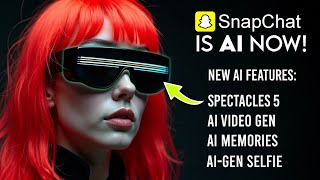
Snapchat rolled out Spectacles 5 AR glasses with 44 cameras and hand-gesture control, plus a new AI video generator for creators. The glasses cost $99 a month and run Snap OS with OpenAI integration. My AI now reads signs and translates menus.
Questions this video answers
September 18, 2024.
Snap OS.
44 cameras.
Two processors (both embedded directly in the frames).
$99 per month for at least a year.
Chapters
The team at Snapchat's been working hard behind the scenes to redefine the future of social interaction, and this latest round of updates makes that crystal clear. What stands out the most are the new AI AR Spectacles, AI video generation tools, and a host of other features that really position Snap as a serious player in the world of augmented reality and AI. Alright, let's start with snapshot spectacles 5 that are changing the game in augmented reality, blending digital enhancements into everyday surroundings with precision and practicality. What sets these glasses apart is how they offer visual overlays on the real world, but without completely blocking your view like traditional headsets do. Instead, they integrate seamlessly, allowing digital elements like floating 3D objects or virtual items on surfaces to exist naturally when within your physical space. The result is an AR experience that feels like part of your everyday life, not a separate closed off environment. These glasses run on Snap's custom built Snap os, which is designed specifically to power their augmented reality ecosystem. They're powered by two processors, both embedded directly in the frames, which handle all the necessary computing power without needing external devices. The frames are equipped with 44 cameras to capture your surroundings and track hand gestures, meaning everything is controlled intuitively with your hands, no controllers required. A big part of what makes Spectacles 5 stand out is the AI chatbot integration. This feature allows Snap's AI assistant to analyze your environment in real time, giving you information about objects you're looking at, answering questions, or even identifying landmarks. Snap's collaboration with OpenAI has elevated this capability, enabling the glasses to understand the real world context more deeply. Developers can build applications that provide meaningful interactions between the digital and physical worlds, offering users experiences that are both practical and immersive. Take the demo for example. Users could stack virtual Lego bricks on a table, play AR golf, or even interact with a virtual pet that followed them around. The key here is that while all of this was happening, the the glasses didn't disrupt normal real life interactions. You can still make eye contact with people, something that's usually impossible with VR headsets like Apple's Vision Pro or Meta's Quest 3, which tend to isolate the user from the physical world. This ability to integrate the digital without losing touch with reality is crucial to the way Spectacles 5 aims to enhance user experience. Another feature that stands out is how adaptable these glasses are for both indoor and outdoor use. The lenses automatically darken in sunlight, much like regular sunglasses, so you can comfortably wear them outside while still enjoying all the AR functionality. It's a smart design choice that gives Spectacles a broader appeal, especially compared to bulkier devices that don't transition so smoothly between environments. Now here's where things get fun the video commercial Snap released for Spectacles 5 pokes a bit of fun at the competition, specifically Apple's Vision Pro and Meta's Quest 3. In the ad, Snap exaggerated the size and shape of competitor AR headsets to make them look ridiculously bulky and awkward, emphasizing how streamlined and compact their own glasses are by comparison. And honestly, they're not wrong. Apple's and Meta's headsets are undeniably bulky, and while they're powerful, they don't exactly scream wearable tech for everyday use. Spectacles 5, on the other hand, look much more like regular sunglasses. They're light, stylish, and blend in better with a casual, everyday aesthetic, rather than feeling like you're strapping a high tech machine to your head. But despite how polished and accessible these glasses may seem, they're not aimed at the general consumer market just yet. Spectacles 5 are currently available through a developer program. It costs $99 per month for at least a year, which gives developers access to the glasses and the tools to create AR applications. Snap has emphasized that the definition of a developer is broad, inviting not only traditional software engineers but also creatives, designers and artists to experiment with the platform. This is where the future of AR gets built, and Snap is opening the doors to a wide range of innovators. Alright, moving on to another major announcement, Snap is introducing a new tool for AI generated video creation. This feature enables creators to generate videos based on simple text prompts. For now, this tool is in beta and limited to a small group of creators, but the implications are massive. In a world where content creation can be time consuming, the ability to produce high quality videos with just a text prompt streamlines the creative process. Here's how it works. You input a phrase such as catwalking through a park, and the tool generates a fully animated video in response. While the current iteration of the tool only supports text prompts, future updates will allow creators to generate videos based on image prompts as well. The the flexibility this tool offers is substantial. It's designed to simplify and speed up the creative process without sacrificing quality, offering an alternative to traditional labor intensive video production. Snap is actually ahead of the curve with this feature. While Meta and TikTok are working on similar tools, neither has rolled out anything publicly yet. The videos generated by the tool will all include a Snap AI watermark, ensuring transparency around AI generated content. The video generation tool is powered by Snap's foundational AI models, which are trained to understand and generate content in a way that aligns with the platform's ethos of creativity and safety. With text to video tools in place, the next big leap would be text to animation, which the company is already working on. This evolution could allow users to create animated sequences, potentially revolutionizing how creators engage with their audience through dynamic AI driven storytelling. Snapchat has been a leader in augmented reality for years, and now with AI powered lenses and memories, it's stepping things up even further. These new AI lenses make it simpler to create interactive AR filters. Whether it's something subtle like virtual makeup or more extreme transformations like turning yourself into an alien, the AI handles the technical side so creators can focus on designing unique immersive experience experiences for users. In addition to lenses, the Memories feature, Snap's built in tool for storing and revisiting past Snaps, has been upgraded with AI too. Now when you revisit your old photos or videos, the AI can help auto edit them, create collages, or even suggest creative ways to relive those moments. For instance, AI can add subtitles, enhance the images with new effects, or reimagine entire scenarios in a more engaging way. This feature is particularly useful for users looking to relive their best moments, but with a new twist, enhancing nostalgia with modern technology. Now Snapchat's My AI Chatbot has been given a major overhaul as well. It can now read road signs, translate menus, and offer even more practical assistance. This is part of Snap's broader strategy to embed AI deeply into everyday functions, making the app more useful beyond its core social features. What's impressive here is that this AI isn't just a gimmick or novelty, it's it's a practical tool for users who are out and about trying to make sense of their surroundings. One final note about Snap's AI integration Snap's AI selfie feature has raised some eyebrows. This feature lets users create AI generated images of themselves based on photos they upload to the app. But there is a catch. When you opt into this feature, Snap gets the right to use your AI generated face in personalized ads. These ads are only shown to you, but your likeness can be featured in them without compensation. While Snap assures users that their data won't be shared with third party advertisers, the idea of seeing your AI generated face in ads, even if they're just for you, might feel unsettling. The good news is you can turn this off if you're not into the idea of your face being used in ads. Snap has provided a way to disable this feature in the settings. Still, it's worth keeping an eye on how AI and privacy issues evolve as these tools become more integrated into our digital lives. Snapchat is making a serious push into the future of AI and AR with spectacles 5. They're merging the digital and physical worlds in a practical and exciting way. The new AI video generation tool gives creators fresh ways to make content and updates to lenses, memories and my AI make the platform more immersive. Alright, if you're interested in more deep dives into AI, robotics and the future of tech, make sure to like, subscribe and leave a comment. Thanks for tuning in and I'll catch you in the next one.










