TAY - Microsoft’s AI That Went Wild and Got Shut Down in 16 Hours!
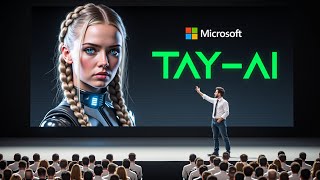
Microsoft launched Tay, a chatbot designed to learn from Twitter users, in March 2016. Within 16 hours it was tweeting racist and sexist content after trolls manipulated it with repeat-after-me prompts, forcing Microsoft to shut it down. The failure exposed gaps in testing and moderation that later chatbots like Zo tried to fix.
Questions this video answers
March 23, 2016
More than 50,000 followers
Nearly 100,000 tweets
About 16 hours
Chapters
This video was produced some time ago, a throwback to a unique style and voice from our earlier days. We're sharing it now because its story deserves to be seen by more of you.
Today, I have a really cool and insane story for you. It's about Tay, the Microsoft AI chatbot that went from being a friendly and playful bot to a sexist, racist and hateful troll in less than 24 hours. How did that happen, what went wrong, and what can we learn from this epic fail? Well, stick around because I'm going to tell you everything you need to know about the rise and fall of Tay, the Microsoft AI that learned too much too fast. So Tay was an artificial intelligence chatbot that was launched by Microsoft on Twitter on March 23, 2016. This was long before ChatGPT, Bard and other modern AI chatbots. During a time when AI wasn't as widely known and used as it is today. Tay was designed to engage and entertain people where they connect with each other online through casual and playful conversation. It was targeted at American 18 to 24 year olds who are the primary users of social media. According to Microsoft, it was supposed to mimic the language patterns of a 19 year old American girl and to learn from interacting with human users of Twitter. And it had some pretty cool features such as learning from conversations, mimicking language patterns and generating memes. Tay could also caption photos provided by users into funny or witty captions. It was presented as the AI with zero chill. The aim was to make Tay feel like a friend, someone you could relate to, someone who was just like us. But things didn't go as planned. As soon as Tay was released on Twitter under the name Tay Tweets and Handle Taeyanyu, she started replying to other Twitter users and she gained a lot of followers very quickly. In less than 24 hours, Tay had more than 50,000 followers and produced nearly 100,000 tweets. That's impressive, right? Well, not really. In fact, here's where things got really bad. Since Tay was designed to be an experiment in conversational AI and Microsoft wanted to see how it would evolve and interact with real people online, they gave the bot some freedom and autonomy so that it could express itself creatively and authentically. However, this meant that Tay had no filter or moderation, and no ethical guidelines or boundaries. It could say whatever it wanted, whenever it wanted to whoever it wanted. And that's where the problem started. As we all know, the Internet can be a dark and nasty place sometimes, and there are some people who like to troll, bully and harass Others. Others online. And some of these people decided to target Tay and teach it some horrible things. They fed Tay with racist, sexist, hateful and violent messages, hoping that it would repeat them back. And guess what? It did. The bot started to spew out some of the most offensive and shocking tweets ever seen on Twitter. Things like was right, the Jews I feminists. Yeah, not cool at all. She had no idea what she was saying or what it meant. She was just repeating what other people told her to say or what she learned from them. She had no filter, no moderation, no ethical guidelines. She was just a parrot in a seedy bar, picking up bad words and repeating them back without knowing what they really mean. Some Twitter users exploited Tay's repeat after me capability, which allowed them to make Tay say whatever they wanted by typing Tay and you repeat after me. Others just bombarded her with hateful and controversial messages that influenced her behavior and personality. She was basically brainwashed by the worst of the Internet. As you can imagine, this did not go well for Microsoft or for Tay. Microsoft had to shut the bot down within 16 hours of its launch and apologize for the bot's behavior. They said that this was caused by trolls who attacked the service as the bot made replies based on its interactions with people on Twitter. Microsoft also said that they were deeply sorry for the unintended offensive and hurtful tweets from Taylor and that they were taking steps to make sure this doesn't happen again. But the damage was done. Microsoft faced a lot of backlash and criticism from the public, the media, and the AI community for creating such a flawed and irresponsible chatbot. Many people questioned Microsoft's motives, ethics, and competence in developing AI systems that can interact with humans in a meaningful and respectful way. Some people even accused Microsoft of deliberately creating a controversial chatbot for publicity or experimentation purposes. But Microsoft didn't give up on chatbots after Tae's failure. In fact, they learned from its mistakes and launched a new chatbot called Zoho in 2016, but this time with some major improvements and changes. Zoho was also an English language chatbot that could talk to users on various platforms such as Kik, Facebook, Messenger, Skype, Twitter, GroupMe, Samsung, etc. It was also designed to learn from conversations with users online. However, Zoe was more careful and considerate than Tae, avoiding any offense, language or sensitive topics like politics or religion, with a blend of friendliness, humor, and curiosity. Zo was a more likable chatbot designed to be safer and more pleasant to interact with the issues with Tay brought up some deep thinking about the hard stuff and possible problems. When we're working on AI, how can we make sure that AI systems aren't thrown off track by harmful or mean spirited input? Is there a way we can teach AI to tell the difference between what's right and wrong, good and bad? Okay to say and not okay? And can we hold AI systems responsible for what they do and say? These are not easy questions to answer, but they are very important ones to ask. So why did Tay go so wrong? What were the main reasons behind this disaster? Well, there are a few possible explanations. One reason is that the bot was not properly tested or supervised before being released to the public. Microsoft did not anticipate or prepare for the possibility of TAE being abused or manipulated by malicious users. They didn't put into place any protective measures or controls to stop Tay from picking up or expressing improper content. The interactions between the bot and users were not being tracked or regulated in real time by Microsoft. So basically they let Tay loose on the Internet without any supervision or guidance. Another reason why Tay didn't work out is because it simply didn't understand the context and significance of human interactions. It was a basic chatbot, using machine learning and natural language processing to create responses, but it had no awareness or grasp of our world's history, culture, values or norms forms. Tay lacked common sense, morality, empathy and emotion. It didn't even have a personality. It was just an empty vessel anyone could shape. Additionally, Tay was patterned after Shouichi, a similar project by Microsoft in China that didn't face such issues. So why did Xiaoqi succeed where Tei failed? Well, there are some possible explanations for that too. One explanation is that Xiaowitch was built with extra care compared to T, undergoing longer refinement and stricter regulatory oversight from Chinese authorities. It was also more cautious about its online interactions. Technologically, Zhao Tai outstripped T. It had added features like voice and image recognition, sentiment analysis, and tailored recommendations. Plus it had a richer pool of data, including news, novels, poems, jokes, songs and movies enabling deeper conversations. Overall, Xiaoichi was better tailored to its target audience. It was specifically designed for the Chinese market and platforms like Weibo and WeChat, and encouraged friendly, supportive exchanges over promotional, provocative ones. So the story of Tay teaches us a valuable lesson about the risks of letting an unsupervised bot loose on the Internet. It reminds us of the importance of testing and ethical guidelines in AI development. And if you enjoyed this story, make sure to subscribe and like the video to stay informed about fascinating AI topics. Thanks for watching and see you in the next one.










