The Biggest AI Project Ever "STARGATE" by OpenAI, SoftBank & Trump SHOCKED AMERICA!
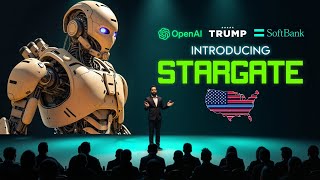
OpenAI, SoftBank, and Oracle announced Stargate, a $100 billion AI infrastructure project that will scale to $500 billion over four years to build data centers and supercomputers across the US. The consortium, backed by Trump and led operationally by OpenAI's Sam Altman, aims to compete with China and create immediate jobs, with construction starting in Texas.
Questions this video answers
January 21, 2025.
Initial $100 billion, planned to grow to $500 billion over four years.
About 1 million square feet.
100,000 jobs right away.
February 5, 2025.
Chapters
Stargate is a massive new AI infrastructure project that brings together President Donald Trump, SoftBank CEO Masayoshi San, Oracle's Larry Ellison, and OpenAI's Sam Altman. They're committing half a trillion dollars over four years to build data centers, supercomputers, and the core tech needed to push AI to its next frontier. Here's how it all unfolds and why it could reshape the industry. So yesterday, January 21, 2025, President Trump held a press briefing. Whitehouse joined by Sun, Ellison, and Altman to announce a massive private sector investment aimed at building the largest AI infrastructure project in history, by far. Called Stargate, it kicks off with an initial $100 billion, with plans to grow to $500 billion over the next four years. The clear message? America is doubling down on AI to stay ahead in the global race, particularly against competitors like China. Now, why do we need so much infrastructure for AI? Well, these advanced models like ChatGPT or any giant language model, require insane amounts of computing power. That means data centers, specialized chips, huge water resources for cooling, and tons of electricity. Sam Altman has been pushing for expanded AI infrastructure for a while, claiming the US Risks losing its edge if it doesn't ramp up capacity by bringing Oracle, SoftBank, and others on board. Stargate aims to build new facilities across the country, starting in Texas. Ellison says they already have about 10 data centers under construction there, including a massive 1 million square foot facility. The job numbers are big, too. Trump says it'll create 100,000 jobs right away, with more added later. People are drawing comparisons to older announcements, like the 2017 Foxconn deal that promised a $10 billion Wisconsin complex but ended up shrinking drastically. So there's some skepticism. Still, Foxconn left behind a major data hub that Microsoft uses, so maybe not a total bust this time around. The players, Oracle, SoftBank and OpenAI, come from the AI and Enterprise Data world directly, so a lot of insiders think Stargate really will become the next big thing. But why is President Trump so interested in this? One huge factor is competition with China. The administration wants to ensure America doesn't fall behind in crucial AI tech, which influences everything from healthcare and finance to military capabilities. In fact, Sam Altman mentioned that advanced AI might soon help cure diseases at an unprecedented rate. Altman also thinks it's essential for the US to produce advanced chips on its own soil instead of depending on foreign factories. There's also been buzz in tech circles about a story from just a few days ago regarding H1B visa policy changes, which could be another piece of the puzzle. While details are still emerging, sources suggest the administration may be looking to streamline H1B approvals, especially for specialized AI and data center roles. Some speculate that this might be a push to bring in more Indian workers, a group historically dominant in the H1B visa category, thereby staffing up these massive AI projects quickly. Observers note that SoftBank has previously invested heavily in Indian tech startups, while Oracle and other enterprise giants have large operations in India. It's not far fetched to think this renewed H1B focus could be linked to Stargate's need for a massive specialized workforce. Critics argue it could be a way for companies to tap cheaper foreign labor, but supporters see it as a practical move to fill urgent talent gaps and ensure the US Remains the epicenter of AI development. This remains a hot butter issue that could evolve as Stargate ramps up. Now the official structure of Stargate looks like this SoftBank and OpenAI take the lead, with SoftBank holding the main financial responsibility and OpenAI directing operational decisions. Masayoshi San is Stargate's chairman, while Oracle, Nvidia, ARM, Microsoft and MGX are also big partners. Oracle will build and operate much of the underlying system and tapping into its massive experience as a data center provider. Nvidia, of course, brings the GPU muscle that large AI models need. Microsoft is still in the picture, but there's a new twist. Microsoft used to be the exclusive provider of new AI capacity for OpenAI, but that exclusivity's been loosened, so OpenAI can work with Oracle and others for this massive build. Microsoft still has a right of first refusal, meaning if OpenAI needs more capacity, Microsoft can step in first. But OpenAI is free to expand if Microsoft doesn't want to or can't handle it all. On top of that, the White House is rolling back an executive order from former President Joe Biden that was meant to regulate AI risks. The idea is to loosen some constraints so the Stargate project doesn't get bogged down. This is a point of controversy. Some say we need more oversight, not less. But the administration's argument is that to beat China, we need to move fast, then figure out regulation afterward. Larry Ellison made a statement during the press briefing that AI holds incredible promise for all of us. Sam Altman called this the most important project of this era. They both emphasized national security as well as technological leadership. Trump jumped in to say the best minds and biggest investors need to keep this in the U.S. he also repeated his belief that this deal will bring hundreds of thousands of new jobs not just in tech, but also in areas like construction, utility management, and even transportation. Now let's pivot briefly to a related story. Rice University in Houston is looking to approve a new AI major for undergraduates by fall 25. The faculty will vote on it February 5th. And the Department of Computer Science wants to carve out a distinct Bachelor of Science in AI. Why? Enrollment in AI courses is skyrocketing. For instance, there's a graduate level deep learning class comp 666 that has 35 undergraduates out of 140 total students. Rice would join other universities like Carnegie Mellon, UPenn and MIT that have recognized AI as a discipline in its own right. This lines up perfectly with the big push to train more AI talent for projects like Stargate. Now if we circle back to the broader implications, the entire point of Stargate seems to be twofold. First, outpace China's efforts in AI by building epic scale data facilities here in the US and second, create a strategic cushion to protect national security. The thinking is that if you control the data centers, you control the future of AI. In a white paper, OpenAI pointed out that around $175 billion is apparently sitting around in various global funds ready to be invested in AI initiatives. If the US doesn't reel in that money, it might go to China backed projects, potentially boosting the Chinese Communist Party's technological reach. That's why the White House is so gung ho about clearing any red tape. Historically, new presidents have made splashy announcements about major companies investing in American industry. Some have fizzled, but some end up partially successful. This time, the sheer scale of the data center push suggests it might be different. Oracle is a big name in enterprise tech, SoftBank has poured billions into everything from tech startups to robotics, and OpenAI is arguably the leading AI research lab right now, with models like ChatGPT that have captured the world's attention. One last note. While Microsoft isn't the only cloud provider for OpenAI now, it's still deeply entwined. They made a big statement saying that the core aspects of their partnership are unchanged. Microsoft retains an exclusive license to the OpenAI API on Azure and can keep integrating AI features into products like Microsoft Copilot. At the same time, Microsoft gets first crack at providing extra capacity. So it's not like they're being cut out of the deal, they just aren't the sole provider going forward. The bottom line is that Microsoft is still heavily involved, but with the kind of money Stargate is throwing around, they can't realistically handle it all themselves. If you're watching this and thinking alright, but how quickly will we see? We don't have an exact timeline, but they've already started building out in Texas, so it's not just talk. Construction is underway. Altman, Son and Ellison all say we'll start seeing job creation almost immediately. We'll see how everything shakes out over time, but it's a major moment for AI in America. The hope is that it'll lead to breakthroughs in healthcare, maybe those disease cures Altman hinted at finance, self driving cars, robotics, and basically any industry that harnesses large scale AI. In short, if you're into AI data centers or major tech developments, this is the story to watch. The scale is colossal, the money's huge, and some of the biggest names in tech and politics are behind it. Plus, with Rice and other universities stepping up AI education, it feels like the US is setting the stage for a massive AI driven transformation. That's the big picture on Stargate. A half trillion dollar bet on America's AI future. Let me know what you think in the comments. Is it too ambitious or exactly what we need right now? And how do you feel about the regulatory side being loosened? I'd love to hear your thoughts. Thanks for tuning in. Be sure to like and subscribe for more deep dives on AI and tech and I'll catch you in the next video.










