The Most Powerful AI Humanoid Robot Yet - Pudu D9 (Better Than Optimus)
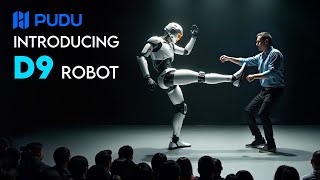
Pudu Robotics unveiled the D9, a humanoid robot with two 7-DOF arms, 42 total joints, and the ability to carry 20 kg while walking at 4.5 mph. It uses real-time 3D mapping and reinforcement learning for warehouse and retail work, with an expected price around $16k to $30k.
Questions this video answers
5.57 ft
65 kilograms
Up to 4.5 miles per hour
Seven degrees of freedom per arm
11 degrees of freedom
Chapters
Pudu Robotics has introduced its most impressive creation yet. The Pudu D9, a humanoid robot built to take on tasks in warehouses, retail spaces and beyond. Standing tall at 5.57ft and weighing 65 kilograms, this cutting edge machine comes loaded with features that put it ahead of the competition. By the way, if this kind of innovation excites you, head to AI Revolution CC for for updates, tools and news links in the description. You're welcome. Alright now. The DE9 moves with the ease and speed of a human walking upright at up to 4.5 miles per hour. It handles stairs, slopes and uneven surfaces with absolute confidence, powered by advanced algorithms that ensure smooth and lightweight movements. Its design makes it ideal for bustling environments like warehouses or busy stores, where it operates efficiently and seamlessly integrates into the flow of activity. What truly sets it apart from is its level of precision and dexterity. With two robotic arms offering seven degrees of freedom each, it can carry loads of up to 20 kg while maintaining the delicate touch needed for tasks like stocking shelves or sorting items. These arms are paired with the Pudu D11 dexterous hand, a piece of tech that brings human like precision to the table. It's equipped with 11 degrees of freedom, which means it can grip, hold and manipulate objects just as effectively as a human hand. This makes it perfect for industries where precision is non negotiable, like manufacturing or retail. The technology driving this robot is just as impressive as its physical design. Pudu Robotics has integrated high accuracy sensors and advanced AI models to give the D9 a deep understanding of its environment. Its visual semantic navigation system creates real time 3D maps, allowing it to position itself accurately and and plan routes autonomously. Whether it's navigating a cluttered warehouse or figuring out the most efficient way to stock a shelf, this robot can handle it without human intervention. Pudu Robotics has been in the service robot industry for years, shipping over 80,000 units across 60 countries. Most of these earlier models were focused on simpler tasks like cleaning, delivering food in restaurants or moving goods in warehouses. The D7, their semi humanoid robot released earlier, was a big step forward with its ability to operate elevators and serve tables. But the D9 takes this to a whole new level. Unlike the D7, which moves on wheels, the D9 walks on two legs and comes equipped with significantly more advanced features. From its dexterous hands to its ability to perform complex tasks autonomously. The level of detail in the D9's design is worth noting. Its 42 degrees of freedom across various joints allow for incredibly fluid movements. Each joint can generate a torque of up to 352newton meters, making it powerful enough to handle physically demanding tasks. It's also stable enough to recover from being pushed or knocked off balance, a feature reminiscent of robots from Boston Dynamics. This robot isn't just about moving boxes or cleaning floors. Pudu Robotics has made sure the D9 can interact with humans naturally and effectively. Using a combination of visual, tactile force and auditory sensors, it collects and processes a wide range of environmental data. The AI processing framework behind it integrates this data to create what the company describes as human level multimodal natural interactions. This means the D9 can not only respond to commands, but also engage in meaningful interactions, whether it's assisting a customer in a store or working alongside humans in a warehouse. One of the standout moments in the D9's launch was a demo showing the robot in a car dealership. It wasn't just there to look futuristic, it actively demonstrated a car's features to a potential buyer. This is the kind of real world application Pudu Robotics envisions for the D9 robots stepping into roles that require both physical and cognitive capabilities. The company hasn't revealed the price yet, but it's expected to compete with robots like Tesla's Optimus and Unit Trees Gone, which are priced between $16,000 and $30,000. Given its advanced features, the D9 might land somewhere in that range. Unlike many concepts that seem stuck in the prototype phase, this robot is ready for commercial use. Businesses can already inquire about it through Pudu's website, with pre sales set to begin soon now. The D9 isn't the first time Pudu Robotics has impressed the TEC world. Their earlier models, like the D7 and the Pudu Shone Floor Scrubber have already shown the company's ability to combine innovation with practicality. But the D9 marks a significant step forward, offering capabilities that could reshape industries. It's not just about reducing labor costs. It's about improving efficiency, precision and adaptability in environments where robots and humans work side by side. Felix Zhang, the founder and CEO of Pudu Robotics, has been vocal about the company's commitment to addressing customer needs through technology. The D9 is a reflection of this philosophy. It's built to serve, not just in the sense of completing tasks, but in genuinely enhancing the environments where it operates. Zhang emphasizes that customer centricity is at the heart of Pudu's values, which is why the D9 is designed to meet the practical needs of industries while also being user friendly and efficient. The hardware and software combination in the D9 is another area where Pudu Robotics shines. The robot uses reinforcement learning algorithms that allow it to adapt and improve over time. This isn't just a machine that follows pre programmed commands, it's a system that learns and evolves, making it more effective with each task it performs. This ability to learn from extensive data sets and execute end to end task planning sets it apart from many of its competitors. The company's focus on practical applications is clear. The D9 has already been demonstrated performing tasks like ground cleaning, carrying boxes and stocking shelves. But its potential goes far beyond these examples. With its ability to interact naturally with humans and its advanced manipulation capabilities, it could find roles in healthcare, education and even hospitality. Imagine a hotel lobby where the concierge is a humanoid robot capable of checking you in, answering questions and even carrying your luggage to your room. That's the kind of future Pudu Robotics is working toward. Pudu's approach focuses on much more than creating iCode AC hooking robots. The company is building a business model that thrives on sustainability and scalability. With $192 million raised through eight funding rounds backed by major investors like Meituan, a Beijing based food delivery giant, Putu has established a massive factory in Jiangsu, China. This strategic step positions them to meet the surging demand for their innovative robots and continue expanding their global presence. The D9 represents a bold vision for the future of robotics. Pudu Robotics is advancing three key specialized machines for targeted tasks, semi humanoid models for flexible roles and fully humanoid robots like the D9 engineered for complex human like interactions. Each category brings unique value, forming a comprehensive ecosystem that caters to a wide range of industries and applications. The D9 stands as a powerful example of what happens when advanced technology combines with practical intelligent design. With its unmatched mobility, precise manipulation and seamless ability to interact naturally, it excels in environments where performance and reliability are critical. Pudu Robotics continues to push the boundaries of innovation, marking the start of an exciting new era for robotics. Alright, let me know what you think in the comments and if you enjoyed this. Make sure to like and subscribe for more AI updates. Thanks for watching and see you in the next one.
Sa. Sam.










