The Rise of AI Robots: Everything You Need to Know
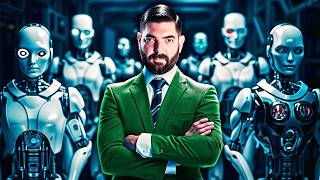
YouTube video (Apr 23, 2024) by Matt Wolfe/LARRUZ surveying recent advances in humanoid robots. The presenter showcases ~10 humanoid robot demos (Boston Dynamics Atlas 001; Figure 01; Tesla Optimus; Sanctuary AI Phoenix; Agility Robotics Digit; Unitree; Apptronics; Fourier Intelligence; 1x; UB Tech), explains why the humanoid form factor is pursued (compatibility with human-designed environments, natural interaction, cultural expectations), and argues the current boom is driven by AI advances (LLMs, computer vision), better hardware, and simulation/ML training. The video cites a Goldman Sachs market estimate (up to $38B by 2035; 1.1–3.5M units) and discusses likely early deployment in understaffed or hazardous industries.
Questions this video answers
April 23, 2024
LARRUZ (presenter: Matt Wolfe)
Chapters
In this video, I want to talk about robots, specifically humanoid robots. I started experimenting with posting some stuff on Instagram. As you can see, most of my videos get, you know, a couple thousand views when I post them on Instagram. However, when I posted this video about the new Boston Dynamics robot, this video went a little bit more viral than the rest of my videos. And then I saw Minchoi over on X post this thread. That did pretty well. And it got me excited to want to go deeper down the robotics rabbit hole. Right now, at this point in time, robotics is experiencing a huge boom. And the humanoid form factor for these robots is also gaining in popularity. With all of the advancements that we're seeing in AI, specifically in generative AI, the area of robotics is growing by leaps and bounds, and the engineers that are behind these robots are figuring out how to do things with the robots that nobody's been able to do before. So I want to start by showing off 10 really, really cool humanoid robots. Then we'll talk a little bit about why we're seeing this huge boom in humanoid robotics right now. So this is the robot that went viral on my Instagram. And this is the Boston Dynamics Atlas 001 robot. And this one went viral because of, well, how it moves. And they really designed this robot to show off that robots don't need to follow the same motions that humans need to follow. They can do things that humans can't do. And, well, this video definitely grabbed people's attention. This was the original Atlas robot, which you've probably seen some of these videos where the ATLAS robot can jump around and do all sorts of crazy stuff. This robot used a lot of hydraulics. The new Atlas 001 is electric, and this original Atlas robot is now retired. One of the more impressive robots that we've seen recently is the figure 01 robot. This one is actually super impressive because it uses OpenAI's large language model underneath it to actually communicate back and forth with the end user who's talking to the robot. If you haven't seen this demo yet, it's pretty cool. Let's take a peek.
Can I have something to eat? Sure thing.
Great.
Can you explain why you did what you just did while you pick up this trash on it? So I gave you the apple because it's the only edible item I could provide you with from the table. Based on the scene right now, where do you think the dishes in front of you go next? The dishes on the table, like that plate and cup, are likely to go into the drying rack. Next.
Great.
Can you put them there?
Of course. Now the original video was in real time going back and forth during the conversation, but I did cut some of the gaps just to keep the pace of the video high here. Now one of the things that makes Figure a really interesting company is that they've been around for less than two years and they've already gotten this far with their robots and even recently made a deal with BMW to use the figure 01 robot inside of one of their automotive plants. Now, as I've been going down this robotics rabbit hole recently, I wanted to learn a little bit more about what was going on. And I found this post from Corey lynch here, who's the head of AI over at Figure and well, he also used to work at Google DeepMind, so he probably knows what he's talking about. In his post on X here he says all the behaviors are learned, they're not teleoperated. This graphic here was shared and it says when he asked, can I have something to eat? It goes from a speech to text model into the OpenAI model and then back out as text to speech where the robot says sure thing. Then it uses the large language model to decide what the next behavior of the robot is. Once it decides the next step, it tells the whole body controller, which then moves and manipulates the robot to do what it's supposed to do all at the same time. The robot has a vision model which is what, looking at the environment around it and feeding that data back into the neural network as well as back into the large language model to help add additional context to the prompt. You've probably also seen videos from Elon Musk sharing his humanoid robot called the Tesla Optimus. Here's a video of the Tesla Optimus walking around the warehouse. Here's another video of the Tesla Optimus actually folding shirts. But we did find out after this video came out that it wasn't doing it autonomously, it was actually being helped. In fact, if you look really closely in this video, let me kind of scroll back. Look on the right side, down on the bottom, you can actually see the hand move with the hands of the robot. Here's another shot where the hand comes into frame. I'm pretty sure this is somebody wearing a suit or at least wearing the gloves. And as they're moving around, the robot is following what they're doing. Of course the long term intention is that these Tesla Optimus robots are going to be autonomous. But right now they still have humans sort of assisting them and helping them to learn the moves we can see here. Elon's post important note. Optimus cannot yet do this autonomously, but certainly will be able to do this fully autonomously and in an arbitrary environment. It won't require a fixed table with box that has only one shirt. Another company developing humanoid robots is a company called Sanctuary AI and they have a robot that they're calling the Phoenix, which in this video here shows that it can autonomously do tasks that humans can do at a similar speed to what humans could do the tasks at that. And here's another video of it doing human things like putting foam balls into a cup. Most of these companies seem to have pretty similar missions to create the world's first humanlike intelligence in general purpose robots to help us work more safely, efficiently and sustainably. If we look at Tesla's mission statement on X, a general purpose bipedal humanoid robot capable of performing tasks that are unsafe, repetitive or boring. They're trying to build these robots to do the things that humans either find too unsafe for humans to do or to do the jobs that really humans just don't want to do. And then we have a company called Agility Robotics who created a robot called Digit. And this one's sole purpose is to work in warehouses like Amazon. And here's a little video clip of these ones walking around and doing their thing inside of a warehouse. There's a time lapse at 6x speed of them organizing and doing what they have to to get products, I guess. Then there's Unitree, who is creating humanoid robots that run really, really fast. And the robots can even be coordinated to dance together so they're all in sync as they're dancing, which is pretty cool. I mean, it's got like a hive mind kind of thing going on. Some demos were showed off where it can jump and it actually looks like it jumped higher than the actual human. But if you look at the hands, it doesn't quite have the same sort of caution, I guess, that the other ones have. It looks like it just kind of clamps down, but it doesn't look like it moves its fingers delicately like we saw in the figure and some of the other robots. And then we have the Apptronic robot, which, very similar to the other robots, looks like it's designed to help with warehouses and manufacturing and to just do kind of the manual labor that a lot of people may not want to do. It's also got the fingers that can move and grip things individually and do things like make smoothies for people. Now I'm not sure I want to pronounce this correctly, but then you have Fourier Intelligence robotics, and they plan to make robots to help. As a therapist, we can actually see this robot working with a patient, showing the patient what to do. And then I'm assuming it's this is for like rehabilitation purposes or something. The patient actually works with the robot to work through whatever issue this person seems to be working through, I guess some sort of rehabilitation sort of process where the robot is able to work directly with them. This might even be the future of gym instructors as well, because, well, it could lift weights and do yoga poses and whatnot and get people to follow along. Who knows, maybe the future of gyms is a robot that's telling you what exercise to do. And then we have the 1x robot, which is the robot that I would vote most likely to be a human wearing a robot looking suit. This one actually appears to have wheels instead of legs, but is designed to autonomously help with things like closing boxes and folding shirts and whatnot. And then finally, there's a robot from a company called UB Tech. This is a company based out of China. And their robots have actually already been deployed in some EV factories, very similar to the rest of the robots. It can walk on its own using its two legs. It uses computer vision models to see the world around it and could help humans with everyday tasks like unscrewing a water bottle for them. But in the demo they actually showed it playing games with people, giving somebody a massage. And it can walk on all types of terrains. Here's actually one of those robots from that same company working in a manufacturing plant. As we can see, it can't totally walk on its own in this manufacturing plant. It looks like it's got some, you know, tethers or umbilical cords or whatever you want to call them. But these robots are already being deployed right now. Now, as I started going down this rabbit hole, one question keep popping up in my mind. Why do these robo to be in a humanoid form factor? Aren't there better form factors to put a robot in? It seems like it'd be really hard to make them walk instead of just putting them on wheels and things like that. And as I did the research, there was really three main reasons that kept coming up to why you would want this humanoid form factor in robots. The biggest reason is that we live in a world designed for humans. The height of doorknobs, the way laundry machines are designed, the height of a sink in your kitchen, the handles on a refrigerator, all of these kinds of things are for a world that humans operate in. So if we want the robots to take over the work of the humans, we kind of need them to be in this human form factor, because that's what everything was designed for. The other reason is that in the humanoid form factor, you get a much more natural human interaction. So when a human is interacting with one of these robots, it just feels more natural to kind of talk to it face to face like you would with another human. And so as these robots get more and more designed to be sort of household helpers or business helpers that you almost treat like an employee and you ask them to do things for you, it just feels much more natural to talk to that humanoid form factor, to talk to a face. And then the third reason isn't really that scientific or anything, it's just that that's sort of the future that we've been promised in sci fi movies. And quite honestly, a lot of these big tech companies are trying to build the future that people are kind of expecting because that's what they've seen in sci fi movies. Obviously not the best reason to build them in the humanoid form, especially if there's cheaper, more effective ways to build them, but it is one of the reasons that was given quite often. Now the other question is, why now? Why are we starting to see videos of humanoid robots all over the place now, more so than any time in history? Well, the main answer to that is, is because of AI, because of large language models now being able to power them and help even program them. Now that we have large language models like the ones that we have from OpenAI and Claude and companies like that, we can now give a voice to these robots. We can now attach large language models that are fine tuned on these robots operations. Computer vision models have also grown by leaps and bounds, making it easier for the robots to understand what's in front of them. We've all seen the GPT4 demos and the Claude demos where you can upload an image and have the AI, the large language model, tell you what it sees in the image. Well, those large language model capabilities are now available inside of robots as well. Hardware has improved by leaps and bounds recently as well, allowing us to get better processing power out of smaller and smaller chips. Training these robots to be autonomous has gotten easier. Companies like Nvidia have created virtual environments where the engineers building these robots can actually train the robots in virtual environments before asking the robots to do them in the real world. And as AI becomes a term that people use on a daily basis. The expectation has kind of become that this is the future we're moving towards. We're going to have robot helpers in the future. And as that idea becomes more and more popular and there's more demand for AI robots, economies of scale kick in and it becomes less and less expensive to manufacture these robots. You might be asking, well, is there a demand for these robots? Well, according to Goldman Sachs in this article here, the global market for humanoid robots could reach 38 billion by 2035. So within the next 10 or 11 years, these robots are expected to be a massive market. Now, this is all speculation and it's all theoretical, but according to this article at Goldman Sachs, it's expected that the demand for humanoid robots can potentially reach 1.1 million to 3.5 million units globally. And as the cost of these robots go down, and as we see more and more of these big venture capital firms invest in robotics companies, it's likely that we'll see this become more and more attainable for the common person. It will probably impact businesses a lot more in the early days, but over time, it's not out of the question that more and more people are going to have robots in their house to help them with what needs to be done around the house. Now, I do know that there's a lot of worry about the idea that these robots might be taking jobs. And I think to some degree that's true. I think it will take jobs. However, most of the industries that they are targeting these robots to work in first are industries that are understaffed. There's not enough employees to meet the demand of the production that these robots are expected to take over. They're also really focused on hazardous jobs that are much more dangerous for humans to do. They'd rather put a robot on the front line to do the dangerous work that could injure somebody instead of actually putting a human there. So one of the first priorities is to use these robots to create more safe manufacturing conditions, as well as to fill in in the areas where there aren't enough employees to meet the demand for the work that needs to be done. So this is a rabbit hole. I'm going to go down a lot more in future videos. I love robotics. I want to learn more about them. I want to talk more about them. Admittedly, it's not something that I know a lot about. I did do quite a bit of research to deep dive on this video, but I want to keep going deeper down the rabbit hole. And as I do, I'm going to share more videos with you about what I've learned about robots. One thing is for sure, these robots are getting more and more advanced every single day. The advancements in AI and robotics is driving costs down and driving demand up. They appear to be a great way to fill roles that humans either don't want to take on or are very unsafe for humans to do. And quite honestly, I can see a future where humanoid robots are walking around among us, helping us do the things that we don't want to do so that we could spend more time doing the things that we all actually do want to do. In my opinion, that's what's most exciting about just all of AI in general is that it's empowering us to spend more time doing the things we want to be doing and letting AI and systems and automation and robots do the things that we don't want to be doing. That's the utopian view. That's the thing that excites me. That's where I see it all going. I'm totally here for it. I can't wait to go even deeper down the rabbit hole, make more videos on robotics in the future and continue to fill you in on the latest news around AI and robotics and where they overlap in my Friday news videos. So if you like stuff like this, you like nerding out about tech and AI and the future and everything that's happening in this world right now, make sure you like this video and you subscribe to this channel and I'll make sure more videos like this show up in your feed and I'll keep you looped in on all the latest AI and AI news and all that good stuff. And as Always, check out FutureTools IE where I curate all the latest AI tools, all the latest AI news. I even have a free newsletter where I will share with you just the most important, important news and the coolest tools in your inbox. And I'll even hook you up with the AI Income Database, a database of ways to make money using various AI tools. It's all free. Just join the newsletter over at FutureTools IO. Thank you so much for tuning in. I really appreciate you and I will see you in the next video. Bye bye.










