The Top 10 AI Powered Robots Coming In 2024 (Nvidia, Open AI, Google...)
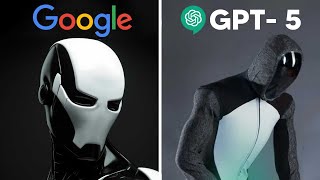
A survey of AI robots coming soon from Tesla, Nvidia, OpenAI, and Google. Interact Analysis predicts over 150,000 automated robots by 2030. Tesla's Optimus is projected to cost $20,000, while OpenAI invested $23.5M in Norwegian firm 1X for a summer 2023 demo.
Chapters
Artificial intelligence and robotics have made significant strides in recent years. In a fascinating study conducted by Interact Analysis, they've predicted that the number of automated robots will skyrocket to over 150,000 by the year 2030. Can you believe that? It's an absolute game changer and a testament to the rapid growth and adoption of robotics in various industries. Think about it. 150,000 robots? That's like having an army of super smart machines working alongside us. Picture a world where robots take over the heavy lifting, allowing us to focus on more meaningful and creative things. It's a whole new era and we're on the cusp of something extraordinary. Today we'll highlight groundbreaking robots that are set to change the game. So without further ado, let's jump right in. Nvidia, the company known for designing and manufacturing powerful GPUs, has set its sights on the world of AI and robotics. The who would have thought? Trust me, you're in for a wild ride. Isaac Sim, developed by Nvidia, is a game changer in the realm of robotics. It's a powerful platform that allows developers to create, simulate and train AI based robots in virtual environments. It's like a high tech playground for the robots of the future. But wait, there's more. Isaac Sim takes it up a notch by integrating powerful artificial intelligence capabilities. This means that robots can learn and adapt to different situations, making them smarter and more versatile than ever before. Just recently, at the highly anticipated GTC event, Nvidia made a groundbreaking announcement. They revealed that Omniverse Cloud, their cutting edge platform, is teaming up with Microsoft Azure. This partnership will extend access to Isaac Sim, Nvidia's incredible platform for developing and managing AI based robots. They bringing the future of robotics to the cloud. And that's not all. Nvidia is taking things a step further by unleashing their full suite of Jetson Orin modules. What does that mean? Get ready for a leap in performance like never before. Specifically designed for edge AI and robotics applications. With better chips powering the AI, we can expect a whole new level of intelligence and capability in the robotic world. Nvidia's expertise in designing powerful GPUs combined with their foray into AI and robotics and opens up a world of possibilities. Can you imagine the possibilities? It's like giving robots a supercharged brain. Tech billionaire Elon Musk has once again pushed the boundaries of innovation. He recently presented the world with the latest prototype of a humanoid robot developed by his electric car company. Tesla Optimus, as it's named, made a grand Entrance at a Silicon Valley event. Musk envisions a future where these mass market robots will undergo rigorous testing in Tesla's own car factories. The true power of Optimus lies in its ability to leverage Tesla's knowledge and economies of scale. From the intricate sensors to the powerful actuators, from the motors to the batteries and chips, every element has been meticulously crafted to create a robot that can tackle a multitude of tasks, both industrial and domestic. And the most astonishing part, it comes at a price that is less than many cars. A mere $20,000 Optimus holds the promise of transforming the way we approach labor intensive jobs, offering unmatched efficiency and precision. And there you have it. The Optimus Tesla robot. A bold vision for the future of robotics. But what does this mean for Tesla as a company? At first, it might seem puzzling, an electric car company venturing into the realm of humanoid robots. But as Elon Musk himself explained, it's all about leveraging Tesla's expertise in AI and applying it to a whole new dimension. The Optimus Tesla robot represents a shift in Tesla's vision beyond just automobiles. The true power of the Optimus Tesla robot lies in its ability to understand and interact with its environment. By utilizing Tesla's AI technology, it can navigate the world, analyze situations, and tackle tasks that would otherwise be dangerous, repetitive, or simply uninspiring. Elon Musk's vision transcends mere automation. He sees a world where robots infiltrate every aspect of our existence, surpassing the impact of the automobile itself. Musk's bold vision suggests that the impact of robots in every facet of our lives will surpass even that of automobiles. And he's no stranger to disrupting industries, from space travel to autonomous cars. While some may doubt the ambitious timeline set by Musk, history has shown us that his predictions tend to come true, albeit sometimes with a bit of delay. Love him or not, Elon Musk's vision pushes the boundaries of what's possible. He has a knack for transforming lofty ideas into tangible innovations. And even though the full context for using these robots may take some time to develop, there's no denying that the future is filled with endless possibilities. Elon Musk's ability to turn science fiction into reality has been proven time and time again. After achieving unprecedented success with its ChatGPT and GPT4, OpenAI has set its sights on expanding into the realm of robotics. This bold move has sparked a range of reactions, both positive and negative. OpenAI has invested a staggering $23.5 million in the Norwegian robotics firm 1X. This company, which previously focused on security, is now gearing up to build custom robots integrated with AI technology. And guess what? The first demo reveal of this mind blowing creation is just around the corner. Scheduled for summer 2023, this move marks a significant shift for OpenAI, as they had previously shied away from mechanical robots. Of course, not everyone is on the same page about this. Ever since OpenAI's CEO Sam Altman expressed his ambition to create a super intelligent AI, there have been mixed reactions. Many of us believe that we were still years away from witnessing AI integrated into physical robots. However, the rapid development of AI has defied expectations. OpenAI's decision to invest in this robotics company suggests that the AI landscape is progressing faster than we could have imagined. If OpenAI successfully deploys its language models into physical robots, we could witness the birth of the world's most powerful and agile robots. Will it be powered by ChatGPT, GPT4 or a newer version? We can only speculate, but it's hard to imagine OpenAI not utilizing the multimodal output they've been developing for this groundbreaking venture. As we navigate this ever changing landscape, we must confront the existential questions that arise. Will AI ascend to unimaginable heights? Can OpenAI tame the beast they have unleashed? Google is on a mission to revolutionize the world of robotics in a way you've never seen before. This technology, called PalmSaycan, incorporates Google's natural language processing and machine learning into robots. Developed by a company called Everyday Robots, an Alphabet subsidiary, their ability to navigate, grasp objects and leverage digital vision, coupled with Google's framework, holds potential for practical applications in households. This technology surpasses other home helpers like Amazon's Astro, which primarily rely on navigation capabilities without the same level of understanding. Unlike traditional robots that require specific instructions, these robots leverage their language model to generate possible actions and then ground them in their actual capabilities. They learn from real world language information and can associate concepts metaphorically such as understanding that green represents a jungle, blue represents an ocean and yellow represents a desert. This approach allows the robots to interpret vague instructions like I'm hungry or I'm thirsty and determine the necessary steps to solve the problem. This robot is its design for chaos and unpredictability in the real world. Unlike other robots, this one is not limited to specific tasks or environments. It's like having a fearless explorer who can handle anything the world throws throws at it. The combination of Google's language processing and everyday robots physical abilities makes this technology a game changer in the field of robotics and human assistance. But now let's shift our focus to the Atlas robot from Boston Dynamics. This machine is known for its jaw dropping physical abilities. It can do parkour moves that will leave you speechless and even dance better than most humans. In the grand scheme of things, who would reign supreme? Can Palm Saycan's linguistic intelligence outmatch Atlas's acrobatic finesse? Well, it's a tough call. Both robots showcase incredible capabilities, each with its own unique strengths. However, here's the While Atlas excels in physicality, it falls short when it comes to executing specific commands. It's like having an extraordinary athlete without the strategic mind of a chess grandmaster. Google's Palm Saycan Once again combining the best of both worlds. Pomsaycan, with its flexible linguistic framework, can tackle vague instructions and creatively find solutions. It has the physical capabilities to explore and interact with the world, while also possessing the intelligence to execute commands. It's like having the football team and the chess club merge into one incredible robot. Let's fast forward to the future. Imagine a world 5, 10 or 20 years from now with the integration of AI and physical capabilities in robots like the Palm Saycan AI robot by Google Google. The possibilities are mind blowing. We're talking about machines that can navigate and take action in the most unpredictable and challenging environments. And let's not underestimate the colossal influence of Google in our everyday lives. From search engines to smartphones, Google has transformed the way we interact with technology. Now imagine that level of influence combined with the power of Palm Saycan linguistic intelligence merged with Google. Google's world altering innovations whether it's Nvidia's powerful AI platforms, Tesla's game changing humanoid robot, OpenAI's robotic revolution, or Google's innovative Palm Saycan, the world of robotics is evolving like never before. But here's the real OpenAI might just become the most powerful company in the AI realm. With their track record of smashing the competition, it's hard to bet against them. And if Neo does hit the scene in the future, it'll be a game changer like no other.










