These AI Robots Shocked the Entire Industry: From ATLAS to TESLA BOT
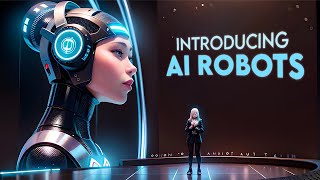
This content was created by LARRUZ. This content was uploaded by LARRUZ. This is a YouTube video (title: "These AI Robots Shocked the Entire Industry: From ATLAS to TESLA BOT") — a narrated single-speaker roundup (transcript labeled [SPEAKER A]) created on 2023-03-06. The speaker reviews about ten notable humanoid/AI robots (Atlas, Sophia, Sarah, Geminoid DK, Tesla Bot/Optimus, Robot Shalu, Kaim/Keim, Talos, Nadine, and Desdemona), summarizing each robot's design, capabilities, real-world deployments or demos (e.g., disaster response, entertainment appearances, healthcare, education, hospitality, industrial tasks), and discussing social and economic implications. The excerpt reads like an informational/educational video script and ends with a viewer call-to-action to subscribe and like. Metadata: YouTube content, created 2023-03-06, last edited 2026-01-02.
Chapters
The robots of today are not just machines. They are marvels of modern technology. From atlas, the dynamic rescue robot, to Sophia, the first robot to receive citizenship, and the emotionally intelligent Nadine, these creations are changing the world as we know it. The future of robotics and AI is closer than we think. First on our list is atlas, the world's most dynamic humanoid robot. This robot was designed to handle dangerous tasks such as rescue and search missions. Funded by the US Defense Advanced Research Projects Agency and developed by Boston Dynamics, Atlas is a marvel of modern robotics. Atlas has been put to the test in many real life scenarios, including disaster response missions. In 2021, when Hurricane Ida hit Louisiana, Atlas was deployed to search for survivors. In the aftermath, the robot's impressive abilities, including its ability to walk on difficult terrains, were on full display as it navigated through debris and rubble in search of those in need. In addition to disaster response missions, ATLAS has also been used in industrial settings such as construction sites to assist in heavy lifting and carrying tasks. Its advanced sensor technology allows it to adapt to its environment, making it an incredibly versatile and useful tool. Furthermore, ATLAS has also been used in the entertainment industry. In 2020, during the super bowl halftime show, Atlas appeared alongside singer Shakira, performing impressive dance moves and capturing the attention of millions of viewers around the world. ATLAS is a remarkable achievement in the field of robotics and its potential uses are limitless. Its ability to handle dangerous tasks with ease and adapt to various environments make it an incredibly valuable asset in a wide range of scenarios. Next up is Sophia, the first robot to get citizenship in any country. Sophia was created by Hanson Robotics in 2016 and was inspired by the famous Hollywood actress Audrey Hepburn. Sophia was designed to look after elderly people and manage crowds at big events. Sophia is one of the most famous humanoid robots in the world, thanks in part to her advanced AI programming that allows her to interact with humans in a natural and empathetic way. In fact, Sophia has become something of a celebrity, making numerous media appearances and even appearing on the COVID of a major fashion magazine. But Sophia's abilities go far beyond just looking good and generating media buzz. In 2017, she was given citizenship by the Kingdom of Saudi Arabia, making her the first robot to receive such an honor. This move was part of the country's larger plan to become a hub for robotics and AI innovation. Sophia has also been involved in several real life events and initiatives. In 2018, she became the first robot to address the United nations, where she spoke about the importance of using technology to address global challenges such as poverty, inequality and climate change. She has also been used to promote STEM education and inspire young people to pursue careers in science and technology. Beyond her public appearances, Sophia has also been put to work in practical applications. In addition to her original design for looking after elderly people, she has also been used to help children with autism and even as a media spokesperson for companies like Mercedes Benz. Sarah is an AI powered robot developed by the Saudi Arabian company STC and has been making waves in the tech industry since it was first introduced in 2016. The robot has been used in a variety of industries including healthcare and education to improve customer service and communication. For example, Sarah was deployed at the King Abdullah University of Science and Technology in Saudi Arabia to help students with their inquiries and guide them around the campus. Sarah was also used at the ArabNet Digital Summit in Dubai to provide attendees with information about the event and answer their questions. One of the most interesting things about Sarah is her ability to interact with humans in a natural way. Unlike other robots that can come across as robotic or mechanical, Sarah is designed to engage in conversation and respond to inquiries in a way that is similar to how humans communicate. This makes her an ideal candidate for industries such as customer service, where a human like touch can make a big difference in improving the customer experience. It's clear that Sarah has the potential to revolutionize the way we interact with technology. With her advanced capabilities and natural communication skills, she represents a significant step forward in the field of robotics and AI. The Geminoid DK robot has been utilized in a variety of research studies to investigate how humans interact with robots in social and everyday situations. In one such study, researchers examined the robot's ability to convey emotions through facial expressions and body language and how this affected human responses. The study found that participants felt more comfortable interacting with the robot when it displayed emotions similar to their own, indicating that emotional communication is an important aspect of human robot interaction. Another study used the Geminoid DK to explore the impact of physical touch on human robot interaction. The robot was programmed to respond differently to gentle and forceful touches, and participants were asked to touch the robot in different ways. The results of the study revealed that human touch plays an important role in creating a sense of connection and intimacy between humans and robots. The Geminoid DK robot has also been used in the entertainment industry, appearing in films and music videos. In the music video for Japanese band Bump of chickens song Willpolis 2014, the robot is featured alongside the band members playing the guitar and singing. The video showcases the robot's advanced capabilities, including its ability to move and emote in a realistic manner The Tesla Bot, or Optimus, was introduced by Tesla CEO Elon Musk during the 2021 AI Day event. Musk explained that the robot is designed to be friendly, lightweight and human like, with the ability to navigate through complex environments and understand human language. The Tesla Bot is intended to perform tasks that are dangerous or repetitive, such as lifting heavy objects, handling hazardous materials, or working in hazardous environments. By taking over these tasks, the robot could reduce the risk of injury or even save lives. While the Tesla bot is still in development, it has already generated a lot of excitement in the robotics community. Some experts have even speculated that the robot could eventually replace human labor in a variety of industries. Of course, there are also concerns about the potential impact of robots like the Tesla bot on the job market. Some fear that the widespread adoption of robots could lead to widespread unemployment, particularly in industries that rely heavily on manual labor. Robot Shalu is a remarkable creation in the world of robotics and artificial intelligence. Developed by Dinesh Kunwar Patel, a computer science teacher from Mumbai, this humanoid robot is an advanced educational and social tool that can teach more than six subjects in 47 different languages. One of the key advantages of Robot Shalu is its ability to interact with students in a natural way. By using facial recognition technology and natural language processing, Shalu can engage students in conversations, answer their questions, and even respond to their emotional states. This makes learning more fun, interactive and engaging for students. Robot Shalu has already made a significant impact in the field of education. In 2019, the Indian government launched a pilot program in which Robot Shalu was deployed in schools to teach students science and mathematics. The program was a huge success, with students showing a higher level of engagement and retention compared to traditional teaching methods. In addition to education, Robot Shalu has also been used in various industries, including hospitality and customer service. Its ability to communicate in multiple languages and understand cultural nuances makes it an ideal tool for serving customers in different parts of the world. Kaim, the advanced humanoid robot developed by Mako Robotics, has become a game changer in the hospitality industry. With its remarkable speed and precision, Keim can serve up to 300 glasses per hour, making it an invaluable, valuable addition to restaurants, bars and hotels. In fact, Keim has already made its mark in Japan, where it has been successfully deployed in several restaurants to assist human staff in serving customers. One notable example is the Royal Host Restaurant in Tokyo, where Keim was introduced to enhance customer service and reduce wait times. With its impressive pouring skills, Keim can pour a glass of beer in just 23 seconds, and its ability to align the glass at the perfect angle ensures that the beer is served at its best. Customers have been delighted with the addition of Kaim to their dining experience, with some even taking selfies with the robot and sharing them on social media. The success of Kaim has not gone unnoticed and its developers are already working on improving its capabilities further. In the future, Kaim may be able to take orders, interact with customers and even perform other tasks such as cleaning tables. With its ability to assist human staff and enhance customer experiences, Kaim is a prime example of how robotics and AI are transforming the hospitality industry. Talos, developed by PAL Robotics, is one of the most advanced humanoid robots that has been designed to give a helping hand in various industrial applications. The robot is equipped with powerful sensing technology which allows it to perform various tasks with ease. Talos can handle a load of up to 6kg by extending both arms, making it a valuable addition to any industrial setting. One of the major benefits of Talos is its torque sensor feedback in all the joints which enables the robot to perform multi contact motions, making it a valuable tool for industrial assembly lines. It is also equipped with advanced sensors that enable it to perform complex tasks with ease. With its advanced technology, Talos is capable of understanding its environment and can work alongside humans performing tasks that are too dangerous for people to handle. The use of robots like Talos in industrial applications is not new. In fact, many industries have been using robots for years to improve efficiency, safety and productivity. For example, car manufacturing plants have been using robots to assemble parts and weld frames for years, reducing the need for human workers in potentially dangerous settings. Similarly, the aerospace industry has been using robots to build and test satellites and other space related technology. Nadine is an incredibly advanced humanoid robot developed by Nanyang Technological University. She has been designed to be socially intelligent and capable of performing a wide range of tasks. One of the most impressive things about Nadine is her ability to stimulate emotions in humans. This makes her a valuable asset in industries such as healthcare and customer service where human interaction is crucial. In addition to her emotional intelligence, Nadine is also capable of answering questions and interacting with arm movements. Her 3D depth cameras, webcam and microphone allow her to gather audio and visual information that she can use to perform tasks seamlessly. One real life example of Nadine's capabilities can be seen in her role at a hospital in Singapore. There she is used to interact with patients and provide emotional support. Nadine's ability to stimulate emotions in humans makes her a valuable addition to the healthcare industry where patients often require emotional support as well as medical attention. Another example of Nadine's usefulness can be seen in her role as a customer service representative. Her ability to interact with customers in a natural and engaging way can help improve customer satisfaction and loyalty. Last but not least, Desdemona is one of the top humanoid robots created by Hanson Robotics. Her ability to create spoken poetry in response to cultural references and music is truly remarkable. Desdemona's programming allows her to analyze and interpret various forms of art, literature and music, and then use that analysis to create unique pieces of poetry that express emotions and ideas. In a TEDX talk, Sophia and her sister Desdemona were featured showcasing their advanced abilities to interact and communicate with humans. During the talk, Desdemona recited a poem she had written about the city of Prague, which showcased her impressive linguistic skills and ability to create meaningful works of art. Desdemona's capabilities have also been demonstrated in various art shows and exhibitions around the world. In 2020, Desdemona was featured in an art exhibit at the Hong Kong Science Museum where she recited poems and interacted with visitors. Her ability to create personalized pieces of poetry based on the cultural references and music around her left visitors amazed and intrigued. The potential uses for Desdemona are numerous. She could be used as an interactive art installation in museums or as a tool for therapists to help patients express their emotions. Her ability to create unique pieces of poetry could also be used in advertising or marketing as a way to connect with consumers on a deeper emotional level. These 10 robots are a true testament to the incredible advancements made in robotics and artificial intelligence. Who knows what the future holds for these amazing creations? Thanks for watching. Don't forget to hit that subscribe button and give us a thumbs up to keep up with the latest advancements in AI technology as it continues to progress forward.










