This AI Builds AI Agents SHOCKS the AI World With Limitless Power (AI in BEAST Mode)
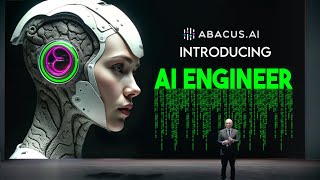
LARRUZ walks through Abacus AI's Chat LLM Teams and AI Engineer tool for building autonomous agents that handle customer service, data analysis, and business automation. The platform costs around $10/month, connects to Slack and Discord, and can reduce customer drop-offs and automate workflows across retail, finance, and real estate.
Chapters
If you've been thinking about building chatbots or AI helpers but felt it was too complicated, here's some good news. A tool called AI Engineer makes it way simpler than you'd expect. It's awesome if you're just starting out and still powerful enough for more advanced users. Okay, let's start with the basics. Abacus AI has this whole setup called Chat LLM Teams. And inside it you'll find AI Engineer, which does a lot of the heavy lifting for you. Which when you're building chatbots or AI agents. Now, why you'd even need a custom chatbot or AI agent, the reasons are practically endless. Take a local flower shop, for example. They might want a chatbot on their website so customers can ask about orchids or bouquet prices any time of day without the shop owner doing a thing. Nowadays, almost every business can use an automated assistant, whether for handling customer inquiries, pulling up data, or walking customers through a PDF file. And the great part is that you don't need to be a programmer to make it work. In terms of cost, Chat LLM teams, which includes AI Engineer, runs about $10 a month. That means you can hop in, give it a try, and see if it fits your needs. If you've looked on Fiverr, you'll notice freelancers charging anywhere from $65 to over $100 to build chatbots for businesses. It's actually a pretty decent way to earn some extra cash. For instance, if you create a chatbot for that flower shop, they might come back later wanting to update their stock and they' again to do that. So how does it work? Once you're inside Chat LLM Teams, you'll see several options, one of which is models. Clicking that takes you to AI Engineer, where you can create either a custom chatbot or an AI agent. The main difference is that a chatbot mostly just handles user questions in a simple conversation. An AI agent, though, can go a step beyond that. It can run on its own and handle more complex step by step tasks like opening a virtual browser, conducting searches, or even downloading images for you. Let's say you go with Create AI Agent. The platform will bring up this little wizard and you'll see some templates to choose from. Maybe you want a news reporter agent that summarizes the latest news on any topic. Or maybe you prefer a document Entity Extractor. If you don't see what you want, you can pick the custom specification option. For instance, you might want an AI agent that finds the best flight, deals for a given travel destination and and then gives You a neat list of prices, airlines and times you just type in. Find the best possible flight prices for me from X to Y departing on Z date. An AI engineer will build an entire agent that tries to do exactly that. One thing that makes AI Engineer even more powerful is how you can tailor agents for specific industries. Let's say you're working with a law firm. You could create an AI agent that summarizes case law or helps staff quickly find important legal documents. A real estate agency could have an agent that recommends properties based on location, budget, or even the number of bedrooms someone's looking for. In fact, you can watch it produce what's called the AI Agent plan, which is basically a step by step outline of what the agent will do. Sometimes generating all this code can take a few minutes, especially if it's a more complex specification. But once that's done, it gives you a link so you can test your newly minted AI agent. You might see a neat little interface with fields to enter your travel details. You just hit submit and within moments you get a response that includes the airline name, flight number, departure time, and even approximate costs. That said, you can also easily create chatbots that reference PDF files as a knowledge base. It's as simple as uploading your PDF, telling the tool that you want the chatbot to answer questions or provide summaries based on that PDF and and you're off to the races. The next time someone asks the chatbot a question related to the PDF, the system can instantly answer. That's hugely beneficial for, let's say, internal company manuals, large ebooks, or big Excel files containing data you want to be easily queryable. Let me give you a couple of quick, real world examples of how Abacus AI's AI agents can level up a business. One finance company was swimming in massive amounts of data and needed help running complex queries across APIs that had something like 30,000 endpoints. With Abaqus, they turned everyday language into SQL queries, which not only delivered super accurate results, but also boosted operational efficiency by about 20%. They saw an 80% success rate in extracting the data they needed and could finally wrangle all that information without tearing their hair out. Another company used Abacus AI's AI agents to build a shopping recommendation engine for in store customers. Think personalized product tips, plus a chatbot that fields questions, freeing up employees to focus on bigger tasks. As a bonus, they saw fewer customer drop offs, about 20% fewer, and cut operational costs by 10%. Even better, they managed to automate around 80% of the routine support questions customers usually ask. So whether it's drilling down into massive data sets in finance or giving shoppers that personal touch, these AI agents can really lighten the load and let teams tackle the work that actually requires a human touch. You can also build agents that analyze data for you. For example, you could upload a big Excel sheet full of sales numbers, and your agent could highlight key trends, point out unusual spikes, or even suggest what products are performing best. Or you can combine it with automation tools like Zapier. For example, you could build an agent that automatically sends confirmation emails when someone books an appointment or updates a spreadsheet every time new data comes in. Another cool thing about AI engineering is that you're not limited to just building chatbots for websites. You can actually connect your AI agents to popular platforms like Slack, Discord, or even WordPress. This is huge for businesses that already use those tools to communicate with customers or manage their workflow. For example, a Slack integrated agent could handle internal questions like what's the Wi Fi password? Or who's on call today? Meanwhile, a WordPress chatbot could guide website visitors through product details, blog recommendations, or frequently asked questions, all without you lifting a finger once it's set up. Abacus AI supports multiple large language models too. So if you want to switch between, say, ChatGPT, Claude, Llama, Gemini, or even Abaqus own model, you can do that in a dropdown. You can just pick which underlying AI model you prefer to use for generating text, summarizing data, or answering questions. This also means you're not stuck with a single provider if you find a better suited model for your specific project. Now, AI Engineer also guides you through a step by step approach to refine your agent. Maybe you need to attach a dataset or a custom table for advanced training. Perhaps you want to add an evaluation mechanism so you can track how accurate your chatbot or AI agent is. Or you might create a document retriever which specifically helps the agent search through large sets of PDFs. Then, once you're satisfied, you can publish or republish your agent for real world use. And if you're worried about how to integrate it into your own platform, Abacus AI gives you neat API endpoints and dashboards. So if you want to embed your chatbot in a website or connect your AI agent to a backend system, you can do so without a huge headache. So yeah, while we're still in the early days of widely accessible AI agents, this is a glimpse into where things are headed. Basically an era of personal or corporate AI assistants doing all sorts of tasks, and we'd typically do manually. If you're even a little curious, I'd Recommend Giving Abacus AI a try for $10 a month. There's not much to lose, and you can probably pick up a new skill that's going to be highly in demand. Anyway, that's about it, guys. I hope you found this helpful. If you did, definitely drop a like and consider subscribing for more AI tech insights. Let me know in the comments if you have any questions about creating your own custom bots, or if you have ideas on how you might use an AI agent in your business or personal life. Thanks for watching and I'll catch you in the next one.










