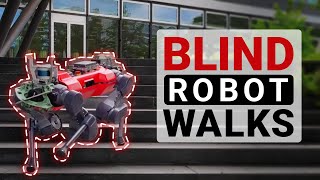
A robot learns to walk through feel alone, using proprioception to sense its own body and navigate terrain without sight. When researchers added camera vision to the mix, it climbed stairs and hiked a mile underground without falling once, opening doors for rescue and space exploration.
Chapters
Köszönöm a feliratkozatokat! Ez volt 2 Minute Papers vagyok Dr. Károly Zsolnai-Fehér, és ma megnézzük, hogyan egy robot-kocsi segíthet segíteni, hogy különböző helyeket megtalálhatunk, amikor nem szabadulunk a született embereket. Hát, nem ezt, mindjárt, mert ez nem túl jól működik. Miért ez? Well, this is a proprioceptive robot. This means that the robot is essentially blind. Yes, really. It only senses its own internal state, and that's it. For instance, it knows about its orientation and twist of the base unit, a little joint information, like positions and velocities, and that's about it. It is still remarkable that it can navigate at all. However, this often means that the robot has to feel out the terrain before being able to navigate on it. Why would we do that? Well, if we have difficult seeing conditions, for instance, dust, fog or smoke, a robot that does not rely on seeing is suddenly super useful. However, when we have good seeing conditions, as you see, we have to be able to do better than this. So, can we? Well, have a look at this new technique! Hmm, now we're talking! This new robot is extra receptive, which means that it has cameras it can see, but It also has proprioceptive sensors too. These are the ones that tell the orientation and similar information. But this new one fuses together proprioception and extraoception. What does that mean? Well, it can see, and it can feel too. Kind of. The best of both worlds. Here you see how it sees the world. Thus, it does not need to feel out the terrain before the navigation, but, and here's the key, now, hold on to your papers, because it can even navigate reasonably well, even if its sensors get covered. Look. That is absolutely amazing. And with the covers removed, we can give it another try, let's see the difference, Oh yeah! Back in the game, baby! So far, great news. But what are the limits of this machine? Can it climb stairs? Well, let's have a look! Yup, not a problem. Not only that, but it can even go on a long hike in Switzerland and reach the summit without any issues. And in general, it can navigate a variety of really difficult terrains. So if it can do all that, now let's be really tough on it and put it to the real test. This is the testing footage before the grand challenge. And flying colors. So let's see how it did in the grand challenge itself. Oh my! You see here? It has to navigate an underground environment completely autonomously. This really is the ultimate test. No help is allowed, it has to figure out everything by itself. And this test has uneven terrain with lots of rubble, difficult seeing conditions, dust, tunnels, caves, you name it. An absolute nightmare scenario. And this is incredible. During this challenge, it has explored more than a mile, and how many times has it fallen? Well, what do you think? Zero. Yes. Zero times. Wow. Absolutely amazing. While we look at how well it can navigate these super slippery and squishy terrains, let's ask the key question. What is all this good for? Well, chiefly for exploring underexplored and dangerous areas. This means tons of useful applications, for instance, a variant of this could help save humans stuck under rubble, or perhaps even explore other planets without putting humans at risk. And more. And what do you think? What would you use this for? Please let me know in the comments below! What you see here is a report of this exact paper we have talked about, which was made by Weights and Biases. I put a link to it in the description, make sure to have a look, I think it helps you understand this paper better. A Thanks for watching and for your generous support, and I'll see you next time!