This New AI ROBOT BRAIN Makes Humans Look Stupid!
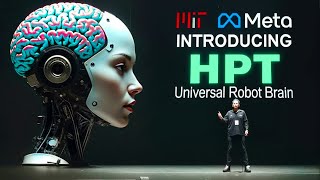
MIT researchers created HPT, a universal robot brain that learns from 200,000 trajectories across 52 datasets. It improved robot performance by over 20% and achieved 76.7% success on new tasks like sweeping. The system unifies camera feeds, sensors, and human videos into one shared model that transfers faster to new skills.
Chapters
Think about robots that can handle everything, just like the ones in cartoons. Picking up groceries, cooking dinner, even looking after your pet. That's basically the dream, right? But here's the thing. It's super hard to train robots to handle a bunch of different tasks, especially in unpredictable real world environments. This is because up until recently, training a robot meant gathering tons of specific data for each task. And you can imagine how time consuming, costly and limiting that can get. Now, researchers at mit, with some help from tech giants like Meta, might have just cracked the code. They came up with this pretty clever way to train robots, using a model inspired by large language models. Yeah, just like the ones that power tools like GPT4. Their idea is to pool together diverse data from a wide range of tasks and domains. Think simulations, real robots, human demo videos, and and create one universal robot brain that can handle multiple tasks without needing to be retrained from scratch each time. Okay, let's dive a bit deeper. They've named this system Heterogeneous Pre Trained Transformers, or HPT for short. Here's what makes it so cool. It unifies all these different types of robotic data, whether it's camera visuals, sensor signals, or even human guided demo videos, into a single system. Normally, every robot has its own unique setup. A different number of arms, sensors or cameras placed at various angles. HPT aligns all of this into what they're calling a shared language, essentially a way of combining all this varied input so that a single model can make sense of it all. So how exactly does it work? So you've got all these different data sources, visual inputs, sensors, robotic arms, and the movements they make. The HPT system uses a transformer, a machine learning model architecture similar to those behind GPT4 to process and learn from all this data. But instead of feeding it sentences and paragraphs like we do with language models, they feed it these tokens of robotic data. Each input, whether it's from a camera or a motion sensor, gets converted into tokens that the transformer can handle. And by pooling these diverse data sources together, this robot brain can recognize patterns and learn tasks in a more flexible, adaptable way. This approach has already shown some impressive results. When tested, HPT not only improved robot performance by over 20% in both simulated and real world settings, but also handled tasks it hadn't specifically been trained for. It's a huge leap forward from the traditional approach of teaching robots with highly specific task oriented data. One of the biggest challenges with HPT was creating a dataset large enough to properly train the transformer and When I say large, I mean massive. Over 200,000 robot trajectories across 52 data sets, including human demonstration videos and simulations. This was a big step because typical training data in robotics is often focused on a single task or specific robot setup. Here, they're bringing it all together into a much broader learning model. MIT researchers Lirui Wang and his team found that one major obstacle in robotic training isn't just the quantity of data. It's the fact that the data is so diverse, coming from many different robot designs, environments and tasks. So they're tackling this by essentially creating a universal robotic language that can process all these varied inputs. To draw a comparison, they're using a strategy inspired by the way we train language models like GPT4. In language models, we pre train the model on massive amounts of diverse language data so it has a broad understanding of language and then fine tune it on smaller task specific data. The HPT approach does something similar, giving robots a foundational understanding across multiple types of data before honing in on specific tasks. This broad pre training means that when they need the robot to handle a new task, it can adapt much faster because it's already been exposed to a wide range of data. Now, if you think about it, the future of robotics hinges on having robots that aren't just good at one thing, but can handle multiple tasks just like humans. Imagine a robotic arm that can help with cooking, then seamlessly switch to folding laundry, and maybe even feed your dog or all without having to be retrained from scratch for each new job. And this HPT model could be a big step toward making that happen. And the vision is actually bigger than that. The researchers hope that one day you could have a kind of universal robot brain that you could download to your own robot, plug it in, and it would be ready to perform a wide range of tasks right out of the box. Here's a bit more on how they tackled the technical side. Inside hpt, there are three main components. Stems, a trunk, and heads. Think of the stem as a translator. It takes in the unique input data from different robots, like visual data from cameras or proprioceptive data from sensors, and converts it into the shared language that the transformer can understand. The trunk, which is the heart of the system, processes this unified data. And then the head converts this processed data into specific actions for each robot to perform. Each robot just needs its unique stem and head setup, while the trunk remains universal, trained on this huge, diverse data set. This setup means that HPT can handle data from multiple robots at once, treating them all as part of one massive training network. And when they tested it, they found that HPT was able to learn faster and perform tasks more accurately compared to traditional methods. When they scaled up the model, they observed that HPT's performance kept improving with the amount of data in the model's complexity and similar to what's been observed with large language models. But this isn't just theoretical. They tested HPT in both simulated and real world scenarios. In simulations, they tried different tasks like moving objects and interacting with different environments, and HPT consistently outperformed other approaches. They also tested it on real world robots, including tasks like feeding a pet and performing assembly tasks, and found that HPT was more robust and and adaptable than traditional models. Even when the environment or conditions changed, HPT was better able to handle the variations. The team ran these tests across several popular simulation platforms, including Meta World and Robomimic. They also combined their robotic data with human videos, like footage from everyday activities in kitchens, and integrated it with robotic data from simulations. By doing this, they were able to teach HPT using data that wasn't just limited to robots, but included examples of human actions too. To make all this work, the researchers had to experiment with how to handle this massive mixed data set. They tried scaling up the model, testing it with different batch sizes and numbers of data points to see how much the model could improve with more data. In fact, they found that the model scaled really well. The more data they fed it, the better it performed. In the future, they want to study how adding even more types of data could could boost HPT's performance further. They also want to make HPT capable of processing unlabeled data, kind of like how GPT4 can understand context from a variety of text inputs. Their ultimate goal is this plug and play robot brain that wouldn't require any training at all. Just download it, install it in your robot and it's good to go. When they transferred HPT to new robots and new tasks, they found that it could adapt much faster than models trained from scratch. For example, in a sweep leftover task where a robot had to clean up objects, HPT achieved a success rate of 76.7%, beating out other models. They also tested it on tasks like filling water and scooping food. And HPT consistently outperformed the from scratch models by a wide margin. But the team admits there's still work to be done. Right now, they're focused on short horizon tasks, actions that are done in a few seconds or less. Expanding this to longer, more complex tasks is one of their next big goals. They also want to make the model more reliable since success rates aren't yet as high as they'd like, typically staying under 90%. So in short, this new HPT model represents a huge step forward in creating flexible multitasking robots. By combining data from all sorts of sources, robots, simulations and even human videos, they're building a model that can adapt to new tasks and and environments more effectively than ever before. It's still early days, but this could lead to robots that are far more capable, adaptable and dare I say human like in their ability to handle diverse tasks. And who knows, maybe one day we'll all have our own Rosie the Robot ready to help with anything we need. So what do you guys think about all this? Let me know in the comments. And as always, if you enjoyed this breakdown, don't forget to like and subscribe for more on the latest in AI and tech. Thanks for watching and I'll see you in the next one.










