This New Sora and Kling AI Rival is FREE and Shockingly Good - Dream Machine AI!
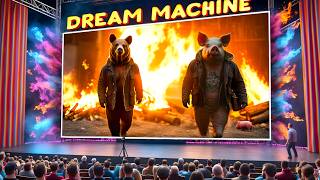
Luma AI's Dream Machine generates 5-second videos in 120 seconds with photorealistic motion and physics awareness, free with 30 monthly generations. It rivals Sora and Kling with prompt weighting and keyframe controls, though it still struggles with text and some natural movements.
Questions this video answers
June 14, 2024.
30 complimentary generations.
120 frames in 120 seconds.
Capped at five seconds (for now).
Up to two minutes.
Chapters
So you've probably heard all the hype surrounding OpenAI's Sora and that Chinese model, Clingai, right? They're both impressive as hell when it comes to generating videos from text prompts. But here's the thing. They're still incredibly exclusive. Like you need a special invitation or some crazy credentials to even get a whiff of them. Not exactly ideal for us regular folk, right? But then, out of nowhere, this little company called Luma AI drops a bombshell on us. Dream Machine. An AI model that can spit out high quality realistic videos. Just like Sora and Kling. But get this, it's open source. Meaning open to everyone. No begging for access or waiting in line. Now if you're thinking, sure it's open source, but is it any good? Oh, you have no idea. This thing is a freaking powerhouse. We're talking about a transformer model that's been trained directly on videos. Which means it understands the laws of physics, motion and all that jazz like it was born for this gig. But let's back up a sec. What exactly can Dream Machine do? Well, for starters, it can take a simple test text prompt, something like a cute puppy chasing a butterfly through a sunflower field, and turn that into a mind blowingly realistic video clip. But not like some low res choppy mess. These videos are smooth as butter with cinematic camera movements and attention to detail that'll make you question reality itself. And maybe the best part is that Dream Machine is lightning fast, like generating 120 frames in just 120 seconds, which is crazy, to be honest. And it opens up the possibilities for creators, filmmakers, and anyone who values being able to iterate and explore ideas at the speed of thought. It's a game changer, no doubt about it. But hold up, hold up. What about quality? So the level of visual fidelity is second to none. Creating photorealistic environments with physics that behave just like the real world, all with a richness of detail that defies belief. Now let's compare it to that Cling AI model everyone's been raving about. Okay, so Kling can generate videos up to two minutes long, which is impressive, no doubt. But Dream Machine, even though it's capped at five seconds for now, absolutely blows Kling out of the water when it comes to sheer realism and attention to detail. I mean, videos that capture the way light reflects off surfaces, the intricate movements of characters and objects, and all the little nuances that make the physical world, well, physical. Looks like the AI has a deep understanding of how things work in the real world and. And it translates that knowledge into every frame it generates. Now let me hit pause on discussing Dream Machine for a second to give a shout out to a tool that's been a total lifesaver for my video and photo editing wondershare. Uniconverter Full Transparency. They are a sponsor for this video, but I wouldn't have agreed to the sponsorship if I didn't wholeheartedly love and use their product myself. The platform has legitimately leveled up my creative workflow in so many ways. Like the video converter alone is a lifesaver supporting over 1000 formats, so I can convert clips for any platform, platform or device without losing quality. UniConverter has this crazy AI video enhancer that can upscale and sharpen footage, making even old grainy clips look sharp and professional as heck. And you can just straight up remove annoying watermarks from videos with a couple clicks. So clutch. But where it really shines for me is the image editing suite. The AI enhancer upscales photos by up to 8x, the original resolution, restores ancient family pics, colorizes black and whites, etc. I actually revived some childhood photos, but what I love most though is just how intuitive and Easy to use UniConverter is. Clean interface, no clutter. You can find everything you need without wanting to pull your hair out. Honestly, if you're into any kind of video production, photo editing, multimedia stuff, UniConverter is a must have. It genuinely makes my life easier and delivers way more than it promises. Full details are linked below. Cannot recommend it enough. Alright, now back to Dreamcatcher Machine. Sorry, Dream Machine. Yes. So as I've said, one aspect that really sets Dream Machine apart is its versatility across different creative disciplines. While many are focused on its potential for filmmaking, this AI model opens up a world of possibilities for visual effects artists, game developers, and even architects. And let's not forget about character consistency. This AI model understands how people, animals and objects interact with the surroundings, which means your characters will move, behave and react in a way that feels authentic and believable. For all its technical prowess, this model is surprisingly user friendly. Luma AI has put a strong emphasis on developing an intuitive interface that allows creators to quickly iterate through different prompts and visualize their ideas. Features like prompt weighting, keyframe controls, and blending multiple inputs provide a lot of creative flexibility. Even without a background in 3D modeling or animation, users can produce high quality cinematic videos. While listening to myself talking about it, it all sounds too good to be true. Not gonna lie. So what's the actual catch? Let's just say it isn't perfect. The team behind it has admitted that the model struggles with certain aspects like recreating certain natural looking movements, morphing effects and handling text. But here's the thing. Luma AI isn't resting on their laurels. They've assembled a team of brilliant minds dedicated to pushing the boundaries of what's possible with AI generated videos. And with the power of open source development, we can expect Dream Machine to evolve and improve at an unprecedented pace. Because despite its current capabilities, the future roadmap for Dream Machine looks even more promising. Luma AI aims to enhance the model's ability to generate longer videos without sacrificing quality. They are working on improving consistency over extended run times and incorporating advanced cinematography techniques such as camera racking and dolly movements. And as these features are developed, this AI model could significantly impact traditional video production for some use cases. So new updates, bug fixes and feature enhancements are likely to come hot and heavy as the community rallies around this tool and helps shape its future. Who knows, maybe in a year or two Dream Machine will be generating feature length films with the same level of realism and attention to detail that it currently brings to its short clips. Alright now, a publisher from tomsguide.com, ryan Morrison, actually decided to put the model to the real test with some wildly different prompts. First up, he tried having it generate a video of a prehistoric dinosaur crashing through a modern room after a guy accidentally brings a photo to life with a magic camera. An outlandish concept, but Dream Machine didn't just slap a static dino into the scene, it legitimately animated this huge beast bursting through and interacting with its surroundings in a way that follows real world physics. The weight and momentum as it smashed everything was insanely realistic. Ryan also made it generate a video of someone casually strolling down a city street at night while while holding their phone out to record. Rather than just having a shaky first person view, Dream Machine captured it from a third person perspective, nailing details like the camera bobbing naturally as the person walked. Little touches like shop windows and street lights glancing by in the background really sold the immersion. But the piece de resistance? He fed it a complex surreal prompt about a chessboard made of gears and steampunk pieces floating in a void. Most AI tools would have just thrown up their hands, but Dream Machine ran with the vibe and created this trippy melting chessboard scene that looked plucked straight from a psychedelic film. Mind blowing stuff. What's crazy is that for a lot of these, Ryan didn't have to provide excessive prompting about motions or angles. Dream Machine's language model seems to automatically interpret and enhance the text in an intelligent way. According to the brilliant minds at Luma Labs who created this beast, their Expertise in generative 3D modeling helped take the motion realism to this insane new benchmark. So I guess the bottom line is as Dream Machine is a game changer in the world of AI generated videos, plain and simple, it's accessible to everyone, insanely powerful and capable of creating visually stunning content that'll leave you in awe. Just head over to the Luma AI website, sign up for a free account, and you'll get 30 complimentary generations to play play around with. Trust me, once you see the magic that it can create, you'll be hooked. Alright, don't forget to hit that subscribe button for more updates. Thanks for tuning in and we'll catch you in the next one.










