This Open Source AI Generates Videos with UNREAL Realism (Tencent HunyuanVideo)
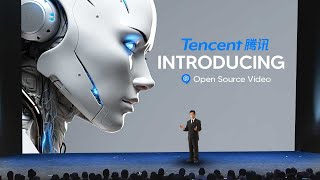
A single-speaker YouTube commentary (by LARRUZ) reviewing Tencent's newly open-sourced 13-billion-parameter text-to-video model, HunyuanVideo. The speaker demos and evaluates the model’s capabilities—high visual fidelity, improved handling of dynamic motion, multi-shot/artistic camera work, native camera cuts, concept generalization, physical compliance, sound generation, and motion- or reference-driven movement—compares outputs to other demos (notably OpenAI/Sora), and argues the open-source release will lower video production costs and democratize high-quality video creation.
Chapters
So Tencent has launched hunyan video, a 13 billion parameter open source AI model for text to video generation. Now this is something that nobody expected because when we take a look at the open source ecosystem, especially for these kinds of videos, we wouldn't have expected that the technology would have gotten to the level where you can see the quality is absolutely incredible. I mean, some of the shots that we are seeing here, I wouldn't be surprised if some people even think that it is from Sora. Now for this is something that is really, really incredible. Also for the fact that this is basically now meaning that video prices are going to fall. I mean, when we take a look at the kind of level of quality we have here, we have to ask ourselves, how are people going to be justifying paying, you know, hundreds and hundreds of dollars per month for a video system that you could literally run for free? Now this video tool is really, really cool because it actually comes with a unique number of features. And, and it's not just text to video. It actually has a decent amount of really cool features that we're likely going to use. So I want to say that the AI space is moving really rapidly because it was only the other week that we got genmo AI that was also really fascinating. So we're going to take a look at some of the amazing features that this Tencent Hunion Video open source video generator has to offer. So one of the things that they actually talk about is the fact that they have really high quality videos. In this short clip here you can, you can see exactly how high quality their footage and the fidelity is. I want to say that looking over many different clips, although some of them are probably going to be cherry picked, the quality and consistency is quite remarkable. I don't notice that many mistakes in those clips. And in certain demonstrations, the quality often exceeds what we do get from other certain areas. Now in addition to this, we also see that they do have something called High Dynamics, which is really good because apparently it breaks the curse of dynamic motions, which means that it completes the actions in one shot. So one thing that we do have when we're trying to get these really dynamic motion field shots is that when you have the camera panning from one thing to another, often times we can enter a situation where the model won't actually be able to generate the continuous action correctly and may actually make some mistakes. And this is something that really doesn't perform well. The Generative AI video. So it seems that with this model this is something that they've managed to focus on and something that they have apparently managed to solve. Next, we actually do take a look at this thing that they call artistic shots, which it says breaking single camera movements, seamless integration of director level camera work. So I'm guessing that this is a little different. So what we have here is something where you can actually get multiple shots of the same person and in any kind of style, which is really, really interesting because this is something that makes me believe that now people are going to be able to get multiple shots of a certain character doing certain things, which leads to more artistic creativity, which of course most people won't originally have, which lowers the, you know, and levels the playing field for those who want to enter the space. Now, I couldn't help but notice that this specific example actually looks like a very familiar example from another other company's demo. Now, if you remember the OpenAI demo, you'll remember seeing the same man that had the same glasses, the same hat, and was actually at a coffee shop. And you can see that the quality difference between the two, I don't think it's that far, obviously. I mean, Sora was really good. But let's take a look at this here, guys. We have to understand that this one was open source and only 13 billion parameters and probably doesn't take as long as OpenAI. So for something that you could likely run on some local hardware, I think this is truly, truly incredible. And remember, guys, this is the worst the technology is ever going to be. Which means that when we talk about future implications, this is going to be something that is insane when we think about the use cases for the things that we could create for ourselves. Now next, what we do have is the concept generalization. And this is of course where we do have different things combined with other things, essentially just stating that, look, if you want to, you can get really creative and you can combine a panda riding a bike, cycling through the streets of London or Prague or whatever it is that you may fancy. So I think this is something that is really important for these models because you have to have a rich understanding of objects and the relation to other objects too. So with physical compliance, basically what we have here is the system that has enough of the physical properties to understand how objects interact with each other. So this is something where you can see we have the water dropping and the ripples in the waves that actually seem to be pretty, pretty accurate. Now, this isn't the only example of physical compliance. You actually need physical compliance in order for the motion, in order for objects to interact with one each other. And of course you need that to perform at a really high degree in order for the video footage to actually look real and for it to actually look legible. And that's something that, you know, a lot of video models struggle with. Now I do know that there's no model that does it pretty consistently, but an open source model that does have a high degree of this is going to be something that people really, really do value. So the model actually stating that, look, we actually ensured that we worked on this, but this is a clear indicator that they've got themselves a good model. Now what they also do have is I think something that is completely incredible. So they have something that they called native camera cuts. Now recently this was something that I did see in OpenAI Sora. But basically what this means is that the model actually natively cuts around the scene in order to generate a consistent storyline. I mean, this is something that is completely incredible because it shows us that I guess if we can get these native camera cuts in models that are open source right now, we what's stopping us from the future models being able to create a native camera cut entire movie. Now of course you will have to prompt it. This prompt has, you know, two levels to the prompt. But I do think something like this is going to be really, really incredible for the wide range of use cases that it can have. I mean, something like this is just really, really outstanding. The quality, the way the sand is dropping, the way the sand is brushing against the dune hills, I mean that is just completely outstanding. So, so hats off to them for this level of consistency and the fact that these cuts are going to allow people to get a lot more out of these systems. So now next, what we actually have here is we have sound generation. So what you're about to hear is the generation for this model which is able to generate sound based on certain prompts. And I think this is really cool because it shows us that this is the kind of video creation tool that not only allows you to create really good videos, but but allows you to create things that can assist you in that video creation. Another interesting thing that they do have, and I have seen this before before, but this actually looks like a really effective method, is that they do have motion driven movement. So there's some kind of, you know, reference motion footage capture. And they essentially use that footage to drive the motion on the image on the right. And then of course the final output is you can see someone that is dancing. Now I do think that kind of thing is really fascinating because it gives you a lot more control over what your character is doing and how you want the video to be. So stuff like that is really, really important for the creative control over the final output. And an open source video tool, adding that in natively is something that's really, really going to be effective. And of course, we do have reference driven movement for the kind of shots, which is going to be once again something where you can capture a video of yourself, use a video you found online, and then use that to drive the video for the character performing any kind of speech or any kind of shot. So when we do take a look at the overall system here, I think it shows a remarkable fact. The AI industry is getting a wave of different AI tools that are going to really change how this space shapes up to be. When we do have open source tools flooding the market in terms of the quality, adherence and character consistency, it's going to really change tire game for how AI content creation is going to be. I mean, these video tools are going to allow people to create their own films and it'll be really interesting to see how this kind of technology develops within the next couple of years.










