Thomas Tull: From Batman Dark Knight Trilogy to AI and The Rolling Stones | Lex Fridman Podcast #259
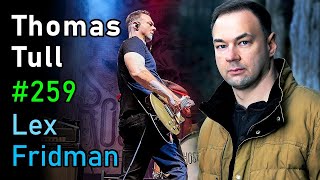
Thomas Tull built Legendary Entertainment behind The Dark Knight trilogy and Jurassic World, then started Telco to inject AI and data science into old industries like fashion and de-extinction. He also tours as a musician with the Rolling Stones.
Chapters
The following is a conversation with Thomas Tull, founder of Legendary Entertainment, known for producing blockbusters like Batman's Dark Knight trilogy, the Hangover franchise, Godzilla, inception, Jurassic World 300, and many more. He runs Telco, which is an investment company that focuses on how artificial intelligence can revolutionize large industries. He is part owner of the Pittsburgh Steelers. He's the guitarist for the band Ghost Hounds that tours with the Rolling Stones. But most importantly, he's humble down to earth and someone who has quickly become a mentor and friend. This is the Lex Friedman podcast to support it. Please check out our sponsors in the description. And now, here's my conversation with Thomas Tull. In 2004, you founded Legendary Entertainment known for producing blockbusters like Batman's Dark Knight trilogy that includes Batman Begins, Dark Knight and Dark Knight Rises, the Hangover franchise, Godzilla, inception, Jurassic World 300, and the list goes on. It's just some of the biggest movies in history. What does it take to make an epic movie like that? What does it take to make it happen from start to finish?
Well, look, I've been enamored with movies since I was a kid, as a fan, and I think what you need is to be able to tell a great story. And if you're gonna tell a great story, you need a great director. You gotta start with a fantastic script that is able to take some of these iconic characters that we did and put your own stamp on it while still respecting the mythology. And I had zero experience in movies and television before I started Legendary. So it was a very interesting trip. Total luck that we had the opportunity to make five movies at the time with Chris Nolan, who turned out to be one of the greatest filmmakers of all time. But each one is its own little startup company. And I don't think there's any formula to get there. But I know that if you don't have a great director and a great script, if you don't have that foundation, it's hard to pull off.
Who's the CEO of that little startup company? Is it the director? Who would you say kind of defines the success or the failure of a movie?
Well, when you build a big movie like that, it's an enormous effort. 360 degrees. I mean, from digital effects, certainly the actors. I mean, if you have an amazing script, an amazing director, but you don't believe anybody playing the parts, that's a problem. So the reason I think it was so difficult to pull off is I always used to say, you start with a stack of papers with words on it called a script. Bring that to life. And you're asking an audience to believe in everything that you're trying to put out there. And you've got a cast that even if they're immensely talented individually, they have to mesh together, they have to have chemistry together. And the director is kind of the general on the battlefield, but if you have a strong producer who's very hands on. But it truly, to me is each one had its own story and its own sort of how it came to be and why it worked or didn't work.
So you said you were new to the industry, but you did a lot of revolutionary things with Legendary. So at that time, and now, what is the good, the bad and the ugly of the business of filmmaking? What are some interesting holes that you were able to or problems that you were able to fix? What problems still exist that can still be solved?
Well, look, the business has changed so radically since 2004. When I started, legendary DVDs were still a cash cow. So that's how far things have come. But I would say a couple of things. The reason that I started it from a business perspective was at the time, it was a $30 billion industry and there was no institutional capital around the movie business. And I was fascinated by that because almost every other category that you look at of that size has institutional capital, private equity, et cetera, as kind of a cottage industry set up around it. And I was perplexed and fascinated that that didn't occur. And the way the movie business worked was unlike any business I'd ever looked at before. So after kind of convincing myself that you could actually make money if you were disciplined and had the right approach, went out, raised the money from the capital markets, markets, which was Herculean still, maybe the hardest thing I've ever done in my career to walk around and say, look, I have no experience. I've never done this before, But. And the second thing, being very fortunate at the time, was able to partner up with Warner Brothers. Warner's at the time was run by a man named Alan Horn, who, besides being creative, is also a Harvard mba. So really understood what I wanted to do. And Alan was just an absolute gentleman, someone that I still look up to this day. After Warner Brothers, he went and ran Disney with their run between Marvel and Star wars and everything. And so between Alan being responsible for Harry Potter, the Dark Knight stuff, and then on to all the Disney stuff, he probably had as great a career as anyone I've ever heard of in the movie business. So my first focus was around sort of two Concepts global, worldwide, large tentpole films and franchises. And then the business aspect of bringing long term institutional capital to bear.
I'm going to ask you dumb questions, which is part of the style, I guess, but just for people who don't know, including me. What is institutional, what is capital? What is institutional capital? What is equity? What is private equity?
Got it? Okay, well, so if you're starting a company and you go around to a bunch of your successful friends and say, hey, you should invest in my company, well, that's great, and it's capital, but it's not getting money from Fidelity or T Row or a sovereign wealth fund or an endowment fund from a university that has large pools of organized capital that has a long term point of view on your business. So if you get money from your neighbor who's a successful dentist, next year, the dentist may say, hey, times are hard, I need my money back. If your partner's with Fidelity or Morgan Stanley or any of these institutions, they have the capital and the wherewithal to say, okay, I'm looking at this over the next five to 10 years. And I thought there was an opportunity to bring that type of capital to the movie business, to be patient and.
The benefit of that patient. So it's long term, you have to deal with fewer parties and they would do much larger investments. So what are the benefits? What are the sort of the challenges of that kind of investment?
Well, I think the benefits in some ways are they're professionals who are largely dispassionate, right? It's like, look, if you're hitting the numbers you told me and you're hitting your plan, great. And the other thing that always was interesting to me about the movie business is if I'm investing in an artificial intelligence company or a chipset company or something like that, a lot of the institutions don't have the technical expertise to really truly grasp what's being done. So they don't, you know, other than good business practices, they're not offering every little opinion. The movies and television are completely approachable, meaning everybody has an opinion. So, you know, whether it's, I think you guys chose the wrong actor for that or why did you do that movie? It's, it's so it invites a lot more sort of second guessing and things like that. So that was always one of the idiosyncrasies of the business that I thought was interesting. And then when you talk about private equity versus public equity, if you're a public company where the companies are traded, you want to buy Microsoft shares You just go to your broker, go on TD Ameritrade and buy them. If on the other hand, you're talking about private equity, that's institutions or individuals investing in private companies. So thus, if you have pools of capital that mostly invest in private equity deals, that's how you'd think about it.
But it's difficult to make those happen because it's individuals. You have to sort of have dinners and agree. So it's much less. It's much more human, much less mechanical.
I would say, yeah, now and again, massive difference between large private equity shops who are professionalized and in the same category that I mentioned earlier versus private individuals who are wealthy or whatever. But again, it's much more individualized when you're going to people who like your idea and just say, I'd like to invest in this.
Is that from all the kinds of investments you've seen, what do you think is the most conducive to creating works of genius? Whether that's in technology, AI space, or whether that's in movies, creating something special in this world?
I would say a couple of things. Enough money that whatever endeavor you're going into that you're not so nervous about the edges, right? If my. If I have $100 to spend and I think I can create a perpetual motion machine or something for $104, I can't do it because they're all over me about the budget. So I would say making sure that you have enough capital, making sure that that capital is patient enough so that it's, you know, if you're going to do things that are extraordinary, it takes some time and you're going to break stuff, right? You're going to make mistakes. You're going to have a whole bunch of film on the cutting room floor, so to speak, or if you're in the lab, you're going to have a whole bunch of broken stuff. And I also think it's very important at the beginning, and I always try to do this with companies I invest in or buy, is make sure that you have a philosophical and somewhat mechanical alignment with the management team so that going in, you both understand, hey, this is how we think about this problem or this company. This is what we feel like our culture is. This is what our goal is, and these are the metrics by which we'll agree to measure them by. Because if you don't have that shared, you know, hey, we're going to take this journey, then I think that's where people get upset, disappointed, etc.
What about this is a weird question, but constraints. So this is both for filmmaking and investment. Do you think more money is always better?
No.
So I like constraints a lot. It's like constraints and almost like a desperation. And deadlines are catalysts for creativity, for productivity, for sort of innovation. So can you, can you kind of speak to that?
Sure.
As an investor, as a creator, like what's, what's the right balance here?
Well, I think if you're focused on a particular problem or a company or a thesis is if you have that focus and you feel like I have unlimited resources or renewable resources, so there's really, there's no leverage in the situation. Right. There's no, if I fail at this, I'll just go get more money. Right? I'll just go. I think that's a hard way to be resilient and to think of new ways to solve problems. So I think capitalizing things just to the nth degree does create some problems. So I think there's that perfect blend of don't starve the oxygen to the point where you make short term decisions or non strategic or thoughtful decisions because you got to pay the rent. And on the other hand, you can't have it be like this everlasting gobstopper of whatever you want will just keep flowing the cash. Because that doesn't create any friction points that I think do result in works of genius, in things that are transformative. And one of the things that is interesting to me about society sort of writ large is I think that when you go through hard times and you have to do things that are uncomfortable and you don't want to do them because you're tired, because you're. That in some ways builds up that you're comfortable being uncomfortable muscle. And I sometimes think we're losing that a little bit and you can't sort of paint with a wide brush. But that's one of the things that I kind of observe and hope that we don't go that way.
I do think challenge and discomfort are a kind of gift. It's like overcoming that. It's like from every perspective, from a human perspective, it's a source of happiness and fulfillment. Overcoming challenge. But from a business perspective, I see, like if something is really difficult, to me it's also a sign that most others would or many others would fail at this point. So it's a feature. It's nice that something is difficult. When people tell you that something is impossible, I love that because it's like, all right, well then that's what a lot of people will believe. And then that gives you an opportunity to be the person who shows it's not impossible. And you, of course, you might be wrong, but if you're not wrong, you have the opportunity to stand out. So going through that hardship, taking those big risks is going to really pay off. So, like, discomfort is. Is a feature, not a bug of both. Personal life, it's just good for life. But for business, it seems like just good business sense. If something is hard, it's probably a good idea to do that.
Yeah.
Because most others will fail. Fun question. I don't know if you can answer this, but what's the most expensive movie you were involved with to make? And why was it. You don't have to say numbers, but like, something stand out as being exceptionally expensive. And why it's it expensive?
I think Jurassic World was pretty expensive. I mean, worked out great.
That's an epic film, by the way.
Look, it's one of my favorites. They just did an amazing job. And frankly, the crazy thing about my life is all the stuff that I loved as a kid somehow came full circle back into my adult life. And having the opportunity while I was out there to develop a friendship with Steven Spielberg and then have my name on the same film as Steven Spielberg, I mean, that was pretty surreal. So that was an expensive film. Dark Knight Rises was an expensive film. But again, to me, there's a difference between expensive and irresponsible. And expensive because the vision warranted and it turned out financially. It certainly did.
Yeah. With Jurassic World, it's. I mean, I can't even imagine having those meetings because, like, you have to create so much, and so much of it is obviously not real. You can't bring dinosaurs in a. Yeah. Is that where a lot of the cost is, is in the, you know, the computer side of things?
Yeah. Those are generally pretty massive components of the budget. And especially if you're doing it and inventing things as you go. I mean, Jim Cameron is one of those filmmakers who is designing the plane as it's flying in such a brilliant way. And I've got to know him over the years and just in awe of the way his brain works. And so, yeah, it's a big component.
Can you speak a little bit more to him in terms of. Because you're such a fascinating person, because you care a lot about technology. You care a lot about the cutting edge of technology. So how does he, a creator, a director, build the plane while it's flying? Like, what's the role of Innovation in this whole process.
Well, so I never made a film with Jim. I'm just a huge fan and got to know him and John Landau, his producing partner. And one of the things that just fascinates me about Jim is so he makes Titanic, and there's a bunch of underwater cameras and things that they need that don't exist. So he goes and invents them and has a good grasp of engineering and has not only the imagination, but the ability to lead a team to build them. I got to go down early when they were shooting Avatar at a warehouse. I think it was where they were shooting. And as they were explaining to me how they were capturing it and that they could go back later because they created the environment, it blew my mind. And I said, okay, this is truly. People talk about a big leap. This certainly is one. So he has continued to push the envelope in terms of the art of the possible. And I just think he's an incredible genius in that way.
Again, another hard question. So you, in the realm of music, care about story, storytelling. Is there some aspect in which money and beautiful graphics get in the way of story in filmmaking? So if you think. If you think about Jurassic World, obviously that's an experience like any other. Like, what do we. What do you think about the tension between story experience and, like, visual effects?
Well, look, if you're using big effect shots and all kinds of tricks to cover over the fact that you don't have a very interesting story to tell, that's where I think it gets in the way, where I think you have these incredible filmmakers we mentioned, Chris Nolan and Jim Cameron, Guillermo del Toro. You could go on and on of folks that just see the world differently and use technology to enhance the storytelling to make you believe differently, rather to make you not just suspend your disbelief, but to feel like you're immersed in it. So I've certainly seen it done expertly and I've seen it done poorly.
You've talked about this a little bit in the past. You kind of left the. The moviemaking business at an interesting time. Perhaps you saw the changes. There's been a lot of excitement with Netflix, with tv. So the. The role of film in society has changed. So what do you think is the future of movies versus tv? Like, if you were as a business person, as a creator, as a consumer, as a technologist, are thinking about the next 10, 20 years, what do you think is going to be the Godfather? The great pieces that move us as a society in the next 10, 20 years, is it going to be TV? Is it going to be movie? Is it going to be TikTok clips? What's it?
Well, and I think the other category that I would add to that, that will be the next great medium, is truly immersive virtual reality, in which new storytellers will emerge, especially when you can go into VR and there's enough computing power to sustain it and to allow it to be social and, you know, for you to have different paths to go down. That'll be, I think, the next realm of what storytelling and experience will look like.
Do you think video game kind of world? Or is it more movies? Or is it more social network? Or is it all of it kind of blending reality and gaming and movies?
Yeah, I thought if you saw Ready Player One, which I love the book and the movie was cool, too, but that's one version of it where you go in. Now everybody's talking about the metaverse and all that, but you go into a world that's fully rendered as yourself and you interact with that world. The other side of it is to go in somewhere between being a passive observer, but being able to move around your point of view and experiences, which I think is interesting. And. And then I think another adventure, so to speak, I could think of is a blend of video games. So there's a mission, right? There's obstacles, there's everything, and you move through it, but it's immersive and it tells a story at the same time. And that's why I think you're going to see new, amazing storytellers that we don't know yet, that understand how to innovate and how to make you feel something in that environment. And to your earlier point, I saw probably around 2015, when Netflix decided to be bold, put out House of Cards, put out all the episodes, leave you in charge of the pace at which you would view them, which I thought was great.
That was a gutsy move.
Yes, it was. And I can't tell you, around Hollywood, anybody that says that everybody thought it was a great idea is not being truthful. Because everybody I talked to said, this is. They're idiots, right? What do they know about movie making and tv? And what I saw happening was if you look at what Netflix pulled off and they realized that there isn't really a moat around the studios, you really could make stuff and really good stuff. And so they started to create their own content that pulled in Amazon, which pulled in Google, through YouTube, and then you had Hulu, then you had Disney deciding that they're going to have Disney plus, and the next thing you know, you have some of the biggest companies with the largest balance sheets on the planet. Being in the creative business, if you're an independent, that's bringing a knife to a gunfight, to be sure. And so I thought that was interesting. The other thing that it used to be that movies were where the big things happened and television was sort of small screen, different experience and you had something like Game of Thrones come out, which was not only on the same epic level visually and storytelling wise, but had the budget to be able to do it. And now I think you're seeing all kinds of different storytelling taking place. And I also like that you're not pigeonholed into a time like you got two hours to tell the story. You can do a three part miniseries, a five part miniseries, you can do television. That's all kinds of different format that I think is allows creators to do a lot more interesting things.
It is also interesting to consider the role of companies that enable that, like the capital that enables that. You know, without Netflix you wouldn't an hbo, you wouldn't have some of these epic shows. And so for, if we're thinking about the virtual reality world that you're talking about, it's interesting to consider who will enable that. You know. Now like you said, Facebook is talking about Meta and Metaverse, but it's unclear that just having money is enough. Netflix did a lot of really revolutionary stuff. There's a, you know, Amazon has money. There's a lot of companies that have money that don't quite do as good of a job yet at enabling creators of creating revolutionary new content that changes the the whole industry. And that's probably going to be the case with virtual reality. There, there is a lot of money needed to enable experiences like in terms of compute infrastructure, there needs to be a huge amount of money there, but you also need to somehow give freedom to creators to have fun, to do their best work at the same time. Like provide the perfect amount of constraints, all of that together. Like, however Netflix makes it happen, they do a pretty good job because it's a very constrained platform. But yet all the creators I've ever talked to, comedians and so on that work with Netflix, are really happy because they feel free to create their work.
Yeah. And I think a lot of times, you know, companies are a letterhead, but it boils down to the people.
Yeah.
And I think I've known Ted Sarandos a long time who ran the studio at Netflix and now took over for Reid running the company. But Ted, very smart, talented guy and understood early how to cultivate talent and relationships with talent, which is important when you're dealing with creative people. Their motivations and their goals are not always the same. Right. They're not always capitalistic. And so in terms of being able to communicate with creative people that are not always A to B to C is a talent. And so I think they did a great job. Ted did a great job with that early. But I think that you're going to see different formats. I don't think going to a theater to see a massive movie on that screen in that format is a fundamentally different experience. And I think you're gonna find movies. You know, my old shop, Legendary, just put out Dune, which I thought was phenomenal. When we secured the rights to Dune years ago, I was over the moon because I love the book, I love the entire world that is Dune. And that's a movie that I think you see on the big screen. I think when Avatar 2 comes out, I want to see that on a big screen. But I think you're going to see a ton of content is obviously being produced and it's not all going to go to a theater going experience. So you're going to see, I think, different versions of this over the next five to 10 years in case James.
Cameron is listening to this. So he officially agreed to talk at the time of, on this podcast at the time of Avatar 2 release. I'm just holding you to that in this recorded conversation. Also, just super excited. Both the movie and the director. There's something special about movies. You know, they win Oscars, they, they're historic in nature. There's something about TV shows, even when they're epic like Game of Thrones, that they're forgotten much quicker in history. I don't know, maybe that's because we haven't had enough of them. But you know, the De Niro performances and you know, the Scorsese films, all the great films that kind of we think of throughout the generations that define generations, our films. Is that, is that just old school thinking? Is that always going to be the case?
I mean, look to me, going in a darkened theater with a bunch of strangers and the lights go down and you go on this journey, there is something special and magical about that. And I think movies have been a part of our cultural fabric forever. And for some reason, Hollywood in America was uniquely positioned to do a great job with it, right? Not that there aren't great foreign movies, but far and away, American movies dominate not only the world market but, and so whatever it is that we do well or Hollywood does well, there's something in the water, apparently. But I agree that I love movies and I will, you know, for the rest of my days. It's, it's interesting how creators can move back and forth now as well. That used to be a complete. No, no. You're either a movie guy or you're a person or a, you know, or you're a TV director, and that's that. But those lines have completely blurred and they're also blurring.
I mean, they're blurring all kinds of lines. Like they're, they're moving to TikTok and Instagram. And like, I know right now it seems ridiculous to consider that these like one minute things could be considered even in the same realm creatively as a, as a film. But maybe that changes over time too. Maybe experiences can completely become fluid in terms of their size, as long as they have some deep lasting impact on you as a human being, as a consumer.
Look, to me, the whole thing is about either the moving image or even sometimes a picture will bring out an emotion, a reaction, something. So short form is harder because you have less time to set things up and all that. But I am sure there will be short videos and creators that come up with things. And if a moving image can get a reaction out of you and make you feel a certain way and stay with you or inspire you, well, that to me is just the next evolution of whatever it's going to be between humans and cameras, et cetera.
See, I think that's why we've talked offline about this. That's why I love robots, is I think there's certain things in the short form with robots that immediately can bring out a feeling in people. There's something about our consideration of our own intelligence, of our own consciousness, of all the fears and hopes and the beautiful things about human nature, the dark things about human nature that somehow especially Lego robots bring out, because we have both a fear and excitement towards that. Are these going to be our overlords, our gods that overtake humanity? Are these going to be things like horses or something like that? Something that empower humanity, like you don't know what to make sense of it. That's why they're super exciting.
I agree.
Speaking of robots and film, you've gone into traditional industries and disrupted them quite a few times. Was there, is there a system for deciding which industry is ripe for disruption? When you look at the world and see what, what are the big problems you would like to solve? Do you have a system of how you see which problems to solve? How do you look at the world?
Yeah, well, on the business side of that, so I have a holding company called Telco, very imaginatively named and part of that is literally every name ever is now taken, registered and all that stuff. So we're a holding company.
What's a holding company?
So instead of being a fund that has money flowing in and out of it and there's what's called a vintage year, I raise capital and I agree to invest that capital for so long and then I give it back to you, which sometimes creates artificial time pressures and things like that. A holding company is more permanent capital. So the idea was behind Telco was to buy almost always whole companies or majority stakes with great management teams in spaces that did not traditionally have a lot of innovation. And to have our labs group who were data scientists, AI practitioners, engineers, machine learning, et cetera, and to be able to bring that wherewithal to that company. So to provide them with the right capital and to provide them with access to technology that would be hard to individually recruit for that company. So I would say that the thesis was to look for industries that were large enough that hadn't traditionally had access to that type of technology or innovation and to try to look for companies that not only looked that part, but had management teams that embraced this and wanted to take that kind of journey.
Yeah, there is quite a few industries like that, but that finding the industries and the management pair because like those industries often have a lot of old school folks who don't. It takes quite a bit of work for them to leap into technology. I work quite a bit with the autonomous vehicles and in just the automotive industry, depending on the company. There's old school folks. It's like Detroit thinking versus like, what do you call it? I don't know, California thinking.
Well, I think you have to look at the nexus of two things there. One is just plain old human behavior. If I am uncomfortable and this isn't a comfort zone for me and it's not something I have as a field of expertise, I'm going to shy away from that. Especially if I'm successful and I feel good about myself and it's a big successful company or person or whatever it might be. And the second thing is that especially if you're a public company and you're being weighed and measured every quarter, you are rewarding the managers of that company to hit metrics and to be reliable and to say, hey, I'm counting quarter to quarter that you're going to deliver what you say. It's difficult to say, you know what, everybody, for the next two years, I wouldn't count on our financial projections at all because we're going to reinvent what we're doing. It's going to work in the long run and you're going to see that this was a really smart investment five to seven years from now. That's not the way capitalism is currently wired generally. Right. And a lot of. So again, if you reward managers with yearly bonuses and stock options based and tied to stock price and all these other things and then ask them to go break stuff, that's hard.
I think you're saying the telco approach, the private investment is the best way or perhaps the only way to enable this kind of long term innovation investment. Taking big risks, investing in innovation.
Well, look, we certainly are not by any means the only one doing it. I'm just saying that when you think about big companies more successful that are in old line businesses and I hear people sort of talk about, well, why can't they just pivot? They recognize they need to be in the technology business. Well, because it's hard. It's hard to steer a ship and turn it that big and especially if it's not part of your DNA at that company. So, you know, I just think that what we tried to do is to enable management teams that know where they want to go and to be patient with capital and also again, bring, bring innovation to bear that they have access to. There's plenty of capital structures doing interesting things. That's one of the things I love about our country. This country innovates and this country invents things. And I'm constantly in awe of just the human ability to innovate and to iterate. I get to hang around some universities, including your old shop, mit and it's.
Like I'm still there. Yeah, still there, still teaching there, still teaching.
But that place is like Hogwarts. I mean, it's just, it's inspiring, right? And certainly the energy in Silicon Valley, which now Austin, Texas where we're sitting, has its own incredible ecosystem. So that's one of the things I love about America, is the ability, and that really is, I think, in the American DNA, to create things and invent things. And I think that's invigorating and I.
Think that's even bigger than capitalism, sort of the machine of how capitalism works. That's just human nature. Capitalism is just one of the ways to sort of make that human nature. Shine, I suppose, but it's like you mentioned mit, you know, there's a drive there to invent, to innovate. That's so purely human, that human spirit, to sort of build something new. It's like that hopeful, optimistic spirit, especially in the engineering space. Like if you pay attention to the Internet, like Twitter and all that kind of stuff. Intellectuals and so on. There's a cynicism to when we talk about stuff, but there's an optimism to when we do stuff. And the doing part, when you actually build things, especially like you care a lot about manufacturing too, like you actually build physical products. That's where we truly shine.
Yeah, no question about it. And I'm passionate about our country making stuff again. Right. Doing our own manufacturing and making sure that we don't lose the ability not just to create things intellectually and do the world's greatest blueprints, but actually make things here.
Actual factories.
Yeah, that's exactly right.
How do we do that? How do we bring more manufacturing to the United States?
There's a company that I have a big personal investment in called Rebuild with some folks that all went through the MIT school years ago. There's a good friend of mine named Jeff Wilkie who used to be at Amazon and we all felt the same way that America needed to make sure that it didn't lose its edge in that way. It's a company that invests in American high tech manufacturing and I think the way that we do that is provide capital, provide training. To me this is also fertile ground for good, sustainable, high paying jobs. And we have to make it economically feasible to do that again here in this country and not to say to companies that again are being weighed and measured quarter by quarter, hey, this is three times as expensive to do it here, but you should do it here. We need to innovate and we need to create processes and companies and opportunity that balance that equation. And I think as we saw during the pandemic, I don't think in this day and age you can be an isolationist. That doesn't make any sense to me. But being self reliant and self determinant and making sure that you are never in a position as a nation that we can't do basic things because we're relying on supply chain in other countries and whether it's we're not friends anymore or a natural disaster or a virus or something pops up, I think those are costs of doing business that we have to put into the calculus of being able to make things here.
There's an extremely high cost to making supply chain resilient that we really have to consider. And so if you really consider that cost, it makes a lot of sense to invest, especially long term in building up manufacturing in a way where like you're making most of the stuff in one place, sort of bringing it all, not all, but as much in as possible and building it almost like from scratch here in the United States. I mean what I guess the your thought is with innovation it's possible to sort of revolutionize the way we do manufacturing. So reduce the amount of supply chain stuff and like build stuff from scratch, like do high tech manufacturing. So like optimize all aspects of the manufacturing, all that kind of stuff.
Yeah, and I think where technology is the most efficient is the human machine interface. Right. It's not let's automate everything and have nobody work anywhere for a long time. That's neither feasible nor desirable. But where we can enhance jobs and make that interface immensely productive with the right training and so forth. I think that's a worthwhile endeavor in something that's going to be important to our country.
Yeah, I mean you're, you know who you're talking to. I love human robot interaction, human machine interaction, human AI interaction. So what do you think is the role of robotics in this high tech manufacturing, sort of like industrial robots, robotic arms, all that kind of stuff, or even, even more complicated kind of robots? What do you think is the role of robotics? What do you think is the role of AI in, in this manufacturing future you're thinking about?
Well, robotics to me is an extremely exciting field. I don't have the same expertise that you do. I have an adjacency, but not the depth of knowledge. Have never really delved deeply into it or made investments in it. But I think what's exciting about it is everything from doing jobs that are very dangerous for humans, enhancing the human experience. When you look at really repetitive labor things that it might take away a job, but is it a good job for that person? Is spending 30 years doing something highly repetitious? Is that a good experience in life? And then when you think about everything from military applications, rescue, we're already seeing a bunch of those things. And then just lastly when you talk about that human interaction with robots, when you start to have the combination so you have some level of intelligence and interaction, I mean, that's why we always love the droids in Star wars. Right. I mean it's exciting, it captures the imagination. And I think, look, many, many hours have been spent on debating Artificial intelligence and the ramifications if things go sideways and so forth. And I think those are all, you know, those are appropriate conversations to be having. AI is happening. I think it's actually happening slower than most people realize because there are tasks that humans do every minute of every day. Standing up without losing your sense of balance. These are really hard things. But I think there's enough investment both in private industry as well as nation states now on artificial intelligence that it.
Is coming so both in the software space, in the digital space and in the physical space. So we talked about manufacturing, so industrial robotics is very true that even in the factory, even the tasks that you think are pretty basic, you know, the amount of small intuitive decisions that humans make is quite incredible. So we have to be kind of explicit about saying which tasks are actually really hard and humans are just really good at them and so on and on. The flip side in the digital space was with social networks, with recommender systems, with all kinds of personal assistance in terms of voice based AI systems, all of that. There's opportunities there to find niches where AI can really have a transformative effect. I think one of the places that really haven't this is where like you're worried to say stupid things. But I believe this very much that when we have AI systems in the home currently you have somebody like Alexa and Google Home and so on, they're kind of very basic servants. They tell you about the weather, they can play some music, they can turn the lights on and off, all the kind of like smart home stuff. I think there's a lot of value in systems that form relationships with us in the way that pets do. Dogs and cats, I don't know, cats just for people who have cats. Cats don't care about you. They really don't. They don't form any kind of relationship. I don't know why you have relationship with them. It's one way anyway. Sorry to throw some shade. I'm just kidding, by the way. That's a basic kind of connection you have with another living being. Then there's also just friends. You have different levels of friends, acquaintances, you have lifelong friends, all that friendship you have. I really believe that there is some aspect of the human experience that is deeply enriched by interacting with other beings. And for systems, computing systems, artificial intelligence systems in our world, to have the capability to engage in some of that I think is not just an opportunity to help people grow, become better people, but it's also just a good business opportunity too. And that hasn't really been Explored enough. So that to me is really, that's a whole exciting space that I think will enable better industrial robotics. It will empower a better Facebook or a better social network, a competitor to Facebook that overthrows Facebook. So it'll create better technologies that currently don't have that human robot interaction touch. So I don't know, that's super exciting to me. But that has to deal with the message of human nature. The reason that most robotics people and AI people stay away from humans, they stay away from the human robot interaction problem is because humans are complicated, they're messy, they're hard to control, they're hard to predict stuff about, they're hard to make sense of or like test repeatedly because one human can be drastically different from another human. And so for to deal with that as a robotics problem is super hard. And so one of the questions is which problems can you remove the human from consideration when you're trying to solve the problem? So like Elon Musk is an example of somebody who believes autonomous driving, we can remove the human from consideration. We could solve autonomous driving as a robotics problem. It's stay in the lane when there's a red light, you stop at a red light. If there is humans in the picture, like pedestrians, that's a ballistics problem. It's just treat them as a moving object that would like 90% probability keeps moving in the way they were in the past few seconds. With some smaller probability they might stop or turn. Just do some basic models about them and you'll be able to do just fine. So I tend to believe that even driving has to consider the full messiness of humans. The dance, the game theoretic dance of chicken that we all do when we jaywalk, we look at the car, that car doesn't. That driver doesn't have the guts to murder me, so I'm going to walk in front of it and not look at the car. We do that kind of dance and AI systems need to be able to play, do that kind of dance. In telco, there's the labs. So there's a data science component, there's an AI component. So how do they go into a company and help revolutionize that industry?
Well, there's different examples. So one of our companies, Figs, makes healthcare workwear started by these two brilliant women and early days helping to build the platform and recruit and make sure that everything that we did at the company embraced technology. And at the same time they were obsessive about their customer, which is doctors, nurses, healthcare workers who are putting it on the line every day and obsessive about their product. And when you have those two things come together, you know, you, you get the result that, that, that we did at figs. We have a company called Akashure, which its AI lab and base is down here in Austin, Texas. It was an insurance. One of the largest insurance brokers in the world. And you know, we did a deal with them and sold some of our, our insurance holdings was completely AI driven. And in that case you basically put the team inside the company, right, because it's a massive company and we've gone into all kinds of things. So it just depends on the different situations. But the biggest thing was just to make sure whatever the company needed, they had access to the talent. Sometimes we'd build it, sometimes we'd help recruit for it. You know how in technology it's whatever works, right? There's no one way to do things.
Well, Acusha is really diff. Is really interesting as an example. So insurance is a fascinating space. It seems like very ripe still for disruption across the board. So how do you. It seems like a lot of the disruption has to do with like almost the first dumb step of we've been using mostly paper, like it's not digitized. You have to basically convert, create a infrastructure and a framework where like everybody is using the same digital system like databases and just organize the data. It seems like that's a huge leap that basically can revolutionize major industries that still hasn't been done. Insurance is obviously the great example of that.
And one of the things that struck me, the founder, CEO of acushare is a guy named Greg Williams. They're out of Grand Rapids, Michigan. And as we were looking at expanding our footprint in insurance, I met with a lot of insurance executives and they would talk about technology, but Greg truly understood the power of, of what would happen across actuarial sciences, predictive analytics and using machine learning to really run every aspect of your business and then automating a lot of just the back office, tedious steps. And as you said, one of the things that was great for us, they already had a data collection system and department, so it was much easier to pivot. And I'm very excited about the future of that company. They're doing some pretty innovative, groundbreaking things. And those are the things that I like doing, is that yes, I want to make money, that's what that is. But at the same time, what did you do with your time on earth? Did you do anything to leave any kind of mark that you did anything Interesting. I can only speak for myself. There are many more ways to measure one's life, and I can only speak about how I think about things. I grew up poor in upstate New York with a single mom and watched her work a couple jobs and had to, from a young age, shovel snow and mow lawns and do all kinds of things to help her make sure the lights weren't turned off in our little place. And so that's just something that I've always been driven towards. And, you know, I just. I have really eclectic tastes and interests and, you know, it's just. It's just been an interesting journey.
So help be part of and help enable some cool new creations across the board, like film, music, AI manufacturing, just, you know, insurance, all the specific industries that you disrupted. Yeah. Small tangent back to your childhood with your mom. Any memories kind of stand out, Stick with you as. As something that helped define who you are as a man.
Yeah. Even though the university and college experience was not part of the family tree and we had no connections, I didn't understand. I didn't know what a trust fund was or prep school. I didn't know what any of that was. But my mom, from a young age would always say, you know, you're going to go to college. There's no, you know, if you choose to. And I. And I think from a young age, that was just an expectation that, that I had and that she instilled. And the work ethic. I watched her. And then my. My grandmother was. Was a janitor, a cleaning lady in a Hospital for 50 years. And then I remember there were times of, you know, I'm probably 10 years old, it's freezing cold out, and if I don't go out and shovel six driveways, we don't have enough money to pay the bill. So I don't know. I'm not a psychologist, so I don't know how that manifests itself in my life today. But I think the grit to say, I'm not in the mood to do this, I don't want to do this, but that's the work that needs to be done. And no excuses, not. I'm a victim and I'm going to sit around and talk about, no, it is what it is, and you have to get done what you need to get done. And again, I think it's. You can never fully put yourself in someone else's shoes or experience. I don't know what that is or feels like, but for me, those were two, I think, formative things that were important in my childhood.
So that's pretty. The reality of life like that is pretty humbling. You've been so exceptionally successful that it's easy to get soft now. How do you get humbled these days?
By getting up. I think for me personally, trying to push the envelope and being weighed and measured. That's why I always love sports too. There's a scoreboard and I'm a huge believer in opportunity, meritocracy, all those things that I think are ideals that we want to aspire to. And I think that there's a lot of things I'm involved with right now that I just want to see if I can do it. I want to see if. And my own little mantra is, cause the outcome as much as you can and at the same time have the humility and not to have the hubris or arrogance to say, I'm always going to cause the outcome because you'll get your ass kicked pretty quickly and humbled. The world and the universe is a big place with forces beyond. But I think I also think a lot about being intellectually honest, which when I do university talks and so forth, I think that's a superpower. Because if you find yourself making decisions based on other people's expectations, based on places you don't want to go, but you're either. You feel like momentum is taking you there. I think that's a big problem. And there are people that go to our top universities and can't wait to get out and start their own company and they want that pressure and they want to grind. And there are other people that are smart and talented, but just say, look, I don't want to lay awake staring at the ceiling wondering how I'm going to make payroll. I don't want that in my life. And I think if you can square that up and be okay with it and say, what makes me tick, what makes me happy, what puts me in a bad head space. Because there's a difference between challenging yourself and going against your nature. So that's why I think that being intellectually honest and being able to really sit down and go inside your own head and say, what am I good at? What am I not good at? How am I going to put myself in a position to be successful? Because I'm working on my weaknesses, but I'm not going to put myself career wise in a position where I'm just fundamentally going to have a hard time being successful.
Yeah, intellectually honest is a tricky one. And it gets. There's levels to it too.
Sure.
Because, well, some of the things, you know, I, I think about when you, when you dream of doing certain kinds of big things. A part of intellectual honesty is to say several things. One is like, hey, the thing you're dreaming about, like one, the fact that nobody's done it probably shows that you're, you know, you're just a dreamer. This, this is not, this is not going to like, think clearly. The fact that hasn't been done probably shows that it may not be the right path. And two is like, if you're dreaming about stuff, there's a certain point where it's like, hey, you haven't done it. Like, why haven't you done it already then? Like, you have to be honest with yourself. Like, you have to be ambitious. Like, you know.
A lot of people.
Work hard a long time for a dream, but you have to wake up and be like, all right, I've been at this for 10 years. Like with a startup. You launch a startup and you think, okay, one year, two years, three years, four years, pretty successful, you know, but it hasn't exploded like you dreamed and you have to shut it down. You know, you have to be intellectually honest there. At the same time, you might want to be like, step it up, lean into it. Say, almost like the flip side of intellectual honesty is like maddening ambition of just saying, fuck it, I'm gonna go all in. But that is a kind of intellectual honesty saying, like, you know, the big problem here is I've been kind of going, doing too many things. Maybe with this dream you have to go all in on it, all those kinds of things. I mean, this is human experience. It's complicated.
Yes, all human things are complicated. And I think there's a difference between being reckless and making well thought out, informed decisions. If you're going to go all in, make sure you've measured twice, cut once, as they say. And one of my other favorite, I forget, many years ago I heard this saying and it stayed with me. It was never mistake. Clear line of sight with distance. And you know that. So I think that the key, whether you're starting a business or you're thinking about leaving the company you're at and starting a business or just leaving for another job, any of these things is as much as you can. And psychologists, I think, would tell us it's hard to be self aware completely. That's the rub that if we were all completely self aware of everything that we did in strength and weaknesses, it'd be a different world. But I do think you can Work on that and at least challenge yourself to think about it and not be in a position where I'm going to medical school because that's what you do in my family. And even though I'm miserable doing it, you know, things like that.
So definitely you don't want to be sort of because you don't think fall victim to conformity. Let's just go on doing the same thing over and over.
That's right.
But at the same time is measured twice and cut once. It does feel like some of the, the biggest leaps taken are where you cut once and measure later is you leap in first.
Sure.
It's almost like a gut. I suppose that is a measurement. But you build up a good gut instinct of like what to do and then you just do it. And then you figure out as the building the airplane as you're flying it.
Right. Well. And I think each one of those instances that you could probably cite has its own unique circumstances. I don't have a deep biotech background. So if I suddenly stood up and said I'm going to put everything I have into this idea. Well those are. It's game theory. Right. What are the odds of success? If on the other hand you're brilliant in your field or you've seen some opportunity that you, you think is wide open and you're going to go for it and break stuff, that's great. You just want to me always say like how crazy is this on the spectrum of do I have any expertise? What is the downside if I fail? Right. If you're at a certain point in life with young children and you got a mortgage and whatever else that is one circumstance versus I just got out of Stanford or I just got out of whatever and I'm going to go for it. It's just the whole thing, right. It is complex as you point out. And sometimes you just want to have the right matrix in your head of decision making process to try to arrive at the right place. And even if you get close, that's where I think you say, you know what? The hell with it, I'm doing this.
Yeah. Yeah. I do want to ask you about one specific idea that sounds super fascinating that you're involved with. Recently you led the fifty million dollar seed round for a company called Colossal that is focused on de extinction. This is funny relative to our connection and conversation about Jurassic World. They're seeking to restore lost ecosystems and use gene editing to restore the woolly mammoth to the Arctic tundra. How are they going to do that?
Well, I Met this fascinating guy at Harvard named George Church five, six years ago and found him to be incredibly smart, have an imagination. And he partnered up with a guy named Ben Lamb, who's an entrepreneur and basically the press and to me, the imaginative, like you're capturing my imagination by telling me you're going to bring back the woolly mammoth and other extinct animals and we'll see where that road leads. I was more interested in an investor in the things that they're working through around understanding genes in a more in proteins and crispr and all these other things. Because being adjacent to George Church and his team as these things unfold over the next decade, I thought was the right thing to do.
People are important here, just like investing in people and seeing what the hell they come up with.
Absolutely. I mean, you can look through history and great things are done by great people. Right. And companies, they end up over time becoming a logo and immediately what you think of them. But they started out with a person with an idea and a team that cultivated that and made that happen. And I think there are certain folks that are just immensely talented that if you can be around them. And I also know his and his team's ethics in terms of. After spending time talking about where the lines are, people in other countries that may not have the same process, may not have the same checks and balances, are doing this and pursuing this regardless. So at least I felt like with George and Ben and their teams, they're also very responsible people.
This is where the human side of things comes into play. I've interacted with a lot of really brilliant people in the technology space where you kind of, you know, there's a lot of ways to feel this out. You can ask them whether they kind of read literature, you can feel out how much do they really understand about human nature here. Whatever the technology is, when it actually starts to play, interact with society at scale, do they have an understanding or an intuition about how that happens? Some of that requires studying history. Some of that requires just looking at the worst and best parts and events in human history to understand like, hey, it doesn't always turn out like everybody hoped the technology turns out. And if a person has a depth of understanding about history, about human nature, then I think that's the right person to, to mess with some of this cutting edge stuff.
Yeah, you want Marcus Aurelius with a PhD from MIT.
Exactly, exactly. Just small tangent, but you mentioned having a conversation with Warren Buffet. You spoke really highly of him as an investor, as a human being. What about him do you admire what from him? What insights have you drawn from him as a great investor yourself?
Well, the afternoon that I got to spend with him, which is something I'll treasure forever. Look, sometimes when you meet people even that are immensely successful, you may decide that after 20 minutes or a half hour, oh, you were in the right place at the right time and that's fine. There are other people that are clearly different, special and I don't care if you made them start from zero would, would end up in a good place. And so it was an absolute privilege to spend the time with him and a couple of things that stood out in the conversation. He is incredibly intellectually curious and well read and I like how simplistic he likes to keep his thought matrix and then also instead of trying to outsmart the market it seems like a simple axiom but just look good companies that are led by talented managers, that are good businesses over time are going to get there. So I'm not going to day trade. I'm looking for value and then just on life stuff and also his ability to take in and then use information, it was incredibly impressive. So I only spent the. I'd met him before but I only spent one afternoon with him. But it's pretty incredible. And one of the things that stuck out to me is we were in the middle of talking about telco or investing or how we thought about it and I said I'm trying to be smart about and he stopped me and he said Charlie Munger, his partner of many years, Charlie and I don't try to think of the smart thing to do. We try to think what's the dumb thing we could do here? And I kind of laughed and he said no, I'm dead serious. We think about it from the standpoint of what could we do in this situation that later we would be like that was a really dumb thing to do. And I actually thought that was. It got in my head and I still think a lot about that as I'm dissecting problems.
So there is like that's a kind of long term thinking if you just avoid the dumb things or if you, if you simplify every. Just focus on those simple steps. All it takes is just do that for a long period of time and you'll be successful.
Well, it certainly worked for him. That's all I can say.
What about you? You've been a great investor yourself. How do you know when you judge people? So I, whenever I go to San Francisco, I was thinking of moving to San Francisco that's why I decided to, after really giving it some thought, talking to people, decided to move to Austin. You know, everybody's dreaming big and they have big plans and it's actually, I don't envy the job of investor of any kind because everybody has big dreams and it's hard to know who exactly what idea is going to materialize, what team is going to materialize into something great. How do you make those decisions about people, about ideas?
Well, if I had any kind of a lattice work on this, it absolutely starts with, with the people. And I think the reason for that is your business plan is going to change, right? There's very few businesses I know of that say we're going to make a widget in this location and 30 years later we're successful and we just make a widget. And that's what it is. Things happen, right? And today they happen with such velocity that you have to be able to make hard decisions based on imperfect information. And how are you going to calculate those answers? How self interested are you going to be? What kind of ethics will you apply? What's your short term versus long term thinking? Are you able to give an honest assessment of a situation? Because the thing that you can count on is problems are going to happen, things you didn't anticipate are going to happen. How pliable are you? How much elasticity is there in your ability to be successful? And I think it's important when you invest in something that you both see, you understand the roadmap ahead and agree to it. Doesn't mean there won't be twists and turns. But you're not like, whoa, wait a minute, what did we do here? This isn't what was in the thing I signed up for. And then I think honesty and communication is a huge thing to me with, you know, I always tell people, if bi directionally, if there's something going on, start the conversation with, you know, Lex, we have a problem. Okay, now I'm sitting up. You have my full attention. We're going to talk about whatever it is. Bad news should travel faster than good news. And because it's going to happen, being in business with someone that is going to shoot you straight and sometimes say, I don't know, I don't know what the answer is, I got to go figure it out that I can process a lot better then, look, I, I don't want you mad at me or disappointed or I, I can't handle not having success. So we're just gonna kick the can. And I, I think especially in today's business environment, that's very, very dangerous.
So that's a bad sign. Not just because it's good to do, to communicate and be honest, but if. If they're not willing to do that, then it goes back to the intellectual honesty. They're probably not also able to be brutally honest with themselves when they look in the mirror about the direction of the company.
Well, look, I wasn't there, so I don't know. But I think if you unpack many situations that turned out negatively, most of the people, whether you're faking lab results. Right. You have a biotech company. We have everybody staring at Theranos these days. Do I think in a lot of cases, you're either the villain. Like you started out saying, I'm going to screw my shareholders over and I'm going to be a liar. That isn't my experience. Most things are little incremental moves that you say, we're going to get this right next week, but today we got to make the presentation. So we're going to just tweak things a little bit. That's a slippery slope. And so that's why I think from a standpoint of people, you want to go into the foxhole with folks that understand things are going to happen and I'm going to let you know about them and we're going to try to solve them together. And then just in terms of the idea, I always ask, like, okay, if this company executed the way. That's the other thing that always cracks me up about financials. Whenever somebody pitches you, inevitably they'll say, our projections are really, really conservative. I'm still waiting for somebody to come in and say, look, my projections are wildly optimistic. We'll never hit these numbers. But anyway, if this company did what it says and executes, does it matter? Does it move the needle enough? And what are the. What are the things that uniquely position this company to be successful? And you just have to be able to answer I think, a number of those questions pretty crisply.
But at the end of the day, it's still a big risk. So you're just trying to minimize the risk. Let me jump to another topic. You're an incredible human being that you're involved with this. Your band, Ghost Hounds, is touring with the Rolling Stones. So before we talk about your band, let me ask about that. What's that like playing with the Rolling Stones?
Surreal. Just because they're my favorite band of all time, to me, the greatest rock and roll band. It's not even close. Of all Time and you know, to share the same stage, to be on tour and to go out and get that energy from the crowd, you know, and every night and come off stage and later when they go on and you hear that iconic. Ladies and gentlemen, the Rolling Stones. And then it's incredible. And you know what's amazing to me about the band? Next year will be their 60th anniversary. 60 years. And it's hard to be around anything for that long, but making music and packing stadiums. And what's amazing to me, they can play a two hour set. And it's not just that, oh, that's a hit or you recognize it. It's like every song is an anthem, right?
Yeah.
So it's been amazing. We got to play with them in 2019 and they ask us to do this again. It's just a absolute privilege.
I asked you this offline, so I know you are a kind of rock star. Yeah, but just me. Maybe I'm projecting. But do you get nervous? Such a large audience with the Rolling Stones? It feels like there would be a lot of pressure.
Yeah, I mean, you definitely don't want to screw it up. I think the band, our band is tight knit and all that stuff. And I think that you, the individual nervousness dissipates when you go out as a group and you're making music together and you sort of, okay, we're all in this and we're doing a thing. Which is why even in sports, I always look at individual events like ice skating or, you know, anything where it's just you out there alone.
Yeah.
And that's, that's different than being with, with a team and nerve wracking. So I'm sure if it was me with an acoustic guitar just going out, it would feel different. But absolutely, you get the right kind of butterflies, I would call it. And just the energy of playing music and having it be this relationship and you. And look, I get it. I've been to a ton of concerts where I'm like, look, can we just get to the band, please? But what's been great is just an amazing reception. And we have this guy named Trey Nation who's the lead singer, who's just incredibly talented. I mean, he's just not only an amazing voice, but just has that charismatic thing.
Yeah, he's great.
It's fun.
What's it feel like to play in front of a huge audience? What's, what's the. As a guitarist like, what's the feel? Are you lost in the music? Like you almost don't feel the audience? Does it add extra energy? Does it extra anxiety? What, what does it make? What's it feel like?
You know, stadiums are interesting just because it's so big and cavernous and because, you know, you want to protect your ears. So we use an in ear system so that you are a little disconnected from the crowd. Because if you're playing that loud and you're standing in front of your amps without ear protection, that. That's bad.
How are you monitoring the sound? The in ear stuff, is that producing sound or is it strictly earplugs?
No, it's producing the sound. So like putting ear pods in and listening to a song and you're playing to it, right? It's just us playing, but it protects your ears. But the, the energy from the crowd when they get going and get into it, which knock on wood so far has been amazing. There's nothing like it. I mean, it's just this bi directional thing that happens. And music was kind of. Music and sports were kind of my first loves. And it's. Yeah, it's very difficult to describe, I think accurately because it's like no other feeling musically.
How's it different than playing in a garage with the band by yourself, practicing? Do you feel like you're creating something different. When you got the guitar and the amp and just the sound dissipating out into. And everybody's listening.
Listen, the first time we did it and there's nobody in the stadium. First time I ever played in the stadium and I'm just like. I'm out there in front and just hitting different chords and playing different licks and I'm like. It's like I won a contest and I get to do this. But you know, what's different about it? And each venue is different. So if you. We went on the road with ZZ Top a few years ago, which was incredible. Love Billy Gibbons. He's a Texan, incredible person and guitar player. But you know, when you're playing in like five to 7,000 seats, it's really, I mean it's. You know, you're right there with them, with the crowd and then when you play in an arena. We toured with Bob Seeger on his last tour, which was cool. Played some shows with him. And again the arena, like they're all kind of packed on top of you and it's super loud, which was cool. Meaning the crowd is. Stadiums is a completely different animal and it's just a completely different experience.
Do you enjoy it versus like a smaller room as a Guitarist, As a musician, what's your favorite room to play?
The size, any room that'll have me look. I think arenas are the perfect blend, if I had to say, because it's loud and 20, 30,000 people, but like right up on you. A stadium look. Playing the stadiums with the Rolling Stones, it just is going to go on the head marker somewhere is one of the more. I say this and I really mean it. My life is like a punk episode that just hasn't. No one's burst in yet. But yeah, it's as cool as you think it is.
So 60 years, how do you think Mick Jagger still got it? How do you explain it?
I gotta tell you something. I mean, the funny thing is, wherever there is excellence, people want to know, how'd you do it? What's the secret? Not only is Mick Jagger and I think the songs that Keith Richards and Mick Jagger wrote together, if you go back and listen to the lyrics, it's just incredibly poignant and I'm just a huge Stones fan. But he works out like a maniac. And it's that 10,000 hours thing. And it's that, hey, maybe I don't feel my best today, but I'm going to get up and do my routine and work out so that at his age, which, I mean you can look at people at different ages chronologically that are, maybe we're both at this age, but I'm a lot older than you are, vice versa. And he just, I think it's the combination of raw talent and the ability. And he's very smart, right? Like he's understands how to have interaction with the crowd and hold him in the palm of his hand and be an entertainer. But then on top of that, the reason he can at this age run around stadiums and be just as energetic is he puts the work in. And that's one thing step that I think a lot of people miss. Sometimes where they want that magic trick, they want to know what's the shortcut. Most of the time the answer is there's no shortcut.
Yeah, you have to work hard on the way there and work hard to stay on top.
That's it.
And sometimes not even like work hard. It's just like, it's like be a professional. Which that involves like in his case, at his age, with the amount of stuff you have to do on stage and the way he does it for two hours, you have. This is a professional athlete. A professional athlete that has to do things that are probably designed for 20 year olds and 30 year olds has to do it at an older age, which means, like, what do you have to do? Well, you have to probably. He probably has like a whole physical routine. He has to do diet, the whole.
Thing, and it's hard. Look, if you want to do great things, you probably have to do hard things to get there.
I'm not going to make you pick. Just stick on the Stones for one more minute. Um, but what are some great Rolling Stones songs that were impactful to you lyrically, musically? Maybe something you like playing, like air guitar? I don't know.
Probably my favorites. I love Sympathy for the Devil. Yeah, it's a very. I don't know, sort of Faustian. I love the lyrics. I love the how the almost a voodoo beat just kind of builds throughout the song. That's always been one of my favorites.
So in that song, he never mentions devil, does he? No, Wait, sorry, you know my name.
Yeah.
There's like a flirtation going on in the lyrics. It's kind of interesting.
Here's all the trouble I've caused along the way with you humans. And I just think it's really, really.
Great and musically builds really nicely.
Yeah.
And it's like both fun and dark. It's cool. It's. There's a playful nature to it that's very Stones. Only they can pull it off because it's, like, playful, but it's also, like dark and dangerous. Dangerous, dangerous.
And Gimme Shelter. Gimme Shelter is just, you know. And to this day, when I listen to the studio version and Mary Clayton just comes on and sings that epic, iconic part. And there's a documentary that was done about backup singers. Phenomenal. And it tells the story of that moment in that song with Mary Clayton. And it's just her voice and the way it unfolded. They got her out of bed at like 10 o' clock at night in LA and she's like the Rolling Stones and went in and just killed it. And I can't sing at all. I'm by ordinance, not around a microphone. So I'm always in awe when someone can sing like that. But those are some.










