Top 10 NEW Chinese Humanoid Robots (Updated List)
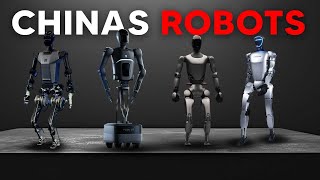
Survey of nine Chinese humanoid robots from 2023-2024, including Galba G1, Ubtech Walker S, and Unitree G1. Models range from industrial to service roles, with capabilities in mobility, AI, and sensor integration. Government backing and industry partnerships suggest rapid deployment timelines.
Questions this video answers
2023
About 173 cm tall and around 88 kg
Walk up to 3 km/h; run up to 5 km/h
Can lift up to 15 kg; 25 degrees of freedom; ~2 hours runtime on one charge
Showcased at the 2024 World Artificial Intelligence Conference in Shanghai
Chapters
China is on the fast track to becoming the world leader in robotics. And it's not just catching up, it's pulling ahead. With rapid advancements in artificial intelligence and humanoid technology, the race to dominate the robotics industry is fiercer than ever. Countries around the world are struggling to keep pace as China continues to push the boundaries of what robots can do. So today we're diving into the top 10 Chinese humanoid robots that are set to redefine the future of robotics. First on our list is the Galba G1, an innovative humanoid robot developed by Beijing Galaxy General Robot Co. Ltd. A company founded in 2023. The Galba G1 is their flagship model specifically designed for industrial environments, combining advanced AI with a human like form for enhanced functionality.
First, let's talk about its design and functionality. The Galbert G1 has a dual arm setup that allows it to perform complex manipulations with high precision and mimicking human movements. Its hands are versatile enough to handle materials of various textures and shapes, making it perfect for tasks like automotive manufacturing or even food processing. When it comes to cognitive abilities, this robot is a step ahead. The G1 uses advanced AI to process information and make real time decisions. It can learn from experiences and adapt to new situations, making it more effective in dynamic and unpredictable environments.
In terms of perception, the Galba G1 is equipped with both visual and tactile sensors, giving it a clear understanding of its surroundings. This ensures that it can safely interact with human co workers and move efficiently through complex workspaces. Now let's look at its human robot interaction capabilities. The G1 can understand and respond to voice commands, which makes working alongside it feel intuitive. In collaborative environments, this feature is invaluable for seamless communication between human operators and the robot. Standing at about 173cm tall and weighing around 88kg, the Galbut G1 is built to handle physical tasks with ease. It can walk at speeds of up to 3km per h and even run at 5km per h when needed. The robot can lift up to 15kg, making it strong enough for various industrial tasks. And it's designed with 25 degrees of freedom for maximum flexibility. On a single charge, the G1 can run for about two hours, ensuring it can handle extended work sessions before needing a recharge. Albert has big plans for the future. They're aiming to enter international markets, especially those with high labor costs, using Hong Kong as a strategic launch point. In fact, the Galba G1 was showcased at the 2024 World Artificial Intelligence Conference in Shanghai, and the company plans to introduce it to Hong Kong's retail sector within the next two years, with wider deployment targeted within five years. Golbert has even partnered with the Hong Kong Investment Corporation to establish an AI lab focused on exploring applications in retail and tourism.
In summary, the Galba G1 combines physical dexterity, cognitive intelligence and adaptability, making it a promising innovation that could revolutionize industrial automation and human robot collaboration. Next up, we have the Tiangong Humanoid Robot, a significant development from the Beijing Humanoid Robot Innovation center. Standing at 1.63 meters tall and weighing 43 kilograms, Tiangong is a general purpose humanoid robot notable for being the world's first full sized humanoid. Powered entirely by an electric drive, the.
Let'S start with mobility. Tiangong can run at speeds of up to 6km per h and navigate complex terrains like slopes and stairs even without relying on visual input. This impressive capability comes from advanced motion learning techniques, specifically state memory based predictive reinforcement imitation learning. In terms of sensors and processing, Tiangong is equipped with high precision sensors including six axis force sensors, visual perception sensors and a 3D vision system. These allow it to process environmental data with incredible accuracy. In fact, it boasts a processing speed of 550 trillion operations per second, making it extremely efficient at performing tasks. When it comes to design and scalability, Tiangong's open source design is a game changer. This approach allows for broad adaptability, meaning it can be used for a variety of applications, everything from manufacturing and research to home assistance. Its electric actuators enable versatile movement in the head on arms and legs, making it highly functional across different tasks.
Overall, Tiangong represents a major leap forward in humanoid robotics with its agile movement and sophisticated sensor array. It sets new standards for robot interaction in complex environments and with the Chinese government backing this open source project, it's clear that China is making a strategic push to advance humanoid robotics technology.
Next on our list is the Ubtech Walker S& advanced industrial humanoid robots. Now let's take a look at the key features. First up, design and structure. Standing at 1.7 meters tall, the walker S features a robust build with force compliant drive joints and a rigid flexible coupling hybrid system. This design allows it to walk stably on mobile production lines and adapt to various terrains, making it perfect for industrial settings.
When it comes to sensory and perception capabilities.
The Walker S is equipped with 41.
Servo joints that provide force feedback along with a comprehensive array of sensors including visual, audio and distance sensors. These enable advanced 3D semantic navigation, allowing the robot to create detailed 3D maps, avoid obstacles and safely navigate dynamic environment for applications. The Walker S is designed for tasks on automated assembly lines and complex object handling. It can handle a variety of jobs such as seat belt inspections, door lock testing, body quality checks, fluid filling, and even applying labels in vehicle manufacturing. Its versatility makes it well suited for demanding industrial roles.
And finally, let's talk about AI integration. The Walker S incorporates a large language model LLM to understand complex intents and plan actions accordingly. This greatly enhances its efficiency in tasks that require hand eye coordination and smooth human robot interaction. Overall, the ubtech Walker S is built to enhance manufacturing flexibility, promote unmanned operations and enable intelligent processes in industrial environments. Next up, we have the Agibot humanoid robot, a product of the Chinese robotics startup Agibot, founded by Peng Jahe, who was once a highly regarded recruit under Huawei's prestigious Genius Youth program. Agibot is rapidly making a name for itself in the world of robotics, and their lineup of humanoid robots is designed to take on a wide range of tasks, whether it's assisting in households or performing more complex operations in industrial environments. Now let's take a look at the key features of their flagship model. The star of Agibot's lineup is the Yuan Zheng A2, a biped humanoid robot. Standing 175cm tall and and weighing in at 55kg, it's equipped with an array of high tech sensors and powered by advanced artificial intelligence. This AI enables the robot to see, hear and process not only text and audio, but also visual data, making it highly adaptable to different environments. One of its most impressive capabilities is its ability to perform incredibly intricate tasks, such as threading a needle, demonstrating precision and dexterity that you don't often see in humanoid robot. Agibot hasn't stopped at just one model. The company has already unveiled five different humanoid robots offering both wheeled and bipedal versions. These robots are designed to compete directly with Tesla's Optimus humanoid robot. While many companies are jumping into the humanoid robot space, Agiabot stands out by focusing heavily on commercial viability and cost control. Their ability to produce robots at a lower cost is one of their biggest selling points, making them a strong contender in the global robotics market. The Yuanzheng A2, along with Agibot's other models, is tailored for versatility, whether it's assisting with household chores, managing logistics or handling complex industrial tasks. Agibot's robots are engineered for adaptability across a variety of sectors. They aim to become key players in industries that range from manufacturing and logistics to healthcare and service industries. 5 Now let's take a closer look at the Pudu D7, a semi humanoid robot developed by PUDU Robotics that's designed to enhance automation across a wide range of industries. Now let's take a look at the key features. First, let's talk about the design and structure. Standing at 165cm tall and weighing 45kg, the Pudu D7 features a human like upper body equipped with bionic arms and a highly advanced omnidirectional chassis. This combination of form and function allows for remarkable mobility and dexterity, making it well suited for tasks that require precision and fluid movement. When it comes to mobility and manipulation, the Pudu D7 really stands out. Its omnidirectional chassis enables 360 degree movement allowing it to easily navigate around obstacles. It can handle slopes of up to 10 degrees, achieve speeds of up to 7.2km perh and even climb obstacles as high as 50mm. This makes it incredibly versatile for a wide range of tasks in both industrial and service environments.
The bionic arms are another impressive feature. With a reach of 65 centimeters, each arm can lift up to 10 kilograms. And and they're designed for high precision tasks with an endpoint repeatability accuracy of 0.1 mm. This level of precision allows the D7 to perform intricate tasks like handling delicate objects or interacting with equipment with fine control. In terms of intelligence and learning, the Pudu D7 uses a multi layered intelligence system that combines data driven embodied intelligence with advanced AI models. This allows it to strategically plan and perform complex tasks in real time. Over time, the robot continuously learns and improves its efficiency, making it even more adaptable as it operates in different environments. Speaking of applications, the Pudu D7 is designed for use in a variety of environments. Whether it's working in industrial settings or service oriented spaces like hospitality, healthcare and retail, the D7 is versatile enough to perform tasks like elevator operation, item transport and sorting.
Battery life is another strong point. The D7 is powered by a battery with a capacity exceeding 1 kWh, allowing it to operate for more than eight hours on a single charge, making it ideal for extended shifts without interruption. The Pudu D7 represents a significant advancement in semi humanoid robotics, offering a flexible and adaptable solution for various industries. It's part of PUDU Robotics broader strategy to push innovation within the service robotics sector, aiming to provide specialized semi humanoid and fully humanoid robots to meet diverse operational needs.
6 Next up is Adam, a humanoid robot developed by PND Botix. And what sets Adam apart is its advanced biomimetic design, particularly its pelvis, which allows for an impressive level of precision and agility in mimicking human movements. Now let's take a look at the key features.
First, let's talk about the biomimetic pelvis. Adam's pelvis is designed to closely imitate human pelvic movements, giving the robot incredibly smooth human like motion control. This feature allows it to perform complex movements like walking and running with agility. That's remarkably close to what we see in humans. Next, we've got reinforcement learning. Adam uses advanced reinforcement learning algorithms to continuously improve its locomotion over time. The robot learns by mimicking human behavior and refining its movements through trial and error. This allows it to adapt and stay stable across various environments, enhancing its ability to handle unpredictable conditions. Another standout feature is Adam's modular architecture. P and D Botix opted for cost effective materials and modular components, making the robot easier to manufacture and repair compared to older robots that relied on complex hydraulics. This design choice not only keeps production costs down, but also facilitates scalable production, an important step as humanoid robots move closer to widespread use. When it comes to advanced motion capabilities, Adam is equipped with 25 quasi direct drive actuators. These allow it to maintain balance even when navigating tricky terrains or when external forces like a push or bump try to knock it off course. The robot is also equipped with a real time communication network and a motion control computer which help ensure efficient and smooth operation. A major milestone for PND Botix was reached in 2024 when they completed the first mass production batch of Adam. This marks a significant leap forward in humanoid robotics as the company plans to continue refining Adam's abilities and expanding its applications in the near future. Let's dive into the Unitree G1, a humanoid robot developed by Unitree Robotics. It's recognized for its advanced mobility, versatility and affordability, making it suitable for a range of industries including manufacturing, healthcare, rescue operations, research and education. First, let's talk about its mobility and dexterity. The G1 is highly agile and capable of intricate movements. It can navigate uneven terrain and handle delicate tasks with precision. Thanks to its compact design, it folds easily for transport, making it adaptable for various applications. Next, let's explore its advanced AI integration. The robot is equipped with cutting edge artificial intelligence, enabling facial recognition, autonomous decision making and complex human interactions. This AI allows the G1 to learn and adapt to different tasks efficiently, moving on to sensory and computing capabilities. The Unitree G1 features a depth camera and 3D lidar sensor providing advanced perception. It's powered by an eight core high performance CPU and can connect via Wi Fi 6 and Bluetooth 5.2, ensuring seamless integration with control interfaces. Now let's discuss its power and autonomy. The robot is powered by a 13 string lithium ion battery providing up to 2 hours of runtime. It also includes a local air cooling system to maintain optimal performance during extended use. Affordability is a major point here. Priced at approximately $16,000, the UniTree G1 delivers advanced robotics capabilities at a more accessible price compared to other humanoid robots like Boston Dynamics Atlas. Finally, let's look at some of the G1's applications. It can handle industrial tasks like material handling, inspection and maintenance, especially in hazardous environments. In disaster response scenarios, its mobility makes it valuable for navigating rubble, assessing damage and aiding in search and rescue operations. Additionally, its affordability and customization options make it a great choice for educational institutions and research labs, especially those focused on robotics, AI and human robot interaction. In healthcare, the G1 can assist by transporting medications or equipment and supporting patient care tasks. In summary, the unitree G1 represents a significant step forward in humanoid robotics, combining advanced technology with practical applications at an affordable price. Introducing the GR2, an advanced humanoid robot developed by Fourier Intelligence. Designed to enhance human robot interaction, the GR2 is a significant evolution from its predecessor the GR1, which focused primarily on assisting elderly individuals with mobility and daily care tasks. Now let's take a look at the key features. First, let's talk about the advanced AI system. The GR2 is equipped with an AI driven brain that uses neural networks to mimic human cognitive processes. This means it's not limited to just pre programmed tasks. It can learn and dynamically adapt to its environment, making it much more versatile in a variety of situations.
Next is its emotional intelligence, which is one of the most groundbreaking aspects of the GR2. It can detect and respond to human emotions by analyzing facial expressions, voice tones and other nonverbal cues.
This allows the robot to interact with.
People in a way that feels more natural and comfortable, enhancing the overall user experience. When it comes to perception and navigation, the GR2 features a camera based PureVision system with six RGB cameras that provide a 360 degree view. This system allows it to generate bird's eye view images for real time object identification and tracking, ensuring safe and accurate navigation in complex environments.
The GR2 also boasts improved dexterity and teleoperation compared to the GR1. It has more dexterous hands and can even be teleoperated via virtual reality. This makes it adaptable for a wide range of environments from household settings to industrial sites. In home assistance, it can help with daily chores, provide care for the elderly and even offer companionship. By learning user preferences and routines over time in medical and rehabilitation settings, the GR2 can assist with patient care and therapy, continuing Fourier's commitment to medical robotics for industrial use. Its ability to learn and adapt makes it perfect for dynamic environments where conditions are constantly changing. It can take on repetitive tasks or those requiring high precision.
Overall, the GR2 by Fourier Intelligence is a versatile humanoid robot that combines advanced cognitive capabilities with emotional intelligence.
It's positioned to be a game changer.
In fields like healthcare, home assistance and industrial automation.
Astrobot S1 is a cutting edge humanoid robot developed by Stardust Intelligence, a robotics company based in Shenzhen. This robot is designed to perform tasks with remarkable speed and precision, closely mimicking human actions.
The Astrobot S1 can move at speeds of up to 10 meters per second and handle a payload of 10 kilograms per arm.
This gives it the ability to perform tasks quickly and efficiently, such as pulling.
A tablecloth from under a stack of glasses without disturbing them, a true demonstration of its precise movement. Next is advanced AI integration. The S1 incorporates a large language model allowing it to understand and interact with its environment intelligently. This integration means it can identify and sort items effectively, showcasing a high level of reasoning and understanding in real time situations.
In terms of household task capabilities, the S1 is designed to take on a variety of tasks around the home. It's capable of cooking, cleaning and even folding clothes. Its impressive dexterity allows it to handle intricate tasks like cutting vegetables and flipping sandwiches with ease.
One of the standout features is its use of imitation learning. The S1 was developed to learn by mimicking human actions, enabling it to perform complex tasks more efficiently. This approach enhances its adaptability and ensures that it can handle a wide range of functions with ease. Finally, let's discuss commercial availability. The Astrobot S1 is expected to be.
Available for purchase in 2024.
Transitioning from a prototype to a market ready product, this marks a significant milestone in its development.
Overall, the Astrobot S1 represents a major advancement in humanoid robotics with potential applications in both household and industrial settings. Its development highlights the rapid progress being made in AI powered robotics technology.










