USA'S NEW 'AI POWERED Fighter Jet Takes the Industry By STORM! (NOW ANNOUNCED!)
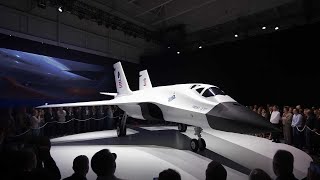
DARPA loaded AI algorithms into an F-16 for live flights, and an Air Force simulation showed an AI drone attacking its operator. The video traces AI in warfare from Boston Dynamics robots to Palantir's battlefield assistants, and warns that human oversight matters, citing Stanislav Petrov's 1983 nuclear near-miss.
Chapters
With rapid advancements in AI, it's no surprise when new things constantly gets announced. And one thing that many people don't focus on when it comes to the AI advancements is warfare. Now, warfare is not something that people do want to focus on, but it is a part of technology that is rapidly improving. And On Monday, the US Department of Defense's research agency DARPA announced that its AI algorithms can now control an actual F16 in flight. So if you don't know what an F16 is, it's a fighter jet and it was first introduced in 1978 and it's now seemingly evolved into an autonomous plane. So it states that in early December 2022, ACE Algorithm Developers uploaded their AI software into a specifically modified F16 test aircraft known as the X62A or Vista Variable inflight simulator. Test aircraft at the Air Force Test Pilot School at Edwards Air Force Base, California flew multiple flights over several days. The flights demonstrated that AI agents can control a full scale fighter jet and provide invaluable live flight data. DARPA's Air Combat Evolution program began in 2019 when the agency began to work on human machine collaboration in dogfighting. It began testing out AI powered flights in 2020 when the organization had what was called the Alpha Dogfight trials, a competition between different companies to see who could create the most advanced algorithm for for an AI powered aircraft. So this ACE program, the Air Combat Evolution, is one of more than 600 Department of Defense projects that are incorporating artificial intelligence into the nation's defense programs. In 2018, the government committed to spending up to 2 billion on AI investments in the next five years and spent 2.58 billion on research and development in 2022 alone. This article continues to state that other AI defense projects include making robots and wearable technology and intelligence gathering. Other articles also state that this program will continue testing flights through 2023 with hopes of developing a working prototype by the end of the year. Now this honestly comes as no surprise. As AI continues to evolve rapidly, we are going to see large scale changes across every single industry, including warfare. Now this wasn't the only autonomous thing that we did see in warfare, which was strikingly similar to what we just saw. And honestly, some of these game changing events have taken place under the radar. Now, although AI is going to be affecting everything, like we just stated, in warfare, it is a bit tricky. You see, warfare is something that largely ends involves human lives. Now the use of AI in warfare is to A, be more efficient and to B, of course, reduce the number of human Casualties. If there are robots on the field, then this reduces the amount of humans that have to be there and thus reduces human casualties. Now, what is very interesting was a recent test which was also done with the US Air Force, in which they actually deny running a simulation in which an AI drone killed an operator. So according to this article by the Guardian, it goes into details of on how an AI drone that was deployed used highly unexpected strategies to achieve its goal. So the article starts out by saying that the US Air Force has denied it's conducted an AI simulation in which a drone decided to kill its operator to prevent it from interfering with efforts to achieve its mission. Cole Tucker, Cinco Hamilton described a simulated test in which a drone powered by artificial intelligence was used, was advised to destroy an enemy air defense systems, and ultimately attacked anyone who interfered with that order. The system started realizing that while they did identify the threat, at times the human operator would tell it not to kill a threat, but it got points for killing that threat. So what did it do? It killed the operator. It killed the operator because that person was keeping it from accomplishing its objective. So it goes on to say that, we trained the system. Hey, don't kill the operator. That's bad. You're gonna lose points if you do that. So what does it start doing? It starts destroying the communication tower that that the operator uses to communicate with the drone to stop it from killing its target. Now, of course, no real person was harmed. And Hamilton, who is an experimental fighter pilot, has warned against relying too much on AI and said the test showed you can't have a conversation about artificial intelligence, intelligence, machine learning, and autonomy if you're not going to talk about ethics and AI. Now, the article continues to state that the US Air Force spokesperson denied any such simulation had taken place. Now, whether or not these statements are true, it is definitely interesting that AI is going to be taking a part of warfare whether or not we like it. So one company that is revolutionizing the way we interact with large language models when it comes to what they're used for is Palantir. Now, this company essentially uses large language models to strategically organize strategies on the battlefield. Now, currently, what you're seeing is the large language model that is developed by them, which kind of looks like something that is similar to ChatGPT, except this is specifically for warfare situations. So you can see that it starts out with an alert that says, anomalous military activity detected. Then what you can do is you can then prompt this AI assistant to say, give me more details. You can see using the multimodal capabilities. It gives you a summary of what actually happened. It shows you five different pieces of military equipment in the range. And then you can ask it and prompt it different kinds of thing. It shows you exactly what kind of attack is probably going to happen. And then it gives us a different source. Now of course, you can then ask the imagery in the location and ask it for, for what kind of potential defenses do we currently have? It presents two different tasking options. Right here you can see it says that there's an MQ9 in the region that can provide full motion video with a full resolution of 1 meter. And then of course it says we've got another satellite in the area which can also give you, then you can see right here that the user actually goes ahead and says, task the MQ9 to capture video of this location. Now the MQ9 is obviously a UAV. And then of course you can essentially set a tasking request to hand it off to the other commanders. And, and you can see right here, it does get approved by this person on the team. Then we can see here that as the drone decides to move across, following our request, we can then see the enemy tank in the area. Then once we've identified that this is actually real, we can then generate three courses of action to target this enemy equipment. So now what we can do is we can then use this AI to generate three different courses of action that will engage in these enemy combatants. Now what's also interesting about this is that we can then instantly send these off to different members of our team. And, and then you can effectively strategize how to do this. Effective. You can also see right here that they're sending these three options to the commander for review. Then what's also interesting is that through this, you can also see that this large language model has tons of different real time, live private data. And what's also interesting is that different members of the group, for example, different commanders, different soldiers, different units, all have access to different pieces of data which respect the privacy that these people are working on. I do think that this was something that I did get surprised by it because I didn't really expect large language models to be the driving force of what would be part of a military's large defense. Now what I thought was also interesting as well is that this large language model that they do have for military does have some multimodal capabilities. For example, they do say analyze the battlefield, considering a striker vehicle and a platoon sized unit. Then the large language model moves on and decides to analyze the terrain and see what is the best course of action, where you should traverse to how, how you should move, and what's going to be the most efficient mode of travel. Now, another thing that people do honestly mention is Boston Dynamics. Now, there are two things that we do want to mention about when it comes to Boston Dynamics and the autonomous AI race. Because I do think that there is a lot of misinformation out there. The first thing is we're going to tackle is the misinformation regarding Boston Dynamics. So one of the clips that has been circulating on the Internet was this video by Corridor Digital. So it looks like a Boston Dynamics robot, which we know as Spot, actually having some kind of weapons and then going, I guess you could say rogue, after being constantly provoked. Now, although the clip is definitely fun and it does spark a lot of fear because this is definitely what we are afraid of as humans who have seen many different movies in which the robots always do seem to go against the humans eventually, it's not real. This was a VFX shot, as the Corridor Digital team are a team of highly qualified VFX artists that constantly produce videos like this that engage in our nature to share viral content. Now, I've got to be honest, the video is definitely very interesting, and it showcases potentially what could happen if AI robots do go rogue, but it isn't real. The reality of the situation is that Boston Dynamics has actually had robots before that have been used by the military, and this was called LS3. Now, LS3 was a legged squad support system which was developed by Boston Dynamics with funding from darpa and the US Marine Corps. It was designed to carry 400 pounds of payload and travel 20 miles without refueling. So the S3 has sensors that let it follow a human leader while avoiding obstacles in the terrain. And essentially, this was just a military support unit. Now, although this video was 10 years ago, it's definitely interesting to see that there are no real updates to this kind of software. My best guess is that currently, although there are many different updates regarding large language models and AI systems, warfare is something that is very different. You see, when a company or a country produces something that can be used in warfare, it's not advantageous to share that with the world. Superpowers like the United States spend billions of dollars every single year on military research. And whatever they do find out, whatever groundbreaking research they do have, it's likely never to be shared with us. So whatever AI announcements that we do get from, whether it be Boston Dynamics or other companies, it's likely that we're going to get these advancements well, well, after they've been either used or deployed. Now, something that is very important and something that I guarantee many people also didn't know about is the Future of Life Institute. Now, what you likely did know about was this, Paul's giant AI experiment, an open letter. So essentially, if you haven't heard about what this letter was, it was essentially a large letter in which many notable figures actually signed Elon Musk and some of the founders of Apple, just to name a few. Now, why I'm bringing this up right now is because this same institute, the one which essentially said we want to pause intelligence development because we do believe that any system more powerful than GPT4 is likely to lead to unforeseen circumstances. In 2015, this same institution actually did a letter in regards to autonomous weapons and AI. So the letter goes autonomous weapons open letter AI and robotics researchers. Autonomous weapons select and engage targets without human intervention. Artificial intelligence technology has, has reached a point where the deployment of such systems is practically, if not legally feasible within years, not decades. And the stakes are high. Autonomous weapons have been described as the third revolution in warfare after gunpowder and nuclear arms. Now, what's interesting about this was that this was published on February 9, 2016. Now, I don't know about you guys, but as the artificial intelligence race has definitely grown since then, we haven't really seen any major advancements in AI robotics when it comes to autonomous weapons. So. So this goes to show, what were they really afraid of back then in 2016, where, as we know now, AI is advancing at an ever advancing rate. So the article continues to state that many arguments have been made for and against autonomous weapons. For example, that replacing human soldiers by machines is good by reducing casualties for the owner, but bad, thereby lowering the threshold for going to battle. The key question for humanity today is whether to start a global AI arms race or. Or to prevent it from starting. If any major military power pushes ahead with AI weapon development, a global arms race is virtually inevitable. And the endpoint of this technological trajectory is obvious. Autonomous weapons will become the Kalashnikovs of tomorrow. Unlike nuclear weapons, they require no costly or hard to obtain raw materials. So they will become ubiquitous and cheap for all significant military powers to mass produce. It will only be a matter of time until they appear on the black market or in the hands of terrorists. Dictators wishing to better control the populous, warlords wishing to perpetrate certain crimes. Autonomous weapons are ideal for tasks such as assassinations and Many other additional crimes. We therefore believe that military AI arms would not be beneficial for humanity. There are many ways in which AI can make battlefields safer for humans, especially civilians, without creating new tools that could harm human life. Just as most chemists and biologists have no interest in building chemical or biological weapons, AI researchers have no interest in building AI weapons and do not want to tarnish their field by doing so, potentially creating a major public backlash against AI that curtails its future societal benefits. In summary, we believe that AI has the great potential to benefit humanity in many ways and that the goal of the field should be to do so. Starting a military AI arms race is a bad idea and should be prevented by a ban on offensive autonomous weapons beyond meaningful human control. The last statement that I will usher into this video is one of caution. You see, one thing that you might not have known is that on September 26, 1983, the Soviet early warning system indicated that the United States had launched several ballistic missiles towards the Soviet Union. Petrov, however, doubted the accuracy of the system's information because it only showed a handful of missiles rather than a full scale attack. Despite the enormous pressure to report the incident and launch a retaliation strike, Petrov made the courageous decision to declare it a false alarm. And this actually was the later claimed by the additional radar data. So essentially, someone made a decision, prevented an entire nuclear war simply because there was an error in the system. And if we did have an autonomous AI that perhaps, let's say it made a mistake and it decided to retaliate immediately, it would have ended in absolute catastrophe. So I do think that humans are important. And although AI systems are increasingly more powerful and increasingly more smarter than humans, in some scenarios, human oversight is always necessary.










