WHAT JUST HAPPENED?! Elon Musk DENIED Seat on NEW Influential AI Safety Board
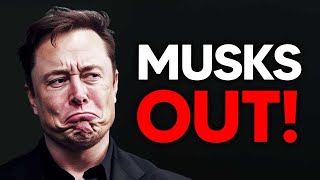
A LARRUZ YouTube video (Apr 30, 2024) reporting that the U.S. Department of Homeland Security formed an AI Safety and Security Board, chaired by Alejandro N. Mayorkas, to advise on safe AI use in critical infrastructure. The video highlights that Elon Musk and Mark Zuckerberg were excluded from the board while executives from major tech firms (Microsoft, OpenAI, IBM, Nvidia, Google/Alphabet, AWS) are included. The narrator discusses possible reasons for the exclusion (social media history, Cambridge Analytica, conflicts of interest) and raises concerns about regulatory capture when industry CEOs help set AI safety recommendations.
Questions this video answers
April 30, 2024.
Secretary Alejandro N. Mayorkas.
Elon Musk and Mark Zuckerberg.
Executives from Microsoft, OpenAI, IBM (also referenced: Nvidia, Google/Alphabet, Amazon Web Services).
Sam Altman, Dario Amodei, Satya Nadella, Jensen Huang, Sundar Pichai, Arvind Krishna, Adam Selipsky.
Chapters
So, ladies and gentlemen, Elon Musk and Mark Zuckerberg are out. There is a new AI safety board that will be overseeing developments in terms of the US And I think this is definitely one of the most important videos because it actually discusses one of the most important things that we're going to be talking about, which is, of course, AI regulation in the coming years. So the U.S. department of Homeland Security, DHS has established the AI Safety and and Security Board to advise on the responsible development and deployment of AI technologies in the nation's critical infrastructure. The board, chaired by Secretary Alejandro N. Mayorkas, includes leaders from various sectors such as technology, civil rights, academia and public policy. And its goal is to develop recommendations for the safe use of AI in essential services and prepare for AI related disruptions that could impact national security or public welfare. And. And President Joe Biden directed the creation of this board as part of a broader initiative to actually manage the risks and harness the benefits of AI. Now, the board members, this is where things get interesting, actually includes executives from major companies like Microsoft, OpenAI and IBM. And these guys are going to be providing guidance on adopting the best practices to mitigate potential threats posed by AI, including cyber attacks. And the DHS is intensifying its efforts to integrate AI into its operations with initiatives such as an AI roadmap and a hiring sprint for AI experts. The establishment of the board marks a significant step in DHS strategy to protect critical infrastructure and ensure the ethical use of AI technologies. Now, something that I think is rather interesting is this part right here, and we're going to touch base back on this because certain points are rather connected, but this is rather important. So in this part here, you can see that they are going to develop recommendations for power grid operators. Okay, Power grid operators, remember that transportation service providers and manufacturing plants, among others, on how to use AI while bulletproofing their systems against potential disruptions that could be caused by advances in this technology. And essentially they talk about how there are significant risks with artificial intelligence and that a failure to deploy AI in a safe and secure responsible manner when it comes to critical infrastructure can be devastating. Now, the majority of things that they're talking about in critical infrastructure include things such as automating tasks at factories, typically done by humans, helping doctors diagnose patients, and detecting anomalies in power facilities, which are, of course, noble causes. But one of the most interesting things about this entire development is that Elon Musk and Mark Zuckerberg are out of this. Two of the most prominent figures in the space of artificial intelligence. Won't be overseeing this board or won't be a part of it. This is where we get this statement, the intrigue. Mayorkas said that he deliberately, deliberately chose not to include social media companies, including Meta and X, in the group, though those companies also have substantial AI operations, which is rather, rather fascinating considering the fact that Elon Musk has probably been the loudest voice for AI safety ever since the inception of OpenAI. If we aren't familiar with Elon Musk's origin story, is that he actually initially created OpenAI to actually focus on open sourcing AI so that it would be completely safe for everyone. And now that there's an AI safety board, okay, Elon Musk, apparently due to his affiliation with X, he won't be able to be overseen on this board. Now I do think that this is rather interesting because there are a lot of different factors at play here and it is quite hard to gauge on why exactly these two are out. Of course that is what they're saying, but maybe there is a different reason going on. But I will dive into some of the reasons and you can see right here, this is another article stating that Elon Musk and Mark Zuckerberg excluded from Fed's AI safety board, filled with top tech CEOs and, and in fact that list is actually filled to the brim with people like Sam Altman, Dario Amodei and Satya Nadella. Now, one of the reasons that they actually talk about not including Mark Zuckerberg and Elon Musk is of course due to the issues with social media. If you aren't familiar with social media, it actually does have a completely rocky past with the government due to certain things taking place. One of the things that took place was of course, the Cambridge Analytica scandal, which with Meta. So Mark Zuckerberg's company had a huge scandal, and I mean completely huge. The Cambridge Analytica scandal happened in 2018, and in this case, the personal data of millions of Facebook users was improperly accessed and used by the political consulting firm Cambridge Analytica for voter profiling and actually targeted advertisers during elections without user consent. And this scandal actually revealed how Facebook had failed to protect user privacy and enforced down its own policies around third party apps accessing its data. It basically was just a major breach of trust that severely eroded public confidence in the platform. The data was essentially used to create psychographic profiles of voters and then target them with personalized political advertisements to influence their voting behavior without their knowledge. This was of course, a severe misuse of personal information. In addition to this, there are actually ongoing data privacy issues with Facebook. Even after the Cambridge Analytica scandal, Facebook Meta had continued to face criticism and regulatory action over its data collection and sharing practices, further damaging public trust. Tracking users across the web and failing to provide transparency about how data is used for advertising purposes, using phone numbers provided for two factor authentication were actually targeted for advertising. Failing to properly store user data leading to breaches, exposing millions of users of information and actually sharing sensitive personal data like health with third parties against its own policies. And in addition to that, the level of user trust that are in these platforms are actually at an all time low. The data indicates that social media platforms like Facebook and Instagram and Twitter are actually seen as the main culprits in facilitating the spread of misinformation and fake news. However, I would argue against this as many people would argue that the mainstream media are the ones who spread fake news. Either way, it's a pretty precarious situation for these two because whilst yes, they do have some involvement with AI, and whilst yes, they do have some interest in social media, I'm guessing that this reason doesn't make sense. And and let me break it down to you. So Mr. Mayoris said that he deliberately chose not to include social media companies, including Meta and X, because they have substantial AI operations because they're social media companies now. Yes, based on the history that we literally just discussed, this would make a good reason if this reason purely isn't based in conflict of interest. So basically what I'm stating here is that this just seems to not make sense because the only reason that they would not include social media companies is because maybe they just wouldn't want to have them. Because basically I do think that there is still a conflict of interest even though Mark Zuckerberg and Elon Musk are not on this board. So one of the things that you need to understand is that on this board there are the top tech CEOs. Okay, one thing that doesn't make sense about this is they're stating that, look, we can't include these guys, Mark Zuckerberg and Elon Musk because there's going to be a conflict of interest. But you can include Sam Altman, the CEO of OpenAI, Jensen Huang, the CEO of Nvidia, Satya Nadella, the CEO of Microsoft, Sundar Pichai, the CEO of Alphabet, Google's parent company, Arvind Krishna, the CEO of IBM, and Adam Selipsky, the CEO of Amazon Web Services. You can have all of these top tech CEOs on overseeing the development of AI and critical infrastructure, but you won't have Elon Musk. Now, I don't think this is a personal vendetta, although some people might actually argue this because of the feud that Elon Musk has had. And of course we know the issues that Facebook and Meta have had with the data and all of those issues there. But I still think that there is a huge potentially conflict of interest with these top companies. Maybe I personally would have looked at esteemed researchers to be sitting on the board because I think those people are some of the key people who can look at things and also contribute most effectively. One thing that could actually happen is the vested interest. So some people have actually mentioned that this could lead to the board downplaying risks or pushing for looser oversight to enable faster adoption of new AI technologies developed by their companies. There could be a perceived conflict of interest between their companies, but business goals and the Board's mission of independently assessing AI safety. However, the Secretary Mayorkas actually said he's not concerned, stating that the board members understand the mission and it's not about business development. But this still raises the question, why aren't there more AI researchers on this board than there are just giant tech CEOs? Now, one of the things that could be happening here is of course, regulatory capture. Now, regulatory capture is basically a concept to where regulatory agencies are formed to act in the actual public of the interest instead advance the commercial or special concerns of interest groups that dominate the industry or sector that they're charged with regulating. Essentially, it just occurs when a regulating body becomes beholden to the entities it is supposed to oversee and regulate rather than serving the public good. Now, in the context of AI and this Security Board, some people are going to argue, me included, that the board's composition, heavily featuring executives from from major AI companies, is an example of regulatory capture. The concern is essentially that these industry leaders whose companies stand to benefit from the rapid development and deployment of AI, may use their positions on the board to shape regulations and recommendations in a way that favors their business interests, rather than prioritizing the safe and responsible use of AI in critical infrastructure. Now, critics could argue this is pretty crazy. Having AI industry leaders advising on AI safety regulations is basically like having the fox guard the henhouse. They might suggest that these executives could potentially slow walk water down or otherwise influence safety recommendations to avoid impeding the adoption of their company's AI products and services. However, some proponents of the board's composition might actually argue against this and state that the expertise and insights of these industry leaders and are essential to effectively regulating a complex and rapidly evolving technology like AI. They might argue that the board member's understanding of their mission, as asserted by Secretary Mayorkas, will ensure they prioritize safety and security despite any potential conflicts of interest. And I have to say, whilst the arguments are convincing on both sides, I have to lean towards regulatory capture. You have to understand that these guys are the CEOs of some of the most important companies in the next decade. I've often argued that whichever company gets the AGI first will likely be the most powerful company for the rest of time. And whilst yes, that is a crazy statement, but if they are about to develop a artificial superintelligence, I don't understand logically how anyone can out compete with them. Which means that these companies and these individuals could pretty much do anything it takes to get the regulations shaped in their best interest. We can also know that they're not going to be arguing for regulations that are shaped against their interest. So let me know what you think about this. Do you think it's a little bit weird that people like Elon Musk and Mark Zuckerberg are left out of determining the fate of AI and how it is shaped with regulations? Or do you think that there's actually a conflict of interest or do you think that there is regulatory capture? I do think overall that this is something that is really interesting, leaving off Elon Musk, but overall I do hope that AI is developed safely because we do not know that the tech leaders, whilst they might not state it objectively, there is most certainly a need to develop this technology safely.










