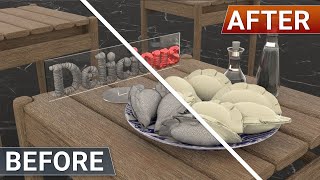
A Two Minute Papers video by Dr. Zsolnai (Dec 18, 2021) presenting a computer graphics paper that enables physics simulations with drastic geometry changes via a technique called "injective deformation processing." The video shows demos (inflating a cat, virtual dumpling cooking, repairing intersection artifacts), reports per-frame timings from ~0.5 seconds up to 12 minutes for large deformations, and ends with a sponsor mention of Weights & Biases.
Chapters
Dear fellow scholars, this is Two Minute Papers with Dr. Zsolnai. Today we are going to absolutely destroy this virtual bunny and then inflate this cat until it becomes a bit of a chonker. And I hope you like dumplings, because we'll also be able to start a cooking show in a virtual world. For instance, we can now squash and wrap and pinch and squeeze. And this is a computer graphics paper. So let's smash these things for good measure. There we go. Add some more. And the mirror is now ready. Enjoy. This is all possible through this new paper that is capable of creating physics simulations with drastic geometry changes. And when I say drastic, I really mean it. And looking through the results, this paper feels like it can do absolutely anything. It promises a technique called injective deformation processing. Well, what does all this mean? It means great news. Finally, when we do these crazy experiments, things don't turn inside out and the geometry does not overlap. Want to see what those overlaps look like? Well, here. Here it is. And luckily, we don't have to worry about this phenomenon with this new technique, not only when inflating, but it also works correctly when we start deflating things. Now, talking about overlaps, let's see this animation sequence simulated with a previous method. Oh no, the belly is not moving. And my goodness, look at that. It gets even worse. What is even worse than a belly that does not move? Of course, intersection artifacts. Now what you will see is not a re simulation of this experiment from scratch with this new method. No, no, even better. We give this flawed simulation to the new technique. And yes, it can even repair it. Wow. An absolute miracle. No more self intersections. And finally, the belly is moving around in a realistic manner. And while we find out whether this armadillo simulated with the new method is dabbing or if it is just shy, let's talk about how long we have to wait for a simulation like this. All nighters? No, not at all. The font inflation examples roughly take half a second per frame. That is unbelievable. And it goes up to 12 minutes per frame, which is required for the larger deformation experiments. And repairing an already existing flood simulation also takes a similar amount of time. So what about this armadillo? Yes, that is definitely a shy armadillo. So from now on, we can apply drastic geometry changes in our virtual worlds. And I'm sure that two more papers down the line, all this will be possible in real time. Real time dumplings in a virtual world? Yes, please sign me up. What a time to be alive. Weights and biases provides tools to track your experiments in your deep learning projects. What you see here is their amazing sweeps feature which helps you find and reproduce your best runs. And even better, what made this particular run the best. It is used by many prestigious labs including OpenAI, Toyota Research, GitHub and more. And the best part is that Weights and Biases is free for all individuals, academics and open source projects. Make sure to Visit them through wnb.com papers or just click the link in the video description and you can get a free demo today. Our thanks to Weights and Biases for their long standing support and for helping us make better videos for you. Thanks for watching and for your generous support and I'll see you next time.