Could Physical Treatments Be Keeping You Stuck?
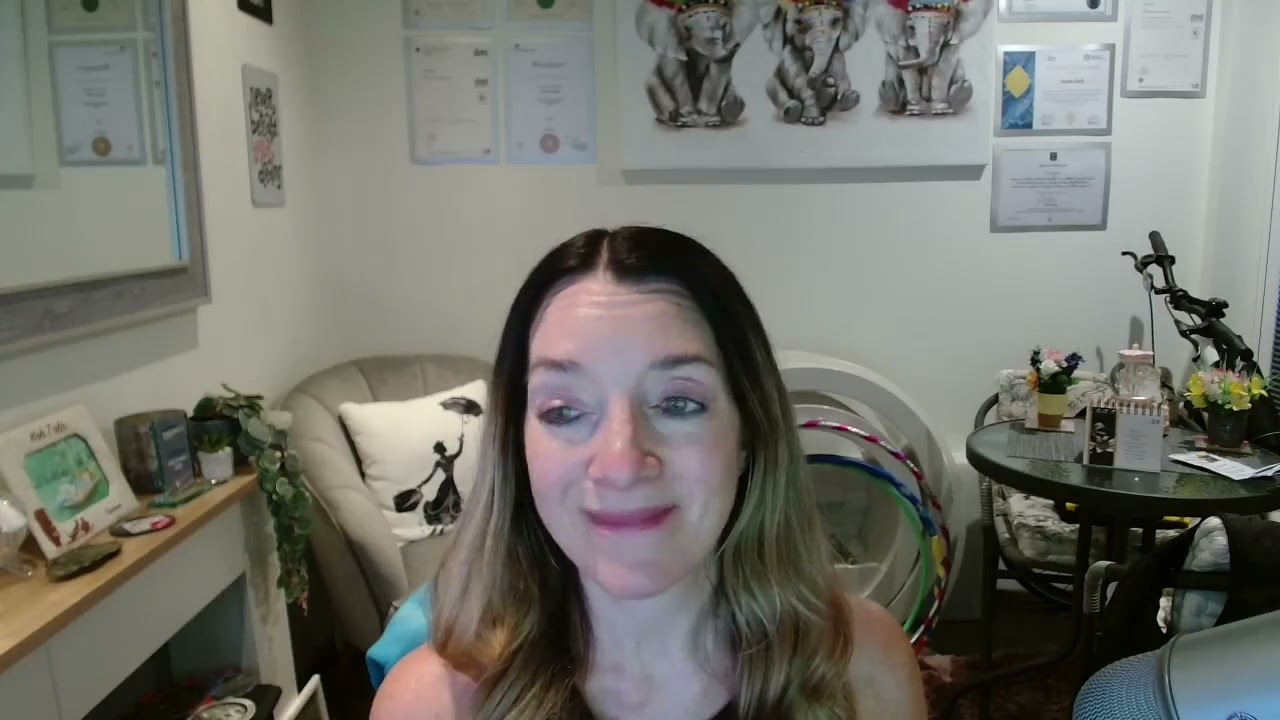
Joanne Smith spent 16 years chasing relief through physiotherapy, chiropractic care, and radiofrequency ablations after a 2008 car accident, until she realized the treatments themselves were signaling danger to her brain. She stopped the physical interventions, did journaling and emotional work instead, and returned to ultramarathons and hula-hooping. She argues that habitual treatments can become rituals that perpetuate pain rather than heal it.
Chapters
Hi everyone, welcome to Bend and Snap, Active People Getting Back on Track. The rain has just started coming down in Leeds. Yeah, finally we're having some rain. Quite nice, I can hear it, relaxing. So welcome for anyone that's recently joined, thank you for being here. Please say hi in the comments and the chat, please ask questions, please share insights, share your experiences, share anything. I really enjoy hearing from you all. Today's session, I'm going to try and keep it a little bit short and snappy, In Ben Dunn Snappy style, just because I've got a session to be in at 8 PM, so I don't want to be late joining that one. So today's session, I want to talk about, could physical treatments be the reason why you are staying stuck? Could treatment be keeping you stuck? Because My personal journey led me to that massive insight of realising that, wow, that was the reason why I was stuck with chronic neck pain, chronic back pain, leg, all sorts of things, because I was treating the body over and over and over and over and getting a very temporary relief. So I know many people will relate to that. So it becomes a daily ritual, and I got stuck in that for years and years and years, and it wasn't until I listened to the book by Dr. Sarno, Mind-Body Prescription, and in the book he obviously explained That the cause of the pain and the symptoms was not being generated via a problem within the body, and he advised to stop treating the body. He was very extreme with the approach, and it was drop all physical treatments. The words repudiate the physical are the words which I really heard And I was like, wow, I've been doing hot packs, cold packs, physiotherapy, chiropractor, acupuncture. Anyway, I just want to do a little disclaimer alert because I don't want anyone to panic believing that I'm saying that all physical treatments are not recommended because they do have their place and their purpose and they can be very, very useful. But for those who have been assessed and been checked and their pain and their symptoms are behaving like a brain-generated symptom and they don't match what we would expect for physical and structural pain or symptoms, then this is what I'm talking about. So I'm not saying, like, don't do physiotherapy, don't follow medical advice. Please do follow the advice of the medical professionals. I'm not saying that injuries are not real. They are very real. We are, you know, we do get injured. I get injured all the time. But it's about knowing the difference between the root cause. So, I'm talking to symptoms that we know that we've got enough evidence to believe are being generated via a brain that's continued the symptom way beyond when the injuries have healed. And for some people, they might not have even had an obvious injury, and it just started up, and they never really know how or what caused it. So Basically, what really changed things for me was the day that I realised that and the day that I got rid of anything that screamed fixing me— massage balls, spiky mats, rolling pins. Because those of you that know me, and you might know a bit of my background story, my chronic pain became a thing after a car accident that happened right back in 2008. I tried everything to get well, to recover. I was told, be active, keep moving, which is exactly what I did. I followed all the advice, all the medical advice. Oh no, not again, I think I've frozen. Ah, this happened last week. I might need to leave and come back again. Oh no, I'm back. Right, it froze last week and then I ended up having to rejoin, so I think I'm back again. So I followed all the medical advice. I was your perfect patient, doing everything as recommended. I did all the sessions. I never missed a session with physiotherapy. I did all the stretches that I was given. I did all the strengthening exercises. Strength. I tried the hot, the cold, the foam roller, you name it, I did everything. I also had radiofrequency nerve ablation, steroid injections done under X-ray guidance, and so many, many physical treatments. And the day that I finally knew something new Because what was happening was I was getting some relief, but it was very temporary. And some of those treatments, it was literally maybe only even like 5 or 10 minutes relief, and then it would be coming back and coming back. And even following those radiofrequency and nerve ablations, it would eventually come back. So if that was the answer, then it would have not come back. The pain was always back and the cycle would then repeat and repeat. So every time that I would be going back and doing special stretches or doing things to treat the body, I did not know that I was reinforcing my brain's perception that there is a problem with my body, so that would continue the cycle. So I'm summarising this just briefly, but when I began to understand that and get curious, I was like, wow, well, it was very easy for me to throw out the hot packs, cold packs, get rid of all the stuff, get rid of the special chairs, get rid of all the devices that I had, and I would no longer be doing anything with the intention behind it to reduce pain. Because I was like, well, the pain's not coming from my body, so I don't need to treat my body anymore. And for me, I actually found that, kind of, for me, it felt easy to do when I understood, and I felt good knowing that it was a way out. There was a hope that I could recover. Some people will really struggle to break away from putting special creams on. They might use anti-inflammatory creams, or they might use All kinds of different things. So some people, it can be really difficult to get away from doing that. I actually found it really easy because when I knew that it was hurting me and I was like, oh, I'm not going to do that anymore, and as a substitute for that, I did what Dr. Sarno said, think psychological. So instead of treating my body, I began to think about emotions. I thought about how I was feeling, and I literally did that, like, what am I angry about, what might I be sad about, what might I be happy, and I just focused on that and did scribbling, little journaling and stuff. It seems absolutely amazing, but that was when I got my first piece of evidence that the connection was there, and it changed everything. So when you start to understand more about the mind-body connection and get curious, About what's happening, then you will get your own bits of information, glimmers, you'll have your own personal journey with this, but you will start to see things differently. But it's a huge part of it for so many people, is stopping doing the things that are treating Something that's not actually the, the cause. It literally changed everything because when I knew that my brain was in a learned pattern and it had just got really good at producing pain based on my expectations and everything else, and I just decided I'm not going to be massaging that and doing special things for it anymore, And there's nothing to fix, there's nothing to fix. So I refocused it to this psychological stuff, like, what actually is it trying to protect me from? I began to address the things that I didn't even know were happening underneath all of that when I started to see the pain as protection and not as a horrible thing that I have to accept because I was told, you've got to accept this for the rest of your life, it's incurable. Fibromyalgia is an incurable illness or whatever you want to call it, and you have to learn to live with it. So I did what I was told, you have to manage it, you have to manage the symptoms, but part of the symptoms management was stretching, massaging, treating my body, putting hot and cold on there and so on. But when I found out that the part of what I was doing was actually not helping, so I have to share this because I wish someone would have shared that with me all those years ago, all those years ago, back like 16, 17 years ago. It would have been lovely to know that, so it's nice to be able to pass that forward. But there are occasions where sometimes it's appropriate, you know, if you have had an obvious injury or surgery, or you're recovering from something where the treatment, the body genuinely does need the treatment, then that's absolutely necessary. So it's just about understanding the difference. So you could ask yourself, is it just helping me to feel safer? Or does my body genuinely need this? I mean, that's 2 questions that you could help to figure out the difference. Does my body genuinely need this, or is this just helping me feel safer? Because would you rather trade in a temporary little bit of relief for a future recovery? And that's the difference that could make the difference. By continuing to treat the physical, you could be trading in your long-term recovery for some short-term relief. And when you put it that way, it's a no-brainer. I know which one I'd go for. I want the recovery. I don't want short-term relief. I'm willing to drop all of that and actually have more spare time, because if I spent maybe 1 or 2 hours a day treating my body, my physical, I freed myself up plenty of time. I could spend 20 minutes thinking about the emotional or the psychological, or what do I need, the self-care element. It's so much quicker than treating my physical body for all those hours a day. And actually staying stuck. And I've seen it many times with like other people that are active people like us in this group, believing that I can't do this particular thing unless I've fully stretched and warmed up and got all the supportive brace on, or I need to have a full-blown sports massage before every single event or race, or I have to wear special tape on my knee, or— I mean, I'm not saying that those things are wrong, like, it makes sense to be warmed up appropriately if you're going to be doing exercising, but it's the intentions behind it that matters the most. So if you believe that you can't Move without them, you know, your brain will learn that and believe that, and it will think that it's not safe without that protection. I mean, I used to do it with my hernia strap. I had an abdominal band that I believed that I couldn't run without it, but obviously as I went on this journey, I no longer use that band. As time went on, I can run without that. Like the same with my sunglasses, I couldn't go outside without sunglasses, I couldn't run without them. So again, that was treating the body, it was treating the light sensitivity, because underlying there's a belief that I can't be without that, which again was fueling the migraine cycle, for an ex— as a personal example. And crazy enough, there were still occasions, even when I took those precautions, that it still didn't avoid that thing happening, so clearly it was— I don't know what I was thinking when I look back, and I'm sure that you'll have your own little insights and golden nuggets where you realise. So yeah. Just, I mean, we can get stuck doing these things for years and years and years, not just months or days, but years and years and years. The only one thing that I did which I would say was physical that was pure joy, wasn't treating my body or anything, was hula hooping. So clearly I didn't stop doing that because I love that. That's my pure joy, pure fun, pure passion. I mean, it does have its advantages because it does actually help you to get— do strength and balance, and it does provide some kind of like massage to the body when the hoops are spinning around your arms and your legs and your body, but it wasn't intentional that To fix. So you've got to ask yourself, is what you're doing moving you more away from or towards recovery? Because you can figure out for yourself then what's going on, because like I say, we're all really different. And I'm not saying if you enjoy having a hot pad or a cold pad Not to go and use that, it's just that if you're using it believing that that's gonna help and gonna get rid of something that's chronic, then rather than using it as an act of, I just enjoy it, it's self-care, it feels nice, there's the difference. But I had so many things that I was doing that I just decided not to do. So I had like a little knee cushion, the special between the knees that I'd sleep with, certain pillows, different pillows that I'd take, you know, all of these things were unintentionally reinforcing the message that there's a problem. So I just stopped doing those things and I started to get more relief and things got easier and easier and it was gradual and gradual. then they come back and then go and then, you know, so on and so on. So I'm not saying that it's a quick fix, but it's super important that you know that this is potentially keeping you stuck. So what else did I want to share for today? Because I'm going to finish slightly early, but I want to make sure that if you are doing something that is potentially keeping you stuck, then you know that there's options And you know that you can decide, and often we know deep down, we just kind of know deep down. I mean, when I think back, it makes sense that I was sceptical to go back again, having done so many sessions and followed all the advice and done all the special stretches that physiotherapists gave me. And then I'd be like, I'm never— not going back, I'm not going to go again, and then I'd get nowhere and be doing my own thing and then think, I'm going to try it again, and I just kept going back and trying the same thing again on repeat, like insanity, not the workout Insanity by the way, but, but like Einstein says, if you keep doing the same thing on repeat expecting a different result, then that is the definition for insanity, but when I look back on my journey, that's what I kept doing. During the deepest, darkest periods of time with how difficult it was, I'd just keep doing the same things that didn't work, hoping for a different result. So if you are doing something that is just giving you a temporary result, a temporary improved feeling, be sceptical. Because get curious, because it might just be that when you stop doing that, that's when you get more of a progress. So yeah, please share afterwards because my comments are not working at the minute, nothing's popping through. I'm sorry if I'm ignoring you, but you know that I appreciate you for being here. So yeah, I'd like to know if you can share at some point in the comments, what is the one thing that you are relying on, the one thing that you are relying on that you can't go without? Some people literally, they are taking, it might be paracetamol or ibuprofen before every time going out running, or they might, I know people that have been hooked on Sudafed, is it? Like, to decongestion, and they're like, I have to have it every time before running, like, because they believe that they've got this issue with the nasal sinuses, whatever else it might be. So what are you relying on that you think you can't go without? Because that's a clue, that's a clue. And mine was Every morning doing special stretches, having to do cold pack all the time. I'd have spiky mat that I'd be leaning on all day, every day, and so on and so on. That's the giveaway. And I want to end it with just a little question, another question. So you can ask yourself, am I recovering or am I managing my symptoms? You pick, you pick which one you want to go with and do your own research, find out for yourself. I'm just sharing from my experience, my personal experience, and from what I've seen with others that I've worked with. And the list is going up and up and up with the numbers of people that I'm working with over the last 2 to 3 years, and this is definitely something that's got to be known and have a go at doing, and you can go all in like I did and just do cold turkey, Or some people do it more gradually. Some people will just gradually reduce the amount of time. So it might be that I was putting cold on my back, I might have been doing that like every 2 to 3 hours every single day, so I might have then moved it down to like just doing it like 3 times a day, and I might have moved it down. So it's whatever feels more comfortable for you, because for some people It's different. Some people, the fear behind stopping all of that could end up increasing their symptoms to a much higher level, but because I had that deep knowing and that deep trust and that deep, like, wow, this makes perfect sense to me, I didn't suffer from that amazing spike. By literally removing all of those physical treatments that I was doing, but I didn't just stop being physical, obviously I continued with all of my ultramarathons and I was still doing marathon distances and I've done ultramarathons since then, I still did my hula hooping, I was still my normal on-the-go Jo, Jumping Jo kind of person, that didn't get taken away. It was just that I was no longer fixing, I was no longer doing intentional stretching, it was just overall health and wellness, no fixed pattern, no strict regimes, just me being me again. And have a go and share with me how you get on and ask any questions anytime. And I hope this has worked because it looks glitchy, so I hope that it is clear on your end. And apologies if not. And I'll be back again next week for another session, so have a beautiful evening, have a lovely week, and keep sharing in the group. I'm relying on you guys to make the group more fun and more interactive, and then when my life gets a bit calmer and quieter, I can get more involved with leading on that, but at the minute I genuinely I know I can commit to coming live once a week for my half an hour. I know I can do that, but I would love to make the group even more things getting shared in there and more of a community. So I encourage you all, be brave. Anyone that's a lurker that's been watching, um, from the distance, come in, introduce yourself, share away, and let's work together on helping each other to raise this understanding and share this with each other because it changes everything, it really does. And I'm part of a group of healthcare professionals who work in the NHS and we are part of a movement that are looking at ways to bring this into mainstream medicine. It's happening. It really is beginning to happen. So I'm not just talking woo-woo stuff. I'm just early to the party, even though the party's been happening for about 50 years. I'm not really that early, but we're still early to the party. So there's a lot of people working on this, and we are getting the word out. So you're just gonna have to Trust and go for it and try and get curious and have a lovely week. And I'm gonna leave it there, so I'll see you all next time. Bye!









