Do you hate your pain & symptoms
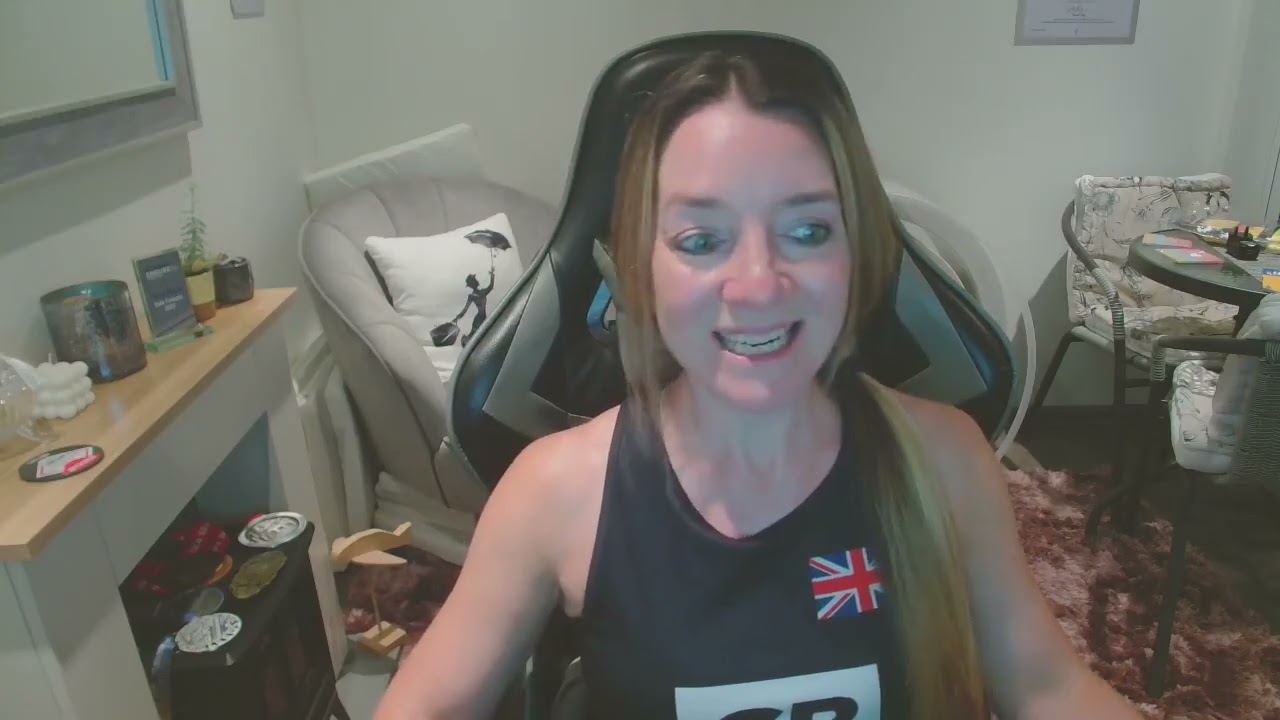
Joanne Smith shares how she ran the Leeds Marathon despite a pain flare-up at mile 19 by recognizing it as a false alarm. She argues that chronic pain is often a brain-generated safety signal, and that accepting pain rather than fighting it creates the sense of safety needed to reduce symptoms.
Chapters
Hello again. Just checking my microphone is working this time. So sorry, I've just spent all that time chatting away with no volume, but the comments weren't coming through and I didn't check my phone for messages. So thank you to Emma and Sophie for doing your best to let me know that I wasn't live. Well, I was live, just with no volume, but here I am. Welcome to Off Trail Tuesday. I hope you've all had a brilliant week. It's been such lovely weather, it's been a really good week, and— oh, it looks as though I've got viewers, so I'm hoping everything's working. I will check my phone for messages to see whether it's working this time, make sure the microphone is working. Thank you, Emma, loud and clear. I can't believe I've just done that and it's cooking and it's like 30-odd degrees in here and I'm really lovely and warm and toasty, so I can't complain. Yes, so if you are an active person with chronic symptoms, any kind of chronic pain or chronic symptoms, this is the session for you. Watch back and see if you can figure— I deleted the other one, I won't make you watch back one where it's just me miming. I'm just gonna put a link in the description box below. But yeah, so I'll start with the fact that I did Leeds Marathon on Sunday, and I'm not a road runner, it's not really my kind of thing, but I actually really enjoyed it. It was such a good, a good day, a good marathon. I would recommend it for anyone looking for, like, the first half marathon or marathon. It was a really good event. If you do like road running. I had to go out and do a trail run yesterday though, just to get that out of my system, but I think I'm the only person who ran the Leeds Marathon wearing trail shoes, really old bangers with holes in as well, just for that. I just thought it didn't feel right. I don't really have any road shoes, so I did it in trail shoes with holes in, and I do have a friction burn that's quite sore, not gonna lie. Chub rub under the arm, that is sore. But yeah, so today we're going to talk about— thank you, Emma, you are awesome, our love, that's so kind of you to say, thank you. I'm not sure whether I'm just awesomely crazy, but I did randomly enjoy doing that. I had moments, I had moments. During the marathon, and I'll share, and it's really relevant to today's session to a certain extent because I was struck down at mile 19, I had 7 miles left to go, and this was such an amazing experience that I overcame, that I have even more confidence in the stuff that I'm teaching these days, that it really, really works, it genuinely works, like my belief is through the scale now. So what happened was at mile 19, I was happily chatting with a person, we're having a nice chat, and then bam, out of nowhere, acute pain straight in the area that when I was pregnant I used to have a continuous sort of feeling sensation of pain there. And then following having kids, I had hernia surgery in that similar area, and it came on really acute, really painful, really strong. And I said to the person, I'm just gonna dip back, I'm just gonna have a moment, you go on. And I kind of just said goodbye, and I was like, wow, what am I gonna do? And then I just decided. I know what this is, and I knew it was a false alarm because I knew that that surgery was healed, it healed years ago, it's strong, it hasn't hurt for a long time, it hasn't niggled or bothered me for a long time, like way over a year or so. From time to time it does, I never really knew what it was, now I know what it is. I literally got rid of it quite soon. And ran the rest of the way without pain there. It was amazing. Normally when that's happened, it stayed, it hasn't gone, and I've just been in a fight with it and decided, well, you can stay until I'm taken off in an ambulance kind of thing. I'm that determined. Silly, silly thing, silly mindset. Don't go with that style because you've got options. And if you respond in a different manner to it and be like, I know what you are, thank you for the heads up here, don't worry, I'm gonna calm down, I'm gonna, you know, take it a little easy, and then it just started to get better and better to the point where it disappeared. Incredible. And following the marathon, hours afterwards, I'm just sat in the garden, I thought, I'm gonna sit in the sun, it's a nice day, And I started to get what previously would have been, for me, a migraine coming on, where I get a flicker, like flicker of light, and then it spreads, and that started, and this is the 3rd time now that I've done this, where I'm ready to share now, I can definitely share that I noticed it and I was like, we don't need this, I know what it is, and I just calmed down everything physically, everything nice and calm, and it didn't progress into anything, it disappeared. It's the 3rd time I've had that experience now, I've not had a migraine in as long as I can remember, so another massive piece of evidence. I'm just going to quickly read these comments as well, it says, Hi Jo, how's everything going? Can you please suggest how to come back with a strong mindset for triathlon training after a long gap? Though it's not today's topic anyway. Well, of course I can, no, thank you for the question, Zabeer. My best advice for mindsets and strong mindsets, well, as you know, mindset does lead the way. The best thing to do, I think, is if you can remember from the past a time where you've achieved or done something And it just felt really, really good, and clearly you were in that mindset then at that time, you can get back to that now. For me, the memories from, if you were able to just recall or remember, what were my thoughts, what sort of things were I doing, what sort of, you know, what sort of life were I living, like the mindset that you had back then. If you can remember from the past being there, that can be really helpful to help you get yourself into that feeling again, because if you can remember those feelings, there's nothing more powerful than thought, and if you can get that mindset back through having some of those memories of the thoughts that you were having back then, that can just be enough just to kick-start everything. So like for me, we had such a great finish on Sunday that instantly, if I just sort of visualise and remember and imagine how it felt, that can kickstart my mindset. So please message me if you want to have a more in-depth chat, more than happy, but hopefully that'll help you get started. And hi Maggie, and Maggie says, evening, sorry I can't listen live with you tonight, yet another birthday celebration for mum. Oh brilliant, happy birthday Maggie's mum. Hi. Oh, thanks for saying hi, and definitely please look back on replay, and I'll see you next time. But thank you for dipping in, and I'm sorry again for all those that were expecting me and I was on mute the whole time. So yeah, I'll get into the content for tonight. I just wanted to share those 2 quick things to give hope out there for anyone who is battling through chronic issues and pains and symptoms that I never ever for one minute thought that that would be possible, for that to, especially with the migraines, to be able to disappear like that, it's incredible. I'd read it in a book a year ago that the author of the book did that, it was Dr. Sarno actually described in one of his books that he did that and I was like, no way! Well, now I'm doing it a year down the line, so We're all made of the same stuff, so we can all do this. So I just want to take a minute just to have a little breather, more than anything, because I'm cooking and it's been a long day. So breathe in with the calm and breathe out with the chaos, okay? And the question is, do you hate your pain? Do you hate your symptoms? Do you hate being dealing with whatever chronic issue has been gifted to you, which doesn't feel like a gift. It feels like a gift that you do not want. Okay, so here's the thing really. I don't know anyone, including myself, who has managed to successfully hate away the pain or the symptom. I hate it so much that I got rid of it through, through pure anger and hate and resentment and— I don't think I've ever met anyone who's been successful with that sort of approach, that the pain just decided, she hates me so bad, I'm just going to walk away. Unfortunately, that's not the way it works. When we hate something so bad and we give it so much attention and fear and focus, and what we focus on, it grows and magnifies, it's actually showing our brains that It's got a purpose, thank you. Jo really does need this because she's— she really does need me to keep doing this because look how much energy and effort and how much attention she's putting upon it, it must be really helpful, and there's some serious mis— mismessages and misfires going on here, faulty false alarms you could say, and it really doesn't help in the long run. So how I imagine how I used to be was like, I used to be in the boxing ring fighting, fighting, fighting, can't stand you, I'm just gonna push you away, can't stand this, hating it so bad that every time I stayed in the boxing ring, every time I stay in the fight, I just kept on getting punched, kept on getting punched and wondering why I kept on getting punched, because I was fighting, I was staying in the fight, I was— yeah, I never saw it that way. Until the last 6 months or so. So in fact, that kind of thinking, it's kept me stuck for such a long time, longer than I care to remember. 17 going on 18 years. Okay, so a long time. So the quick insight really is the pain, the symptom, it's not a sign that you're broken. If you've Being ruled out from medical, if you had all the medical go-ahead, we can't find anything serious, there's nothing broken, there's nothing wrong with, you know, if they can't find anything medical, there's no infection, there's no, you know, you know the score, get checked out medically, but most of the time when it's chronic and it's persistent, Then mind-body symptoms is the, is the root cause. The brain is perceiving that there is danger and it's creating a false alarm, and that can be pain to a joint, it can be any, many, any of the many symptoms. I have a list of pretty much every symptom you could imagine on there. Dry mouth, painful tongue, painful eyes, painful joints, back pain, neck pain. Irritable bowel, reflux, there's so many things that the brain can do to send you an alarm when it thinks that there's a problem. So it could be a— the danger could be coming from many sources, it could be physical, it could be something you're doing physically, if you're doing a certain movement or you're pushing yourself to a certain physical place that you've not been before, if you're doing a big distance, it could be me at mile 19, my body was saying, what is she doing? And it was like, right, boom, let's give her some pain in that old surgery site, let's just, you know, let's raise the alarm. It was a false alarm and lucky I knew that, otherwise it could have been such a different outcome. Okay, so Emotional pain. I use the example of when my dad died and I had this mystery pain in my joint here, which actually, in hindsight, I figured out after the event because I didn't realise that sometimes the brain will choose a site from a previous injury because it seems realistic that I could develop pain there when I fell on that hand roller skating. And hurt, injured it years ago, it kind of made sense that it might hurt there, but I didn't realise that till afterwards. So it can be a bit sneaky really, in a nice way, because it's only ever trying to help us. But yeah, if your nervous system's in high alert and it's dealing with all kinds of stress, perceived, perceived danger, then that can often, rather than them being an issue within the body, the body may not be broken and the pain is a signal, is a danger signal, because the body doesn't speak English, it doesn't speak in the same language, so it's only able to speak to us in sensations and feelings and yeah. But anyway, back to the subject of hating pain is not helpful, it's not the solution, So I'll just talk about it a little bit more, and I'm gonna use the word acceptance, and it's not an easy one, it's not an easy thing to do, and I used to say, oh, I've accepted, but I was still hating and being mad and angry, so because I thought that accepting was giving up and just accepting that I was resigning myself to a lifetime of this, and actually it doesn't mean that. I found it easier to accept it when I realized that acceptance doesn't mean resigning myself to a lifetime and that I can never get better, it actually means just accepting what's happening right now. And not fighting with my pain and not hating it, not trying to change it, not trying to fix it, not trying to do anything, just accepting. But only now. I'm not accepting a future of torture. Why would I accept that? So I'm not saying learn to love and accept and be at peace and all that business, because if someone told me to do that, I'd be like, are you kidding me? Like, It can be just so hard just even getting up on a morning, never mind getting through the day when you're dealing with the symptoms that don't hold up or give you any respite. So please don't think for a minute I'm saying be at peace and it's all lovely and rosy and peachy and all that business, because I'm not. Not at all, and Emma, I'm loving the comment about getting rid of— I hope to get rid of mine, because you are going to get rid of yours, it is going to happen, and you hang around me for long enough and you're going to get rid of them, trust me, because you're not far behind me, okay? So yeah, we're gonna do this, so let's just see whether I can react to that with a love heart. So yeah, accepting where we are right now, that's what I mean, rather than responding in an angry, hatred way. We'll challenge that sort of mind, challenge to shift that mindset more than anything. Rather than hating, we're just going to accept where we are right now. I think with understanding and consistency with an approach, and the understanding comes from clarity, clarity about what is creating these symptoms, is that relevant to me and my situation, you know, when you're able to get to a point of, I understand what's creating these symptoms and I'm clear, I'm crystal clear on this, I know that there is nothing broken within my body and that I'm worth Working perfectly well. Pain and symptoms are a very, very unreliable, very, very unreliable indicator of the condition of the body. Now that is truth. You know, we would always get genuine medical issues checked out, you know, if this feels serious, get it checked, but if it's an ongoing chronic Then there's ways to do checkers, you can do symptom checkers, you can do surveys which will give you a very, a very good— they're really clear and identifying on what the cause of the pain is, and it's well worth doing those because that will help you to get from, I don't know if I believe this, to genuinely, I believe this, this is definitely me. And it can really help you with being able to get to this acceptance in the moment and just this knowing and this really reassuring responding in this completely different way to what you may have ever responded in before, and it's so much easier to get to with that understanding and clarity, so get in touch if you want me to talk you through. Whether you think this might be relevant to you and your symptoms, because when you get stuck in fear and hate and anxiety towards pain, that's where it stays. So what we're going to do instead, the goal is, this is what I've been doing, I've been through this journey and I'm still not fully out through the other side as yet, but I'm getting, getting there. It doesn't happen like a light switch. No. But you can teach your brain that you're safe, even with the feelings of discomfort, even with the pains. And it sounds strange, but when you do start to shift the focus away from the, oh no, the anger, the fear, the hating, those kind of responses, towards actually, I'm safe. And I've got evidence, and this is clarity, like what I did on Sunday when that pain came over me. And I'm sure there'll be a picture of me somewhere bent over in 2 when it first happened, squat down on the pavement. And I'm sure that it would have been interesting to watch that back on camera and watch the process that I went through, and you could have seen this live in action and the miraculous outcome. Whereas in the past when that's happened, I've been strapping on the tight hernia band, I've been medicated, it's just been a completely different scenario, and now I know what was the cause. So you'll begin to reduce those danger signals, and as soon as, as soon as the feeling of safety outweighs the danger, what happens? The symptoms and the pain reverses. There's no need for it anymore, it goes, like the migraine did as well, it went, there was no need for it anymore. So yeah, okay, so if there's something in life that's not working right now, in your life, if there's something that you feel is not working well, like anything like that could be potentially perceived as a danger or a threat, So something like work, changing jobs, moving houses, anything at all, being critical of yourself, I'm not good enough, I need to do better, all of those things, it's endless the amount of things that could be perceived danger. I don't even know what was going on because a lot of this stuff is not conscious. There's lots for me, oh Emma! We can work through them, nothing is a problem. So I do not know, because it's not my conscious mind that's controlling the show, this is done on a subconscious level, subconscious, unconscious, whatever you want to call it, doesn't really matter, it's just simple, there's no need to complicate things, but I've been there 17 going on 18 years now, there's moments where I just thought, I can't take it anymore, I can't do this anymore, Just don't want to do this, I'm out. But what I've learned in this last year has been the best year of my life really, and yeah, safety, safety is the solution. Being sore, having issues, having symptoms, is still safe. And if we're able to teach ourselves that concept and then get evidence, which you will get along the way, the more that you practice these, these ideas, you will get, you'll build your own credible evidence, and there's no going back. Once you've got that, you've got it. So the fear, the focus, anxiety about symptoms, uh, will persist. What you resist will persist. That's what creates the cycle. The key is shifting the focus towards calm reassurance, consistent every time. We can't be having a freakout moment one day and the next day being calm. We need a consistent approach. And the solution is not about getting rid of the symptoms and the pain instantly because that's unfortunately not Not possible. It's just about this shifting of this understanding and this mindset about what's causing them and what do I need to do to move towards reduction to eventually switching them off completely, because if, you know, we've been there, stuck there for a long time, it's a process. It's not an instant and it's, yeah, it takes patience but it's possible, very, very possible. So the solution, we have a solution, yes it works, thousands and thousands of people are getting well with this approach, there's so much evidence that it's unreal. So yeah, it's what I've said really, consistent messages, it does begin to dial it all down. So do your best to be more accepting where you are right now rather than hating, and because you know it's not helping, it's not getting you closer to feeling better. It's not something that we hear people sharing, saying, this is how I got better. So yeah, if you can turn down the anxiety, turn down the fear, the only way of really doing that is by knowing and understanding. So do some, some of the surveys if you want to do your symptoms. I can send you some links as well. Oh, hi Nigel, and thank you for listening from Bulgaria. I love it how we've got a lovely group all over the world, like we're just, we're all over, aren't we? It's brilliant, so thank you for being here. And shifting the focus, I've forgotten what I was talking about, but yeah, I just wanted you to shift your focus onto being calmer than you were yesterday, okay, so I'm not gonna say— you don't go from doing a 5K to doing a marathon, so it's a similar sort of journey, you build your way up, so if you can just aim to be giving yourself more messages of safety tomorrow than you did today, and then do more again the next day, you're heading in the right direction. And you're going to start to experience improvements, and you don't need to overthink it, you just need to know it. So yeah, just accept where you are. I'm not saying you're going to be here forever because you're not. Have a go at being more accepting than hating, and whatever you need to do to make yourself feel safe. Because that's the really important thing, safety, safety, safety. Even at the end of the marathon as well, I spent the last 4 miles talking to a girl that was completely giving up, whose mum was desperately trying to help her, and I ended up overhearing the conversation and I stepped in and she was like, I'm gonna die, I can't do it, I'm gonna pass out, I'm gonna collapse, I'm gonna She was— her messages of danger were far outweighing the messages of safety, and I got such a beautiful message from them afterwards, it was just so nice, and I'm gonna find it, I'm gonna read it to you because this is the power of understanding how to help someone who's perception of danger is a false alarm. So I got a lovely to meet you yesterday, and thank you so much for helping Millie get her head back in the run, and chatting to you was a massive distraction for the remaining 4 to 5 miles. Oh my God, thank you again. So it was just such a nice message, and it helped distract me from my own messages So win-win-win, and we all went over the line together, it was so nice. So yeah, okay, I'm gonna leave it at that because I've been talking for over an hour now because I've done this session twice, so I apologise if I've missed any bits, and if you do have any more questions, just get in touch, you know I'm always happy to chat with anyone. Just remember that this is so possible. Thank you. To recover from chronic, chronic issues, and it's time to reevaluate your approach if you've been stuck. And oh, Emma, I didn't want to make you cry. I hope that's happiness, crying with hope and happiness, and I'm loving the fact that you're crying because teach yourself that emotions are safe as well. It's safe to feel emotions. We Whether the happiness, sadness, tears, crying, whatever it might be, and I had that too because the thought of that mum and that daughter and how proud that mum was of her daughter, and she was only 22, it was her first ever marathon, and I kept thinking about me and Sophie and thinking, oh wow, I'd be crying, honestly, I'd be crying too because if that was— Me and Sophie running over that marathon line together, or me and Niall, and me and you, Emma, let's do it! Feeling our emotions is a good thing and proving to ourselves emotions are safe too, because that was one of my challenges, that I never showed, or I repressed emotions, you could say, and so it's a really good thing actually. To just allow them, and you know, they might only take 30 to 90 seconds max. Don't sit there all day, I'm not encouraging you to, to stay crying for the rest of the evening, but that's so lovely that you had that, and it is a lovely story, isn't it? So I'll end it on that note, and hopefully I'll be back next week with more lovely stories to share, and please share your beautiful stories as well in the group. And I'll see you all next week. Thank you. Have a great week. Bye.









