How I set my goals to achieve Ultra Marathon success despite having fibromyalgia
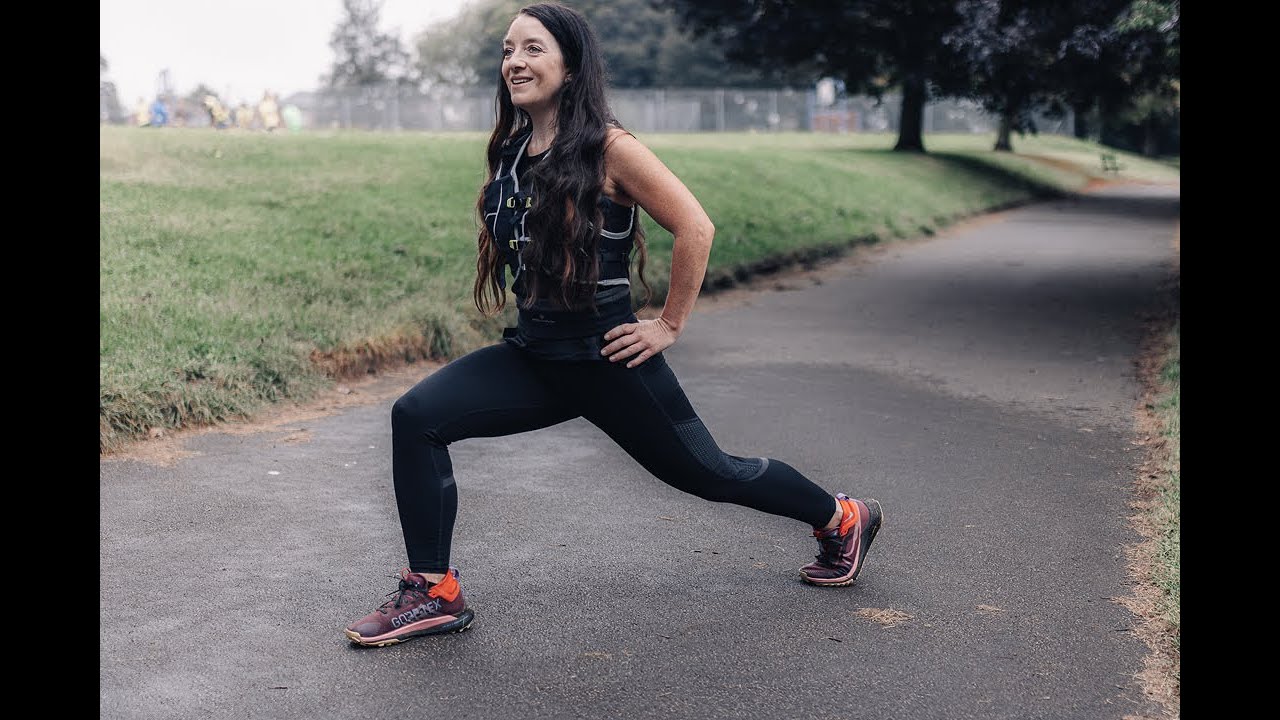
Joanne Smith, an NHS nurse and health coach, completed a 100-mile ultra in 22 hours 43 minutes while managing fibromyalgia. She ditched rigid SMART goals for an explorer mindset that embraces flexibility and curiosity, finding that chasing external validation leads to disappointment. A hybrid approach, mixing clear core objectives with day-to-day flexibility, keeps her resilient through setbacks.
Chapters
Hi there, welcome to Off Trail Tuesday. I'm Jo Smith. Say hi if you're here in the chat. I'm hoping that the chat will work today. I had a little issue with it last week, I had to log on from a mobile phone. I'm hoping— I was trying to find a way of keeping an eye on the chat on the mobile phone and going live at the same time, and I've not managed to figure that one out yet. So I hope that the comments work and hopefully I'll be able to see, but I'm not actually sure that it is working, but if you are able to let me know, give me a shout. So yeah, I've got a really great session for today, something I actually really do enjoy speaking about when it comes to goal setting, because I used to be really big, big when I first into the world of coaching, I was really big on SMART goals. SMART stands for specific, measurable, achievable, realistic, with a time on it, and I was always really bang bang, this is getting me places, I'm loving this. So yeah, today's session's inspired by that. So I'll just say hi to any of our new members, just in case you've not met me before, a little bit about me. I'm Jo Smith, I'm a health coach for trail runners, trail runners with health issues, injuries, that's my passion. I've come from having health issues myself, that's what's inspired me to go on this journey in coaching. I am a nurse, part-time nurse, 15 hours a week for the NHS now, I've just cut down and down on the hours as I've began to do more and more coaching, which is brilliant. And I'm here every Tuesday evening at 8 PM, and I've been doing this since last September. You'd think I'd be brilliant with the technology by now, but I've still not figured it all out, but I'm getting there. So yeah, today's session is inspired by SMART goals versus the Explorer goal strategy. So it's something that I've personally experienced along my journey in running. So when I first started out with my first marathon dream, it was all SMART goal, it was all right, I want to do this and I want to do it by this date and this is how I'm kind of going to do it. So it was quite— I limited myself in hindsight as to what I was able to achieve by having that, because I put a a limit on it. This is what I'm gonna do and when. I maybe could have done better than that if I'd have thought about it, not realising. So yeah, I'm just gonna, gonna chat away as I do, and we're gonna explore really about understanding goals. Like, what, what are goals? Like, where do we want to be? Why do we want to be there? Understanding that our goals, this is where I'm going to start with because I think this is really important, people, a lot of people don't always realise that achieving and having the goals are not directly linked with your emotional state. So a lot of people misunderstand that if they get a certain goal and they achieve it, That they're going to feel a certain way, and actually emotional states stand in isolation to achieving a goal. If that— it hopefully makes sense as we go with this session. So understanding on why we want to pursue them rather than just choosing them because we're going for that external validation or pressure from another person that we should be doing a certain thing. Is not a good goal-setting approach. Going for it, if you, if you're going for it for a change in emotional state, believing that when you get this you're going to feel a certain way or everything's going to be solved, you know, life's going to be so much better, then that's not what I would define as a good goal-setting strategy. Kind of, The best way of putting it is emotional state versus a tangible goal. So it's good that we can decipher the difference between having a tangible goal, like I'll say for example running 100-mile ultramarathon, that's a tangible goal, that's measurable, you can say yes I've run 100-mile ultramarathon, and that's the tangible goal, and then the emotional state feeling happiness or relaxation or feeling overjoyed. Joy overjoyed, is that a thing? Feeling overjoyed, that's an emotional state and it's just the difference between emotional states, you don't need that goal, you don't need that end outcome, you can have that right now, you can literally have that happiness Right now, look at me, I'm feeling really happy right now, feeling brilliant. We've had hula hooping tonight, been nice on the park, having a dance. My pain level's gone down because I was struggling today, and I'm having that right now. I don't need to go and achieve a 100-mile ultramarathon to have that. So that's what I mean by emotional state versus tangible goal. So it's good that we have this awareness That we can access that anytime. So on the other hand, we've got the tangible goal of getting that 100-mile tick complete. It can often involve external achievements which might not actually be necessary to bring you that long-lasting fulfilment. Yeah. If we're purely going for the fulfilment from that external achievement, that external validation, then we're not going to achieve that long-lasting fulfilment. Yeah, we might get, say, a couple of minutes of, yeah, I feel brilliant, at the end of that, but the feeling subsides often quite quickly and And then we're left wondering, well, what's going on here? And then we're going to put ourselves through our paces again to go back chasing this external validation for a change in feeling. So this is the difference today, what I'm going to hopefully explain in more details. So just getting you warmed up right now. So just thinking about why do we want these goals, reflecting on the goal, it's actually quite crucial whether the motivation comes from inside us or whether that's an external pressure from outside of us. It's crucial to actually have a think about this. Is this motivation coming from me or from— Others. Me believing that it's something from the outside, let me think if I've got the, I've kind of used the example here of the 100 miles initially seeming, and it's a personal example this because I did do this, I did actually do this, and I really wanted to do this 100 miles, it seemed at the time like it's going to be really fulfilling, Kevin Sinfield did his 100-mile in 24 hours. I was like, I want to do that too. I want to be able to beat 100 miles in 24 hours. I did it. I did it in 22 hours 43 minutes. But later, when I'd done it and I realised I didn't have that, what I was expecting, how amazing I was expecting it to be, I was like, oh, is that it? Is that actually it? And on reflection, after having done that 100 miles, I mean, it may seem like a massive personal achievement, and it really is, but when I reflected on it, I realised that why didn't I feel so overwhelmed and amazed by it? And I actually looked back on that and thought to myself, Jo, you were doing it, you were doing it. And I realised this, that I was doing it. For external validation, I was doing it because I wanted other people, I wanted my dad at the time, who I never, no matter what I did, I never seemed to be able to impress him, and I was doing it to prove my worth to other people, you know, because I was actually doing it because I'm like, I can be good, yeah, you know, I can do this. But really it was because I didn't think that, that myself, yeah. So the point being that we've got to align our own goals with our true desires, our true values, rather than seeking the approval of external sources or people or others. So it's about that inside-out understanding of the reasons. Being driven by our own internal motivation rather than— if we're driven by our own internal motivation, then these goals tend to be so much more fulfilling and sustainable, and it's because they're our own aspirations, our own values. We're driven from our internal rather than our external pressure. Rather than the outside in, you could say, which, yeah, it can lead to a temporary satisfaction, but it doesn't tend to continue, it really doesn't. So just remember that, you know, the journeys towards achieving goals in general, they should be accompanied and aligned with what we truly desire and want, and understanding our motivation, choosing it. ones that genuinely come from our own excitement and fun more than anything. So just thought I'll share that little story there because I actually thought that that particular goal there was, I realised afterwards, Jo, you're not, you're just doing this just to sort of like get some validation that you are capable or you are, you know, and it was the wrong reason to go for that. And so yeah, I'm gonna share a couple of goal-setting strategies. So we've got the FARMER approach, it's called the FARMER approach. So this is a bit like your SMART goal where it's very specific, it's very measured, So a farmer might have a spreadsheet, they might have an exact amount of— I'm not, you can tell I'm not a farmer, but what I know about farmers is they might have a certain amount of crop that they have to plant and, you know, the weather might have to be a certain way, so it's very structured and quite specific and quite measurable, very clear tangible goal, and they tend to be, it's done like over a period of time. So it's quite structured and quite exact, I guess, that's my best way of putting it. So a bit like maybe when I did my first marathon, it was, I will do a marathon on the 6th of September, it might not have been then, but 2018, I'll say, I think it was then. This is what will happen and when, and it was very You know, I 10 out of 10 believe I can do this, and this is— and then my check my self-belief, yes, I believe, yeah, 10 out of 10, maybe 9, that I can do it, and then it's all really structured and quite, um, how's the word, it's been a busy day, um, it's just very structured and specific. And it can be tangibly measured because there'll be like real evidence to prove it. So I'll give you another example with weight loss. Say for example, I'm going on holiday in 3 weeks and I want to lose 4 pounds in weight. So it would be like my specific goal would be that I am going to lose exactly 4 pounds in weight by the 12th of August 2024. Now that's the date I go away. As proven, as shown on my scales, you know, like the weight drop. So you can evidence how it's happened. That's just an example of a SMART goal, like I will do this and by when and how you're going to evidence and prove that you've done it. So that can be a really good approach for some people and I went with that. I was really massive on SMART goals, my whole life revolved around having a SMART goal and I'm gonna do this and in lockdown, I was like, I will run 11 miles every Sunday for the next— and I did it for 12 weeks, as proven by, you know, Garmin app. So that was another really structured, smart goal that I set for myself, but in all honesty, in hindsight, when I started to become more relaxed and more of an explorer style to goal setting, this is when I started to achieve Even more bigger things, but I enjoyed them so much more when I did the other version of goal setting that I'm going to explain to you today, which is explorer goals. And the explorer approach is more a bit adventurous, it's a bit curious, it's a bit like You don't really know what's going to come next. It's like if you just picture yourself as an explorer trekking through unknown territory, you might have never been there before, you're up for just, let's go down this path, let's try it, let's see which way is the best way, let's have a look down here, then it's quite a flexible approach, it's quite curious, it's quite— if something crops up, you know, the coincidences that just crop up in life, or the invites that you get where you're not expecting and you're just like, oh yeah, I'll go for that, I never knew about that, but yeah, why not. A bit like, for example, I didn't know what my next step was going to be after doing Endure24, in fact I didn't know Endure24 were going to be a thing, but I didn't know that I was going to get a place for volunteering. So it was like, I've totally gone with the explorer approach for the last 2 years, and I love it because I never know quite what I'm going to be doing next, but I always know that something's going to come up and I'm going to get an invite and it's going to be nice and I'm going to enjoy it. So like this September, the next step, I didn't know what it was going to be, but then I got an invite to come and support from mile 50 to 100 with Gary, Gary Smith at Snowdonia 100 Mile Ultra. And for those that were wondering, Gary Smith is not my husband, just in case you've been following me on social media and you thought that we were married. We're running buddies, we're good friends, we met on our Pennine Barrier Ultra 2 years ago and we stayed friends and we ran together in quite a few events since then. And I would have not known that, it wasn't, it wouldn't have been part of my SMART plan, I am going to go and run this run and then after that, you know, I could have limited myself to the explorer approach of just going with the opportunities and taking the next chances. You only ever need to know the next step in explorer style, You only ever need to know what you're going to do next, and then it'll reveal itself, and it'll just keep on revealing itself. So from a goal-setting perspective, I'm just thinking it might involve just not knowing what you're going to be doing, like, next week, like, not having it mapped out. Not knowing what's going to happen, but just knowing that you're going to do something. And it just can actually help with some benefits, can help you to be more motivated and to actually not get bored, you know, not get too repetitive. It can be a bit exciting. This for me means that I never ever miss out on an invite. I never get to say, no, I'm sorry, I can't come on this night out, and I can't No, I can't drink or I can't do something that I'd prefer to do because of my structured plan. So I don't have a structured SMART goal marathon training plan or anything like that. It's a much better balance, I'd say, and I personally find that with this explorer style approach You can enjoy different paces, try new things. You don't have to do anything at a certain— I know a lot of people might have said that they've got to do it at a certain pace today, whereas you can just go with how you feel on that day. And you can, you know, just celebrate all along the way. And The farmer kind of approach might involve maybe a bit more patience, which again, I just don't think I'm very patient. I'm not a very patient person. So you can create a bit of a blended mixture of the 2 approaches as well, which can be a really good way too. So it's not just all one or a bit of the other. You can do a hybrid, love that word hybrid, I like to wear running shoes that are hybrid where you can run on any surface, and so yeah, you can do a blended approach too, but I think to explore a style is just go with a brilliant feeling, know that the end goal is just because you want it, you're passionate for it, it's not to prove yourself, to think that you're going to be loved more, because trust me, people— the weird thing is that the more, and I've actually physically seen this happen, like to me personally, sometimes the more you achieve and the more that you strive and do well and the more successful you are, the sad fact about it is that people actually actually you're doing it because you want to be liked and you want people to think that you, you know, you're loved and all these things that you want to seek that, like, what's the word, recognition, or you want to seek that validation, or you want to kind of, you're doing it because you think people are gonna be motivated and you're gonna help people and all these things. And the sad fact is that often the more that you do get there and the more you succeed, and no matter how hard you work for it, other people, sadly, some people actually don't even, they like you less. They're like, all of a sudden they don't want to go with you anymore, or all of a sudden it's like, oh well, it's easy for you. Oh, oh, you, yeah, yeah. You kind of just get to the point where you don't even tell people what you're doing because they're just like, oh, you're crazy, you're just crazy, yeah, yeah, it's easy, easy for you. So it's getting that fine balance, so this is why I'm really passionate on understanding the difference between having those successes, having those goals, achieving them, and them not being linked to emotional states, because if it's, if it's for a change in emotional state that you're going for, Then you're gonna be sadly a little bit disappointed, which is a shame, is a shame. It's a bit like the scenario of when you get like these people that are just striving, striving, striving to have a really beautiful, posh, fancy car, they want to get like the Porsche or whatever, and then you think, oh, you think you're gonna feel brilliant when you're in it driving around in it, and all you get is dirty looks. It's a bit like when you get in really good shape and you, you like, you think, oh, feeling good about myself right now, you know, you, I don't know, it doesn't happen that often, but maybe every now and then, and then all that you get is dirty looks when you, or, you know, I'm sure some of you will relate to what I'm saying here. You're feeling good about yourself, you've done well, and then nobody's got nothing nice to say and you're like, oh. Well, there you go, there's the proof in the pudding that whatever you do, you're not going to change anyone else, you're not going to change how they feel, you're not gonna, um, it's not about that, um, and I'm running out of words, it's not like me to run out of words, but for how I could describe that, um, right, I'm just gonna go back on track a little bit because I'm good at going explorer style off track. So there's the 2 differences. You've got your farmers who it's all structured, and that's the equivalent of the SMART goal, and then you've got your explorers, which are me. I don't know what run I'm going to be doing this weekend. I don't know what I'm going to be doing next week. I've got a bit of a rough idea. The only one next part of the plan is the 10th of August for me. That's my next step. In my plan, and I know that I'm going to be doing a day out, kind of like a run that day. That's all I know now for what's next, and I'm just going to go with the way that I feel, and if I'm feeling it, I'll go for it, and if I'm not, then I won't. I'll just hula hoop every day. So yeah, let's see if I can Bring it together a little bit for you then. So we've got this, either I mentioned about doing a hybrid where you're mixing little bits of the different strategies, whatever works for you. You could have a set goal, a SMART goal for something that you know that you're always motivated for, and then you could be more open to the other options that crop up in life. For me, it's more important for you to enjoy your journey, you know, go at a steady pace, no rush, no race, nowhere to be on the journey. There's no good like having that fine layer of, thin layer of pressure that you're not even aware is there on your shoulders, and having that bit of stress is just always going to hinder the process without even knowing Without even realizing it, sometimes not until it's gone that you feel it. It's like when you take your shoes off at the end of a day and you think, oh, that feels better, you know, you don't always, you're not always aware it's there. So this is why not being emotionally tied to the end goal can really help you to succeed. So Realising that any level of stress that's there is actually going to hinder the outcome. It's going to be like having a clenched fist, constant clench, clench, clench, clench, and it isn't until you go, ahhhh, and let go that you'll realise that you can You can't do any of these goals you want to do without that pressure. So that's where it's important not to— if you do go with the SMART goal approach, don't make it too— it's got to give— that's the realistic part. Make it realistic so that you know that like maybe 9 or 10 out of 10, that you know it's possible for you. Rather than setting yourself something unachievable and then going away and feeling bad about your own, your own goal that you've set for yourself. So when setbacks happen, because setbacks happen, things come and bite us in the bum sometimes, unexpected things like falls, illnesses, having to go deal with an emergency at work. So it's part of the game, but if you stay— by staying emotionally detached will help you get over it quicker, you'll bounce back faster, you know. If you've got to adjust your training plan, you're not going to dwell on it, you're just going to be like, hey, whatever, you know, it's part of the plan, it's part of the game. So thinking about being open to trying these new strategies is easier when you're not fixated on hitting a specific whether it's a running target or a weight loss goal or whatever it might be, because that kind of a mindset will just allow you to be a bit more experiment with the different approaches. And hi, I've just seen that some comments popped up, thank you, I've only just noticed them. Good news that it's working. Hi Emma, hi Stephen, thanks for being here. They were right down low on my screen and I didn't know they were there. So yeah, back to the approaches that I was talking about. So being open, trying different things, being flexible, whether it's with your meal plans or other things. By not putting your emotions into achieving this certain pace or this certain thing, Whether whatever it might be, completing a challenge, or I was talking earlier about gut reset, reset your guts. Hey, maybe I'll do a session on that. I think I need one today because I think I've eaten really badly out-of-date crackers for my dinner. I had cheese and crackers and I tasted it and I thought, I'm not sure about these crackers, they've been in the cupboard a while. And I think, well, when I looked back, they were out of date and I ate them for my dinner and ow, I've had stomachache. Hula hooping. Ow! Yeah, I don't actually feel too good. I think I do need to do the gut reset. So my best advice, don't eat mouldy crackers. I can't believe I did that. I literally need to go shopping and get some food. So fortunately my mother-in-law made tea and she brings tea on a Tuesday. I'm so lucky. So at least I got a good meal. So yeah, back to the celebrating, completing the, celebrating the achievement is what I was talking about, I think. But yeah, more I was talking about not being fixated and emotionally attached, one, to the end outcome. So you can take on, you know, embrace any new opportunities and challenges, don't be scared of falling short of your goal, which is always a really important one because having that courage to open up to these different things and pushing your limits is gonna actually allow you to achieve something you didn't, might not thought or believe you could achieve, whereas if you'd have said, well, my limit, like on that 100, I actually set myself a limit, I did myself A disjustice because actually on the day I could have gone further, so I stopped 2 hours before the finish, I could have kept going and done more and in hindsight because I'd actually been smart with that goal setting, it was like done. So you could outdo yourself, you could always potentially limit your ability to what you are naturally capable of, so the explorer style. There is no limit on what you can achieve. I love that because it's such a nice place to be, and when you're not emotionally attached as well, even more of a bonus. So, um, put— oh, half past! Oh my gosh, I'm nearly there, I'm nearly there. So, okay, think of it a bit like a snakes and ladders analogy. So in a game of snakes and ladders, the ladder represents obviously going up the ladder closer towards your goal, and the snake is the setback where you've got to come back down. But if, if all you're focusing on is climbing ladders and climbing ladders and then dodging the snakes, which then obviously set you back, the pressure can weigh you down, and sometimes you might forget that you just need to enjoy the game, you know. I like the Snakes and Ladders scenario because if you stay in the game, you're always going to finish it, like eventually you're always going to finish it. So Just remember, it is, it is like that. Enjoy the ups, learn from the downs, keep your eye on what truly makes you happy along the way, and finding, just finding that right place where you do feel like you're living your life to your fullest, no matter what dice you roll, whether you're going to go down the, down the snake or up the ladder, whatever. You know, if you just keep staying in the game, you're going to get there. So find your fulfilment, that's the win, that's the biggest win, isn't it? Finding the place where you're going to discover that your happiness is not, your happiness is not tied solely to those external achievements, you know, it's the joy in the process. Like I said, I've achieved those achievements, but the happiness is not linked with that, not at all. Nothing to do with the outside factors and the external world or having that car. I even got my Audi A5, you know, a couple of years ago that I desired to have for like whenever them cars first ever came out. And I felt, you know, oh, it's fine, but first 5 minutes, like, is that— is this it? Because it's not that that's creating my experience. It's not possessions or goals or doing things. It's none of that. It don't come from those things. And it's going to make you so much more successful in your fitness journeys, health journeys, because you've got the understanding that the vast majority of human beings going around this planet don't have. A lot of people misunderstand What's creating their experience, but not in this group, we've got this, got it covered. So yeah, you're full, the satisfaction of all those things, you don't need to do any of those things to have that. And you might also realise that you might go off in one direction to achieve a certain goal, and then be like, oh, I actually enjoy doing this more than what I thought I was going out to do. And then, you know, you can go true explorer style and then do that instead, you know. So you might decide that you think you want to do a marathon, you might start doing the training, meet some new people and think, I actually prefer hanging around with this group, and they do, they tend to go and do 10 miles every Sunday, and I just love doing 10 miles every Sunday, and that's me, that's where I'm at right now. And again, Explorer style. I started running with Jess just over a year ago. I knew nothing about this other group of runners, and I just joined her journey because I was invited, and then I just loved that. And they meet every Sunday, and I never knew that I'd be doing 10 Before 10 every Sunday, and I love it. So that was another example. And actually, I realised that I enjoy that more than doing marathons and ultramarathons, so who knows? What's going to happen next. But thank you so much. Any questions, just type it in the chat before I finish. And I hope that I've given you a little bit of an idea between the differences in how we can go about achieving goals. And I'm hoping that it's given you a little bit of something to think about to why you think you need to do these things. And the fact that if you think you need to do them because you think other people are gonna think better of you, then it's not a good strategy. It needs to come from you out of passion and, you know, I just want to go and get this because it'll feel brilliant and I'll be so happy if I get it and I'll also be so happy if I don't and it's not, the end outcome is not going to affect my health and wellness and that's That's your best, best way to go for things in life. When you're not attached to the end outcome, you're going to be really successful. So thanks for being here, and I'll see you all again next week, next Tuesday. Have a brilliant week. Thank you. Bye. Bye.









