Shin Pain
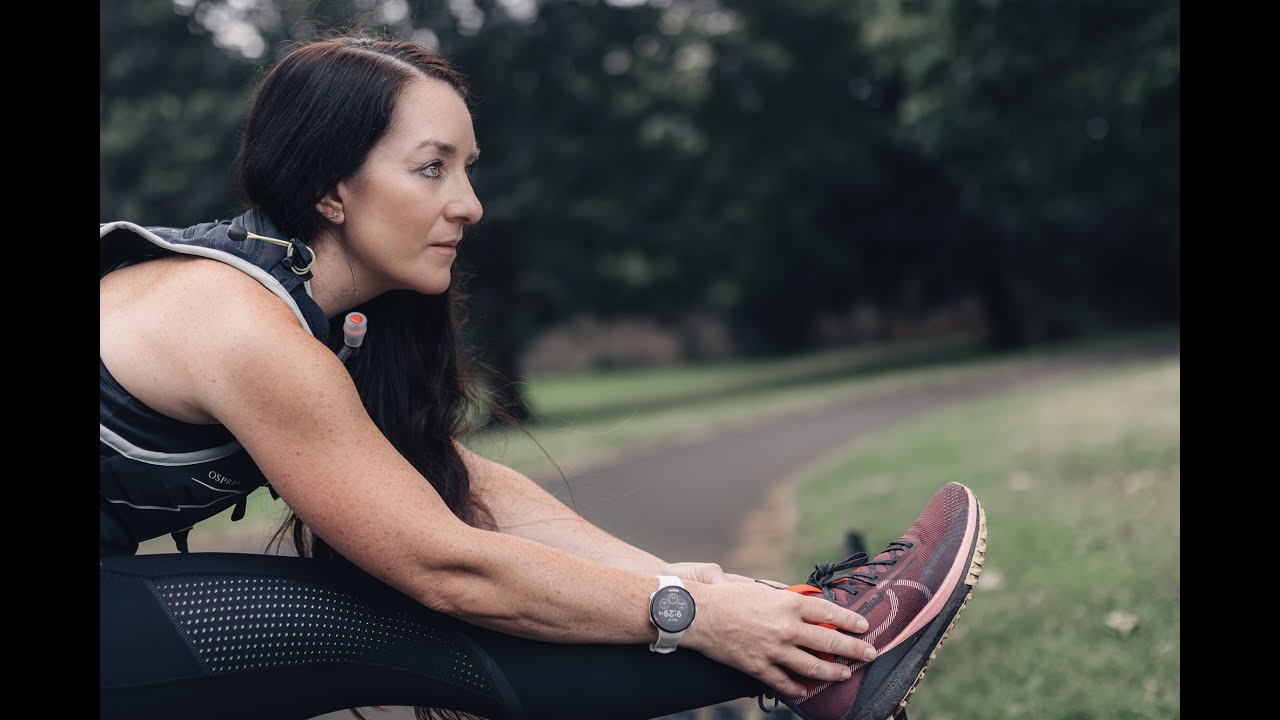
Joanne Smith breaks down shin pain into three categories: compartment syndrome, tibial stress injuries, and medial shin issues. Calf tightness, footwear, and genetics all play a role. Ice, foam rolling, and single-leg exercises help, but get a professional diagnosis instead of trusting Google.
Chapters
Hi, I'm so sorry I'm late for Off Trail Training Tuesday. Major technical failures, nothing seems to work. I've just tried to log on on the laptop as well. It's just one of those Tuesdays, just one of those days. The heat's on, isn't it? Maybe that's why, who knows? Maybe it's affecting the Wi-Fi, who knows what's going on. Say hi if you're here. You've probably all been and gone and left by now, but thank you so much if, if you're able to click back on and join me. I will do my best to, to continue with the session despite— oh, thank you, Emma, you're here. It's telling me that you're watching. I'm not sure whether it's going to log off or not if I try and do any comments or click on any difference. Hopefully it's still live. Hi, Victoria, it's telling me that you're watching as well. I'm going to talk about shin pain today, shin pain, and we can't call it shin splints because supposedly— Hi there. Hi. Supposedly shin splints is a term that is a no-no, not allowed to use. A lot of physiotherapists, I think this goes right back Oh, hi Stephen as well. I know, I'm so sorry, I've been running around, I'm frazzled even. I've let my hair down, been rushing about, rushing about, dropping my mum off at home, been hula hooping on the park, um, got stuck in the temporary lights. I got back in good time, I was logged on thinking everything was going smooth, um, and then for some reason it just wouldn't let me on. So I've come into the house, gone onto the laptops Still not letting me on. Finally, my phone says yes. So the session's probably not going to be as as planned because I don't have access to the all the little bits of notes that I'd made previously. But you know what? I can go without the notes. I don't need notes. I'm going to share you a really, really helpful video at the end, which is from. Plantonium Physiotherapy. And to be honest, it summarises everything that you need to know about shin pain in this video, and it's about 20-25 minutes max. It's well worth a watch. And actually, Plantonium Physio is going to save the day for me, as they always do, because they've got some really, really helpful videos that they do regularly. You let your hair down too, did you, last time? Before I had my hair down, it fell out. Ah, at least it'll keep you cool in this heat. And so yeah, they're gonna save the day. So I'm gonna share, I'm hoping that I can log on and share the link for the video, but in a nutshell, I'm just gonna share what I know, what I know that from personal experience has been true for me and true for people that I've met along my 11-year journey of running. So that's why I think going back to a few years ago where a lot of people thought we're no longer going to call it shin splints, because actually, imagine, what do you think when you think shin splints? I know in my mind I've got this horrible image of the shins are all You know, like if a pole or a branch snaps and it's all cracked and sharp and— I don't know, I get quite a graphic image that comes to my mind. But you could compare it with things like arthritis or sciatica or, you know, all these broad terms that don't really diagnose or mean anything. And you could be really going— Hi, Lindsay! Oh, I'm so glad that you're all joining still, even though I'm so late to turn up today. So yeah, when we're thinking about shin splint, we'll call it shin pain, and there's— because it can be so many different reasons, and often people could be, potentially you could be resting it and not running, but you'll never get better if it's a certain type of issue that's causing that particular shin pain. Like, you could just never get anywhere with it, so having the correct diagnosis is so important. For being able to eventually, you know, run pain-free. You could go through a million, million and one pairs of trainers and never ever actually— if it's not down to the footwear and it's down to, like, say, a tightness in your calf and it's nothing to do with the footwear, then you could be spending a lot of money and getting nowhere also. So this is why I thought I'd have a session just talking about it. Today, and I'll, I'll do my best to break it down because you can kind of break it down into 3 types of shin pain, and at least if you've got a little bit of an idea on which type you're dealing with, then you're going to know what to do to help it. But for me, when I first started running, I— oh, how old were I when I started running? 31. And I knew nothing about anything. I knew nothing about footwear, shoes, I didn't know nothing about running, and I just wore a pair of trainers that I'd had since I was about 18 years old that I used to go to the gym in when I were in sixth form. I think I had that same pair of gym trainers for a few years because, you know, I didn't go outdoors with them. They seemed fine. And then I joined the, the running beginners. It was a Run England. It was a 10-week course. We went up to 10K at the end of the 10 weeks. And I was wearing a pair of random trainers that were the same foot size as me. I was a size 4, so I wore size 4 trainers. And at the time, I suffered horrible pain. I never really knew why. I never actually figured out why. Never really analysed it. It just sort of— luckily, it just sorted itself out in time. I think maybe as my— maybe just the muscles got stronger. I'll never know how or why. Maybe I was lucky. But I did spend a lot of time With, um, somebody told me ice a bottle of water, keep a bottle of water in the freezer and you can roll your foot up and down it and you can roll your calf up and down it. This is what somebody told me to do, like, right back all those years ago when I didn't really know nothing about any of these kind of pains. So I just did that. I just used to like, it felt nice, it was relaxing, it was icy cold. And I'd just roll it up and down my foot, under my instep, up the back of my calf and up the front of my leg, and I just roll it. And that's kind of what I did. And then I did get new trainers eventually also, so potentially a mixture of new shoes, a bit of a cold icy bottle of water rolling up and down, just a nice bit of massage really more than anything. And then I Eventually, I never looked back and I never suffered again with it. But since then, maybe I know a little bit more than I did, and I'm not no expert in this kind of thing. I'm just here to raise some awareness because I don't want anyone going off down the wrong path and getting disheartened by it because it's so uncomfortable when I think I've just left you there for a second then because I tried to change my screen and I'm not sure if I'm still working. Hopefully I am, hopefully I am. Please type in the chat if I'm still here and I think it paused. So yeah, I really don't know if I'm paused or not now. I'm really— oh, there we go. I'm not frozen anymore. Hi, so hopefully we're still working. I'm back. I'm really sorry. I don't know what I did. Good, thank you everyone, I'm still here. So I can't remember the exact ins and outs of the 3 different types because I can't remember all the different words for it, but the one type of shin pain that stands out to me is— they call it compartment— I'll send you all the technical— I'll send you the video with all the technical stuff afterwards so you can watch that in your own time. But how I understand this one Is that basically what happens. My brother, I'm going to get him on to do a live with me at some point. He's in the Falklands, he's in the Air Force, but when he's no longer mega busy, I'm going to get him on to talk about his situations with his shins because he's got every kind of type of shin pain you could have. He's got compartment syndrome, he's got the tibial fractures, he's got the— I can never remember the name of the other thing, but it's like medial, on the inside pain. Oh, medial malleolus. He's got lots of deformities in his shins that give him— he has to handle it and deal with different types of pain, and he finds trail running is all— he can't do road running at all, but he can do trail running, mountain, he's fine with that kind of thing. He finds it a lot more bearable on his shin complaints. So that's compartment syndrome one, how I understand it, and you'll probably laugh when you hear me describing it if you're experts and you know a lot more about it, but how I imagine it is that the shin, it's got, well, in simple terms, it has 4 sections and it can't get any bigger than what it is. Like your bicep muscle and like your thigh muscles and things, they can get bigger and bigger with use, like there's space for For movement to get bigger, but with the shin, it can't do that. It can't get bigger. So the pain, if that shin muscle's like overworking, and I think how I understand is, is often if the calf is weak or the calf is tight, is that your shin, when then when you're running, really works so hard that then the pain kicks in big time. Because of the— call it compartment— like, it's got nowhere to go. It's getting bigger, but you've got pressure building up inside there, inside the shin. So ultimately, even if you went away, usually with that type of a shin issue, I think it settles down as soon as you're not doing that activity anymore. If you ice it, calm it down, but then as soon as you go back and do it again, that's going to return time and time again. So I think that's the important one where it's to do with the tight calf. And I think the, the video I'm going to share with this company, they do sessions like, they do all kinds of things like foam rolling sessions. And I think in hindsight, potentially this is what was maybe happening to me because I think as well, in my family, it's a bit of a genetic thing with this shin issue that my brother's got really extremely because it comes in varying forms. And definitely don't rely on Google because if you start Googling these things, you scare yourself because there'll be probably things about needing surgery. Like, I know that the specialist that my brother saw said that he'd be lucky if he'll not need surgery. It was all really extreme. But luckily, there's lots of varying levels of it. And most people, it's quite minor and it's not as extreme as what you might find on Google. So yeah, don't rely on Google, but, but just, I think, definitely see an expert to diagnose the right type so you're going about it in the right way. I think I've been quite lucky because when I look at what you should be doing for all these, there's 3 different types of shin issues. And I've been doing all the things that I should have been doing without knowing I'm doing them. And I just do it because I enjoy doing a lot of jumping around and a lot of balancing one foot. And I do even more of that with hula hooping as well, because I do a lot, a lot of things on one leg and a lot of jumping and a lot of like rocking up onto my toes and back onto my heels. And I do a lot of these things that actually is really good for avoiding shin pain indirectly without realising it. And because I'd always done a lot of the, like, massaging with the









