The Invisible Link
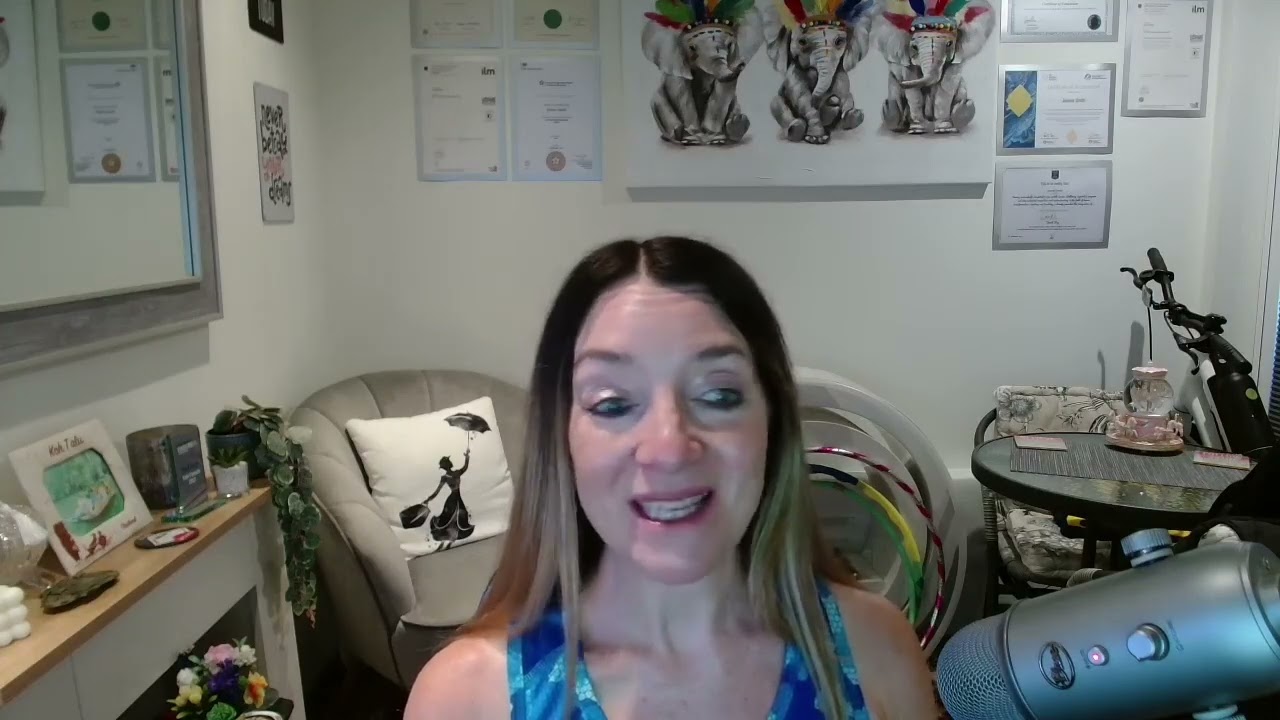
In this 30‑minute live session of the “Bend and Snap, Active People Getting Back on Track” series, neuroplastic symptoms recovery coach Jo (Joanne) Smith introduces what she calls “the invisible link” – the unseen connection between thoughts, the brain/nervous system, and physical sensations. She argues that many chronic pains and symptoms are generated by the brain rather than purely physical tissue damage, and that recognizing this link can trigger recovery. Smith shares personal anecdotes, explains how thoughts produce feelings which trigger nervous‑system responses, and demonstrates how noticing the cycle (e.g., a pain disappearing then re‑appearing when thought of) can be used as a learning opportunity rather than a failure. She advocates “lean‑into‑the‑sensation” rather than fighting or pushing away uncomfortable sensations, using conflict‑resolution analogies to illustrate the approach. The talk emphasizes the power of the stories we tell ourselves, urging listeners to rewrite catastrophic narratives into empowering ones. Smith references the Association for Treatment of Neuroplastic Symptoms (ATNS), the Curable app, Dr. Sarno’s classic work, and Dr. Schubin’s new book Unlearn Your Pain as free or low‑cost resources. She encourages self‑directed exploration, offers guidance on when to seek professional coaching, and highlights the limited number of trained practitioners. Throughout, she maintains an encouraging, conversational tone, inviting audience interaction and promising future topics.
Chapters
Hi everybody, welcome to Bend and Snap, Active People Getting Back on Track. Welcome to another lovely Tuesday. Hope you've all had a lovely week, and welcome to anyone that's new here. My name is Jo Smith. I'm a neuroplastic symptoms recovery coach. Just try and shorten that one because it's a bit of a tongue twister, but basically I help people recover from having neuroplastic symptoms and pain, and along with helping people that also have physical pain and symptoms too, because we now know that the approach is helpful for both. But for those that do have purely neuroplastic symptoms, then full recovery is on offer for you there. So I encourage you to stay and listen if you don't know anything about it yet, or if you're in the early parts of your journey and you're thinking, what on earth is she talking about? Then definitely go and do a little bit of research or ask me to send you some links and I will do. So thank you for being here. I'm just going to chat for the next 30 minutes or so. Today's title— I get desperate because I think, oh, they're going to get so bored with all the same sort of things, so I called this one The Invisible Link just to try and get a little bit of intrigue there for you all, keep you interested, and just don't want you getting bored because I do come here every Tuesday and I do talk about similar things on repeat, but I don't care how many times I have to talk about the same things on repeat because there will be one day where you'll hear something slightly different and it can literally make all the difference. Many, many people in this world of mind-body recovery knew about this for a long time before they got any benefit because they chose to dismiss it, push it aside, that's not relevant to me. They may have had the books and thrown them across the room. People have got some really, really extreme stories of where they've literally dismissed the whole idea and gone full circle, exhausted all the options, only to find that they came back to this approach and it was the only thing that worked, and they now are fully recovered. So today I've just been in a specialist group which I'm part of, as part of the ATNS, which is the Association for Treatment of Neuroplastic Symptoms. I'm one of the coaches on their directory. So we— there's a group of coaches who have what they call like a specialist group, and pretty much every single one of those coaches apart from one of them has their own personal recovery journey, and that's what's led them into this work as a profession. And so there were 14 of us tonight at the meeting, and it was absolutely lovely hearing from each and every one of them how they, from all over, well, mainly, mainly there were 3 people within Europe and the rest were all in different parts of America, but the the type of work that we're all doing, so much similarities and so many great, great successes all coming together. So we have that meeting monthly now, so it's a really good group to be part of. But just sharing the fact that even just that small select group of people have all got amazing stories to share where this approach has literally changed their life, and some of them have got some incredible journeys. So today I'm going to introduce you to what I call the invisible link, and I apologize if I'm ignoring comments because nothing's popping up. As always, Facebook does not seem to cooperate no matter what device I use, so apologies for that. But I will look back afterwards, and I do really appreciate those of you that do listen in live. And please just share away anything And everything in the comments. Any insights, any questions, anything that you'd like me to come back to, please share. So straight into this then, the invisible link. Um, so what I really want to share with you, and this can be a big breakthrough for many, many people, is knowing that, well, for most people It's quite the norm to believe that pain or having a symptom within the body is purely a physical creation, it's purely physical, like a problem with the physical. That's pretty much common information that I grew up believing. I was trained in nursing to believe this. We were always told to look towards the body. As the source, as the root cause of what's causing the pain or the symptom. But actually, this is why I call it the invisible link, because the invisible link, really, we don't know, we can't see this. But this is when the shift really happens, is when you actually see that there is a connection between thinking, so the thoughts that we have, the nervous system, the brain, How all of that operates and the body. There's an invisible connection between all of those things, and this is where recovery is for so many people. It is where it begins, when they actually are introduced to this concept that pain is not purely created from a physical issue. So it really matters because for people like us who are part of this group, active people who want to be able to get out and move and do life and do the activities and just live and just be mobile and active, if we're— if we've got a mind that's telling us stories about what we can't do anymore or what we once could do can no longer do, Um, there is a gap there between what is, what potentially, for many, many people who have got chronic symptoms, a very, very high number of those people will fit under the category of having neuroplastic symptoms, which means that the root cause is not a fault with the physical. So it goes against everything that most of us have been brought up believing and looking towards as the culprit, the reason why we're having a problem. So that's why I called it The Invisible Link, because the invisible link is that it may not be that, and it may be purely, purely coming from a brain-generated Sensation, and it does connect massively with our thinking. So that closes the gap for us where we're a bit lost, getting stuck thinking, I can't fix this body, I've done everything, I've massaged it, I've put hot and cold, I've done all of these things and nothing's helped. We're treating a problem that is not— we're treating the body that's not the problem. So for me, it was really important for me to understand a lot about the mind and thought and the brain and the nervous system, and so that's where the research, the science behind all of this stuff is really incredible to learn a bit more about and understand, but I'll just keep it simple. For these sessions is that this science and evidence and research which is out there now for everyone to, to see, um, talks about truth. It doesn't talk about theories or ideas. It doesn't talk about, um, something that is just a nice idea or, um, A little bit of woo-woo. It's not, not like that. This is legitimate, evidence-based, research-based truth now about, about how, how the pain works, how pain works. So I'll give you an example going down the road of the thoughts, for example. Because if we have a thought, then part of the same feeling— thought equals feeling is what I'm trying to say. You can't have a thought without it coming with a feeling that goes with it. And then we have a nervous system response and a physical sensation. So I'm going to give you a really good example of how, how that might work in real time. So for me, when I first started learning about all of this stuff and things started to just gradually change, there were occasions where I would be like, Oh. I'd noticed that the usual pain that would have been there continuously wasn't there, and then I'd notice it and I'd be thinking, oh, that's incredible, where has it gone? And then on the back of that, that thought, clearly my brain, my nervous system was like, oh, And it would bring it on. Incredible how that can happen. You've, you've not thought about it, then you think about it, and then you can feel it literally physically. The physical sensation will return. And it can be so super interesting when you start to notice these things for yourself and you start to get really curious and you start to see these connections on how, how these cycles continue and how this can really work. That's just a really basic example of Of how I may have noticed that something that had been there for such a long time wasn't there, and then all of a sudden it's there. So then when that happens, do not panic. Do not panic, because that is not a failure. That's how the system works. So it's not like having that little mini flare up there is normal. That happens very often for people along this journey, and each time that that will happen is an opportunity to show, physically show for yourself, your nervous system, something different, something new, because it can change. Nothing is permanent, even though many, many, many of us have been told that what we have is permanent and it's incurable, irreversible, there's nothing that can be done. We know differently now, so each time that that might happen is an opportunity rather than a failure. And a big part of this process is getting to a point where you might not notice that you might be doing this, But often when the when we have feelings and sensations that are not feeling pleasant, you want to push it away. You want to get rid of it. Like we don't want that. Nobody wants that. So it can become a fight. It can become like a maybe not like a physical fight, but but it can become like a mental fight where you're really. Pushing it away and doing everything in your power to get rid. And that was a big part for me about when things did start to change, was when I realized that I'm going to surrender that fight. I didn't even realize I was fighting, but the longer that you stay in a fight, the more you're going to get hit, let's put it that way. And it's like counterintuitive, So that's a big part of it, to stop fighting, to stop pushing so hard against. It reminded me of when I did the conflict resolution training, and one of— we— I really enjoyed doing this because it's physical, it's practical, and we do like getting out of being strangled moves and different things like this. And we got to do where you have your hair pulled. Mm-hmm. They grab your hair, and they like get hold of it, and the instructor showed us what to do, and he said naturally what people will do if someone grabs hold of their hair is that they'll pull away to get away from it, and they'll like pull away— no, I've already said that, but you know what I'm saying, like most people wouldn't think to actually— Pull away. Lean into it. So you— we had to like push into it and lean into it. So going towards, like, rather than, rather than fighting against and pulling away, it was a leaning towards. And I liked that concept because it reminds me of recovery from chronic pain and chronic symptoms, because that's what it's like. Um, we're actually leaning into it. Rather than fighting back, it's like, um, another analogy which someone shared with me where you have to put your finger in these— I've forgotten what they call it, it's like a, a little trap, and you put your hand finger in it, and then if you try and pull your finger out, it grabs it even tighter, um, but the actual way of getting out of it is to push into it. So it's a similar concept, you you're leaning in, you're like, this is not a problem, I'm not fighting it, this is safe, I'm okay with this. So that's one of the big areas. And also the stories that we share, the stories that we tell ourselves and other people. Get really curious about what your story you're sharing and what it is that you believe is wrong with you. I and how that potentially is keeping you there, because it's so powerful. Human beings are amazing at telling stories, and we all love a good story, and we all love to listen to a good story. But be cautious of the stories that you're sharing, and also to other people, because you're experiencing that whatever it is you're sharing, if you're sharing it in a catastrophic way, With about how bad things are. Again, that was another really big link, a big invisible link, you could say, that I didn't really recognize. But now that I recognized it, it's no longer invisible, and I was able to change that story, completely change that story into what do I want and what do I know is possible. Because when you begin to change your stories, guess what follows? What you believe follows that, and that is the power, the power of how the beliefs change as you go with this stuff. So yeah, it will, the nervous system will learn through experiences, Not through fighting, pushing, telling catastrophic stories and all of those things. Well, it will learn through that, but it won't learn the outcome that you're wanting. It will learn the outcome of keeping you suffering, which we don't want. Um, and there is waiting for you on the other side freedom, recovery, Who wouldn't want to have that? And for me, it was over 16 years before I even discovered this approach, before I knew anything about this. Over 16 years of, of being a warrior, fighting, going, going all gung-ho. I love that expression. I'm sure if you're watching back, you'll know who you are, the person that shared that with me recently. But it really, really was a lovely way of saying about many of us do that. We will really, really fight, push, push ourselves to be better and better and better. And I really want to share that that approach keeps you in the fight, unfortunately, even though there's a lot of— what's the word? there's a lot of intention, like good intention behind it, and feelings that this is how we need to be. But yeah, the more that you discover, the more invisible links that you begin to discover, whatever they might be for you, the first one being the catalyst of knowing that The pain and the symptoms does not mean that it's coming from a physical cause is the beginning, and you'll have many, many more shifts about things that you will recognize, and then the invisible will become visible and you won't be able to unsee it. You won't be able to stop seeing it. I can guarantee you, when you see it, that's that. And you won't just spot it in yourself, you'll spot it in so many, many people that you come into contact with— family, friends, colleagues. It won't end there. You'll spot it. So I want to encourage you all that active life is possible, for sure. I know I'm living it. I know I've lived it. I lived it with for too long. I lived it with, with the belief that I had to live it with, with the symptoms. And when that begins to shift, when you start to realise that there's so many people in this world that are now living it without, that were in similar situations, and it doesn't matter how long that they've been there, that does not make a difference. 20, 30, 40, 50 years, it doesn't matter how old you are, it's possible for you to be living the life without those symptoms or with a massive, massive reduction dependent on the exact cause. Um, So, um, I genuinely believe that if I knew this, um, a lot sooner, then I wouldn't have had to take it with me for so long on so many ultra runs, and I probably wouldn't have needed medication to get through those ultra runs, let's put it that way, because now I'm able to do that without Without Sir, I wouldn't even think twice about it. Like, everything was exor— ruled by having to have like everything with me, and it's so nice just to be able to leave the house these days without even, without even a pair of sunglasses. I can leave the house without a pair of sunglasses. That in itself is, if you've known me a long time, that is just enough evidence for you to get interested. That is surely enough evidence for anyone that looked back over the last 2 to 3 years and saw my purse and me doing 75-mile, 100-mile ultramarathons, whatever it might have been, 24 hours, Endure 24, things like this. And now to see that I am no longer doing that, that's just one tiny little bit of evidence, but I'm hoping it gives you enough to get curious, to know more, to want to know more, to know what's on offer for you, and to know what's possible for you. Because again, that wasn't even on my bucket list, to recover from light sensitivity and chronic migraine. Another thing that I believed and was told that I just needed to live with and that it was just tough, and it wasn't true. So even if that's you and you're having chronic migraine, get interested. But it actually doesn't make a difference what your chronic symptom is. It doesn't matter whether it's dry eyes, back pain, leg pain, knee pains, hip pains, neck pains, headaches, migraines, reflux, irritable bowel syndrome, and the list goes on and on. Be interested, and I really encourage you to learn a little bit more. Dr. Schubin has got a brand new book out called Unlearn Your Pain, That's the latest release in the world of mind-body medicine. You can download these on Audible, and if you're not even a member, you can get a free credit. So anything like that, I encourage you just to treat yourself to the gift of knowledge that will free you up if you're having problems at the minute, and then getting back, getting back, or doing like me and actually just getting back to doing activities, but without, without having to medicate yourself just to get through them, anything like that. Just loads of so many examples. But what I want to really share with you is it doesn't matter, like, if you don't understand everything or you don't even know what I'm talking about. If you're thinking, I don't understand what she's talking about, she just talks and talks and none of this makes sense, it doesn't actually matter. All you need to know is the one simple thing that I shared at the beginning. The one thing that I shared at the very beginning. Just because you have pain and just because you're having symptoms, it doesn't mean that it's purely physical. It doesn't mean that. And just be intrigued to know a little bit more, and that's where you can start. Meet you where you're at, start where you're at. You don't have to know everything all at once. You can notice You're thinking and how that might connect with how you're feeling and sensations that you're feeling. You can notice that, um, and if you really are stuck and you need to know more, reach out. Reach out to me or many of the other professionals. There's not enough, let's put it that way. There's not enough of us. I mean, like I say, There was 14 of us in that group tonight. There are many, many people in the world, but there's nowhere near as many as what there are in mainstream medicine. It's a shift that is happening and it's spreading, and more and more people are getting help. So there ain't enough professionals out there doing this work to individually help every single person that needs help with this. But it's okay because there are so many free resources out there. There's so many books that are published going right back to the original Dr. Sarno in the 1970s, Mind Body Prescription. Nearly probably about half of the people out of the group tonight had their major first shifts from reading or listening to that book, Mind Body Prescription, Dr. Sarno. Many, many people do it on their own using the free resources. The apps are very cheap, you know, it doesn't cost a lot to download the books or to join the Curable app. There are so many people out there, doctors, that have got free resources on their websites. The ATNS, the Association for Treatment of Neuroplastic Symptoms, has lots of resources on their website. They do a monthly Q&A for the, um, public, so you don't even have to be a paying member. Um, it's a purely, um, not-for-profit, um, what's the word, um, not— it's, it's a not-for-profit, like the, the people that are running that do it all voluntary. And they're just such amazing people. So there's a lot of resources out there to get well. So we always encourage people to take it as far as you can on your own. You're not on your own, obviously, but in the beginning, it can be really helpful to, to just do it on your own for a little while. And if you're finding that you're, you're hitting a plateau with recovery, or you do want some help because you're getting a bit stuck, that's the point when I'd encourage you to reach out, like, for support, additional support, because it can be so super helpful. And there's so many different ways of going about it. There's many, many of the practitioners have got group programs that are really affordable, one-to-one work, ATNS actually have vouchers for people that can't afford membership for Curable, so we do have access to helping people who are in financial difficulty. So reach out, ask for help. We don't want to exclude anyone because we, we all work the same way. We're all humans, we're all working in a similar way. And, and nobody deserves to be, be stuck, and it's definitely not your fault. And there's help, there's help for everyone, so let's get on it. And let me know if you have any questions. Apologies for ignoring— I'm not ignoring, I'm just not getting any comments. And hope it's been a bit useful, but I look forward to seeing your comments and questions, and I'll see you all next week. And if you have any requests for challenges or specific areas that you'd like me to help with, then just please reach out and share, and I will look forward to getting some requests because I'm quite happy just to pick and choose and turn up every week and talk whatever I think's going to be interesting, but I'd love to be guided by By you guys, so please share with me to make it a little bit more interesting, and I'll see you all next week. Have a great week. Bye.









