Easy Jobs Finder
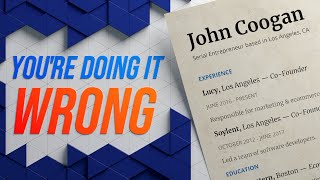
John Coogan breaks down a three-week job search that runs research, outreach, and interviews in parallel instead of waiting between steps. Build a spreadsheet of 100 companies and contacts, spend 25 minutes on semi-personalized outreach to many leads at once, then use interviews to compare offers. Expect about 10% to convert to interviews.
When most people try and get a new job, they search for a listing, then they apply, and then they wait. Search, apply, wait. Over and over again. This is all wrong. I've hired over 100 people in my career and today I'm going to explain exactly how to get a new job in just three weeks. Hunting for a new job can feel daunting, and believe me, I've been there. But I promise you that there is a right way and a wrong way to go about finding a new job. The method I'm going to outline doesn't just apply to finding a job. It works in sales, operations, and even fundraising. I've actually used this exact technique to raise over $100 million for my businesses. If you're new here, I'm John. I live in Los Angeles, California and have been an entrepreneur for the past decade. Every week I put out new videos about technology startups. So please hit that subscribe button and ring the bell so you don't miss any. Let me walk you through how most people apply for jobs and then explain why it takes forever and rarely gets results. First you you start searching around for job postings, casually bouncing between websites until you find something that looks interesting. Then you read the post and see if you could qualify. Usually the job description is extremely long and vague, with dozens of qualifications that sometimes contradict one another. Then, after you finally find something that looks good, you fill out an application and start to wait. If you don't hear back, you start to look for another job listing, but this is extremely slow. Then, even after you've applied, you you have to wade through several rounds of phone screens and interviews to find out if you even got the job. I see people doing this all the time and it always takes them forever to land a new job. This can be really dangerous because for better or worse, lots of human resource departments are trained to filter out candidates with resume gaps, meaning that more than a few months have passed between jobs following this process of search. Apply Interview is terrible and can lead to a downward spiral where it actually gets harder the longer you work at it. But there's a much better way, especially Essentially, instead of doing one step after the other, you want to do everything in parallel. That means instead of just searching for a single job posting, you need to collect hundreds of postings before you fill out a single application. Getting a job is just like selling a product. It's impossible to have a 100% conversion rate, so you need to acknowledge that up front. Apple has one of the best brands in the world and Some really great marketing to push their products. But not every Apple advertisement is going to lead to a customer purchase. So they spread their bets out and market their products broadly. Let's break the entire job hunting process down into three key steps, which could be done one week at a time. First up is what I call research and development, and this is what happens before you apply to a single job posting. This whole process is about being as efficient as possible, so it's important to do all of your research in parallel. Your goal here is to build a massive list of prospects that you can reach out to in step two. So organization is key. Instead of searching for job postings in this stage, you need to search for companies and more specifically individual people who have the authority to hire you. Start by listing out every company that operates in whatever industry you were just working in. Then expand out based on your specific skill set. So if you've been working in marketing at an electronics company, start by finding as many electronics companies as possible, then broadening out to any company with a growing marketing department. Don't try and filter too much at this stage. Instead, just focus on gathering as much information as possible and compiling everything in a spreadsheet. If you're used to using a tool like Notion or Airtable, you can definitely use those, but Google Sheets is fine too. Just make sure to note the name of the company and how big they are. Working for a small company can be dramatically different than working for a large corporation, so it's worthwhile to keep size in mind. You can usually find out how many employees a particular company has by searching LinkedIn or just Google. Applying for jobs is really a sales process, and not every lead is going to convert into a job offer, so you want to maximize your top of funnel leads by collecting as many potential opportunities as possible. It's not crazy to compile a list of over 100 potential companies before you start applying. If you spend five minutes researching each company, you should be able to compile a list of 100 companies in just one day. Once you have all these companies in your spreadsheet, start developing your leads. This this is where you start to find job listings and contact information for managers who hire people with your skills. You should be adding information to each row in your spreadsheet so you wind up with names and contact information for every target company. This is also a good time to start developing your personal elevator pitch. As you research these companies and start seeing patterns in what they're hiring for, try to imagine how you would fit into the organization. There's often a big mismatch between the title of the job and the description below. At Google, a software engineer might be expected to have a computer science degree and really understand algorithms, whereas a small company outside the tech industry might still be hiring a software engineer, but really just need someone who can build a simple website. You want to figure out what skills you have and what skills are immediately adjacent to your experience. If you feel like you're lacking a specific skill, now is a great time to go and learn more. If you've been programming for a few years but don't really have any experience with design, take time before your job search fully gets going to try and get up to speed with the basics of that discipline. You can't become an expert in just one week, but it never hurts to be more well rounded. Then comes step two Parallel outreach. This is really the heart of this entire process. HR departments are notoriously slow to process job applications, and you never want to be in a position where you're just waiting to hear back about a job and have nothing to do. In a great scenario, maybe 10% of job applications are going to turn into interviews, so you really need to fill up your lead spreadsheet before you start reaching out. The goal is to only go through this process once, and then just decide between multiple job offers at the end, but you can obviously repeat the cycle if need be. The key is to keep the top of the funnel as big as possible so every stage has the maximum chance of converting. Applying to multiple jobs can be really daunting, and it's not uncommon to think that you should just focus all of your energy on a single posting and spend an entire week preparing for that. But that's a huge mistake. The first stage of any hiring process is basically just a filter. You might be the perfect candidate for a position and spend weeks preparing an amazing application, only to find out that they just hired someone a week ago and forgot to close out the job listing. So you need to standardize your process for applying. You don't want to spam people, but a little bit of process optimization can go a long way here. After all, if you're serious about applying to 100 jobs in one go, you can't spend much time on each one, so you need to create a workflow for efficiency. You can use a tool like Mail Merge to automatically fill out personalized emails, but sometimes this can backfire. Even if you add personal details like the name of the person you're emailing, it can still feel like a marketing email where there were clearly just a few holes that got filled in automatically. Instead, you should have a few lines of boilerplate about yourself and then customize the rest. In your spreadsheet, you should have the name of the company and the name of the person you're reaching out to, which is a good starting point. If you have time, be sure to add in a few details about the position and why you want to work for the company. This is a great place to show that you did some research and mention a recent announcement by the company that you couldn't have possibly just auto filled. The key here is to stick to a schedule. If your target is to apply to 100 companies in a single week, you shouldn't spend more than 25 minutes per company. That should be plenty of time if you're well organized and have all of your supporting materials like a resume and links to relevant work experience altogether already in one place. As you're applying, really try and figure out what steps you have to repeat over and over again so you can automate them. Tools like autohotkey and textexpander can create macros to keep you from typing the same sentence over and over again. Regardless of whether you use Mac or PC, there are great options to speed up your process, and I'll leave some links to helpful resources right below the like button. Step three is what I call targeted interviewing. It's easy to treat every interview the same way and put your maximum effort into each one, but that's actually a common error. Interviewing for a new job should be as much about you deciding whether or not you want the job as the company deciding whether or not they want to hire you. Job postings can be very misleading, and it's not always the company's fault. The hiring manager could be using an old template, or the company's goals could have shifted since they put up the job wreck. Either way, you can't fall into the trap of thinking that you have to see every interview process to the end. Far too many managers would love to hire someone who's a bit overqualified, and you don't want to end up being that someone. It's important to validate early on in the interview process exactly what you'll be doing and assess whether or not that's a fit for you. You might have done a particular job a few years years ago and hated it. So even though you're technically qualified, you need to filter out any companies that want you to do that terrible job. There are two added benefits to this more aggressive approach. First, taking an active interest in the position and really digging in to see if it's what you want to be doing for the next few years shows a lot of initiative, and that looks great in interviews. Second, declining to advance to the next round after a phone screen reveals that a job isn't quite right for you builds your confidence. If you followed the first two steps properly, you should have plenty of interviews going on simultaneously and never feel like you have to take a job because it's the only opportunity available. This strategy is all about parallelism, and if you do it right, you'll wind up in a great situation where you can actually decide between multiple job offers and weigh the pros and cons of each one. You might even be able to negotiate for a higher salary at the most interesting company because you have some real leverage. Even though companies are legally limited in what they can ask you about your job search, most managers can actually sense when a candidate that they really want to hire has multiple offers, even if you don't say it explicitly, so use this to your advantage. If you'd like to go a bit deeper, just drop your email@johncoogan.com and please check out this recommended video. The YouTube algorithm thinks that you'll really like it.










