History of Xi Jinping
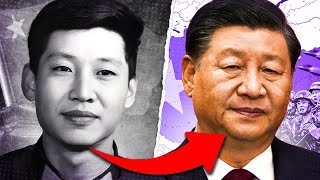
This is a narrated YouTube documentary tracing Xi Jinping’s life and political ascent from his 1953 birth into a privileged ‘princeling’ family, through hardship during the Great Leap Forward and Cultural Revolution, to his decades-long bureaucratic rise in Fujian and eventual takeover of the Chinese Communist Party. The video links Xi’s personal history to policy choices after 2012: an intensive anti‑corruption purge, ideological campaigns ("Xi Thought" and related slogans), massive expansion of censorship and surveillance (including Xinjiang repression), assertive foreign policy toward Taiwan, and constitutional changes enabling indefinite rule.
14 days. That's how long Xi Jinping was missing before he suddenly became China's leader back in 2012. So he got 99.86% of the vote. During this time, he canceled meetings with foreign leaders and Chinese media refused to comment on the situation. People naturally started to speculate perhaps he had been replaced or thrown in prison or even assassinated. Government censors blocked search results for his name anywhere on the Internet. And then out of nowhere, he resurfaced. The Chinese Communist Party just acted like nothing had happened and they appointed him General Secretary. Exactly where he was during that two week stretch is still unknown to this day. But understanding his journey to become the most powerful man in the world is key to understanding the future of the global world order. Xi Jinping is an enigma in many ways. His entire life is shrouded in mystery. But thanks to some intrepid reporting by anonymous sources, we're starting to learn more. Now we know that he grew up in an extremely tumultuous time for China. Political power was shifting quickly and it ultimately tore his family apart. But somehow Xi remained dedicated to the Chinese Communist Party. To understand why, we have to go back to the 1950s. Mao Zedong was the founder of the People's Republic of China and led the entire country as the Chairman of the Chinese Communist Party. Xi's father worked for Chairman Mao directly as Secretary for Industrial Affairs. This was a very important role and it allowed their family to live in a part of town reserved for party officials. The neighborhood was gated and had security patrolling the entrance. The government paid for nannies and housekeepers, and the accommodations were luxurious. Xi Jinping was born in that private Beijing neighborhood in 1953. Although he wasn't directly in line for a political position, he was practically royalty. His father was critical to the founding of Chairman Mao's empire and was routinely featured in party propaganda. Mao had successfully unified China and ended the so called century of humiliation that came before it. Decades of rebellions, civil conflicts, imperial invasions and political upheaval had come to an end. And Xi's father was right at the heart of the new order. But even though he was a hero in the political realm, He Tsi's father was a strict disciplinarian. At home, the children of Mao's revolutionary compatriots were called the Red Second Generation or princelings, since they were set to inherit this new unified government. But parents were worried that these princelings would become entitled, so they enforced strict rules at home. Not much is known about Tsi's mother. She's still alive today at over 90 years old and keeps a picture of her on his desk. But reports show that she's kept a low profile on purpose. Xi didn't spend much time with his parents growing up because he went to an exclusive boarding school. But his time living a fancy life as part of the political elite wouldn't last long. Mao Zedong was working to abolish private ownership of farmland and build up Chinese industrial capacity. But it wasn't going well. This so called Great Leap Forward led to mass starvation and and even Xi's fancy boarding school couldn't get enough food to feed the students. Dictators like Chairman Mao put loyalty above all else. It didn't matter if people were dying left and right, as long as they could still rule with an iron fist. Anyone who questioned Mao's plan was swiftly dealt with. And Tsi's father was no exception. His father had written a novel about the Chinese Civil War and in the process been critical of Mao's leadership. So in 1962, he was removed from government and put on house arrest. Mao had to be sure that Xi's father would never question his authority again, so he sent him to a labor camp to live out his days in poverty. This was just the start of a broader consolidation of political power. Though the late 1960s brought the cultural Revolution and with it broad attacks on anyone who questioned China's new socialist doctrine. Teachers were shamed for allowing free thought. People were beaten, tortured and even killed. Even though Xi Jinping was still just a boy, he was brutally punished for his father's sins. Mao loyalists brought Xi to a courtyard in Beijing to shame him. The crowd chanted slogans about how dishonorable he had been and even forced his mother to participate in the public denunciation. These Mao loyalists were called Red Guards and they would stop at nothing to enforce compliance with the new political regime. They broke into Xi's boarding school and dragged the teachers into the street. They even built makeshift prisons to lock people up. It was a horrible time for the country and his family was suffering. His older half sister took her own life because of the stress it caused her. And in later accounts, Si has said that he thought he might die too. At age 14, Cee was locked in a detention center and left to starve. One night he managed to run away and make it home to his mom to ask for some food. But the risk of getting caught was simply too high. So his own mother had to turn him into the authorities. This kind of chaos was unsustainable even under Chairman Mao's authoritarian rule. So something had to be done. The solution was to send young people out of the cities and into the farmlands to learn the virtues of hard labor from ordinary peasants. Tsi was only 15 when he was sent to a tiny village to start working. But surprisingly, he remembers this time fondly. For Si, it was. It was an opportunity for personal growth and a chance to become a stronger man. Survival in Beijing had become increasingly difficult, so Xi was excited for a new beginning, even if it meant leaving his family behind. But his time on the farm was far from his expectations. He was forced to live in a cave with very little to eat, and the locals didn't even like him. He started smoking cigarettes just so that he could take more breaks from the hard work. After only a few months, he. He couldn't take it anymore. So he escaped and headed back to Beijing. His plan was half baked, though, and he was arrested almost immediately and forced to build sewers throughout the city. One year later, he decided to give the countryside another shot. So he headed back to the farm and eventually was able to have an impact on the village. He put his education to use and helped build wells, dams and new roads. At age 22, he was finally ready to depart for good this time.
From New York, this is ABC News. Good evening. Mao Zedong, the most powerful influence on China since Confucius, has died at the age of 82.
This was a really critical turning point for China. Chairman Mao died in 1976, bringing the cultural Revolution to an end. Finally, the mark on Xi's family could be lifted and everyone could reunite. The young princelings were back in the political elite. So most of them started seeing celebrated. They drank and partied, but not Xi Jinping. You would think that after watching Mao's Cultural Revolution destroy his entire childhood, Xi would reject the Communist Party. But he did the exact opposite. Xi never wanted to be in that position again. So he started working to gain political power. He had seen firsthand the helplessness of political outsiders. And so he had to double down on the Communist Party, the CCP said still had complete control over China. But it was the leader of the party who had the real power. Xi Jinping would need to climb the ranks and reach the top to fulfill his mission. In 1975, he managed to earn admission to a university to go study chemical engineering. The Chinese academic system had been gutted during the Cultural Revolution, and nearly every class had been restructured to teach the writings of Mao Zedong. Getting into a good university was no longer about getting good grades and Passing the entrance exams. The name of the game was getting a strong recommendation from a local party leader. Even though the classes were more focused on Marxist theory than solving true engineering problems, the degree was enough to let C qualify for political positions. So he called up his father, who was no longer a political exile, and asked for some help. His father was able to get him a job with a military official as a secretary. It wasn't glamorous work, mostly just managing schedules, taking notes in meetings and and helping with speeches. But it allowed him to form relationships with senior army officials. Because of the chaos of the Cultural Revolution, Xi's boss didn't want him to write anything down that could be used against him in the future. So Xi would have to take notes, then run to the bathroom to memorize everything. Before burning the paper he had just written on, Xi was learning about the complicated power dynamics in China. The army officials he was working with were the People's Liberation army, or pla. These soldiers don't serve China broadly. Instead, they report directly to the Chinese Communist Party. Their job is first and foremost to keep the Communists in charge and prevent any attempt at a coup. If Xi wanted to one day run the Chinese Communist Party, he would have to cozy up to the pla. In hindsight, working in this lowly position was incredibly valuable because it gave him military credentials. But just as he was starting to make progress, he decided to completely change trajectories. He again returned to the poor rural Chinese countryside to integrate with the average worker, this time as deputy Party secretary. It was a tough job, far away from the comforts of a city life. But it was a critical function for the Communist Party. The Communist regime needed the support of average peasants, so sending officials out to promote the party line was a win win. Spread the message of Communism while identifying future party leaders. Xi Jinping had positioned himself perfectly to join the ranks of the next generation of Communist Party leadership. This was a critical moment as the Communist Party was going through a major strategic shift. The famines caused by the Great Leap Forward and the violence caused by the Cultural Revolution had eroded confidence in the Communist Party, and they needed a new direction. So they decided to dial things back a bit. Instead of extreme socialism with complete collective control of all industry, the free market would need to start playing a role. It would be socialism with Chinese characteristics. And it ultimately led to massive economic growth.
Good morning. Well, history is about to be made. On the South Lawn of the White House, where President Carter will officially greet Chinese Vice Premier Deng Xiaoping, the first Chinese Communist official to make A state visit to the United States.
There was a new leader now. His name was Deng Xiaoping, and he was so dedicated to reforming China that he even visited America personally to build a relationship between the two countries. International trade would come to define the Chinese growth story over the next decades. But this transformation wouldn't happen overnight. Xi Jinping was looking for a new job, and a unique opportunity popped up in Fujian Province, this mountainous region on China's southern coast, and had been a major international trading hub until Mao Zedong closed off China to the world. Fujian had become one of China's poorest provinces, but that was an opportunity for xi. He spent 17 years there, working his way up in the local government and keeping a low profile. Even though Xi was making solid progress, sticking his neck out too much could be risky, so he rarely spoke publicly. Part of the reason he was so careful about flying under the radar was was the rampant corruption that plagued China at the time. Every major city had their fair share of wheeler dealer types that were constantly making backroom deals to keep imports and exports flowing. One of the most prominent bosses was a man named Lai Cheng Sing. And he was operating right in Xi Jinping's backyard. For years, Lai had been running a massive smuggling business in Fujian and in the process, avoided paying billions of dollars in taxes. Lai had focused on one of the ports in Fujian province, right across from Taiwan. His smuggling empire had illegally imported billions of dollars worth of cigarettes, cars, and oil, all directly under the noses of local officials. Much like Xi Jinping, Lai Cheng Sing had spent years as a ditch digger living an impoverished lifestyle. But once China started opening up to foreign trade, he saw an opportunity. Lai was barely literate, but he was a master of building connections and manipulating people. He realized early on that the biggest winners during the next economic boom wouldn't necessarily be the smartest or most educated people, but instead the people who were able to control government officials. So Lai started growing his network and reinvesting all of his profits into bribes. Whenever times were tough, he was quick to help the police, army, or other government workers with whatever they needed to get done. The strategy worked, and after a few years, Lai controlled the entire port system. System. He was so connected that he could drive right into the Chinese capital without getting stopped by the guards. He even built a new airport to speed up trade and was responsible for one sixth of all Chinese oil imports. Lai was becoming a local hero because even though he was breaking the law, he had so many people on his payroll that everyone still loved him. He was basically the Pablo Escobar of China in the 1990s. And just like Escobar, he bought a local soccer team to further further cement his name in history. For his most important assets, he built a pleasure palace where absolutely everything was free. Lavish dinners, endless gambling, even prostitution. Anything was possible at Lai's headquarters, and it kept everyone looking the other way on his corrupt practices. Eventually, Lai's fraudulent empire became too big to ignore, so the Chinese government cracked down. They sent investigators to arrest him, but he was tipped off by his local contacts and escaped the country. He sailed to Hong Kong on a boat and then flew to Canada. The corruption scandal resulted in over 150of his associates getting arrested, and some of them wound up getting the death penalty. Lai claimed that he had done nothing wrong, and the Chinese government was going after him purely for political reasons. He requested political asylum in Canada, but was eventually sent back to China. After spending 12 years fighting his case, he was arrested as soon as he landed and quickly sentenced to life in prison. Even though the Chinese government made an example of lie, he clearly wasn't the only one doing this type of thing. At that time, corruption was rampant, and nearly every major government official was assumed to be involved in either bribery, tax evasion, or some other abuse of power. The question is what Xi Jinping's role was in all of this. After all, he was a senior party official in Fujian at the time, and it's hard to imagine that he wasn't aware of what was happening. Well, even if Xi turned a blind eye to corruption in Fujian, it didn't hurt his political career. Because he was born a princeling, he already had plenty of connections and likely didn't need to get involved directly with Lai's empire. That put him in the perfect position to clean up the scandal. So Beijing officials tapped him to put an end to corruption once and for all. The official history of Xi Jinping doesn't mention any ties to corrupt business practices. China clearly doesn't to want to tarnish their leader's Image. But in 2012, Bloomberg News reported that Xi's family owned hundreds of millions of dollars in real estate and other business assets. And a Chinese billionaire told the New York Times that he had helped the Tsi family dump some assets. But this billionaire quickly disappeared from a Hong Kong hotel and then was sentenced to 13 years in prison for bribery and corruption. Xi's wealth remains shrouded in mystery to this day. And after all, he might really believe in Communism to such an extent that he never crosses the line. But still, many questions remain. One of Xi's predecessors, Deng Xiaoping had a famous hide your strength and bide your time. It appears that Xi Jinping had taken this to heart. He had always prized power over wealth and had seemingly unending patience. He never overestimated his power and he never stuck his neck out desperately grasping for money more. It served him well because in 2002, Hu Jintao became General Secretary and opened up a wave of new opportunities. Xi Jinping had spent 17 years in Fujian, but now it was time to travel north to Zhoujiang. It didn't matter that businessmen were getting rich through corrupt business practices. Xi had his eye on real power, political power. And positioning himself as the anti corruption leader. Who the Communist Party could count on was the perfect. In 2006, Hu Jintao was consolidating power and that meant getting rid of the current leader in Shanghai. Whenever Chinese leaders remove their challengers, they almost always claim that they're fighting corruption. As the ruling party, the greatest threat we face is corruption. This strategy works great since nearly everyone is involved in corruption at some level. Xi Jinping was the logical choice to take over in Shanghai since he had publicly steered clear clear of corruption and help clean up the Lai Cheng Seng scandal in Fujian. Most importantly, though, Xi was also a political independent. His loyalty and patience was finally being rewarded. Every five years, the Chinese government held a party congress. This event would decide who ran the country as well as who was next in line. The 17th party congress was a particularly important turning point for Xi Jinping. As the party's leader, Hu Jintao walked on stage, he was followed by members, members of his Politburo. These were the men who were next in line for the top job. And Xi Jinping was ahead of his main rival. He was basically on track to serve as vice president and eventually lead all of China. Only one question could Xi continue to keep a low profile and stay away from scandals. China had struggled under Hu Jintao and was eager to find a stronger leader to take the party forward. Even though Xi Jinping had styled himself himself as a reserved and diligent servant to the party, he was quietly planning to adopt a much more aggressive stance. Most of the world was still unaware of Xi Jinping in the early 2000s. But in 2008, China would host the Olympics in Beijing and Xi would preside over the Games. It was a time of great optimism. The Chinese Olympics had been hailed as a turning point in China's development. The hope of was that the country would become more open, more democratic and more free. But even though China had welcomed visitors to the massive stadium in Beijing. They also had ramped up military operations and security measures to suppress local protests. Xi Jinping had a major problem on his hands. It was a problem faced by all authoritarian governments who stay in power for decades. The population must be kept in check at all times. In a democracy, disgruntled citizens have an outlet for their frustrations. If enough people are unhappy with the current leadership, they can vote in a new government. The Chinese Communist Party didn't want to give up control under any circumstances. So managing dissent was critical either. This is the first Arab revolution of the 21st century. Mubarak deposed Egypt's 18 day revolution. His a theater of the absurd, a murderous clown. In 2011, Joe Biden flew to China to meet with Xi Jinping. They were both serving as vice presidents at the time and were grappling with the global political issues of the day. The Arab Spring had caused massive upheaval in countries like Tunisia, Libya, Egypt and Yemen. Anti authoritarian protests had spiraled into violent confrontations and calls for new governments. Xi was clearly worried that something similar could happen in China. After all, the same government corruption that had forced Middle Eastern citizens onto the streets was rampant in China. Government officials had taken bribes and cut corners while construction companies were building schools. These shoddy structures had collapsed during a major earthquake and killed tens of thousands. A Chinese infant formula company had paid off regulators and covered up a tainted batch which caused thousands of children to develop learning disabilities. And across the country, corrupt government officials had stolen land from local farmers and soldiers it off to the highest bidder, all while pocketing the profits. This was just how things got done in China. At the time. Even the smallest interactions with the government, like getting an ID card, would require a bribe. Sometimes it was just a few packs of cigarettes, but often party officials would take everything they could. This had been boiling over into a major protest movement. It was extremely risky for citizens to take to the streets, but they had no options left. There was just no way for an honest person to make it into China. You either had to start a business and bribe the government to get ahead, or work for the party and extort the locals. Xi Jinping knew that China was uniquely vulnerable. He couldn't let the revolutionary ideas of the Arab Spring spread to the Chinese populace. Fortunately for Xi, in addition to being the Vice president, he was also serving as the first Secretary of the Secretariat. It's a bit of an opaque title, but it gave him much more power and a unique insight into the day to day operations of the party's bureaucracy. This Role allowed him to learn the inner workings of the party and understand how to actually get things done efficiently. But while Xi was grinding through the bureaucracy and keeping his head down, another man had his sights on becoming China's top dog. His name was Bosu Lai, and he had a very similar upbringing to Xi Jinping. They're both roughly the same age, and they both come from prominent political families. But Bo Su Lai wasn't interested in keeping a low profile. He wanted power, and everyone knew it. Bo Su Lai was more like a Western politician than others who had come before him. He loved the spotlight, and he had a great sense of humor. He also pushed lots of populist policies and tried to appeal to the largest audience possible. Like Xi, Beau saw that getting tough on corruption was the quickest path to power. But he was too gung ho about it. His fellow party members could see through his rhetoric and knew that he was arrogant and overly ambitious. Back in 2007, Bo Su Lai was serving the party in Chongqing. The city was absolutely massive, but with this scale came tons of problems. Pollution was getting worse every day, and organized crime was running the city. Bo's mission was clean up the city and use that as a platform to gain political power. So he teamed up with a grizzled police chief named Li Wong Li Jun. Together, they purged criminal organizations from the city and for a time, were hailed as saviors. But that wouldn't last. Beau was engaging in his own corruption and feared that he would be caught. So he fled to the American consulate. Over time, the truth surfaced. Not only had Beau been corrupt, but his wife had killed an American businessman by poisoning him. Beau was stripped of his government title, and his wife was found guilty of murder. All of a sudden, one of China's most promising leaders had been unmasked as a corrupt fraud. It was a massive setback for a government that had been trying to prove that scandals were limited to lower ranking officials. Even the top party leadership was capable of horrific actions which would undermine trust in the system. So there were two possible paths. Give more power to the people or completely centralize control. Unsurprisingly, the party decided that they needed an even stronger leader, someone who could root out corruption once and for all. It's unclear what role Xi Jinping played in all of this, but the end result was certainly to his benefit, since Bo Su Lai was his primary challenger for control. This is one of the leading theories for what happened during the 14 days Xi Jinping was missing in 2012. No one knows for sure, but Shortly after Xi's disappearance, Bo Su Lai was removed from power and charged with corruption. By November, the the Party had consolidated around Xi and sworn him in as General Secretary. Bo Su Lai would wind up getting sentenced to life in prison. Xi had successfully consolidated power within the Chinese Communist Party. But this was really just the start. After all, no one wants to be at the helm of a dying party and quickly get overthrown by a populist revolution. Control over the Chinese population would be a new challenge entirely, and Xi Jinping would look to history to inform his strategy. So now we gotta talk about Tiananmen Square.
A brutal massacre of Chinese students and other protesters by the Chinese army. The death count goes on tonight. It may go as high as a thousand or more. And the fighting is not yet over.
In the late 1980s, China was changing. Calls for democracy were getting louder and louder each day, and the Party could no longer ignore them. There was a real risk that the Chinese Communist Party could fall if something wasn't done. Protesters had gathered in Tiananmen Square to demand democracy and an end to the relentless political corruption. Citizens were closer than ever to grasping freedom. So the Chinese leadership had to take drastic measures. It wasn't just average citizens who were calling for change. Several party officials were also sympathetic to the protesters. So Deng Xiaoping sent the army to Tiananmen Square and locked up the most prominent official who had been supporting the protest. We still don't know the official death toll, but it's likely in the thousands. Photos and videos from that incident are heavily censored to this day. The protests weren't confined to Beijing, though they had already spread across the country. And even though Xi Jinping was thousands of miles away in southern China at the time, the official party history states that Xi remained loyal to the party and blocked local students from protesting. Having lived through the chaotic Cultural Revolution, Xi believed that democracy would lead to more violence, not less, and dedicated himself to consolidating authoritarian control. But although the Chinese Communist Party had managed to stay afloat in 1989, the Soviet Union wasn't so lucky. Mikhail Gorbachev was celebrated in the west for bringing an end to the Cold War. But Xi Jinping saw the fall of the Soviet Union as a massive failure. After all, the original Chinese Communist revolution was heavily inspired by the Russian Revolution, so watching a similar system collapse was terrifying. The Chinese Communist Party is haunted by the fall of the Soviet Union to this day and has become completely obsessed with avoiding a similar fate. So why did the Soviet Union fall? And what exactly would Xi Jinping's survival plan look like? Well, in Xi's mind, China would need to do two main things differently. First, they would need to double down on indoctrination. Everyone had to understand the history of the Communist Party or at least a positive version of the history that would lead everyone to fall in line. There could be no room for ideological exploration. Second, the regime should be prepared to use violence to stop revolutions. This is why the People's Liberation army is so important to the ccp. They report directly to the party and can quell uprisings before they gain steam. In Xi's mind, Gorbachev allowed the Soviet Union to fall because he didn't have the tools to reassert power. The communist ideology is built upon the idea of a corporate. But as corruption spreads, that concept breaks down and people lose faith. As soon as Xi took power, he promised to go after both the tigers and the flies. In his first public speech, that meant rooting out powerful but corrupt tigers high up in government, as well as the petulant flies engaging in low level bribery. He didn't just lead the charge himself though. He wanted to create a culture that had a zero tolerance policy toward political corruption. This led to an eight point code to govern political behavior. No longer would officials be allowed to accept expensive gifts, fancy cars or even free dinners. Then Xi made a point to publicize the trial of Bo Su Lai. The judge quickly ruled guilty on all counts and handed down a lifetime sentence. This was an important message to send to any would be challengers. It didn't matter how high up you went in the government. No one was immune to anti corruption investigations. The purge reached the highest ranks of the Communist Party people who were normally able to operate with impunity. Members of the Politburo Standing Committee were arrested and charged with abuse of power. High profile citizens were forced to turn over billions of dollars in assets. And high ranking military officials were quickly stripped of their ranks. Every time Xi would remove someone for corruption, he would replace them with one of his own people. He understood at a deep level from his time in government how the system worked so no stone could be left unturned. And although his campaign was ruthless, it was hugely popular with average Chinese citizens. There really was a ton of corruption all throughout China and nothing could get done without paying bribes. By the time he was done, Xi had identified more than 4 million corrupt people throughout China. This led to a huge improvement in lifestyle for the average worker. Peasants wouldn't need to bribe officials anymore to get basic assistance from the government. But this created a new Problem. The wealthy Chinese elite started to hate Xi Jinping. He had taken so much from them before they could relax and enjoy a steady stream of profits from their unscrupulous business practices. But now those cash flows had dried up and no one was safe from investigation. He had to get these people to fall in line. It wasn't enough to keep the peasants happy and let the elites plan a response. Everyone had to recognize the new leadership. The solution was to codify a new version of the Communist doctrine into the party constitution. The vision comes directly from Xi Jinping and is referred to as Socialism with Chinese Characteristics for a New Era. The party now uses a mobile app to ensure that everyone is studying the principles important to the party. The app quizzes people on Xi Jinping thought on a daily basis and is required for party members, university professors and young students. In order to build out this ideological ideological content pipeline, Xi Jinping needed support. He found his answer in a Chinese scholar named Wang Huning. While China had been turning over massive swathes of the political elite, Wang Huning had somehow managed to remain in his position. He'd served in the government since 1995 and remained committed to the Communist Party. Because Xi Jinping had such a tumultuous childhood, he was never able to develop a strong grasp of political theory or Western philosophy. Wang Huning was able to fill that gap and develop a set of Chinese policies to usher in a new era. Wang Huning had written a book called America Against America, in which he argued that the United States was going to tear itself apart because citizens were granted individual freedoms. This was exactly what Xi Jinping wanted to avoid. So rolling out a comprehensive indoctrination campaign was the next logical step. Political slogans became a cornerstone of this new ideology project. The Belt and Road Initiative. The Chinese Dream, Common Prosperity. Each of these served to solidify the new party vision in the minds of the populace. But unlike in America, where you can choose between Barack Obama's Yes we can and Donald Trump's Make America Great Again, in China there was only one Non compliance would be met with swift punishment. The apparatus that Xi had created to fight corruption could, could now be used as he saw fit. And it wasn't long before he started using it to punish challengers. Even though plenty of corrupt officials had been removed from their positions, many poor villagers were still left empty handed. Farmlands had been sold off to the highest bidder and local citizens had no way to reclaim what had been stolen. As protests started to build again, Xi Jinping turned his anti corruption campaign on the protesters and arrested a local leader on charges of bribery. Corruption was bad, but political dissent was worse. Absolute control was all that mattered. But dragging people out of their homes in the middle of the night is still a last resort. Xi Jinping realized that if he could control the flow of information and shape how people thought, he might never need to send in the troops again. So he set up a massive censorship operation. Every message sent over the Chinese Internet would need to be scanned. First by algorithms to fly flag sensitive words, then by humans to review in more detail. It was exhausting work, but the Chinese government had plenty of resources to throw at the problem. They literally employ millions of people now just to censor Internet content. And as more and more Chinese citizens gain Internet access, the task has only grown in scope. The banned word list is constantly changing and has to include lots of seemingly bland words that could be used to covertly signal discovery. When the Internet started really growing in the 1990s, controlling the flow of information seemed like an impossible task. President Bill Clinton even described Internet censorship as sort of like trying to nail Jell o to the wall. But to the Chinese Communist Party, it didn't matter how difficult it was. Free speech and the open Internet was a direct threat to authoritarianism. Lots of independent observers had argued that the Internet had played a key role in the Arab Spring. Protesters had coordinated on social media sites, and that couldn't be allowed to happen in China. The first stress test of the censorship apparatus came In July of 2011, when two high speed trains crashed, 40 people died, and everyday citizens turned to social media to ask questions about how this could possibly be allowed to happen. But government censors worked tirelessly to shut down the conversation. 120 people spent three full days deleting posts about the accident. And the trains were quickly buried in dirt right where the accident happened. Xi Jinping was gaining more and more control over the Internet, and he wanted to make it clear to every party official that censorship was a top priority. A secret memo known as document no. 9 outlined how the new regime would reject the rule of law and the West's idea of journalism. The crackdown expanded to famous newspapers. Popular bloggers, even actors and lawyers started to disappear from the Internet. Anyone who felt comfortable criticizing the government, government and had a decent following needed to be controlled. The goal was to get everyone to fall in line with the ideological goals of the Chinese Communist Party, specifically around the idea of national rejuvenation. This refers to Xi Jinping's goal of Chinese supremacy. Everyone in the country needs to be working to improve China directly. And that means following strict social norms. Women should get married and have babies. Men should be strong and stop playing video games. Anything that violates the idea of traditional family values is censored. And so is talking about Xi Jinping directly. A student was actually sent to jail for six months just for posting a picture of Winnie the Pooh. And this line is extremely blurry. There isn't a law written down somewhere about how to speak about government leaders. You can just be punished for saying anything Tsi doesn't like personally. People are constantly finding ways around specific bands, but the censors are always just one step behind. It's a constant cat and mouse game, and it's made understanding what's really going on in China extremely difficult. Some analysts say that despite all of this, Xi Jinping is actually very popular. And that's not as crazy as it sounds. China's economy has been growing rapidly for years now, and the average living standard of Chinese citizens is on the rise. If the alternative is chaos and corruption, censorship might seem acceptable to many, many people. The Chinese censorship machine isn't stagnating, though. It's actually growing in scope every single day. Over half of the world's CCTV cameras are sold in China. Those cameras are all connected to the Chinese surveillance system. Citizens can be tracked both on and offline now, but the amount of data required to do this is overwhelming. If China had human monitors doing all of this work, there would be no one left to grow crops, make clothing, or assemble iPhones. So they have to employ technology. Artificial intelligence is the only way to scan every text message, image, and video uploaded to the Internet. So that's where China is investing most heavily. In 2018, Xi Jinping faced a the constitution had a two term limit on leadership, so he would have to step down in 2022. So he changed the constitution to allow him to rule for life. A big change to the structure of the government like that would normally be met with heated debate online. But the censors made sure that only positive comments survived online for more than a few seconds. The censorship was so all encompassing that you couldn't even search for the term disagree. Support for Xi Jinping was the only acceptable opinion. The censorship also extends to areas you would think would align with the Chinese Communist Party's interests. Topics like socialism, trade unions, and workers movements are all banned. That's because even though the government markets itself as communist, what they really care about is complete authoritarian control. They can't allow smaller groups to organize and start making demands because that could undermine their power. Even though Marxism lies at the core of Xi Jinping thought, discussion of the topic is tightly controlled. Ideas that seemingly align with the goals of the Chinese Communist Party can only be disseminated through propaganda. Individuals who spread messages of workers rights are quickly silenced. This practice was made evident during a workers protest in 2020 18. No journalists were allowed to report on what was going on independently. Xi Jinping declared that the media must pledge absolute loyalty to the Communist Party and only print stories directly from China's state news agency. When questioned about his absolute control of the media, Xi and his fellow party members have pointed out that American media is politically biased as well. They argue that this is merely the status quo. But even though Fox News may lean right and MSNBC may lean left, at least America has opposing viewpoints. In China, there's no room for a difference of opinion. During that 2018 protest, students started coming out in support of the workers after they were censored on social media. They were raided by the police and subjected to constant surveillance. Even after being released, these students were assigned government jobs, forced to live in specific dormitories, and even required to wear tracking devices. This is the heart of Xi Jinping's China. A government that claims to serve the peasants and workers clearly doesn't care about individual rights or freedoms. All the talk about the plight of the worker is merely propaganda. The real goal of the CCP is maintaining social stability and their own power. Xi Jinping will do anything to maintain control. He's imprisoned hundreds of journalists, shut down human rights lawyers and repressed religious groups. Everyone thought it would be impossible to build such an all encompassing surveillance state in the Internet era. But Xi accomplished it by gradually ramping up restrictions. Over time, the watchful eye of the Communist Party reaches every corner of China. But nowhere is it more ever present than in the rural province of Xinjiang. The Uyghurs. They're a mostly Muslim ethnic minority Castera has dismissed as fake news. Currently detained in the Xinjiang is the home of the Uyghur Muslims, a small minority who speak a language that's actually closer to Turkish than Mandarin Chinese. There are roughly 12 million Uyghur Muslims living there, and for decades the Communist Party has been pushing them harder and harder to assimilate. Xi Jinping has a metaphor that he likes to use to describe his grand vision of Chinese unification. He says that all ethnic groups should be like the seeds of a pomegranate, bound tightly together inside inside one Chinese nation. Sounds reasonable in theory, but this strategy has led to Brutalities I can't even mention here on YouTube. So let's focus on the technology side of how Xi Jinping controls the Uyghurs. It all starts with propaganda. Historically, Xinjiang has been a bit of a battleground state. It wasn't until 1949 that the communist Party took power and got full control of the territory. Once they did, they immediately started incentivizing Han Chinese to move, move into the region to help prevent any calls for independence. But that's a story you won't hear on tv. In Xinjiang, Chinese propaganda is constantly playing and tells a different story. One of Uyghurs slaves that were liberated by the Chinese Communist Party. As attention shifted from televisions to smartphones, so has the focus on the surveillance state. WeChat is the primary communication tool throughout China, and it's also the primary method of control. It's more than just a chat app. People get their news there, they pay for things with the app, they can even trade stocks. But the CCP has full visibility into what goes on inside the app, and they use that information to target anyone that they think might be interested in undermining the current regime or even just promoting the Uyghur culture as a unique identity. In one particularly horrific case, the party targeted a linguist who had returned to Xinjiang after studying abroad to teach the Uyghur language to locals. They tossed him in an unmarked car, threw a black bag over his head, and took him to a detention facility. He had been accused of being a CIA spy sent by America to encourage revolution. They also claimed that he had misreported financials of a related company. Really, anything to cover up the truth. He was being silenced just for continuing to spread the Uyghur language and culture. He was humiliated and tortured before getting sentenced to years in prison for his alleged crimes. And since then, more than a million Uyghurs have been sent through through these detention centers. It wasn't always this way. Before Xi came to power, the Uyghurs thought he might actually usher in a new era of peace. After all, his father had been particularly soft on China's ethnic minority groups. But Xi had a different plan. Social stability at any cost. These brutal strategies have a hidden cost, though. The goal of all this oppression is to reduce the amount of unrest in Xinjiang. But the primary cause of unrest in Xinjiang is all the oppression. The end result is an extremely unstable cycle of violence and human rights abuses. Xi Jinping would argue that his actions are limited in scope and ultimately outweighed by the benefits of social stability. After all, economic growth has been high in Xinjiang. So in his mind, the policies are working. Even though the oppression in Xinjiang has its roots in religious and cultural conflict, economic factors are becoming more and more important. Globalization has led to many American companies having close ties to China. Apple needs China to make iPhones, big financial firms need Chinese investors, and even the NBA needs China to help expand their viewership. It's led to a situation where a huge swath of Americans can't speak openly about China without fear of consequences. This kind of international influence, influence is unprecedented in history, and it's becoming a massive source of strength for Xi Jinping. American celebrities are afraid of criticizing him. They know it will hurt their professional prospects, so they stay silent. The sheer scale of Xi Jinping's influence is hard to wrap your head around. It's really not an exaggeration to call him the most powerful man in the world. After all, he has absolute control over the Chinese Communist Party, which has nearly 100 million members. And the CCP has absolute control over China's entire population of 1.4 billion people. There are no checks and balances in China. Xi doesn't have to get approval from senators to make new laws, and his decisions can't be challenged by independent courts. Remember when Nancy Pelosi caused a big stir by visiting Taiwan? The trip was viewed by the international community as a sign that America would support Taiwan in a future conflict. And Xi Jinping didn't like the sound of that. He. He actually called Joe Biden directly and warned that the visit would escalate tensions. Think about that for a second. Xi Jinping basically called the President of the United States and told him to stop the speaker of the House from visiting Taiwan. It's an outrageous demand, but perhaps most importantly, it reflects a fundamental misunderstanding of how the American government works. Nancy Pelosi doesn't work for Joe Biden. The legislative and executive branches of the US Government are separate entities. Biden really can't tell representatives what to do. He just doesn't have the authority. But Xi Jinping does have that kind of absolute authority. He answers to no one and has no limits on his power. But why is Taiwan so important to Xi Jinping? It's a complicated question, but one worth understanding because it drives so much of his thinking. The history of Taiwan has always been tumultuous. The island nation has an indigenous population that has lived there for 30 thousands of years, but they haven't lived in isolation for centuries. Han Chinese started arriving in the 13th century with Dutch, Portuguese, and Spanish explorers. Arriving in the 17th century. In 1895, Japan took control of the island after the First Sino Japanese War and held onto it for 50 years. But in 1949, millions of Chinese fled the mainland after the Communist party took control. They lived in exile and slew slowly develop Taiwan into the democratic and self governing country we see today. Xi Jinping argues that Taiwan is rightfully part of China and needs to be reunited with the mainland. But his claims are fairly arbitrary. Taiwan was independent then it wasn't, and now it's independent again. Arguing that we have to go back to how things were in the 1800s and strip Taiwan of its independence has no logical basis. You could just as easily say we need to go back to the year 1200 and leave Taiwan independent. Xi Jinping is not a rational actor, though he's acting ideologically. He needs to focus on making the world safe for dictatorships. And Taiwan's independent democracy is a major threat. Fundamentally, Xi Jinping believes in Marxist Leninism at a very deep level. His mother taught at the leading Marxist academy and his educational career was focused on the subject. One of the key ideas in Marxism is controlling the means of production. Industrial politics policy is a huge part of that. Xi Jinping can't create a flourishing Marxist China if they have no control over the production of advanced technologies. So that's the real reason why Taiwan is so important. The real question is why hasn't Xi already invaded Taiwan? He has the power he needs to launch an invasion, and the military has been planning and preparing for years. Well, Taiwan is not an easy target. Even though it's much smaller than mainland China, conditions in the tank Taiwan Strait are treacherous. The beaches are heavily fortified, and the Taiwanese military has built up ground defenses for years. Joe Biden has also continually made statements that America will defend Taiwan from unprovoked invasions. So for now, Xi is biding his time, building up his military and waiting until there is an opportune moment. But he's also had other problems to deal with. For the last two years, Covid has presented new challenges and and unexpectedly new opportunities for Xi Jinping. When the virus first broke out in Wuhan, Xi tried to sweep it under the rug. His Internet sensors blocked any mention of the virus, and even doctors with firsthand experience were silenced. This policy backfired, though, and it quickly became clear that the virus was going to spread across the globe. So Xi pivoted from a strategy of ignoring the threat of COVID to one of maximum fear. He lost, locked down entire cities, restricted travel, and ramped up the Surveillance state. Fear of the virus was enough of an excuse to start tracking every single citizen's physical location at all times. It was an entirely new level of control, but it was working. Si had been building his surveillance system slowly over time, but Covid provided a breakthrough. Now, anyone could be tracked, ostensibly to reduce COVID infections. But it's impossible to ignore how this first further empowers the police state. As draconian as the zero COVID policy was, it did work, at least for a few years. The lockdowns prevented the virus from spreading, but unemployment was on the rise and the economic toll began to climb. During the Shanghai lockdowns, the local economy shrunk 14%, and more and more young people were out of work. It's important to understand what Xi Jinping was thinking around this time. It was clear that lockdowns hurt economic growth, but this actually wasn't that big of a problem. China had been growing rapidly for decades, and so the population was quite happy with how things were going generally. Yes, obviously these lockdowns were a setback, but average citizens were still looking at the general upward trend and willing to sacrifice for the greater good. There were other factors to consider as well. Compared to the West, China doesn't have the same level of hospital infrastructure. They never approved MRNA vaccines, and they never developed a big base level of natural immunity. Xi Jinping had plenty of good reasons to enforce lockdowns, but those might have just been cover to allow him to further consolidate power. After all, In October of 2022, China held the 20th National Party Congress. All eyes were on Xi Jinping, who should have stepped down if he was following the typical succession plan that Chinese leaders had been adhering to for the past few decades. But that's not what happened. Xi had successfully dispatched every political opponent, cemented his hold on the Communist Party, and guaranteed that he could rule indefinitely. It wasn't entirely unexpected, but many Chinese citizens took issue with this aggressive decision. Exact statistics about Xi Jinping's popularity are hard to come by for obvious reasons. In the wake of Xi's third term announcement, even the letter N was banned on social media. This is because people were simply Posting n equals 3 or n infinity to comment on the number of terms he might serve. Even though I've tried to cover as much as possible about Xi Jinping, there are still tons of gaps in this story. His whole life is shrouded in secrecy, and unbiased reporting is very hard to come by. That's why it's so important to support the sources who made all this possible? I'll leave links to additional information down below. The story is still evolving too. Chinese, China and the United States have been on a collision course for years, and a battle for the control of the semiconductor industry is heating up. If you want to understand how Xi Jinping is thinking about China's artificial intelligence strategy, just watch this video next. Thanks for watching.










