How Boom Supersonic is Building The Future of Travel
YouTube video presentation profiling Boom Supersonic and founder Blake Scholl’s effort to revive commercial supersonic travel. Covers Scholl’s background and startup path, Boom’s XB-1 prototype and design priorities (speed, safety, sustainability), lessons from the Concorde, business strategy and early airline commitments, and competitive/ regulatory challenges.
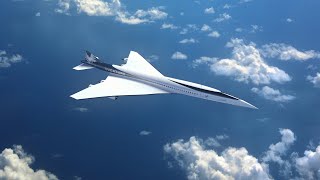
This car goes 250 miles per hour, this train goes 350 miles per hour. And this plane goes 550 miles per hour. And those are all slower than this bullet, which travels at 800 miles per hour. But this new plane from Boom Supersonic goes over 1,000 miles per hour. And there's a good chance it could change how we travel forever. The only faster way to get around might be using a SpaceX rocket, but Elon's plan for that is still completely untested. Now, supersonic planes have been around since the 1960s, but we'll get into the history of high speed travel a bit later. First, we need to talk about the founder of Boom Supersonic. Blake Shull is on a mission to bring supersonic travel to the masses, and he's making solid progress.
Imagine New York to London in three and a half hours for about the same fare you pay in business class today.
In just five years, he's raised hundreds of millions of dollars, hired dozens of engineers, and built a working prototype called XB1 to that can travel at Mach 2.2. But the most impressive part is that he had zero experience in the aerospace industry. So how'd he do it? Even though Blake doesn't have an aerospace background, he's an engineer by training. He studied computer science in college and then went to work for Amazon all the way back in 2001. While there, he built an automated system that would buy Google Ads for Amazon.
Products that turned into a $300 million P&L by the time I was 24.
Joining a high growth startup like Amazon in the early days is one of the best ways to accelerate your career. Money. No big company would hire a 24 year old to manage a $300 million piece of their business. But by joining a risky venture, Blake was able to develop management skills that helped make Boom a reality later on. After a few years at Amazon, Blake wanted to start his own company. So he launched an app called Barcode Hero.
I'm Blake Scholl. I'm the co founder and CEO of Barcode Hero. Barcode Hero lets you zap a product, barcode with your phone to find a competitor's pricing, share thoughts or recommendations.
The app received positive reviews and was growing steadily. But mobile commerce was an extremely competitive market back in 2010. It's now extremely common for startups to spend years completely focused on building a great product before trying to make money. But back then, questions about profitability popped up much earlier.
Can you tell me though, how far along you need to be before you start to make a profit. To be honest, we're a ways away from that. Our business model is to create a shopping application that people want to use when they're in a store to help them make better decisions about what to buy.
So in 2012, Groupon acquired acquired Blake's company for an undisclosed sum and shut down Barcode Hero. It doesn't look like it was an amazing outcome, but Blake clearly wasn't deterred. He wanted to go bigger with his next startup, so he set his sights higher, literally. Blake had been flying planes since he was in college and always dreamt of having a real impact on the aviation industry. He didn't have the perfect resume to start a company that builds airplanes, but that didn't bother him. After all, the Wright brothers had only built bicycles before they made the first airplane. And Elon Musk was running a payments company before launching SpaceX. So Blake founded Boom Supersonic and began building a team around the idea of safe and sustainable high speed travel. One of the first major milestones for the company was joining the startup accelerator Y Combinator. Although YC is typically known for funding software startups like Airbnb, Stripe and Coinbase, the partners at Y Combinator love all ambitious entrepreneurs. Building physical things, though, is usually much harder than writing software. There are long research and development cycles, expensive manufacturing bills, and plenty of regulatory hurdles. But Blake developed a really interesting method for overcoming these challenges.
At Boom, we believe that life happens in person and that real FaceTime beats FaceTime.
Blake is obsessed with the idea that in person interactions are inherently more valuable than conversations over the phone or email. And he really lives this mantra. Why? Combinator's demo day was quickly approaching and Blake was going to have to present Boom to a huge group of investors. He needed to demonstrate that airlines would actually buy the supersonic planes he was going to build. Emails and phone calls to airlines were going nowhere. So he decided to hop on a plane and get some FaceTime with Richard Branson. Virgin Galactic was rolling out a new spaceship and Blake knew that this was an incredible opportunity.
We ended up crashing the rollout. I never actually got my name on the invite list, but we got our 15 minutes with Richard Branson. We're not asking you to invest in the company. We're asking if, when the airplane is delivered, whether you'd like to have the first view with a Virgin logo on the tail.
This was a huge moment for the company. Everyone knows Richard Branson and Virgin Airlines. So overnight, Boom became much more legitimate in the eyes of investors. Most importantly, Virgin didn't actually have to spend any money up front, so it was easy to get the deal approved. I was actually at the YC demo day where Blake first presented Boom to investors, and the reaction was pretty amazing. Everyone loved the idea and couldn't wait to invest. None of the specifications of the airplane had been decided yet. After all, the company was still brand new. But Blake had a clear vision for what would be most important to speed, safety, and sustainability. These might seem like vague marketing terms, but they are actually extremely calculated based on the previous failures of supersonic development. In order to understand why Blake is so focused on these particular values, we have to go back to 1969. America had just landed a man on the moon, and the first commercial supersonic airplane was about to take flight. It was the Concorde, and it had a lot in common with Boom's new aircraft. On the Concorde, a trip from New York to London took just over three hours, and it felt like the dawn of an entirely new age. Throughout human history, increases in the speed of transport have had remarkable second order effects. In the 1840s, crossing the United States required traveling in a covered wagon. The journey took months and and people often died in transit. But in 1869, the Transcontinental Railroad shortened that trip to just 83 hours. America went through a remarkable period of growth as people migrated westward. And in the 1930s, transcontinental airlines began moving Americans across the country in just 20 hours. A few decades later, jet engines cut that time down to just six hours, and travel exploded. The jet age affected culture in remarkable ways. The Beatles were able to go on the first world tour and become an international sensation. And major league baseball became a national sport played all over the United States, not just in the northeast. It's always hard to predict the effects of faster travel, but throughout history, great things always happen when we start moving faster. The Concorde promised to make international travel dramatically more accessible, but there were still a ton of problems, and most of them came back to speed, safety, and sustainability. Speed was obviously the main selling point of the Concorde business. Travelers value their time extremely highly and are willing to pay lots of money to save time. But it's also just cool to go fast. And celebrities loved how fast the Concorde went.
It's always exciting flying supersonic, and it's always exciting to get to New York before you've left.
But Traveling at Mach 2 can cause some real issues, the first of which was heat. The Concorde went so fast that the plane would heat up substantially. The Entire fuselage had to be coated in a highly reflective white paint in order to deflect as much light as possible. One Concorde was painted blue during a promotion for Pepsi and wound up only being able to stay at Mach 2 for 20 minutes because of the heat buildup. The Concorde was built before computer simulation allowed for engineers to test performance in virtual environments. So a lot of these issues had to be worked out through painstaking experiments. But Boom is building their planes using the latest software tools. The second issue was fuel. You would expect a plane that goes twice as fast to use twice as much fuel, but the Concorde actually used more than five times as much fuel as modern commercial airliners. This meant that tickets had to be extremely expensive to offset the cost of fuel, and every trip came with significant carbon emissions. Boom is leveraging advances in engine design that yield greater fuel efficiency, which will mean cheaper ticket prices. But they aren't stopping there. Boom plans to use fuel made from carbon that was removed from the atmosphere, meaning that supersonic travel will be carbon neutral from day one. Increased fuel efficiency won't just make New York to London trips more affordable, though. It will actually open up entirely new routes. The Concorde was never able to fly across the Pacific, but Boom has planned to offer service from San Francisco to Tokyo since day one. These new routes will expand the market for these planes planes and give Boom a better chance at winning. Blake also thinks about pricing differently than the executives who ran the Concorde project. He wants to continually bring prices down until you can get anywhere in the world for just 100 bucks. But the Concorde executives were much more focused on short term profitability. British Airways and Air France actually performed market research to inform their pricing strategy. They found that people generally thought of the Concorde as extremely expensive, so they raised their prices to match expectations. This is fine when your customer is a rich business traveler, but if you're catering to wealthy people, you need to have a perfect safety record. And safety is what really did the Concorde.
In news tonight. This Tuesday, the first Concorde ever to crash just after takeoff from Paris. 113 people are killed, which included everyone on board.
Shortly after the turn of the millennium, air France Flight 4000, 590 crashed during takeoff and killed everyone on board. The plane had run over a piece of debris on the Runway and ruptured a tire. It destroyed the Concorde's reputation and grounded the entire fleet for months. One year later, the September 11 terrorist attacks crushed the entire airline industry and forced the Concorde into early retirement. But Boom is Learning from all of this, airplane safety protocols have advanced significantly in the past two decades, and the problem with the Concorde's tires has been thoroughly investigated. Many of the safety issues with the Concorde came from the fact that engineers on the project had a goal of delivering a supersonic plane at essentially any cost. The original budget for The Concorde was 70 million, but the project wound up costing more than a billion. Engineers had to make lots of compromises to get the Concorde to work, one of which was the nose of the airplane. Because the plane landed at such a steep angle, the pilots couldn't see the Runway as they approached, so the entire nose cone of the plane would tilt down during landing. Boom just installed a camera in the front of the plane.
There's like, camera toggle button you can hit and it flips over, and you get all your flight controls overlaid on top of what is a virtual window through the nose of the airplane. And so you get better Runway visibility than you get with a traditional subsonic cockpit.
It's such a simple solution that significantly reduces complexity. I love it. Another issue that plagued the Concorde was the fact that it required a flight engineer to be on board during every flight. Essentially, the plane was so complex that a trained expert had to sit in the cockpit with the pilots just to ensure everything went smoothly. This created a ton of extra cost, and even with the flight engineer, most airlines still had to have an extra Concorde sitting on standby at all times. This is because Concorde passengers were so demanding that no airline could afford to frustrate customers with delays if there were maintenance issues. Boom is building for reliability from day one, and by simplifying the design of the plane and using software solutions wherever possible, they should be able to avoid many of the pitfalls that the Concorde faced. Lastly, there is the issue of noise. The fact that Blake named his company Boom is pretty funny, since the sonic boom was one of the major issues with the Concorde. Sonic booms are so powerful that they can break windows in houses below. And for that reason, the United States has put a speed limit on aircraft traveling over the country. But NASA engineers are working on solving the issue of the sonic boom as well. It's unlikely that they'll ever be able to muffle it entirely, but there's a good chance that they could lower the boom from 105 decibels to just 70 decibels. And at that volume, US lawmakers might revisit the speed limit if it means getting from California to Washington, D.C. in half the time. Strict regulation is just one of the many factors that has led to stagnation in the aerospace industry. And prominent investors like Peter Thiel have been calling for America to address this for years now. I often think it's worth looking at quantity, not quality. And we're not going faster. You know, the Concorde was decommissioned in 2003, and if you include low tech airport security mechanisms, we're Back to about 1960 type travel speeds today in the U.S. part of the problem with the Concorde was that ultimately it was a vanity project by the UK and French governments. They had amazing engineers working on the technology, but they never had a strong economic model. But BOOM is thinking of the business model from day one. And they already have signed contracts with airlines. Only 14 Concordes ever saw commercial service, but United Airlines has already committed to buying 20 planes from boom. That's really solid progress. But Boom does have some strong competition. Regular subsonic planes are getting faster and more efficient. It's also possible to have a more productive future flight on a traditional plane now that you can use the wifi to get some work done or sleep in a lay flat seat in first class. There are also other companies working on developing supersonic planes like Spike Aerospace and Ariane Supersonic, although Ariane recently went out of business. But I think boom's real competition will come from outside the traditional airline industry. There are several companies working on planes capable of vertical takeoff and landing, which could change the way we travel. Even if everything is still subsonic, a huge amount of any trip is spent just getting to and from the airport. And these new VTOL aircraft will make it much easier to get to smaller airports. Then there's SpaceX. Point to point. Elon Musk thinks he can get passengers from New York to Tokyo in just 30 minutes using a rocket. This is clearly a long shot, but if it works, it would be substantially faster than flying in a supersonic plane. Lastly, we can't forget about the exponential growth of the Internet. Every year Internet speeds get faster and more people get connected. Video conferencing just saw a massive surge in adoption during the pandemic, and people are more comfortable doing business remotely now. Virtual reality is still in its infancy, but Facebook is working hard to make communication in VR indistinguishable from reality. This is all part of a larger initiative to build what people are calling a metaverse, but that's a topic for another video. Thanks for watching.










